

What Happens to Watches That Fail Authentication
The Stellaris Journal
Most buyers never see what happens to a watch that fails authentication. That is by design. The pieces that pass become inventory. The pieces that do not pass are removed from view, returned, or sometimes destroyed, and the conversation moves on. Yet the rejection path is precisely the part of the process that separates documented authentication from a seller's self-attestation. If a dealer cannot describe what happens to the watches they reject, the strength of their guarantee is harder to evaluate.
This piece looks at that path directly. It draws on what is publicly known about authentication platforms, customs enforcement, and the few brands that have published their own protocols, and it sets those against what we have stated publicly about our own process. Where examples are used, they are clearly identified as hypothetical or industry-wide.
The Rejection Path: Why It Stays Out of Sight
Authentication in the secondary luxury watch market is unusual among quality-control disciplines because its failures are not usually discussed. A watchmaker who services a movement and finds it worn will note the wear. A jeweler who grades a diamond and rejects a stone will return it. But a pre-owned watch dealer who rejects a submission rarely writes about it, and a private seller who is told a watch is not what they thought it was has no incentive to publicize the result.
The result is a market in which authentication is described almost entirely in terms of pieces that succeed. Buyers see "100% authentic" and "authenticated by experts." What they rarely see is the funnel that produced those claims: how many pieces were considered, how many were returned, and on what grounds.
That information gap matters. According to Hodinkee's reporting on Bezel's 2025 mid-year authentication report, the online platform rejected 27% of the watches submitted to it during the first half of 2025, and 29% during 2024. More than half of the rejected pieces were listed as, or claimed to be, Rolex. Thirty-eight percent of rejected pieces were listed above $10,000. These numbers are unusually high relative to what most consumers assume the rejection rate is, and they illustrate how much of the secondary market never makes it past inspection.
A rejection rate that high is not a scandal. It is a sign that the inspection is real. A process that never rejects anything is not authenticating; it is confirming.
What Causes a Timepiece to Fail
Industry reporting consistently groups the causes of failure into a small number of categories. Understanding them is useful, because the same categories apply whether a watch is being authenticated by a major platform, an independent dealer, or a customs officer at a port of entry.
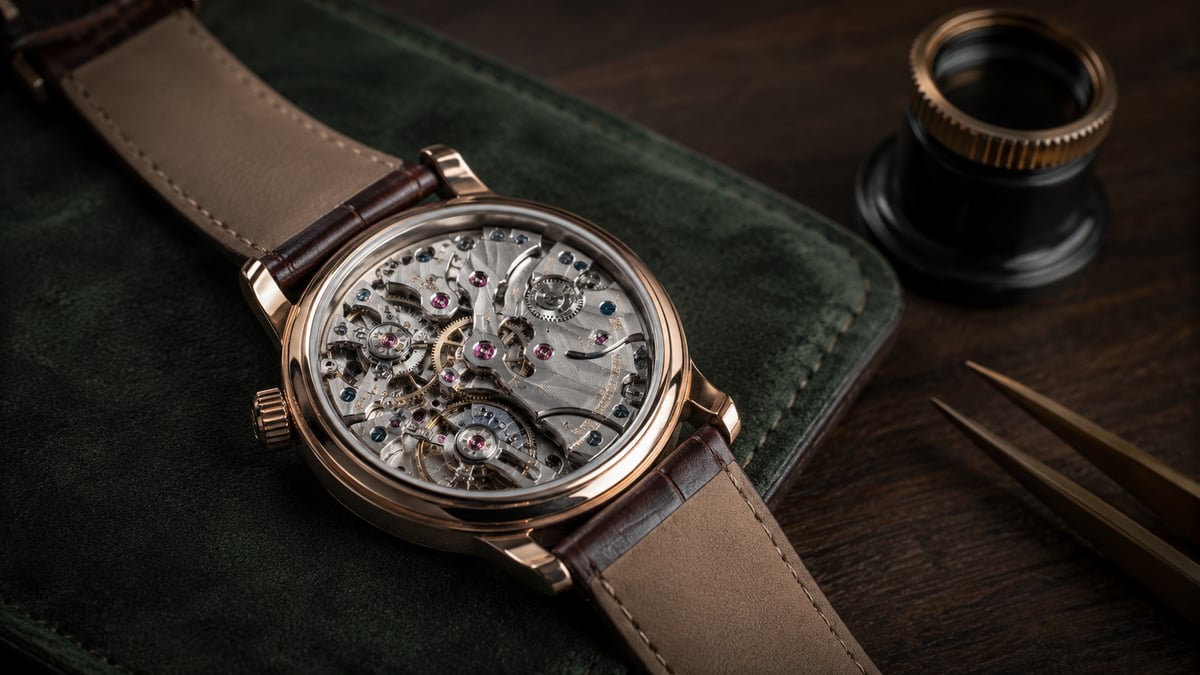
The most common cause is the so-called "Frankenwatch": a timepiece assembled from a genuine case, dial, or bracelet, paired with non-original or aftermarket components. A movement that does not match the reference, a bezel that was not produced for that serial range, or a dial that has been refinished to a standard the manufacturer never shipped can each disqualify a piece. Bezel's report, as summarized by Hodinkee, attributed a large share of its 2025 rejections to "swapped components and parts" and listings that did not match the watch in hand.
The second cause is outright counterfeiting, including the "superclone" category of replicas that use real Swiss or Japanese movements, 904L stainless steel, and correctly weighted cases to defeat casual inspection. According to MVS Watches' authentication guide, these pieces typically sell for 15–30% of the genuine article's price, which makes them harder to detect on price alone than the obviously cheap counterfeits of earlier decades. The Fondation Haute Horlogerie has estimated the cost of counterfeit watches to the Swiss watch industry at roughly two billion Swiss francs annually.
The third cause is condition or provenance misrepresentation that has nothing to do with whether the watch is real. A genuine Rolex Submariner with a polished case, a redone dial, and a service movement may be authentic and still be rejected, because its condition no longer matches the listing. Hodinkee's reporting on Bezel noted that "watches may not match their aesthetic condition, or they may not include crucial descriptions of elements that affect the value and desirability of the watch."
A fourth, smaller category involves stolen or lost pieces. Authentic watches with valid paperwork can still fail if their serial numbers appear on loss registries. Heddels' reporting on Bezel's authentication process describes that platform's use of a global database of lost and stolen watches, against which every serial is checked before listing.
How the Wider Industry Handles a Failed Authentication
The handling of a rejected piece varies sharply by who is doing the authentication. A few examples, drawn from public sources, illustrate the range.
Online trading platforms with authentication centers. Bezel, eBay, and Chrono24 all run physical or hybrid authentication services for used watches. When a piece fails, the platform typically returns it to the seller, withholds funds, and in some cases charges fees. A discussion thread on the eBay community forum from a seller whose certified Rolex did not pass eBay's authentication shows the pattern: the watch was sent back, the buyer's funds were refunded, and the seller was left to absorb fees on a piece they believed was genuine. The experience is common enough that sellers of high-end watches routinely warn each other away from platforms with strict third-party authentication.
AI-assisted authentication services. Entrupy's published guarantee states that if its re-authentication determines a certified item is not authentic, "title to and possession of the item shall remain with or be transferred to Entrupy." In other words, the disputed piece does not return to the seller; it stays with or transfers to the authentication provider. This is materially different from the platform model and is one reason Entrupy is used mostly by resellers and pawn operations rather than by individual buyers and sellers.
Brand-owned certified pre-owned programs. Rolex's Certified Pre-Owned programme requires every pre-owned watch to return to the brand's workshops, where it is fully disassembled and each component is checked against the original configuration. The brand has stated that "only Rolex can confirm the authenticity of a Rolex watch," and pieces that cannot be confirmed do not enter the program. Rolex does not publish what happens to pieces it rejects in this process, because rejected pieces simply do not enter the program at all.
Customs and border enforcement. When counterfeits are intercepted before they reach a buyer, the path is different again. U.S. Customs and Border Protection routinely seizes counterfeit shipments; a single 2024 seizure at the Port of Louisville intercepted 200 counterfeit watches with a combined manufacturer's suggested retail price of over $28 million. Seized goods are forfeited to the government and typically destroyed or auctioned as scrap, depending on the agency's procedures.
The four models produce four different outcomes for a rejected watch: return to seller, transfer to the authenticator, exclusion from a program, or destruction by the state. None of these outcomes is industry-standard. A dealer that claims to authenticate but cannot explain what happens to pieces that fail is making a weaker claim than one that can.
What Our Authentication Process Is Designed to Catch
We have not published a step-by-step inspection protocol, and we will not, because publishing it would reduce its effectiveness. What we have stated publicly is the structure of the process. According to our authenticity FAQ, every piece we offer is authenticated on arrival, undergoes a multi-point inspection, and is reverified before shipment. Items acquired through private trades are authenticated before they are listed. Every item carries a 100% authenticity guarantee.
The framework matters because it is the framework a serious authentication program is built around: an entry point, an internal check, and an exit check. Anything that fails any of those points does not reach the buyer. The framework is also specific about a relationship we want to be honest about: we are not an Authorized Dealer for any of the brands we carry, and we have no affiliation with them. Authentication in the secondary market is not a substitute for brand-authorized service. It is a separate discipline, and the broader authentication ecosystem ranges from human-led expert review to AI-assisted material analysis to hybrid models.
What our process is designed to catch is the same set of conditions the wider industry reports: outright counterfeits, Frankenwatches with non-original components, condition that materially diverges from the listing, and documentation that cannot be reconciled with the piece. What we do not claim is that any process catches everything. The guide to superfakes and authentication pitfalls we have published elsewhere notes that high-end replicas now replicate weight, finishing, and even movement characteristics closely enough to fool visual inspection alone. Authentication is a process, not a guarantee against the future.
What Happens When a Watch We Source Cannot Be Verified
A failure of authentication is not a public event for us. It is an internal one, and the question worth asking is what we do about it rather than whether we discuss it publicly.
The verifiable structure, drawn from the FAQ and from how we operate, is straightforward. A piece acquired through a private trade that does not pass authentication on arrival is not listed. A piece already in inventory that does not pass a reverification before shipment is not shipped. In both cases, the piece is removed from the transaction. Our published guarantee extends to the buyer's full purchase price; we have not published the handling of the rejected physical piece, because handling it well is part of how we handle it.
The customer experience is also worth describing, because it is the part of the rejection path that is most often misunderstood. Two distinct experiences apply. A buyer who is told the piece they received is not as described can return it under the guarantee. A seller who brings us a watch that does not authenticate is in a different position: they came to us believing the watch was something it is not, and our honest answer is part of the value of the relationship, even when it is unwelcome. A hypothetical example, clearly labeled: a seller brings in a 1990s steel sports watch with original-looking papers. The case, dial, and bracelet pass. The movement does not. We do not list the watch. We explain what we found, in plain language, and we return the piece. The seller leaves with information that may matter for any future sale, and we keep a record of the inspection. That is the version of the process worth describing, because it is the one that most resembles what actually happens.
For the wider context, the checklist we publish for pre-owned watch buyers and the guide to common authentication myths cover adjacent ground and are worth reading alongside this piece.
Why Transparency About the Rejection Path Matters
A guarantee is only as strong as the process it describes. When a dealer publishes a 100% authenticity guarantee, the meaningful question is not the number but the path: what is authenticated, by whom, against what standard, and what happens when the standard is not met. A guarantee that exists only on the listing page, with no description of the funnel behind it, is closer to a marketing line than to a process.
What we have described here is partly our own practice, partly a survey of how the wider industry handles the same problem, and partly a description of what we believe any serious authentication program is obligated to be transparent about. The pieces that fail authentication are the test of the pieces that do not. A program that cannot describe the test is asking the buyer to take the result on faith, which is the opposite of authentication.
For anyone considering a pre-owned luxury watch, the practical advice is simple. Ask the seller what happens to a watch that does not pass. Ask how often that occurs. Ask whether the rejection is shared with the seller, the buyer, or no one. The answers to those questions will tell you more about the guarantee than the guarantee itself.
If you are considering a piece from our current inventory, the watches collection is searchable by brand and reference, and our authenticity FAQ describes the framework in full. For questions about a specific piece, or about selling or trading a watch through our concierge process, you can reach us directly at (213) 444-0926.
