

7 Critical Questions Before Buying a Pre-Owned Luxury Watch
The Stellaris Journal
Twenty-two billion. That’s the pre-owned watch market. And look, it’s not slowing down – growing faster than new retail, in fact.
People aren't just speculating anymore, they're hunting value. Smart move, in theory. But this isn't some free-money bonanza.
Because the game has changed. Fakes are slicker than ever. Values can tank. And often, your 'bargain' comes with a stack of hidden repair costs you didn't even sniff out.
So, before you buy someone else's expensive wrist candy, you better ask the right questions. All seven of them. (Yeah, seven.) It ’s not about luck. It's about knowing what you're doing, or getting royally screwed.
The Modern Pre-Owned Watch Market: An Overview
Twenty-two billion dollars. That's the mess we're talking about now, people. This ain't your grandpa's flea market anymore. The pre-owned watch market? It's blown up. So big, in fact, Similarweb (2026) shows it’s growing faster than the brand-new stuff. Faster. Think about that for a second. It means something's shifted. Big time.
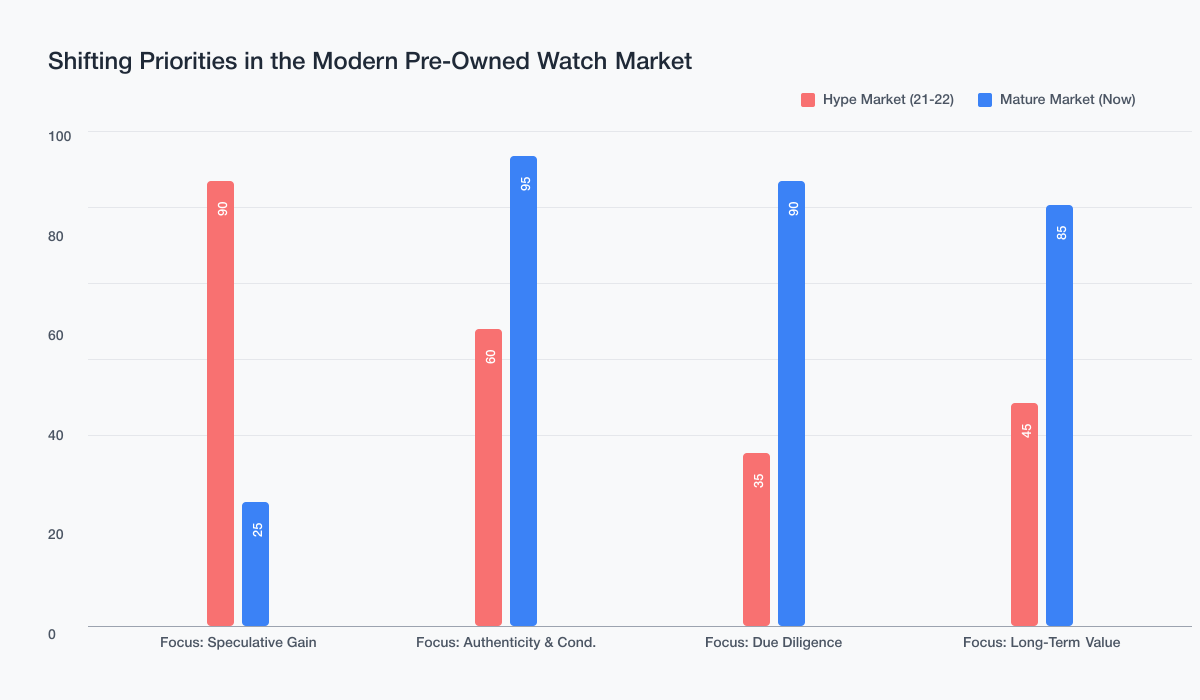
And what's shifted? The whole damn vibe. Back in 2021-2022, everyone thought they were some kind of watch wizard, flipping watches like hotcakes. Pure speculation. "Will this appreciate?" was the only question. But that crazy hype-train? It crashed. And now, the smart money? It's on real stuff. Authenticity. Long-term value. Actually wearing the damn watch. Not just stashing it in a safe, waiting for some unicorn.
Because today's buyers, they're not dumb. You're not dumb. You've done your homework. You know the score. You want transparency. You need verification. So, the old smoke-and-mirrors routine? Doesn't fly anymore. Not even close.
Here's the thing. If you're going to play in this market, you gotta know the questions. You gotta ask 'em, every single time. And these aren't just polite inquiries. They're your shield. Your armor.
Here's the short version, because I know you're busy:
- Authenticity. Is this watch even real? Or some fancy fake?
- Seller. Who is this person or company trying to sell it to you? Are they legit?
- Complete Set. Box? Papers? The whole shebang? It matters. A lot.
- Fair Price. Are you getting ripped off? Or is it a decent deal?
- Long-Term Costs. Maintenance? Repairs? Unexpected headaches?
- Authenticity isn't a nice-to-have; it ’s the bedrock. No legitimate papers, no deal. Period.
- Condition is more than scratches. It ’s what lurks beneath, waiting to empty your wallet for servicing you didn’t budget for.
- The seller's reputation isn't just about good vibes. It's about accountability when things go sideways. And they can.
Condition. What's the actual* shape it's in? Not some airbrushed fantasy.
Right Watch. Does it even fit your wrist, your* life? Stop chasing trends.
This market, it ’s matured. Grown up. And it rewards the smart ones. The ones who do their homework. The ones who ask the tough questions, because that's how you win. You gotta prioritize due diligence over chasing some dumb speculative wave. It ’s not about finding a deal; it ’s about making a smart acquisition.
Question 1: How Can I Be Certain It's Authentic?
Look. I've been in this game too long. Seen too much junk pass for gold. And the simple truth? When you're buying a pre-owned watch, especially a high-value one, you're walking into a minefield. You really are. Because the fakes today? They ’re not just bad copies anymore. They ’re called superfakes for a reason, you know? They can trick almost anyone. Even guys who ’ve spent decades looking at these things. Regularly.
And don't even get me started on 'serial number checks.' Like that's all it takes to prove authenticity? Nah. That's for rookies. Because these guys making the fakes? They're smart. They clone serial numbers. Or they swap parts. So, you need more. Way more.
I'm talking about a full-on autopsy. A deep dive. Look, these expert authenticators —they're practically forensic scientists for watches. They crack open the back (because a real one looks different inside, obviously). They don't just glance. They eyeball the movement. Every single screw. Every gear. The finishing. Because even a microscopic detail, like a subtle difference in metal composition, can blow the whole thing wide open. And the caseback? Those tiny, intricate engravings? They ’re under a microscope, believe me. Even TrueFacet authenticators use things like X-ray spectrometry to really get down to the materials. And the font on the dial? The specific spacing? It ’s gotta be pixel-perfect. Or it ’s a fake. Or at least, a highly questionable one.
But then there's the truly rotten stuff. The Frankenwatches. Yeah, like the monster, stitched together. Some genius takes a genuine case, maybe a real dial, then shoves a cheap, crappy movement in there. Or aftermarket hands. Or a fake crown. Looks fine on the outside, mostly. But inside? A total disaster. A ticking time bomb for your investment. And it kills the value. Destroys it. You might as well just light your money on fire, honestly.
So, when you buy? You gotta demand proof. Serious proof. Not some shaky promise. Not a 'trust me, bro' from some random seller. I'm talking a Digital Authentication Report. Something official. Because without it, you're just gambling. You're playing Russian roulette with your hard-earned cash. And if the seller balks? Walks away? Good. That tells you everything you need to know. Even Similarweb (2026) data tells you this market is full of hidden traps. You can't just trust a pretty face.
Look, your money's on the line. And the only way to sleep at night is with a professional, multi-point authentication. Period.
Question 2: What Is the Watch's True Condition?
You wanna buy a watch. Sure. You glance at it. See some scratches, maybe. Think, "Eh, easy fix." And that ’s where you screw up. Because the real mess, the stuff that kills value? It ’s not always on the surface. Not the light stuff, anyway.
Look, a ding here, a scuff there? Honest wear. It's part of a life lived. But a deep dent? Something that actually crushes the case, maybe near the movement? That's different. That's a repair nightmare. And an immediate red flag. But those are obvious, right? So, you look for the hidden demons.
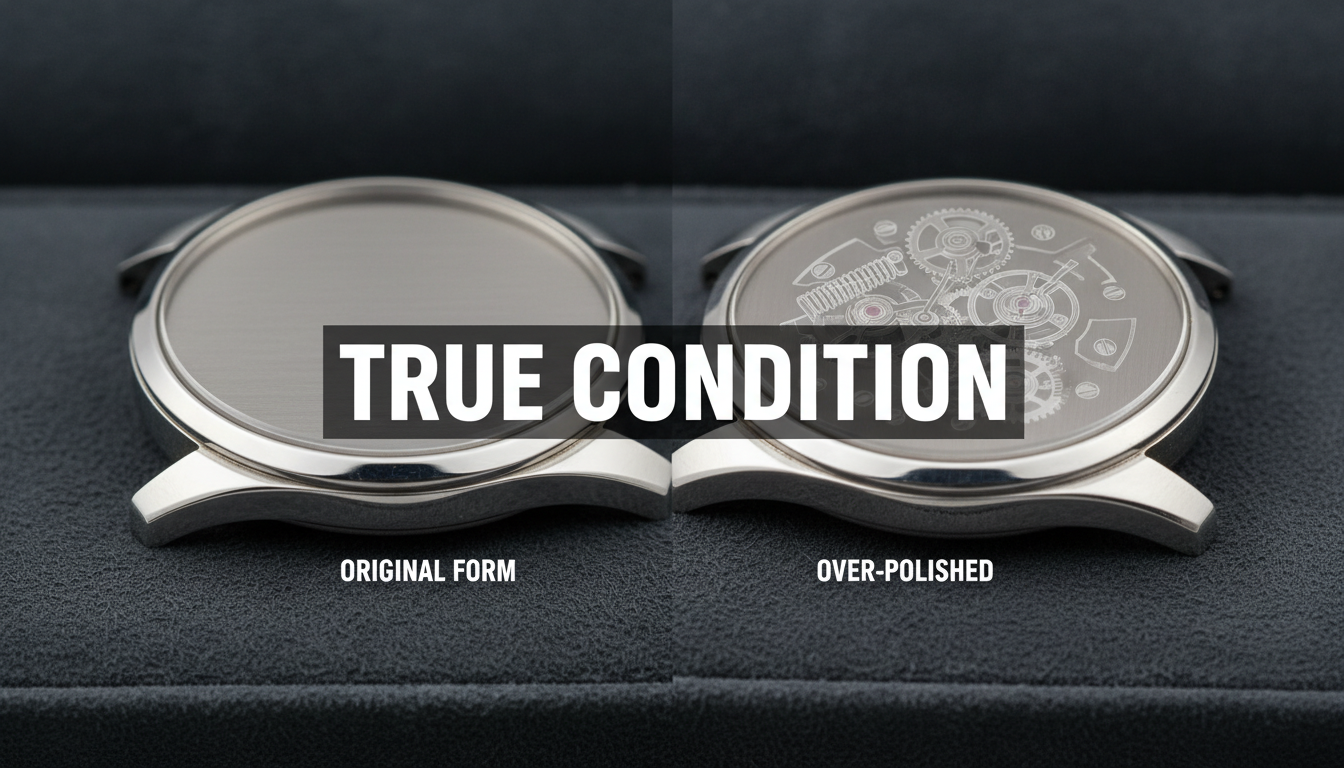
Here's the thing. Over-polishing. It's a killer. A silent one. People try to make an old watch look "new." So they take it to some hack, or even some brand service centers, and they just grind metal off. They remove the original shape, the sharp edges of the lugs (imagine a knife edge, now imagine a melted bar of soap). And once that metal is gone? Poof. It's gone forever. Can't put it back. TrueFacet, they nailed it: 'Over-polishing destroys collectibility.' It's like erasing history. And it wrecks the geometry. That watch? Its value just nose-dived.
But there's more. The inside. The movement. It’s the heart, yeah? And if it's been ticking away for ten years, twenty, without a proper service? You're looking at a time bomb. Or a money pit. Because a watch overdue for service? You’ll be shelling out anywhere from five hundred to maybe fifteen hundred bucks, easy, just to get it running right. Right away. So, always ask. Service history? Timekeeping accuracy? Get the details. Or you're buying someone else's problem.
And don't even get me started on "condition grades." Mint. Excellent. Good. Those are just words, mostly. Everyone’s got their own crazy definition. But on platforms like r/WatchExchange, at least the good sellers, they’ll break it down. "Excellent Pre-Owned." Or "MAJOR signs of usage." They tell you what’s what. You need to read that stuff. Understand what you’re really getting into. It sets expectations. Realistic ones.
So, you see? It's not just the surface. Never is.
A watch’s real worth isn’t skin-deep. It’s about structural integrity, original form, and a healthy ticker. Mess with those, and you've got a paperweight, not an investment.
Question 3: Who Is Selling This Watch?
Alright, you found a watch. Great. But stop. Before you even think about money, you need to ask this. And it’s not just a polite question. It's the whole damn ballgame, because the integrity of what you're buying? It lives and dies with who's selling it. Trust is earned, not given. Especially not in this mess.
Because there are types. Lots of types. You’ve got your private sellers. Some random guy on a forum. Could be great, a true enthusiast. Or, could be a complete scammer, just trying to unload something dodgy. Then there are the "grey-market" guys. Dealers. Some are solid, established for years. Others? Fly-by-night operations, slick websites, zero backup. And then you've got the Certified Pre-Owned (CPO) platforms. Usually more expensive. But they come with some peace of mind. A little less risk, you know?
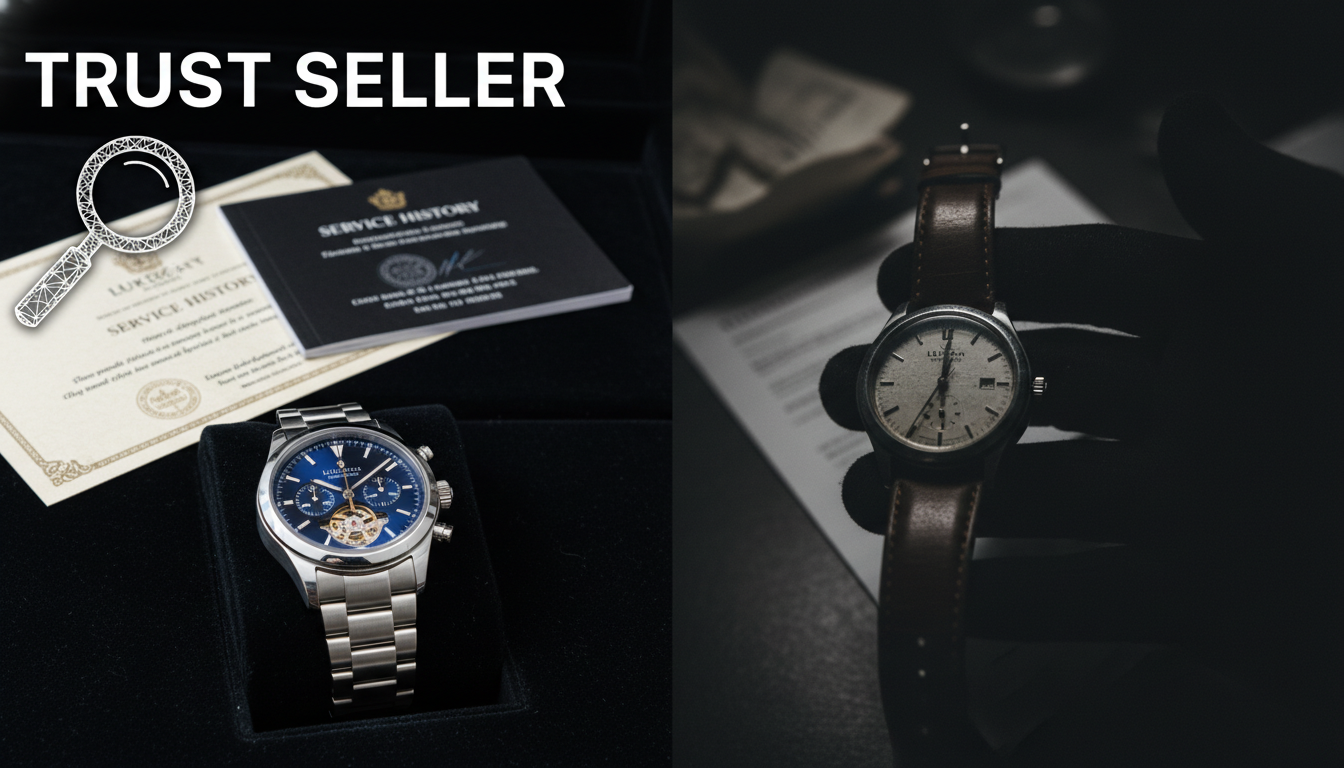
So, how do you sort the wheat from the chaff? You gotta look for signs. Real dealers, the good ones, they lay it all out for you. Transparent histories. Crisp, clear photos —not blurry shots taken in a dimly lit bathroom. And they actually talk to you. Respond to emails. Answer the phone. You can tell. Chrono24, they've got a list of what a legit online retailer looks like. Pay attention to that.
And you must do your own digging. Seriously. Go check online reviews. Go lurk on Reddit's r/Watchexchange. They have this transaction flair system there. Shows you who's done how many deals, how many were good. It's a goldmine for vetting folks. Kettle Club, they talk about all the mistakes people make, and seller reputation? Right at the top.
Red flags? Oh, I’ve seen enough to make you sick. Bad photos. Vague, generic descriptions that could apply to any watch. Or, even worse, they won't jump on a quick video call. Reddit sellers often do a FaceTime to prove they actually have the watch. If someone balks at that? Run. Fast. Because if they ’re not willing to show you proof or documentation, or just answer a straight question, then what are they hiding? Your purchase is only as good as the person standing behind it. Period.
Question 4: Does It Come as a 'Complete Set'?
Alright, you ’ve vetted the seller. You’re liking the watch. Now, we talk about the packaging. And before you roll your eyes, this isn ’t just some collector neurosis. This is money. Real money. So, does it come as a 'complete set'? Because that's the whole damn game.
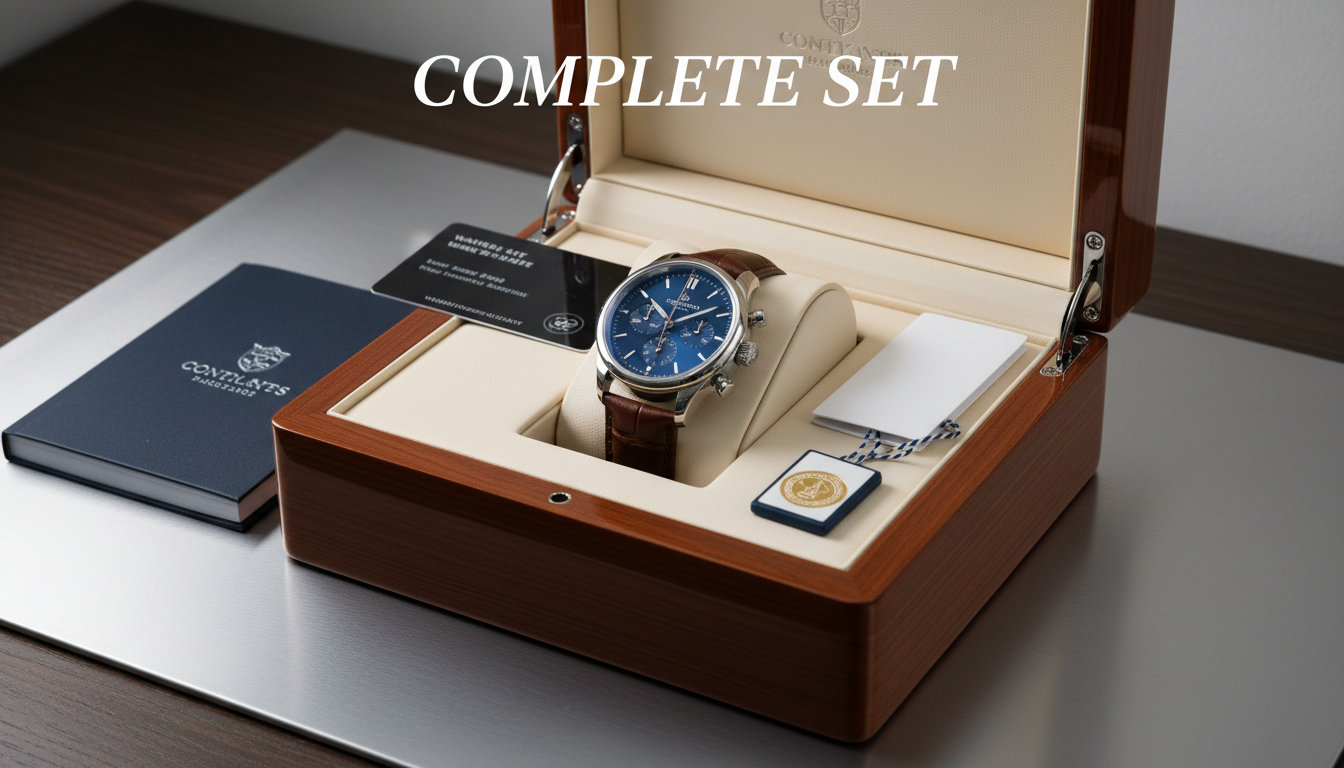
What’s a "complete set"? It means you get the watch, sure. But also the original box. The warranty card. All the little manuals and paperwork that came with it when it was brand new. Every little thing. And you might think, "Who cares about a box?" But you know who cares? The next buyer. And the guy after that. And because they care, it adds real value. TrueFacet says it can tack on anywhere from 10-15% to a watch's resale value. Ten. To. Fifteen. Percent. Just for the damn box and papers. That's crazy, but it's true.
And it’s not just about the numbers. That documentation? It's like the watch's birth certificate. It proves the production year. It confirms the original setup. And it gives you a solid paper trail, a chain of ownership. Which, later on, when you want to sell it? That ’s your ticket to an easy, fast sale. Liquidity, they call it. And it's critical.
Now, sometimes you see a "watch only" deal. Just the watch. No box, no papers. Can you do it? Yeah, you can. But it better be for a steal. A serious steal. We ’re talking 30% or more off the price of a comparable complete set. And you must have it authenticated by someone you trust implicitly. Not your buddy, not some dude on Instagram. A pro. Because without those papers, that watch is harder to move later. It ’s got a question mark hanging over it. So, think hard. And don't cheap out on verification. Reddit listings often spell it out: "Watch Only" or "Watch, Box, eBay Authenticity Card." They do it for a reason. Original box and papers aren't just extra stuff; they're the watch's story, and that story? It's worth real cash.
Question 5: What is a Fair Market Price?
You wanna know what a fair price is? Forget the tags, first off. Ignore the fancy boutique brochures. That ’s just wishful thinking, a fairy tale for newbies. And it’s a total mess out there, trust me. So, look. You need to dig. Seriously dig. Your first stop? Always Chrono24, obviously. But don't stop there. Hit up the auction results too. Recent ones. Because those numbers? They tell you what real people actually paid, not what some dealer hopes to get. Or what a price guide printed three months ago. That’s your baseline. Your ugly truth. You can't just guess; you gotta check the receipts.
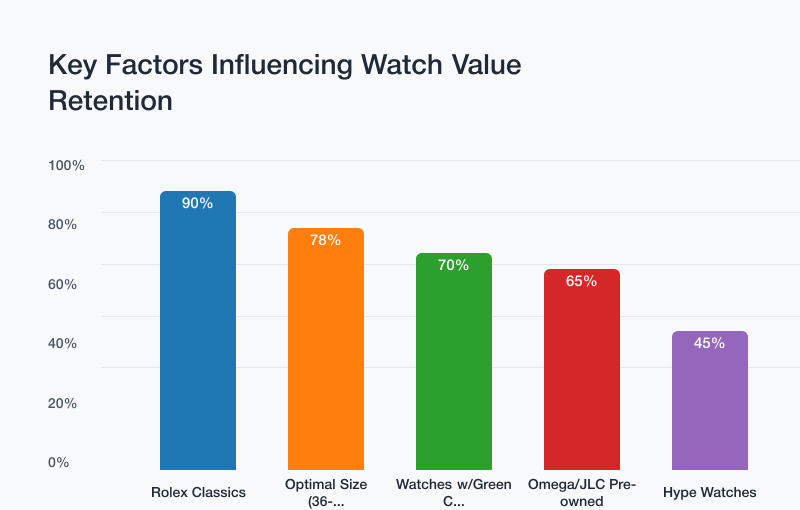
And here ’s the crazy thing: the market changed. It shifted. Hard. All those "hype watches" everyone went bananas for? Yeah, they’re cooling off. Fast. So, people aren't lining up to pay double for some trendy piece that just dropped last year. But what does sell? Stuff with real staying power. Total classics. Think Rolex Submariner. Or that Tudor Black Bay 58. They just keep moving. Because people want a safe bet. Something they know they can actually sell later, without taking a bath. Liquidity, you know? That's the game now. Don't chase fads; stick to the legends.
But size matters. A lot. Always has, always will. And right now? Everyone's looking for that sweet spot, that 36mm to 40mm range. It just fits better. Looks better. On more wrists, too. So, it's easier to move later. But if you're rocking something huge? Or super tiny? Good luck. The data proves it. Watches in that 36-40mm zone? They hold their value. Better. Have stronger liquidity, too. And you want to save some cash, right? Many Reddit collectors, they'll tell you they snag pre-owned Omega or JLC pieces for 20-50% off retail. So, don't pay full price for something that won't hold up. Get the right size, or you're stuck with it.
And get this —there’s even a "green" premium. Yeah, I know. Weird, right? But watches with documented sustainable creds? They ’re pulling in an extra 5-8% on the resale market. It's a thing. Because buyers are actually starting to care about that stuff. And you can't fake it. But if you ’re thinking pure value retention, some things are just bulletproof. Specific Rolex models, for example. They consistently hang onto 85% or more of their value. So, you can buy smart. Or just get ripped off. It’s up to you, really. This market rewards smart buyers, not suckers.
Question 6: What Are the Long-Term Ownership Costs?
Here's the thing about a fancy watch. You pay for it. Big money. But that’s just the ticket, kid. Just the cover charge. Nobody tells you about the real costs down the road. Because luxury mechanical watches? They ’re like a high-maintenance trophy wife. They need regular attention. Not just a quick polish. Real servicing. Every five, maybe ten years, if you ’re lucky and don't bash it around. Or it just stops working right. It slows down. The gears gum up. A mess.
And what does that "attention" cost you? A chunk. A solid chunk. We're talking $500 to $1,500 for a standard service, according to TrueFacet. More if it's some crazy, complicated model. Way more. And if you wait too long? Then it's a full-on repair job, not just a service. So, you need to ask. You need to demand the watch's service history. Has it been to an authorized center recently? That ’s good. That adds value, peace of mind. But if not? Buyer beware.
Or worse, maybe you buy something, and then no one can even fix it properly. Because some brands have terrible service networks. That watch? Its long-term value just tanked. Nobody wants a beautiful paperweight. Kettle Club even lists "Neglecting Maintenance Costs" as a top mistake. This isn't a one-and-done purchase. It's a commitment. Factor it in.
Question 7: Is This the Right Watch for Me?
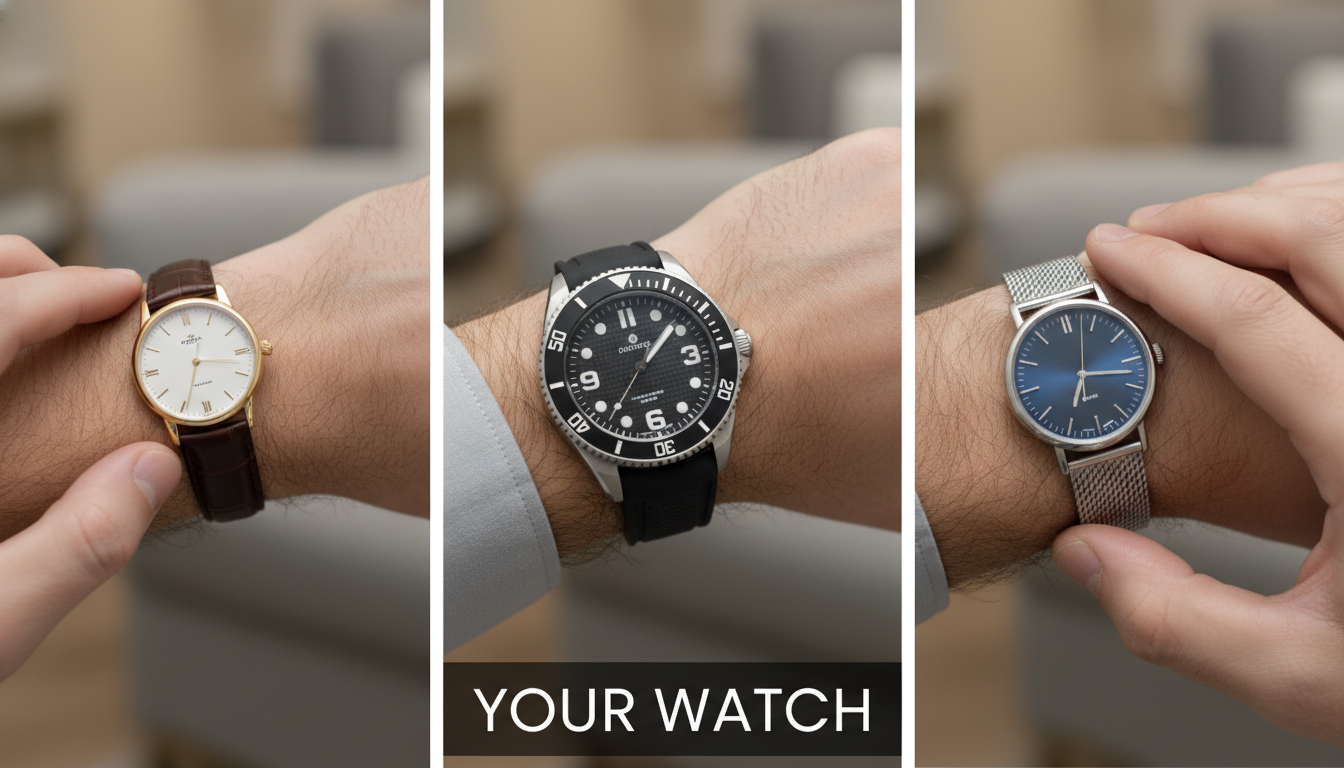
Forget what the forums are screaming about. Or what some influencer is flashing. Yeah, resale value is a thing. Important. But is it the only thing? No. Not for a luxury watch. Because you ’re the one wearing it. You're the one looking down at it, every single day. So, does it actually fit your life? Your style?
Does it work with your office clothes, or your beat-up weekend jeans? Or is it just a hype piece you bought because everyone else said to? Look, Reddit collectors get it. They say, "Buy the watch that you love and gets your adrenaline going, don ’t buy the watch that everyone tells you to get." And they're not wrong. Because if you don't connect with it, if it just feels... wrong... then it doesn't matter what its "investment potential" is. You wasted your money. And your time.
So, here's what you do. Try them on. Different styles. Different sizes. See what feels right on your wrist. TrueFacet says buy with confidence, not speculation. Kettle Club emphasizes balancing investment with enjoyment. You gotta like it. You gotta love it. Stop chasing trends. Find your watch. Wear it. Enjoy it.
So, you’re still with me. Good. Because if you came here looking for an easy button, you ’re in the wrong place. Buying a pre-owned luxury watch isn't like grabbing a new gadget. It ’s a hunt. And the market, for all its shiny allure, is a minefield if you don’t know where to step.
You don't just want a nice watch. You want a smart buy. And that means kicking the tires, looking under the hood, and grilling the seller until you ’re satisfied —or you walk. Always walk if you're not sure. There ’s always another watch.
Here’s the straight dope:
It ’s a jungle out there. But with your eyes open, and a healthy dose of skepticism, there are treasures to be found. Just don’t get sentimental. This is business.
Get it right. Or, find someone who already has their system buttoned up, one that actually guarantees what they sell. Because in this game, certainty isn't cheap. But neither is ignorance.
