

The Evolution of Iconic Watch Designs: A Century of Timeless Masterpieces
The Stellaris Journal
Alberto Santos-Dumont. A pioneering aviator. High above the ground in his plane, circa 1904, he found himself in a predicament: both hands occupied with the controls, yet he needed to check the time. His solution? A custom-designed wristwatch. A crucial instrument, not a mere adornment.
This was the genesis. A practical exigency. Yet, consider where we stand today. Watches have transcended their utilitarian origins, evolving into powerful statements, and in many cases, outright wrist-worn artistry.
Forget the ubiquitous marketing jargon of 'game-changers' and 'unparalleled craftsmanship.' We're delving into genuine design – the innovations that endured, defined eras, and continue to tick (literally) for decades, influencing every subsequent development.
In this piece, we'll dissect a century of that evolution, tracing its path from the battlefield to the boardroom. We'll uncover precisely why certain designs aren't merely 'good,' but true masterpieces.
From Battlefield Necessity to Boardroom Statement: The Birth of the Wristwatch
Let's be clear: no one was clamoring for a watch strapped to their arm. Pocket watches, while somewhat cumbersome, served their purpose adequately. You'd retrieve it, check the time, and pocket it again. Then came World War I – a brutal, chaotic conflict. Suddenly, those pocket watches became liabilities. Fumbling with a chain was impractical, if not outright perilous, whether in the trenches or mid-flight.
A critical problem demanded a real solution. Alberto Santos-Dumont, the aforementioned aviator, recognized this acutely. He approached Cartier, and in 1904, they developed the Cartier Santos – the first purpose-built men’s wristwatch. Its design wasn't driven by aesthetics, but by the necessity of flight, ensuring the wearer could read the time with both hands on the stick.
Then came the absolute chaos of the trenches — a pivotal moment in horological history that every passionate luxury watch dealer and collector understands as the true birth of the wristwatch. Officers and soldiers desperately needed instant time synchronization for attacks, movements, and strategic pauses. So, they improvised, strapping small pocket watches to their wrists. These makeshift, often crude devices became the WWI Trench Watches — the earliest ancestors of the pre-owned high end watches that command extraordinary premiums in today's market. Existing movements were fitted into rugged cases with added lugs, creating simple, yet absolutely indispensable timepieces that laid the foundation for everything the modern pre-owned luxury watch market stands upon. It is a heritage that reputable high end watch dealers and serious collectors never take lightly — because understanding where these timepieces came from is inseparable from understanding why they matter today. You won't find this kind of historical depth at a casual second hand watch shop; it is the domain of those who treat horology not merely as commerce, but as culture. This was not a fashion statement; it was a matter of survival — and that story of purpose and precision is precisely what the finest high end watch dealers carry forward with every piece they authenticate and place.
Following the war, as is often the case, societal norms shifted. Soldiers returned home, retaining the convenience of wrist-worn timepieces. What began as a military necessity rapidly permeated civilian life, becoming a symbol of modernity and forward-thinking. Similarweb (2024) data even indicates this dramatic post-war shift, showing a sharp decline in pocket watch sales as wristwatches gained widespread adoption. What started as a life-saving tool evolved into an everyday essential. The wristwatch wasn't a whimsical invention; it was an innovation born of dire necessity, then wholeheartedly embraced for its profound convenience.
The Golden Age of Tool Watches: When Form Followed Function
The 1950s. A pivotal era, not for its cultural trends, but because watches began to transcend mere time-telling. They evolved into specialized tools, meticulously engineered for specific tasks, and they excelled in their roles.
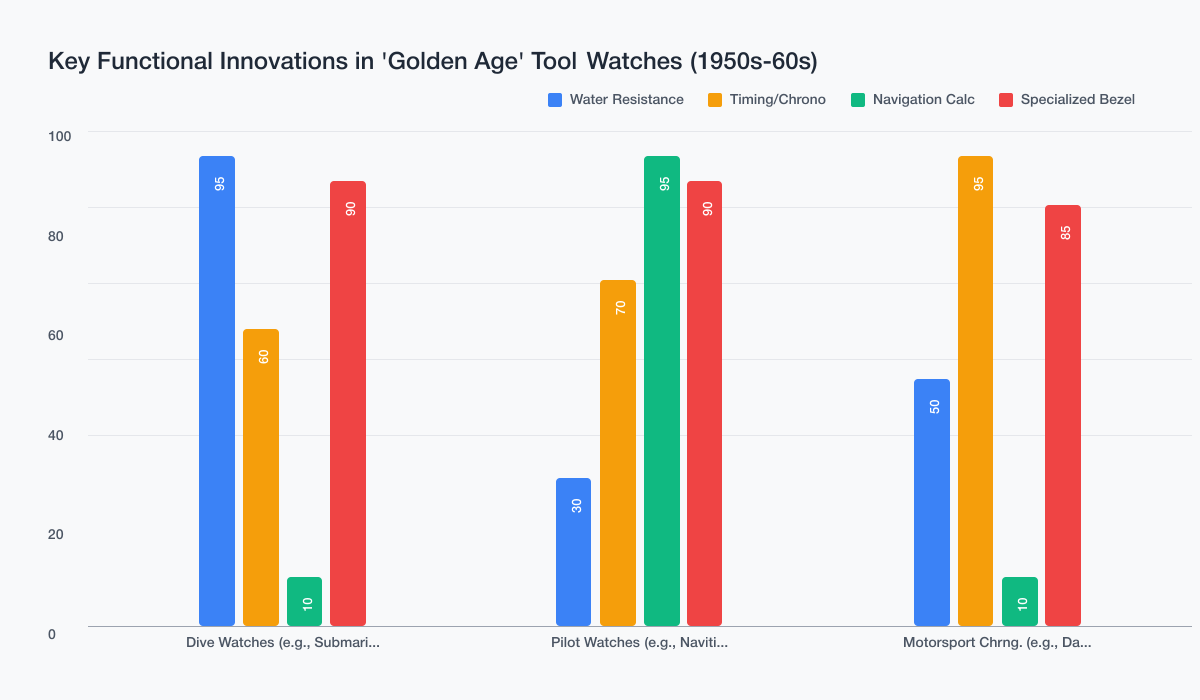
Consider the needs of a diver venturing into the deep. A watch capable of withstanding immense pressure was non-negotiable. This demand birthed icons like the Blancpain Fifty Fathoms in 1953, quickly followed by the Rolex Submariner in the same year. These were not delicate accessories; they were robust instruments built for the unforgiving ocean. Crucially, they introduced the unidirectional rotating bezel – a simple yet life-saving innovation allowing divers to track elapsed dive time without accidental resets. Set it, and you knew your remaining air.
For the serious aviator, beyond a simple time display, precise calculations of fuel, speed, and distance were paramount, especially in the heat of flight. The Breitling Navitimer (1952) emerged as the answer, featuring a complex slide-rule bezel – essentially a wrist-worn computer. While requiring skill to operate, it became indispensable for pilots who swore by its utility. Such dedicated engineering was clearly not designed for mere aesthetics.
Motorsports, too, demanded split-second timing and absolute precision. The Omega Speedmaster (1957) and Rolex Daytona (1963) were chronographs born on the track. Their tachymeter scales, integrated directly onto the bezel, enabled on-the-fly speed calculations. Every component of these watches served a specific, demanding purpose; they prioritized accuracy and function above all else. The most enduring designs weren't conceived in boardrooms; they originated where real-world action demanded ingenious solutions.
The 1970s Design Revolution: Steel, Audacity, and the Luxury Sports Watch
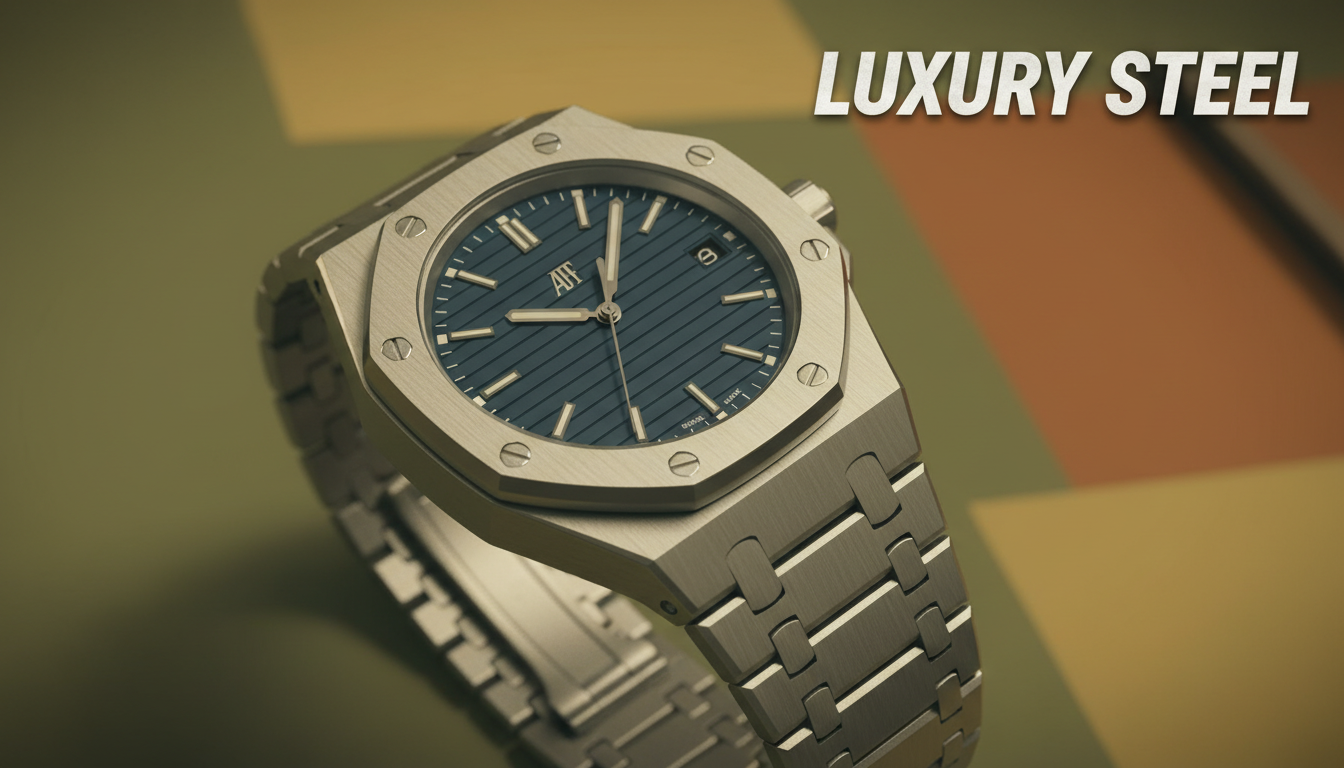
The 1970s. An era of upheaval, from oil crises to bell bottoms, and for the Swiss watch industry, a precarious period. The industry, complacent in its traditions, was caught off guard until a series of audacious designs fundamentally reshaped its landscape. Enter Gérald Genta, who didn't just disrupt the status quo; he redefined it.
Yet, it wasn't solely Genta. It was a perfect storm. The Audemars Piguet Royal Oak debuted in 1972, a shock to the industry. A stainless steel watch, dubbed the 'Jumbo' at 39mm (then considered enormous), it commanded a price tag that rivaled or even exceeded many gold watches. Luxury in steel? Many believed AP had lost its way. But it worked, forging an entirely new category: the luxury sports watch. Previously, one wore a dress watch with a suit or a tool watch for active pursuits. This new breed blurred those lines.
What defined these groundbreaking designs? Subtlety was not the aim. Integrated bracelets, for instance, were no longer mere attachments but seamless extensions of the watch case. Case shapes abandoned traditional roundness for bold octagonal or even more unconventional geometries. The Royal Oak Ref. 5402, with its distinctive bezel and exposed screws, openly displayed elements previously hidden – an industrial aesthetic that, unexpectedly, achieved elegance. It was a complete inversion of design conventions.
Why this radical shift? Why the audacity? The answer lay in the looming threat of the Quartz Crisis. Seiko had introduced its Astron in 1969, offering unparalleled accuracy at a fraction of the cost. Suddenly, meticulously hand-finished mechanical watches appeared slow, antiquated, relics of a bygone era. The Swiss industry faced an existential threat. Their response was a bold gamble: an embrace of steel as a luxury material, a defiant statement screaming, "We are not just accurate; we are art!" It wasn't about out-telling quartz on time, but about delivering a powerful horological statement. This strategy proved so successful that even Patek Philippe, a bastion of tradition, launched its own Genta-designed steel marvel, the Nautilus Ref. 3700, in 1976, followed by the IWC Ingenieur SL. Similarweb (2024) data continues to highlight the enduring market influence established by these designs decades ago. The 1970s demonstrated that audacious design, not just precious metals, could save an industry on the brink, proving the transformative power of "ugly-beautiful" steel.
The Mechanical Renaissance: Complications and Craftsmanship Reborn
The 1990s heralded an unexpected resurgence of interest in mechanical watches, a remarkable turnaround after the quartz revolution had flooded the market with billions of cheap, accurate plastic timepieces. Suddenly, collectors yearned for the intricate gears, tiny springs, and the tangible authenticity that only a mechanical movement could offer. The quartz onslaught had brought traditional watchmaking to the precipice, a near-death experience that profoundly reshaped its future.
In response, brands like Patek Philippe didn't just survive; they thrived by doubling down on extreme horology — a resilience that continues to define the pre-owned luxury watch market to this day. They pushed the boundaries of complexity, reintroducing and perfecting perpetual calendars, chronographs, and often combining them in breathtaking ways — a tradition Patek had pioneered with masterpieces like the Ref. 1518 in 1941, but which now felt like a declaration that no quartz movement could ever replicate. These were no longer just watches; they were miniature, incredibly complex engines that any knowledgeable luxury watch dealer will tell you represent the absolute pinnacle of horological achievement. Enthusiasts and serious collectors of pre-owned high end watches were willing to pay handsomely for these intricate, beautiful, and utterly unnecessary mechanisms — and the demand reverberating through established high end watch dealers and auction houses confirmed it. Today, these complications remain among the most aggressively sought references in any reputable second hand watch shop or dealer network, precisely because quartz watches simply couldn't replicate such artistry — and never will. It is this enduring, irreplaceable craftsmanship that continues to drive appreciation across the high end watch dealers who specialize in these exceptional timepieces.
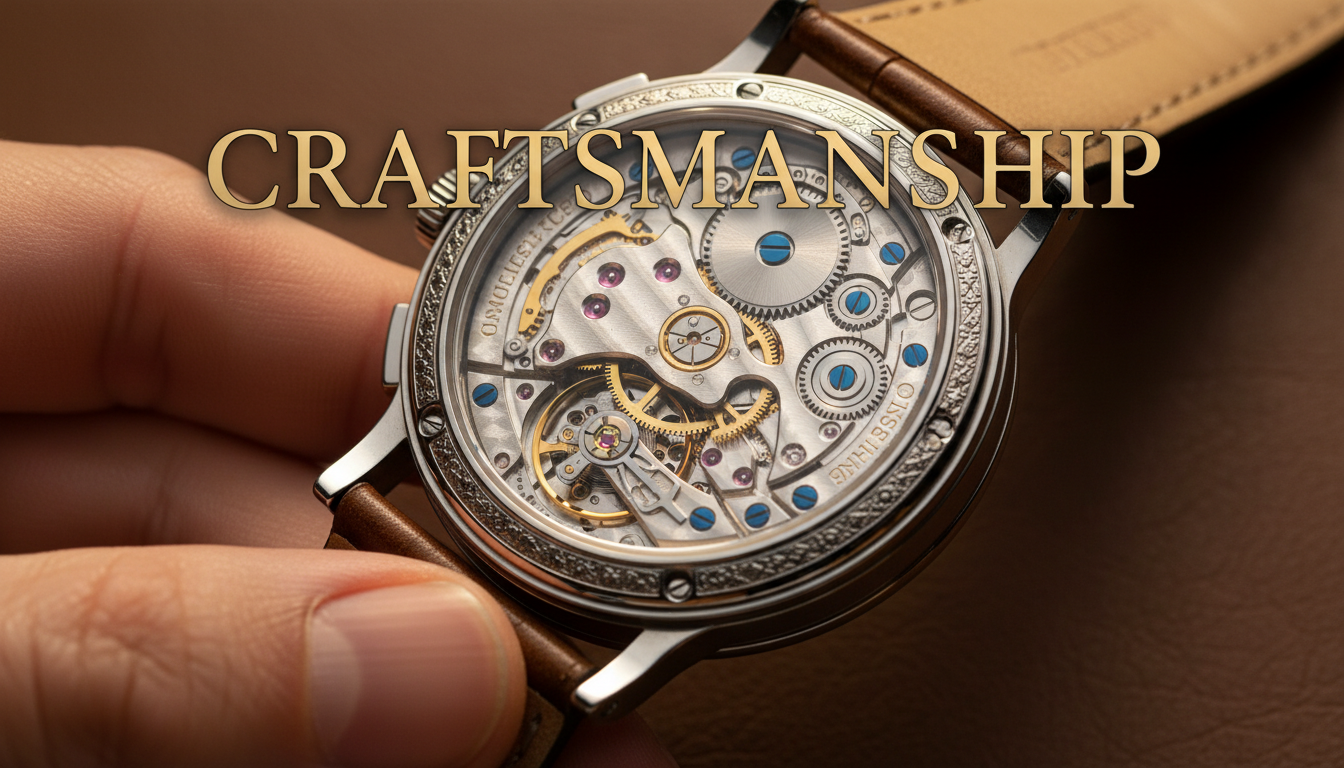
Meanwhile, a phoenix rose from the ashes in Germany: A. Lange & Söhne, re-launched in 1994. Their debut, the Lange 1, with its distinctive oversized date window and off-center dial, instantly conveyed a blend of German precision and an elegance that boldly declared their return. The focus wasn't just on showcasing fancy complications, but on revealing the meticulous how behind their creation, leading to the widespread adoption of the open case back.
Owners could now visibly admire the movement's finishing, the intricate polishing, and the mesmerizing dance of tiny components. The watch's reverse transformed into a private artistic exhibition, a key selling point that elevated mechanics from purely functional to exquisitely beautiful. This era also saw the emergence of independent watchmakers like F.P. Journe, who pushed creative boundaries even further, as the market increasingly desired art and soul alongside accurate timekeeping. The Quartz Crisis, though a near-fatal blow, ultimately forced the industry to rediscover its soul, prioritizing artistry and complex craftsmanship over mere utility, a shift that captivated discerning customers and continues to define the market today.
21st Century Fusion: Where Material Science, High Fashion, and Heritage Converge
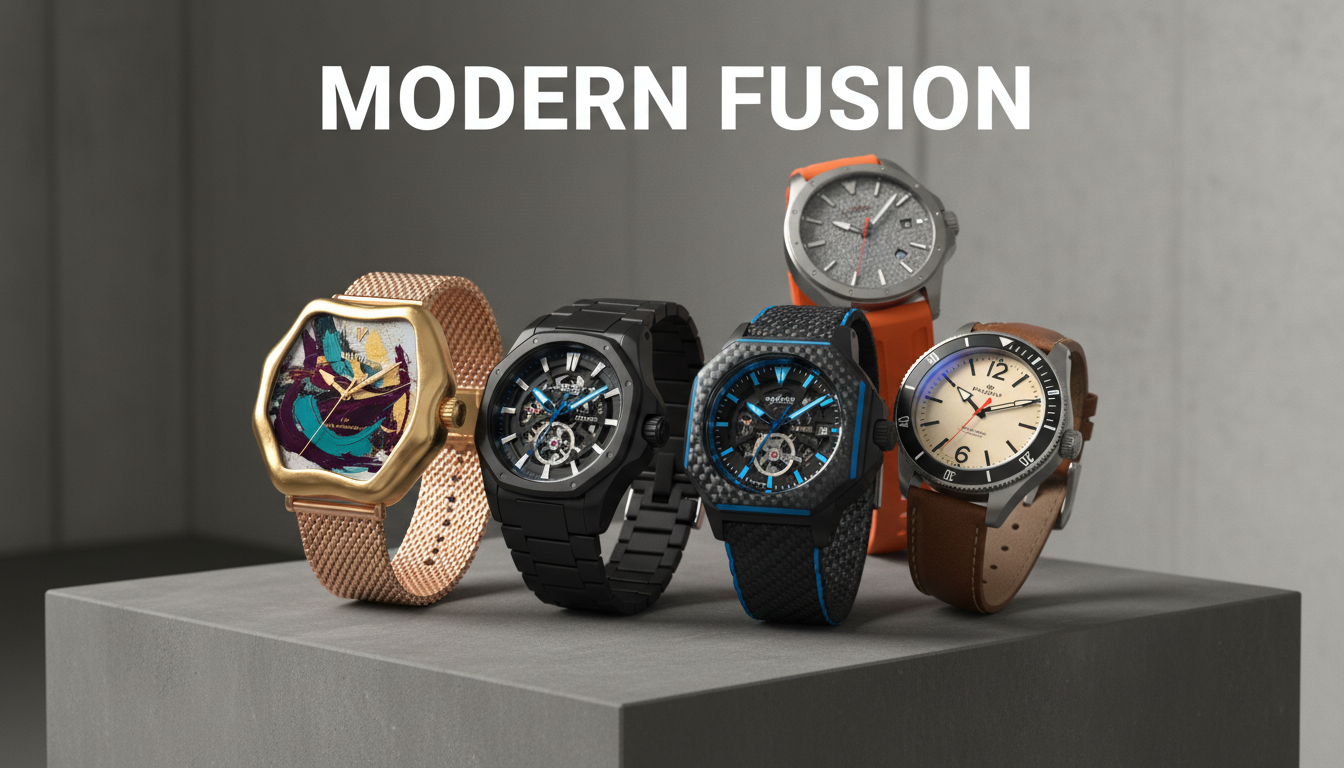
If the 70s felt audacious, today's watch market is a glorious, beautiful, and utterly exhilarating free-for-all, where virtually every concept is fair game.
First, consider materials. We’ve moved far beyond your grandfather's steel (though it remains a stalwart). Today's horology embraces ceramic cases (think the iconic Chanel J12), ultra-light titanium, futuristic carbon fiber, and even transparent sapphire, revealing every internal mechanism. Brands like Hublot, with their Big Bang line, have built empires on fearlessly experimenting with every conceivable material, pushing design boundaries far beyond Genta's original vision by enabling technically impossible forms and aesthetics. The focus is now on novelty, lightness, and avant-garde visuals.
But that’s not all. High fashion houses, once content to merely license their logos for generic quartz pieces, have evolved into serious horological players. Chanel, Hermès, and Louis Vuitton now develop their own movements (Chanel notably invested in Kenissi and launched its Caliber 1). Hermès, for instance, produces poetic complications like the Arceau L’Heure de la Lune, displaying moon phases in two distinct locations. These are not mere accessories; they are genuine timepieces, injecting a distinct, conceptual artistry into the horological landscape.
Then there’s the pervasive trend of vintage reissues. This strategy resonates because it delivers nostalgia and classic aesthetics without the complications (and service costs) of actual vintage pieces. Tudor’s Black Bay Fifty-Eight, a modern interpretation of 60s and 70s Submariners, has achieved immense commercial success. Longines similarly delves into its archives, reviving iconic designs with modern movements to create instant classics. This taps into a consumer desire for familiarity, heritage, and a tangible connection to the past, while still offering contemporary reliability.
This dynamic confluence ensures that a modern watch can be anything: a high-tech instrument, a kinetic work of art, a nostalgic callback, or all of the above simultaneously. It’s a diverse, multi-faceted market, brilliantly designed to appeal to every conceivable buyer. Similarweb (2024) data decisively underscores the overwhelming market dominance of these multifaceted design approaches. The 21st-century watch market thrives on a dynamic fusion of cutting-edge materials, high fashion influence, and cherished heritage, catering to an increasingly diverse and demanding clientele with unparalleled innovation and artistry.
*
This isn't some deep philosophical trek. It's about watches. And how they became more than just a way to tell time.
The entire trajectory – from Santos-Dumont needing free hands to today's tech-infused luxury statements – screams not just evolution, but primarily adaptability. That's the core. The market dictates, technology enables, and designers... well, the good ones respond with genius.
Here’s the straight dope:
- It started with a job. A pilot, a soldier, a diver – they needed a tool, not a bauble. That necessity birthed the wristwatch, no frills attached.
- Then came the shifts. Wars, economic booms, cultural earthquakes like the 70s – each left an indelible mark on what we strapped on. Steel became king. Movements got thinner. Audacity sold.
- And the legends? They weren't just pretty faces. They were statements, milestones. Proof that solid engineering wrapped in smart design isn’t a fleeting trend; it’s horological bedrock.
Trends come and go. Real design sticks. That’s the brutal truth. The innovations that mattered a century ago, the pieces that defined eras? Many still hold their weight, and then some. Because function, wrapped in genuine character, always wins.
So, next time you're looking at a watch, don't just see a dial and hands. See the history. See the engineering. And then ask yourself: is it just pretty, or does it have the guts to last? If you're serious about what actually holds value, what stands the test, you need to know the difference. There are places that do.
