

Craftsmanship Unveiled: The Making of Bespoke Jewelry
The Stellaris Journal
Most folks hear 'bespoke jewelry' and picture some stuffy atelier, velvet ropes, and prices only oligarchs can stomach. Pure garbage, that idea. (Because it is.) It's not about being rich. It ’s about being particular.
This whole gig? It's a partnership. Your story. Our hands. Not some off-the-shelf trinket. We're talking about making a piece of your life tangible.
So, forget the mystique. We're ripping back the curtain. This isn't just buying something. It's building an heirloom. A proper one. And I'm gonna show you exactly how it works. Every single step. Explore our gallery to see the final results.
The Bespoke Jewelry Journey: A Summary (TL;DR)
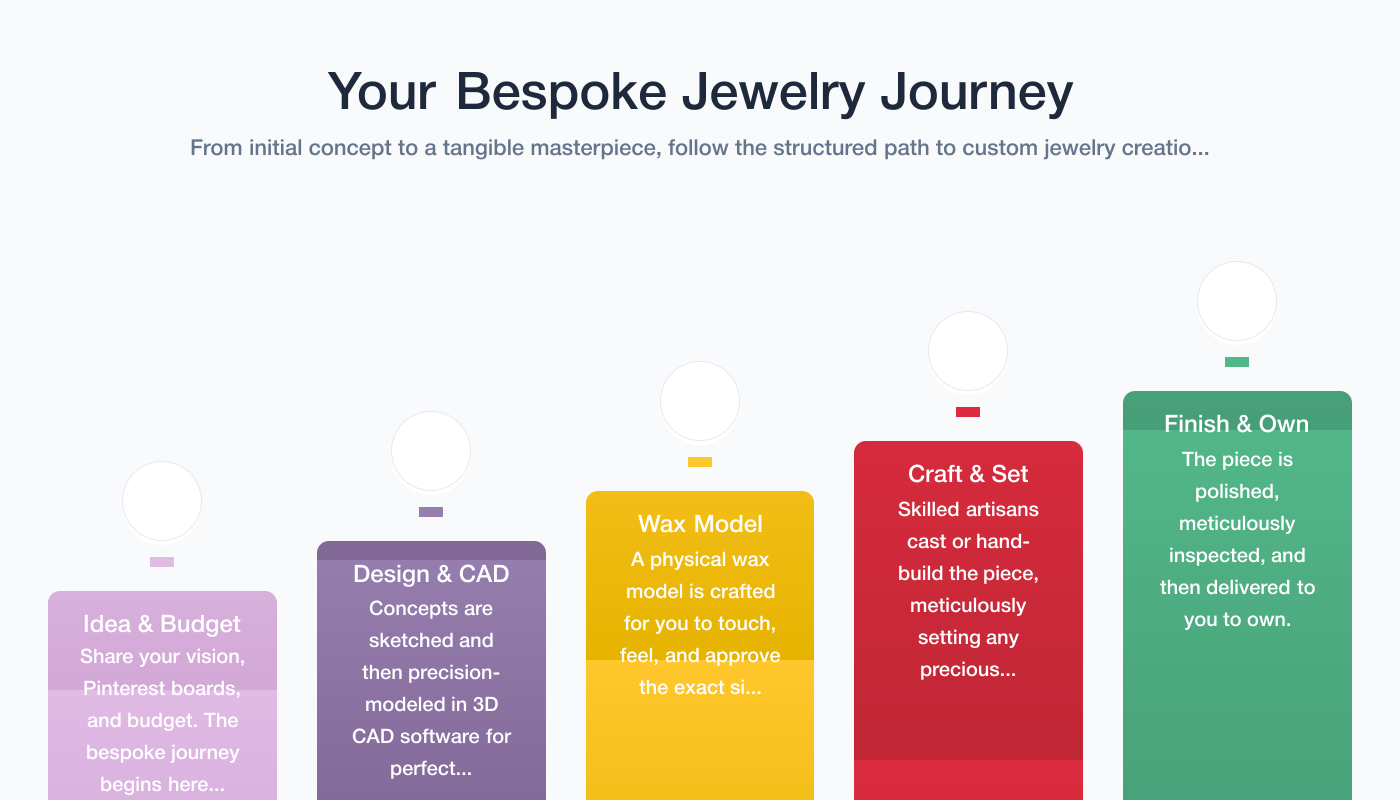
Got an idea stuck in your head for some custom bling? And you just want to see it happen? Look, this ain't magic. It's a messy, but necessary, process. And you gotta get through it.
So, first up: we talk. You tell me what you're seeing, what you're trying to achieve (maybe show some weird Pinterest boards). And, yeah, your budget. Because that matters. Then, we take all that crazy talk and put it on paper. Hand sketches. Or, more likely, we throw it into some fancy 3D software (CAD, they call it) to make those perfect digital models. Because details. You need them.
Next, a wax model gets made. Physical, right there in your hands. So you can feel it, see the size, before we melt any precious metal. After that? The real work. Artisans (that's what we call them) cast the actual piece. Or, they build it by hand. Setting stones? A nightmare, sometimes. But they get it done. And, finally, it's polished. Finished. We scrutinize it. Because nobody wants a screw-up. It's a structured journey, yeah, weeks of it. But it turns your vision into something real. A tangible piece of art, or just a really expensive fix.
You own the whole damn thing.
Step 1: The Blueprint - Design Concepts and Wax Modeling

You had a chat. Talked about "feelings" and "vibes." Cute. But now? Now it gets real. This is where your vague ideas turn into something you can actually see. Something you can approve. Or, more likely, something you'll send back for a few rounds of painful edits (it happens). It’s the transition from airy concepts to solid reality. A necessary step.
So, they start with sketches. Yeah, pencil and paper. Still a thing. Captures the "artistic essence," they say. And sometimes it does. Gives the initial idea, a starting point. But good luck wearing a sketch on your finger. And frankly, a sketch can hide a lot of bad ideas.
Then, they bring out the heavy guns. Computer-Aided Design. CAD, for short. And this ain't no MS Paint. It's where the real precision kicks in. They build a digital model. A 3D one. Lets you spin it around on a screen, pinch and zoom. See the damn thing from every angle, really dig into the details. Before they start chopping up actual metal. You get a photorealistic preview (finally!). No more guesswork. Or at least, less guesswork. Because you still need to feel it. Even Similarweb (2026) shows that people bounce from sites without these clear visuals. They need proof.
So, next? They 3D-print it. In wax. A tangible, to-scale prototype. This is it. The actual thing, in your hand. You can hold it. You can put it on. And this wax model? It's your last goddamn chance. Seriously. To pull the plug. To change your mind.
Because this isn't just a fancy show-and-tell. It's the critical step. You check the size. Does it feel right on your finger? Is it gonna slide off your hand at the worst possible moment? Or feel like a dumbbell? You test the comfort. Does that edge dig in when you bend your finger? Will it annoy you every single day? What about the proportions? Does it look balanced from all sides? Or just … chunky and off? This hands-on review session. It’s your moment to ensure the vision truly translates. Your one opportunity to catch the screw-ups before they become permanent. Or ridiculously expensive to fix. You will ask for changes. Often. Because the design will evolve. It always does through a few iterations. It ’s expected.
And once you're satisfied (or just tired of looking at it, I get it), you sign off. On that wax model. That's your final approval. The blueprint. The exact, precise guide for casting in actual precious metals. And don't forget, they'll usually want a non-refundable deposit right then. Like 50%. Standard practice. Because after this, there's no going back without a lot of pain.
That wax prototype? It's your final word. Don't sign off until it's exactly what you want. Or you're stuck with it.
Step 2: Forging the Form - Casting and Fabrication
Basics of Lost Wax Casting - Under 20 Minutes
Alright. So, you got your wax model. (The one you probably tweaked a dozen times.) What now? We melt it. No, not that simple. We turn that delicate wax into something solid. Metal. This is the real deal. And it’s a messy process, believe me. You need the right kind of heat. And the right eye for the pour. This is where your design actually starts to become physical.
We ’re talking about lost-wax casting here. Ancient stuff. Really old. And for good reason. It’s how you get crazy detail. Pure precision, that’s what it delivers. You start with that approved wax baby. Then, it gets buried. Encased in this plaster-like gunk. A mold. Because you need a blueprint for what's next. A container. No mold, no metal. Simple as that.
But why "lost-wax"? So, we bake it. We heat the whole damn thing up. And the wax? It just melts away. GONE. Evaporated. Leaving a perfect cavity inside that plaster mold. A void. It’s genius, really. Or, like, basic physics. Whatever. Then, we pour. Molten metal. Super hot stuff. Gold, usually. Yellow, white, rose – you pick your poison. Or platinum. That's for the serious players. Tough stuff, platinum. Real durable. Some folks stick with silver, though. And that ’s fine. All good choices. But the metal? It fills every tiny crevice. Every detail. It just does. This ancient method still delivers unbelievable accuracy.
And then? It cools. It solidifies. Quickly. This forms the bones of your piece. The actual structural foundation. But it’s not done. Not even close. You get a raw, rough form. Like a baby fresh out of the oven. A metal baby. Ugly. So, an artisan, a real pro, steps in. They trim the excess. All that sprue and flashing. Little bits you don't want. They refine it. Clean it up. It takes patience. A lot of it. And a steady hand. Because one wrong move … And it’s back to square one. Or a really expensive scrap pile. The raw form needs a lot of clean-up. A lot.
But hey, casting isn't the only way to skin this cat. Some designs? They just don't want to be cast. They fight it. So, you go a different route. Hand-fabrication. This is where real craft shines. Because it’s all hands-on. Directly shaping the metal. No molds. No melting wax out. Just metal. And tools. Saws, hammers, torches. Pliers. You know, the stuff you actually imagine when someone says "jeweler." Sometimes, you just gotta hit it with a hammer.
Why do some people go this route? Control. Pure control over the final design. A total artisan thing. You can hand-carve wax, sure, but with fabrication, you're forging. You're hammer-texturing. It makes for unique stuff. Truly one-of-a-kind. Because you ’re manipulating the metal itself. Directly. You ’re shaping, bending, joining. It's a slower dance, often. More deliberate. And maybe a bit more personal for the maker. You get a feel for the metal. And you see exactly where all the work went. Hand-fabrication gives you the ultimate say in the final shape.
So, you choose. Replication through casting? You get intricate designs, yeah. Or the direct artistry of fabrication? That’s for the weird, unique stuff. But the goal’s the same. To make that damn thing real. And solid. And ready for whatever comes next.
Step 3: The Unveiling - Final Inspection and Delivery
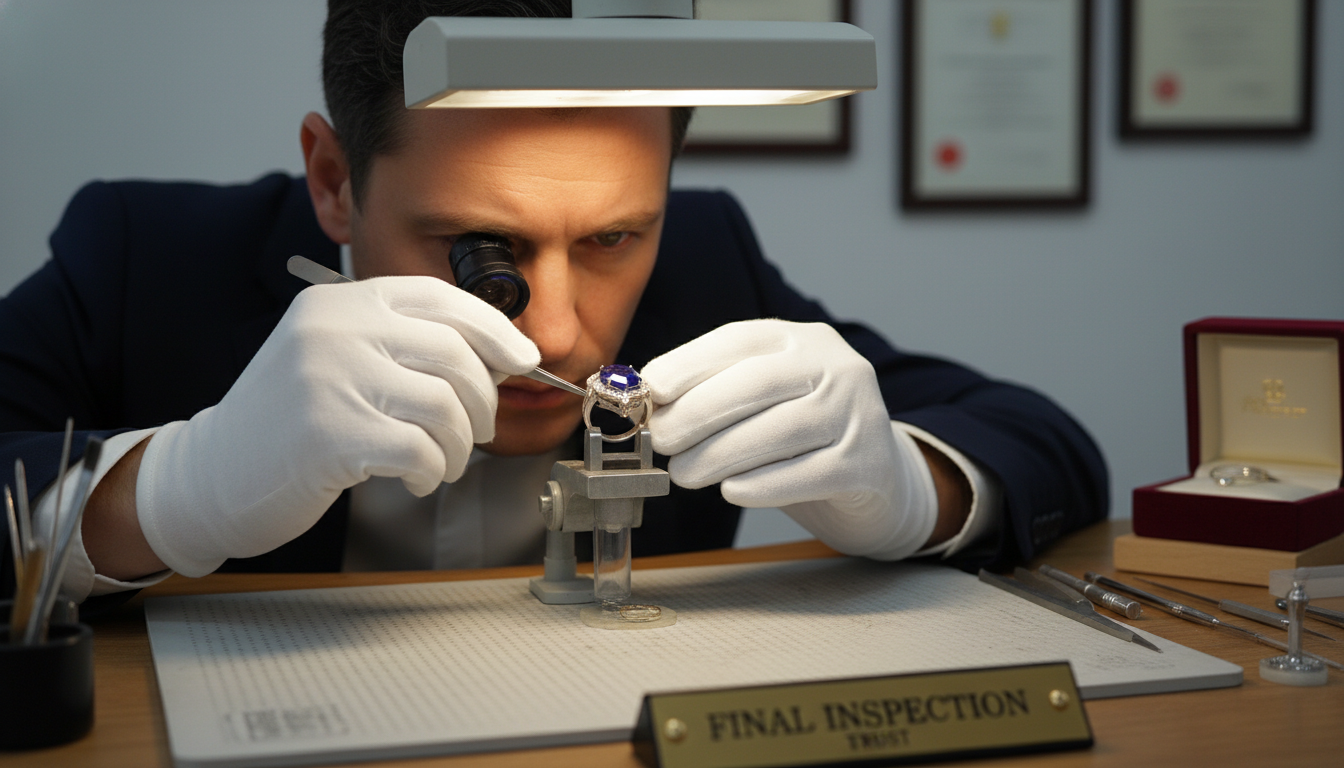
Alright. So, it's almost done. Almost. You think the hard part's over? Nah. This is where we catch the screw-ups. Or don't. That's the difference, right? Every single piece, it goes under a microscope. Literally. Using magnification tools, I’m talking a deep dive, we carefully inspect every single facet. Every curve.
And this isn't some quick glance. No way. This is the last stand. Stones? Better be locked down tight. Like a safe. No wobblers. Or it's back to the bench. Metal joints? Gotta be solid. You don't want your heirloom falling apart on the red carpet. Or the grocery run. Polish? Flawless, goddammit. You paid good money. And comfort? So many pieces look great but feel like a medieval torture device. We check that. It needs to fit you. Because it's yours now. Your thing.
So, the call comes. Good news. Your custom piece is ready. And when you finally collect it, it's more than just a shiny thing. You get the roadmap. The actual instructions. How to keep it looking good. How to keep it from turning into junk. Because, let’s be real, you’re not gonna know how to clean this stuff right. And then there's the paper. Oh, the endless paper. You’ll get your insurance appraisals. Crucial. And gemological certificates (GIA, if your rock ’s big enough to actually deserve one). Proof. For your peace of mind. And for your accountant, probably.
But here’s the thing. It doesn't stop there. Good jewelers? The ones worth their salt? They stick with you. Many offer complimentary annual cleaning. And inspections. Because taking care of your fine jewellery will ensure it can be enjoyed for generations to come. It’s not just a transaction. It's a commitment. From both sides. And if you’re smart, you'll take them up on it. Years of peace. Or a quick repair before it becomes a disaster.
Because the real value isn't just in the piece. It's in the trust. And the long haul.
Frequently Asked Questions
What's it gonna cost you?
Nobody charges extra for the design bit here. Not us. That's part of the deal. So, the real cost? That comes down to what you actually want. Materials, mostly. What metal you pick, the stones you're after. And yeah, how much of a pain in the ass the actual work is. You want some crazy intricate filigree? More shop time. More money. But here’s the thing, you can tell us your budget. So we design within your requirements. Don't hide it. Be upfront. Don't pay for thin air; pay for the rock and the metal, pure and simple.
How long does this whole song and dance take?
Look, it’s bespoke. So it’s not instant coffee. Typical wait? Four to ten weeks. Things take time. Your design might be a monster. Or maybe we gotta chase down some weird, obscure gemstone halfway around the world. (It happens more than you think.) It depends. So, patience. You want it right, right? Expect a wait, but expect it done right.
No idea what you want?
That's fine. Honestly. Most people don't. Or they think they do, then they see something else. So, you talk to us. It’s just a chat, a consultation. We figure out your style. Your vibe. Because you may want guidance on design and materials. We'll show you things. Different stones, different cuts. What works, what doesn't. We've seen it all. Just come in with an open mind. We'll pull the design out of your head, even if you don't know it's there.
Your grandma's old gold? Or that weird little sapphire you found? Can you use your own stuff?
Totally. And yeah, we do too. It adds something, doesn't it? A bit of history. Saves you a few bucks on materials, maybe. But sometimes that old gold needs refining. Or the stone needs a recut. So it's not always just a swap. But yeah, we try. It's about that sentimental value. Pure emotional currency. Your past can be part of your future; we can make it happen.
So, custom versus bespoke. What’s the difference, really?
Because people toss those words around like they mean the same thing. They don't. Not exactly. Bespoke? That means we start from scratch. A blank page. Just for you. Your crazy idea, our hands. Custom? Sometimes that's just tweaking an existing design. Changing a stone, maybe. A different finish. But it's not truly yours from the ground up. It’s a subtle distinction. But it matters. Bespoke is you, from idea to reality. Custom is just a little nudge.
Even with all the options out there, all the flashy sites promising the world (Similarweb (2026) probably tracks how many minutes people waste clicking through that junk), you still gotta talk to a human. So talk to me. Get real answers. Don't sit there wondering. Pick up the phone. Or send a message. Ask.
Get off the fence. Start your journey today; your piece isn't gonna design itself.
Okay, so you’ve walked through the workshop, virtually speaking. The whole dance, from napkin sketch to final polish. Bottom line: bespoke isn't some ethereal, unreachable luxury for the bored elite. It's a grind. A methodical, often finicky process. Requires a sharp artisan. And a client who can actually articulate a vision.
Here’s what matters, really:
- That four-to-ten week timeframe isn't some marketing gimmick. It’s the absolute minimum needed to translate a flicker of inspiration – your story, your vibe – into tangible metal and stone. Forget "express delivery" here. Doesn't exist.
- You ’re not just commissioning. You're collaborating. Your input, your quirks, your personal history – that’s the raw material. And getting that right, that ’s usually the trickiest part of the whole damn thing.
- The "value," the real juice of it, isn't in the material cost alone. It’s in the hours. The obsessive attention to detail. The hand that carefully beds each gem, the endless polishing cycles until it glows. That's the real investment.
Truth? A genuine bespoke piece isn't just an accessory. It’s a story told in metal. A tangible fragment of your personal history. Something built to last generations, not just seasons. And that kind of permanence? It demands time. Precision. No rushing it.
Now, if you're serious about creating something that actually means something – if you're ready to stop browsing and start building – you need a partner. Someone who prioritizes the craft over the quick buck. Someone who understands this isn't just about selling a shiny object, but executing a complex vision. Find that kind of maker. Or, seek out a trusted intermediary known for transparent processes and reliable execution. (Because frankly, a lot of players in this game are all sizzle, no steak.)
