

Vintage vs. Modern Luxury Watches: A Collector's Dilemma
The Stellaris Journal
The allure of a 'mint' vintage timepiece can be captivating, yet the reality often strikes harder than the glossy advertisements suggest. A friend once invested heavily in such a piece, only for it to fail within a week, demanding significant additional investment for repair. This common scenario underscores that the vintage vs. modern debate isn't merely about aesthetic preference; it's a critical reality check on your expectations and finances. Do you seek a piece of history on your wrist, fully understanding the implications for ongoing maintenance and cost? Or do you simply desire a reliable watch that functions flawlessly, day in and day out, free from unexpected complications? We are committed to providing you with the unbiased pros, cons, and essential facts, empowering you to make an informed decision rather than a costly sentimental error.
Navigating the choice between vintage and modern watches demands a clear-eyed assessment of reality over romantic ideals.
Vintage vs. Modern: Choosing Between History and High-Tech
The pre-owned luxury watch market has experienced explosive growth, with Similarweb (2024) reporting billions in transactions. This surge has elevated the decision between a vintage and a modern timepiece beyond a simple purchase, transforming it into a significant debate between heritage and contemporary innovation.
Vintage watches, typically defined as twenty to thirty years old or even pre-1980s, represent an era of distinct watchmaking philosophy. As Patek Monger aptly noted, these pieces 'prioritized restraint, proportion, and longevity,' crafted not for fleeting trends but for enduring value and a unique sense of timelessness. The "Quartz Crisis," highlighted by The Journal of Antiques, inadvertently catalyzed the vintage market, turning older mechanical watches into coveted symbols of authentic craftsmanship.
In stark contrast, modern watches are engineered for precision and durability, leveraging advanced technology and contemporary materials. Influenced by global demand and social media trends, modern timepieces are designed for immediate visual impact and cutting-edge performance, often prioritizing bold aesthetics and robust functionality.
The choice then becomes clear for anyone navigating the pre-owned luxury watch market: Vintage offers unparalleled character, unique narratives, and potential long-term appreciation, albeit with significant commitments to maintenance, part sourcing, and specialized servicing — factors that experienced luxury watch dealers will always walk you through before any acquisition. Modern watches, readily available through established high end watch dealers and reputable second hand watch shops alike, provide unwavering reliability, superior convenience, and consistent performance, yet often come with a substantial initial cost and can sometimes lack the deep historical resonance found in their older counterparts. For serious collectors of pre-owned high end watches, this tension between vintage romance and modern pragmatism is one of the most personal decisions in the hobby. Ultimately, there is no universally "best" option. As Gray and Sons accurately advise, the ideal choice "best aligns with your lifestyle, tastes, and long-term goals" — and the best high end watch dealers understand this implicitly, guiding buyers toward pieces that reflect their individual journey rather than simply chasing market trends.
The decision between a vintage and modern watch is a deeply personal one, balancing the allure of historical narrative with the demands of contemporary functionality.
The Allure of Vintage: A Story on Your Wrist
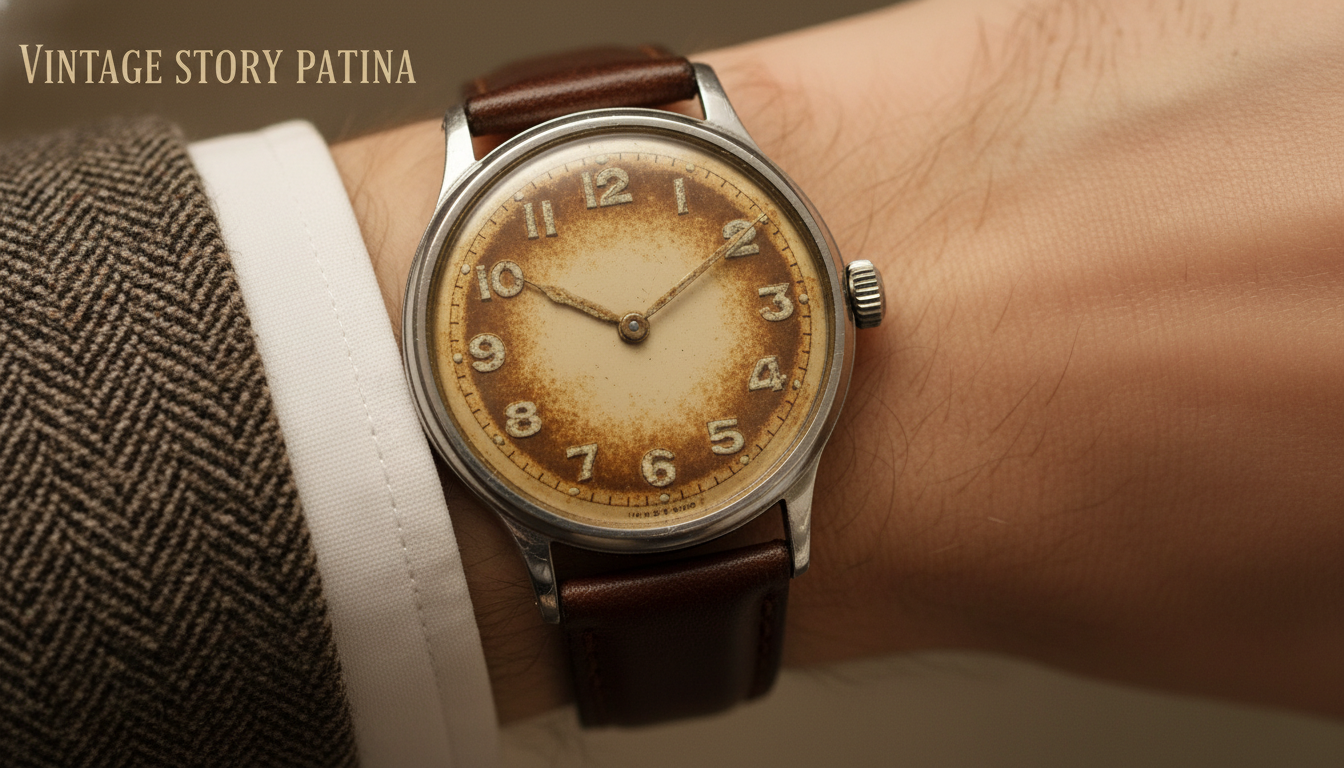
Beyond the relentless marketing of new releases, lies the profound soul of vintage timepieces. These are not mere sterile objects but artifacts that have genuinely lived, their every scratch, every trace of faded lume narrating a unique history. Patina on a dial is not a flaw; it is character, a testament to its enduring journey, much like an old friend bearing the marks of a well-lived life.
This inherent uniqueness extends to exclusivity. While modern watches are often mass-produced, vintage pieces frequently originated from limited runs or are no longer manufactured, making them genuinely rare. Owning a piece from the past offers a distinct sense of possessing something few others can access
—a tangible piece of history. As Gray and Sons affirm, you hold something truly unique, a natural conversation starter, or a subtle acknowledgment from those who appreciate its heritage. Your vintage watch is singularly yours.
Financially, a well-preserved vintage watch from a reputable brand can represent a sound long-term asset. While the value retention of new watches can be inconsistent, discerning collectors recognize the investment potential in quality vintage pieces. A Reddit user, discussing neo-vintage Omega, highlighted their 'incredible value for money and fantastic wearing experience with thinness that seems to be elusive for them now.' This illustrates that smart investment seeks true quality, which the market often rewards.
Finally, consider the elegance of size. Modern watches frequently feature oversized cases, often exceeding 40mm, designed for overt display. Vintage timepieces, however, typically range from 34-38mm, embodying a philosophy of understated elegance. Patek Monger's observation about their 'design language' is accurate: they sit gracefully on the wrist, sliding effortlessly under a cuff, commanding attention subtly rather than clamorously. Applied indices, distinctive fonts, and subtle aging all contribute to a classic aesthetic that ensues, offering a timeless sophistication absent in today's trend for bulkier designs.
Wearing a vintage watch is more than just telling time; it is embracing a story, a tangible connection to the past, and a piece of genuine artistry. Indeed, a good vintage watch is tangible proof that some things truly do improve with age.
The Owner's Guide to Vintage: Maintenance, Risks, and Rewards
While the romantic appeal of a vintage watch
—its history and distinctive patina
—is undeniable, prospective owners must understand that this is not a casual purchase. It signifies a substantial commitment, involving potential expenses and considerable logistical challenges.
Foremost among these is maintenance. Vintage mechanical movements, with their intricate gears, springs, and accumulated decades of wear, require specialized and regular servicing. Locating a qualified watchmaker adept at restoring these delicate relics is critical, as a substandard repair can prove more detrimental than beneficial. As Forbes emphatically warns, service costs can 'cost you more than the watch did,' and this necessity arises every three to five years. Neglecting this crucial upkeep invariably leads to performance degradation or complete failure.
Sourcing authentic parts presents another significant hurdle. Many original components are long obsolete, making replacements scarce and exorbitantly priced. Preserving the originality of critical elements
—the dial, hands, bezel, and crown
—is paramount, as their integrity directly impacts the watch's value and authenticity. Compromise here diminishes the very essence of the vintage piece.
Durability, when applied to a fifty-year-old timepiece in the pre-owned luxury watch market, is a relative term. Unlike modern watches readily available through contemporary high end watch dealers, vintage pieces were not engineered to withstand modern standards of water resistance or shock absorption. Daily wear, accidental bumps, or even minor moisture exposure can cause irreparable damage — a reality that any honest luxury watch dealer will disclose upfront before a vintage acquisition. This is particularly critical for buyers of pre-owned high end watches, where the emotional and financial stakes of damage are considerably higher than with a standard purchase. A Reddit user's cautious handling of his grandfather's vintage Submariner, specifically avoiding any water exposure, highlights the constant anxiety associated with these older movements — a sentiment echoed by professionals across every reputable second hand watch shop that handles vintage inventory. Many of these movements were simply not designed for the conditions of daily modern life, which is precisely why sourcing vintage pieces through knowledgeable high end watch dealers — ones who can accurately assess a movement's current condition and serviceability — is absolutely essential.
Finally, the vintage market is notorious for authenticity challenges. It is rife with fakes, outright copies, and "Frankenwatches"
—assemblies of disparate parts designed to mimic genuine articles. The existence of "entire underground industries" for forged documentation, as Forbes reports, underscores the necessity for extreme vigilance. The Journal of Antiques' advice to "buy the seller" is particularly relevant here; a reputable seller, such as those curated on platforms like The Stellaris Collection, is your best defense against inadvertently acquiring a compromised or inauthentic timepiece. Ultimately, acquiring a vintage watch is less a simple purchase and more an immersion into a complex puzzle, a calculated gamble, and an ongoing commitment. The romance of vintage ownership is best enjoyed with a full understanding of its inherent realities.
The Case for Modern: Precision, Durability, and Peace of Mind
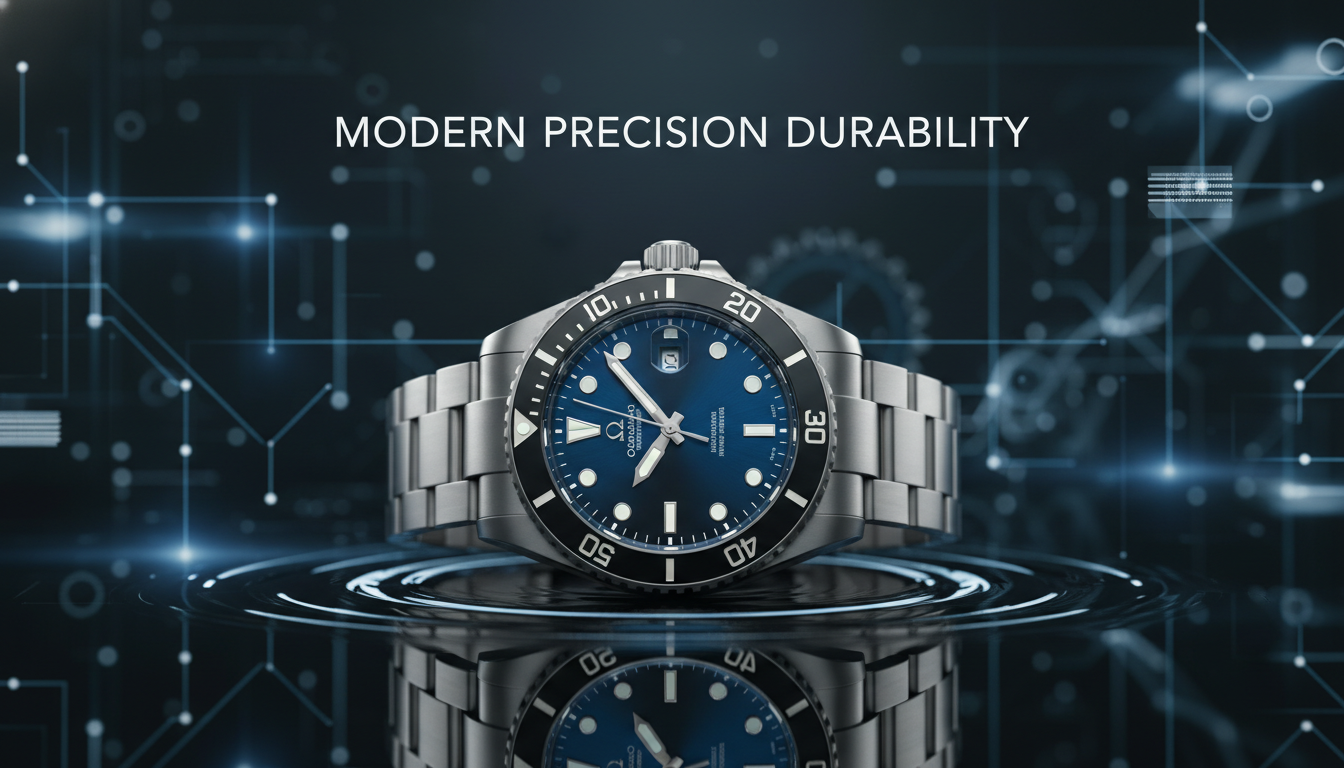
Dispense with romanticized notions of "heritage"; the truly impressive quality in a timepiece is consistent, flawless performance. This is precisely what a modern luxury watch delivers: uncompromising functionality without the associated complications.
Contemporary horological technology represents a significant leap forward. Computer-aided design and advanced manufacturing processes ensure that modern watches are assembled with unparalleled precision, resulting in a level of reliability virtually unattainable in older pieces. As The Watch Pages asserts, new watches incorporate 'the most up-to-date materials' to achieve superior accuracy and steadfast reliability. For those seeking a truly "set it and forget it" experience, modern is the definitive answer.
Beyond precise timekeeping, modern watches are engineered to withstand the rigors of an active, contemporary lifestyle. The materials alone speak volumes: scratch-resistant sapphire crystals, highly durable ceramic bezels
—almost impossible to scratch
—and advanced high-tech alloys. These innovations mean modern timepieces are built to endure, as Gray & Sons observes, they "handle daily wear with ease" and require significantly less frequent servicing. Reduced workshop time translates directly to more time on your wrist, fulfilling the fundamental purpose of ownership.
Moreover, features like robust water resistance and sophisticated shock protection are now standard, not premium upgrades. Modern watches are designed to accompany you through swimming, sports, and everyday accidental impacts, continuing to perform flawlessly. A Reddit user, comparing a modern Steinhart to an older Omega, underscored the "quality-of-life upgrades" evident in contemporary designs, including superior clasps and ceramic bezels, all optimized for today's dynamic world
—watches built for use, not just admiration.
Crucially, modern acquisition through a trusted luxury watch dealer brings unparalleled peace of mind. Whether new or certified pre-owned luxury watch sourced from a reputable dealer, you receive a complete package: original box, papers, and often an extensive warranty, typically five years or more — a standard that distinguishes professional high end watch dealers from casual or unverified sellers. This comprehensive assurance means any (rare) issues are covered, offering a level of security virtually absent in the vintage market and increasingly difficult to find outside of established second hand watch shops with formal certification processes. You are investing in a definitive solution, not inheriting a potential problem — a distinction that buyers of pre-owned high end watches from accountable, professional sources understand implicitly. Modern watches sourced through reputable high end watch dealers are engineered for superior performance, built for lasting durability, and provide an unmatched sense of ownership peace of mind that no private, unverified transaction can replicate.
Modern Watch Drawbacks: Size, Soul, and Depreciation
Despite the marketing fanfare, a new luxury watch should rarely be considered an investment in the traditional sense. Its value typically depreciates significantly the moment it leaves the boutique, mirroring the immediate loss incurred when driving a new car off the lot, a fact candidly noted by The Watch Pages. This immediate devaluation means you are left with an expensive item that is instantly worth less than its purchase price.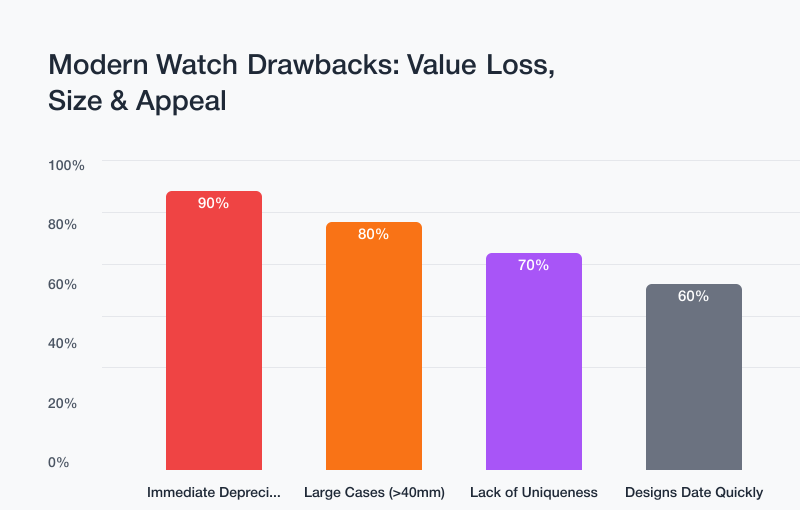
The trend towards oversized cases is another prevalent drawback. Many modern timepieces, often exceeding 40mm, can feel disproportionate and cumbersome on the wrist. As discussions on Reddit frequently highlight, after experiencing the balanced proportions of vintage pieces, some find modern divers can feel "fugly," clunky, and prone to catching on clothing.
Furthermore, the notion of "soul" is often elusive in high-volume modern luxury production. While vintage watches carry a tangible history and unique character embedded in their very imperfections, newer models can feel less distinctive. Patek Monger differentiates this by noting that modern designs prioritize "Design Impact", contrasting sharply with vintage pieces that embodied "Design Longevity." This distinction often results in modern watches feeling less unique and special than their handcrafted predecessors.
Finally, rapid design cycles contribute to quicker stylistic obsolescence. What is popular today can quickly become dated tomorrow, unlike true classics that maintain their timeless appeal. This accelerated turnover means you are not only experiencing financial depreciation but also a quicker fading of the watch's stylistic relevance. Ultimately, opting for a modern watch often means accepting a premium for immediate value depreciation and a more transient aesthetic appeal.
The Decision Framework: Which Watch Is Right for You?
The journey to choosing your ideal timepiece
—vintage or modern
—culminates in a personal reflection of your priorities, lifestyle, and values. There is no universally 'correct' answer, only the decision that aligns best with your specific needs.
If your heart yearns for a unique story, an undeniable connection to history, and the quiet satisfaction of owning a rare artifact, a vintage watch might be your calling. You must, however, be prepared for a commitment that includes specialized maintenance, the challenge of sourcing original parts, and an acceptance of its inherent fragility. The reward is a piece with unparalleled character and potential for long-term appreciation, provided you navigate the market wisely.
Conversely, if your primary demands are unwavering precision, robust durability, and complete peace of mind, a modern watch sourced through a reputable luxury watch dealer stands as the superior choice within the pre-owned luxury watch market. It offers cutting-edge technology, resistance to daily wear, and comprehensive warranties — standards that established high end watch dealers enforce rigorously across every piece they certify and sell. Unlike a private purchase or an unvetted second hand watch shop, buying modern through a professional dealer frees you entirely from concerns about authenticity or immediate mechanical failure. While you might forego some historical gravitas associated with pre-owned high end watches and face some immediate depreciation, you gain a reliable, high-performing instrument designed for today's world — backed by the accountability and expertise that only trusted high end watch dealers can consistently deliver.
Consider your budget not just for the initial purchase, but for the full lifecycle of ownership. Evaluate your tolerance for maintenance, your desire for a statement piece versus a daily driver, and your personal appreciation for either historical narrative or technological advancement. The ultimate choice rests on a transparent assessment of your lifestyle, financial capacity, and emotional connection to the art of watchmaking.
Frequently Asked Questions About Watch Collecting
What constitutes a "vintage" watch?
While definitions can vary, a watch generally qualifies as vintage if it is at least twenty to thirty years old, often much older. This designation is less about a mystical age and more about distinguishing it from contemporary production, frequently implying a different set of ownership considerations and potential challenges.
Can watches be a reliable investment?
Approaching watches purely as investments is fraught with significant risk. As Forbes and numerous other experts consistently advise, the watch market is highly speculative, and most watches will not yield substantial financial returns. Instead of chasing quick profits, prioritize acquiring timepieces that genuinely appeal to you for their craftsmanship and personal significance.
How can I avoid scams when buying vintage watches?
The vintage watch market can be a minefield of fakes and misrepresented pieces. Due diligence is paramount: meticulously research serial numbers and movement details, and insist on high-resolution photographs. Crucially, consult with reputable experts, not just online forums. As The Journal of Antiques emphasizes for new collectors, "buy the seller"
– a trustworthy vendor is your most important safeguard against acquiring a compromised or inauthentic watch.
What are good vintage brands for a first-time buyer?
For those embarking on their vintage watch journey, it's wise to start with accessible and well-documented brands. Avoid the high-end "grail" pieces initially, as these carry greater risk. The Journal of Antiques recommends brands such as Seiko, Hamilton, and Longines, which offer excellent value, reliable movements, and a robust secondary market for parts and information. These brands provide an ideal entry point for learning without undue financial exposure.
How often do mechanical watches require servicing?
Mechanical watches, both vintage and modern, are intricate machines that require regular maintenance to ensure accurate timekeeping and longevity. The Journal of Antiques recommends professional servicing every three to five years for most mechanical movements. It's essential to budget for these periodic service costs, as neglecting them will inevitably lead to decreased accuracy and potential mechanical failure.
This section aims to provide straightforward answers to common questions, cutting through the hype to offer actionable insights. Educate yourself, purchase with genuine appreciation, and understand that instant financial gains are rarely the reality in watch collecting.
*
The enduring debate between vintage and modern timepieces ultimately boils down to a deeply personal reconciliation of expectations and realities. There is no simple choice, only an informed one that aligns with your specific desires and capacity for ownership.
Consider this essential framework:
- A vintage watch offers unparalleled charm, a tangible narrative on your wrist, and distinctive character. However, this comes with the commitment of meticulous upkeep, potential complexities in sourcing parts, and the risk of significant repair costs. The rewards are a truly unique possession and, for the astute collector, the possibility of substantial appreciation.
- A modern watch delivers superior precision, robust durability, and effortless convenience. Yet, it typically incurs immediate depreciation, similar to a new vehicle, and for many models, the initial resale value diminishes quickly. You gain predictable reliability and fewer surprises, but often at the expense of historical gravitas.
- The pivotal question remains: What is your primary purpose for this watch? Is it a strategic investment, a dependable daily wear, or a cherished display piece? Your honest answer to this will unequivocally dictate your optimal path.
This choice is akin to selecting between a meticulously restored classic automobile requiring specialized, ongoing care and a brand-new, high-performance daily driver. Both fulfill the function of transport, but their ownership experiences and overheads diverge dramatically. Therefore, shift your focus from which watch "wins" to what genuinely suits you. Evaluate your personal risk tolerance, your available budget (both initial and ongoing), and your intended use case. Seek guidance from transparent, fact-based professionals, like the experts at The Stellaris Collection, who can verify authenticity and offer clear market insights. Before making your final decision, gather concrete information and align it with your authentic needs, not just fleeting sentiment.
