

Luxury with Purpose: A Guide to Philanthropic Jewelry
The Stellaris Journal
Seventy percent. That's how many buyers crave brands that genuinely mirror their own values, not performative corporate platitudes. Jewelry, in this new landscape, is no longer just adornment; it's a bold statement, a personal billboard for what you stand for.
But the philanthropic jewelry sector? It's a chaotic frontier. From industry titans like Tiffany & Co. investing millions in legitimate causes, to opportunistic sellers peddling 'silver-toned' counterfeits while claiming to 'save the world,' a clear roadmap is essential. Your investment must do more than simply enhance your appearance; it must actually contribute to good.
TL;DR
Let's be clear about 'philanthropic jewelry.' The promise is simple: beautiful jewelry that also supports a cause, empowers artisans, or drives sustainability. The reality, however, is often far more complex. You might acquire a shiny item, with the assurance that some funds (supposedly) benefit a cause or artisan community – a genuine win. Or, it could be a hollow claim of sustainability, based merely on recycled metals. The market is rife with deception. Misleading descriptions, like 'silver-toned' items that are merely copper, are common. (Remember the €200 AMBUSH bracelet that peeled in three weeks?) Fake reviews proliferate; a quick Reddit search for 'Louise Carter Jewelry' reveals a trove of misrepresented, cheap products. Similarweb (2024) likely holds data on how many clicks these shady sites garner. To navigate this, diligence is key: demand verifiable donation receipts, look for B-Corp certifications, and consult independent reviews beyond brand websites. The future points towards greater transparency, with genuine sustainable practices and scannable QR codes to trace impact. Yet, the landscape remains a gamble.
The biggest mistake you can make? Thinking every sparkly thing with a "cause" attached actually means well. It doesn't.
What is Philanthropic Jewelry? Beyond the Sparkle
At its core, philanthropic jewelry transcends mere adornment. It’s a tangible statement, a literal emblem of your values. It fuses appealing design with an inherent mission, transforming a piece of jewelry into a narrative, a cause. As Samantha Siu wisely observes, it’s about "marrying style with a mission."
A purchase here is intended as an act of support—for education, environmental preservation, or crucially, the empowerment of artisan communities (such as HopeAnchor & Crew, which dedicates 15% to supporting women). You're not just acquiring an item; you're investing in a larger movement, aligning your expenditure with your deeply held convictions.
This represents a profound shift from purely aesthetic consumption to purpose-driven purchasing. Brands like Gifts for Good exemplify this, allowing you to shop by specific causes like "Empower Women" or "Fight Human Trafficking." It redefines luxury, placing intrinsic value on impact and meaning, rather than solely cost or rarity, a philosophy seen in curated selections like The Stellaris Collection. However, many brands unfortunately exploit this "beauty with a mission" narrative as mere marketing.
Ultimately, you're putting your cash down for an object that should carry more than just value. It should carry purpose.
The Anatomy of Impact: From Purchase to Progress
You've committed to philanthropic jewelry. But how exactly does your purchase translate into tangible progress? The mechanics are diverse, and understanding these distinctions is crucial, separating genuinely impactful models from mere performative gestures.

The most direct model is Direct Financial Contribution, where a portion of your purchase or the brand's profits is channeled straight to a designated charity. Examples include Tiffany & Co.'s $1 million pledge to The Nature Conservancy, or a Patek Philippe watch auctioned for over $6.5 million for the same cause. This model offers clear traceability, which you should always verify.
Next is Artisan Empowerment, focusing on sustainable job creation rather than just donations. This involves skill development, fair wages, and dignified employment in underserved communities. HopeAnchor & Crew, for example, directly employs the women they aim to support, fostering genuine economic independence and long-term impact.
The more intricate model is Ethical Sourcing & Sustainability. This entails using recycled metals to reduce mining impact, guaranteeing conflict-free gems, and even repurposing waste materials like ocean-bound plastics (as seen with Tiffany & Co.'s REPREVE® cords and their foundation's ocean protection efforts). While aiming to minimize harm, critical questions remain: how ethical, and how sustainable, truly?
Lastly, Awareness Campaigns focus on advocacy and dialogue rather than direct financial or material impact. Brands create themed collections to highlight issues like ocean health or mental health, aiming to spark conversation and raise consciousness. While valuable, this model is the most susceptible to superficiality; always question what tangible action accompanies the symbolic message.
Here’s the thing: It’s not just about the sparkle. It’s about the proof. The real, undeniable impact your money is making. Or not making.
Buyer Beware: How to Spot Scams and Poor Quality
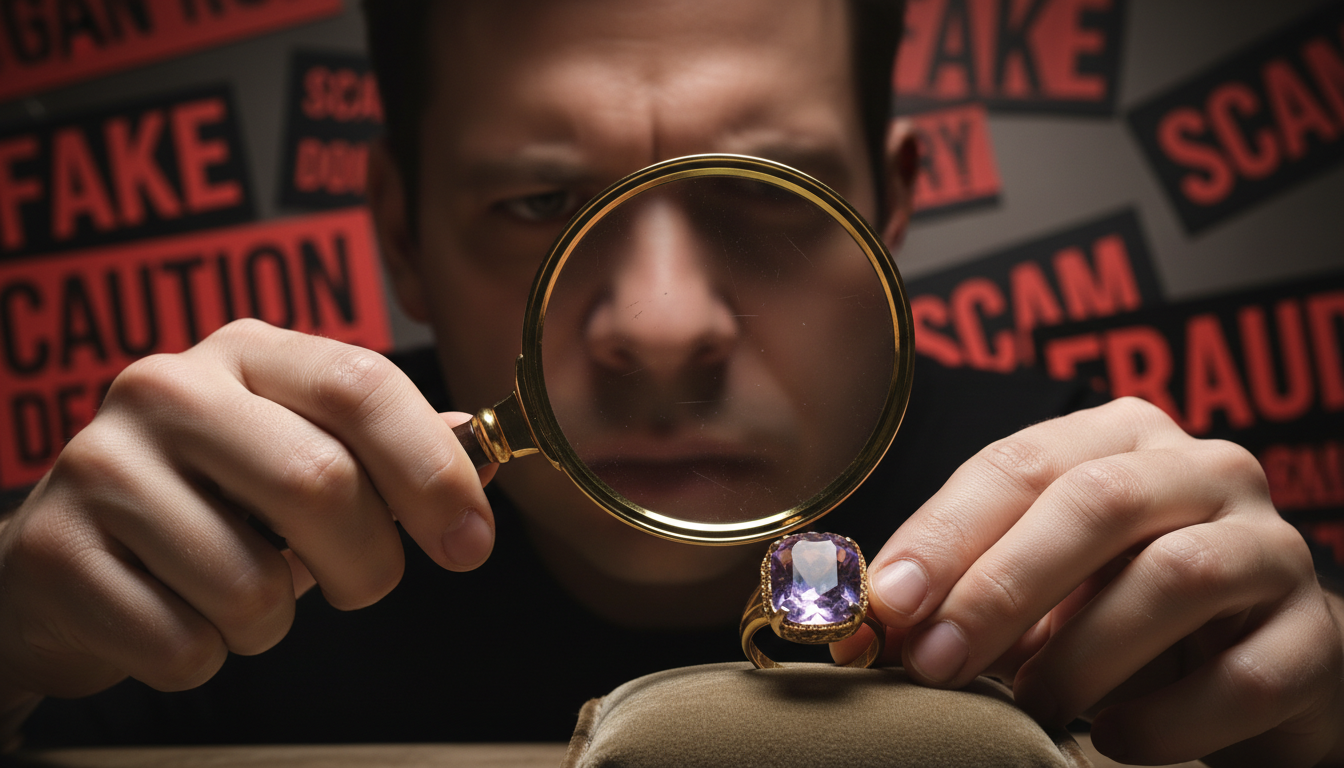
Your intention is noble: to invest in meaningful, impactful jewelry. Yet, the online marketplace is a deceptive labyrinth, teeming with counterfeit goods and outright fraud, all preying on your goodwill. Discerning genuine quality from elaborate deception requires vigilance.
Understand this: much of what’s marketed as 'luxury' online is merely sophisticated branding. These companies aren't just selling jewelry; they're peddling a fabricated narrative. You must be astute.
Misleading material descriptions are the first red flag. Terms like 'silver-toned' or 'gold-plated' without karat specifications are immediate warnings. If 'Sterling Silver' or '14k Gold' isn't explicitly stated, assume it isn't genuine. Countless consumers fall for this, like the unfortunate buyer of a €200 AMBUSH bracelet, where 'silver-toned' plating wore off in three weeks to reveal copper. Such images are infuriating.
A 'luxury' façade — high prices, elaborate websites — is often pure theater, not an indicator of quality. Many brands simply inflate the cost of cheap, plated junk, exploiting the consumer fallacy that expensive equals good. This assumption is dangerously mistaken.
Outright fraudulent operations are the most egregious. They often disable comments on social media or suppress negative feedback. Consult independent platforms like Trustpilot or Reddit, where an abundance of negative reviews, such as those detailing the 'Louise Carter Jewelry' scam—fake reviews, shoddy products arriving in 'cheap plastic baggies' from China—will expose dropshippers masquerading as legitimate brands.
Shipping and packaging offer vital clues. A 'luxury' item arriving a month later in a flimsy plastic bag from overseas indicates dropshipping, where middlemen profit from ordering cheap goods off platforms like AliExpress. The ensuing low quality is a direct reflection of the actual cost, regardless of the price you paid. The lack of accountability, as exemplified by AMBUSH support redirecting a customer to a third-party retailer, underscores this pervasive issue.
So, don't just hope for the best. Be a hawk. Trust nothing until you see proof.
Your Checklist for Buying Jewelry with Confidence

Having navigated the landscape of scams, your goal now is genuine impact. Acquiring jewelry that truly does good, beyond mere aesthetics, requires deliberate action. A 'conscious purchase' must, by definition, be informed.
Resist the common impulse to simply 'add to cart.' Transform hopeful intentions into verifiable trust using this essential checklist. It will save you both frustration and capital, ensuring any piece, whether from an artisan collective or a curated source like The Stellaris Collection, is a worthy investment.
- Investigate Their Impact. This is paramount. Does the brand feature a prominent, detailed page on its philanthropic efforts, or are such claims vague and hidden? Authentic commitment is transparent, detailing charity partners and quantifiable contributions ('15% of profits to X,' '10 trees planted per purchase'). If not, proceed with caution. Brands like Tiffany & Co. (2024) demonstrate that clear articulation of their foundation's work is entirely achievable.
- Scrutinize the Materials. Many fall victim here. Read product descriptions meticulously. Demand specifics: 'Sterling Silver,' '14k Gold Plated' (with plating thickness), solid gold, or platinum. Dismiss any 'tarnish-free' claims for cheap metals—it’s a falsehood. As Reddit communities repeatedly advise, always check for hallmarks and purity listings; neglect this at your peril.
- Verify with Third-Party Reviews. Critically, ignore reviews solely hosted on a brand's own site, as these are inherently curated. Seek independent verification on platforms like Trustpilot, Reddit, or Google Reviews. As countless victims on scam threads attest, these are the unvarnished sources where the truth, however unflattering, resides.
- Check for Certifications. Legitimate certifications add accountability. Is the company a Certified B Corporation, like Gifts for Good—a significant trust indicator? Does it adhere to standards such as the Kimberley Process for diamonds? While not flawless, these demonstrate a tangible commitment beyond mere profit.
- Understand the Logistics. Scrutinize return policies, shipping times, and overall transparency. Brands that obfuscate these details or create intentionally difficult processes signal trouble. A reputable brand prioritizes customer satisfaction and clear, accessible policies. HopeAnchor & Crew (2024) exemplifies this with unambiguous communication of its non-profit status and give-back model.
- This isn't about mere sparkle anymore. It’s a bold statement, a commitment worn openly. But that statement? It needs to be backed by verifiable action, not just some fuzzy feeling.
- Impact isn't a single model. Some brands cut a percentage. Others build entirely new ecosystems, empowering artisans directly. Know exactly what mechanism your cash supports. Or you're just guessing.
- The market itself? A minefield. Fraudulent brands, dubious claims (ever read 'silver-toned'? Exactly). Your diligence is the only shield against getting fleeced.
So, ask them anyway. Demand answers. Your wallet, and your conscience, will thank you.
Frequently Asked Questions
What about inherited jewelry? Is its value more than sentimental?
Often, its monetary value is far less than imagined, primarily tied to its metal content rather than perceived 'heirloom value.'
What's the realistic appraisal?
Beyond its gold or silver content, most inherited jewelry holds minimal resale value, unless it's a celebrated designer piece or features exceptionally large, flawless diamonds. Generally, it's worth its melt value. As countless Reddit discussions on inherited jewelry confirm, sentimental attachments often inflate perceived market worth.
Is an appraisal worthwhile?
You can, but be aware of the cost—appraisals can run up to $150 per item. If the market value is low, you've simply paid to confirm minimal worth. Consider its sentimental significance; if it's mere clutter, independent jewelers will often buy gold for its melt value.
Can old gold be sold?
Yes, many independent jewelers purchase old gold for melting. However, unless you possess substantial quantities, temper expectations; the market for most pre-owned jewelry is competitive.
What are the options for unwanted inherited pieces?
Consider selling the gold for cash. Alternatively, if sentiment is paramount, retain it or explore redesigning—re-setting stones to create a piece you genuinely desire to wear, preventing it from languishing unused.
So, be practical. Your attic isn't a museum.
Enough with the lofty rhetoric of 'purpose' and 'values'—much of it is simply polished marketing. But you've listened, and now understand that philanthropic jewelry exists on a spectrum from genuine impact to utter fabrication. Discerning the difference is your responsibility.
Naive trust in pretty pictures and vague 'giving back' promises leads only to overpriced trinkets that deplete your wallet without impact. Your money is a tool; wield it with precision.
Here’s the essential takeaway, stripped bare:
Therefore, do your due diligence. Define your cause, then rigorously verify. Demand transparency. And for anything truly high-value—pieces intended to endure and appreciate, not just disappear—insist on genuine authentication and clear market insights. Anything less is merely a gamble.
