

The True Cost of Transparency in Luxury Transactions
The Stellaris Journal
Seventy-five percent. That’s how many luxury buyers now give a damn about sustainability. Not a niche. Not a fleeting trend.
Which means the old "mystique" playbook? Dead. Or dying, fast.
And if consumer pressure wasn't enough, thanks to EU rules like CSRD, it's not just a nice-to-have anymore. It's the law. A mandatory headache for every big player.
So, pulling back the curtain. You think it's just about paying for some new tech or an audit? Ha. Think again. The real cost of transparency? It hits deeper. It’s a gut renovation of your whole operation. Your brand's DNA. What 'exclusive' even means now. This ain't just an expense; it's an existential crisis for some brands.
Beyond the Velvet Rope: Why Transparency is the New Hallmark of Luxury
Look, for decades, luxury was all about the smoke and mirrors. Secrets. That quiet exclusivity. You didn't ask where the silk came from, you just paid for the name on the label, right? It was a game. A carefully managed illusion of scarcity. And it worked. For a long time.
But guess what? The game's changing. Or maybe it's already over. We’ve got a whole new generation buying stuff now. And they actually care. About more than just the shine. About values. About what kind of mess a brand leaves behind. Yeah, Millennials and Gen Z are pulling back the curtain. They want to know. And they expect answers.
This isn't some niche activist thing, either. We’re talking mainstream now. And the numbers don't lie. Most luxury shoppers—we're talking roughly three-quarters of them, according to some data from BSPK—they actually think about sustainability when they’re buying. It’s a huge factor. And over half of those European buyers? They'll throw down another 10% for something if it’s proven ethically made. Think about that. So, people will pay more for honesty. Crazy, isn't it?
And social media? That just lit a fire under everyone. You can’t hide anymore. Not really. The internet makes sure of that. Every move, every sourcing decision. It gets scrutinized. And the big houses, the iconic ones? They get held accountable. Like it or not.
So, this isn't some PR stunt anymore. It's not a nice-to-have. No. It’s the cost of entry. Transparency is the price of trust these days. And without trust, you’ve got nothing. Just an empty storefront.
Because the value isn't just in the craft now. It's in the story. The real story. Every stitch. Every stone. You need to show it.
The Regulatory Mandate: From Voluntary Pledges to Legal Obligations
Remember when brands would put out those fancy "sustainability reports"? All fluffy words and vague promises. Voluntary stuff. Looked good on paper. But meant almost nothing, most of the time. Well, those days are done. Finished. Because the EU? They’ve had enough of the hot air.

And they’re serious. Their Green Deal isn't just some suggestion. It’s a massive overhaul. A total rewrite of how business gets done. And it hits hard. Especially for any brand selling into Europe. Think of it as a giant, unavoidable hammer.
The big one is the Corporate Sustainability Reporting Directive. The CSRD. Yeah, sounds boring. But it's a monster. It started with something called the NFRD—Non-Financial Reporting Directive. A bit of a joke, honestly. But the CSRD? It takes that old directive and turbocharges it. Massively expands its reach. So, suddenly, a ton more companies, a lot of them in fashion, are caught in its net. Big time.
And what does it want? Everything. Seriously. It demands detailed reports. Not just on environmental stuff. But social. Governance. ESG metrics, they call it. And it’s not just about your factory, either. Oh no. It’s the whole damn thing. From the moment a raw material gets pulled out of the ground. All the way to when someone throws that thing in the bin. End-of-life, they say. Your entire supply chain. Every single step.
But here’s the kicker. The absolute biggest punch. All that pretty data you collect? It needs to be audited. Independently. Not just some internal team signing off on it. We're talking third-party verification. Just like your financial statements. Think about it. Because if it's not verifiable, if it's not provable, then it’s worthless. And you’re in trouble.
So, what happens then? It's like a weird domino effect. A trickle-down. Or maybe a flood. All these massive brands, suddenly they need data. Real data. Verifiable data. From their suppliers. And those suppliers? They need it from their suppliers. Even the little guys. The small workshops. The farmers. Everyone. And they're all getting these huge, insane spreadsheets. From their clients. Because if they don't provide the info, the big brand can't comply. And that's a risk they can't afford. It's changing everything.
And don't forget the EU Taxonomy. Another beast. It basically spells out what counts as "sustainable" and what doesn't. A classification system. Which means if you say you're green, you better fit into their little boxes.
So, this isn't about marketing anymore. Not a choice. It's the law. If you want to sell in Europe, your operations—every single part—have to be transparent. Or you're out.
Mapping the Unseen: The Investment in a Verifiable Supply Chain
So, you think you want transparency, huh? You really want to see it all. Every fiber. Every stitch. Good luck. Because that "verifiable supply chain" everyone's buzzing about? It ain't cheap. Not by a long shot. And it’s not just about slapping a QR code on something. That's for show. The real mess? It’s deep.
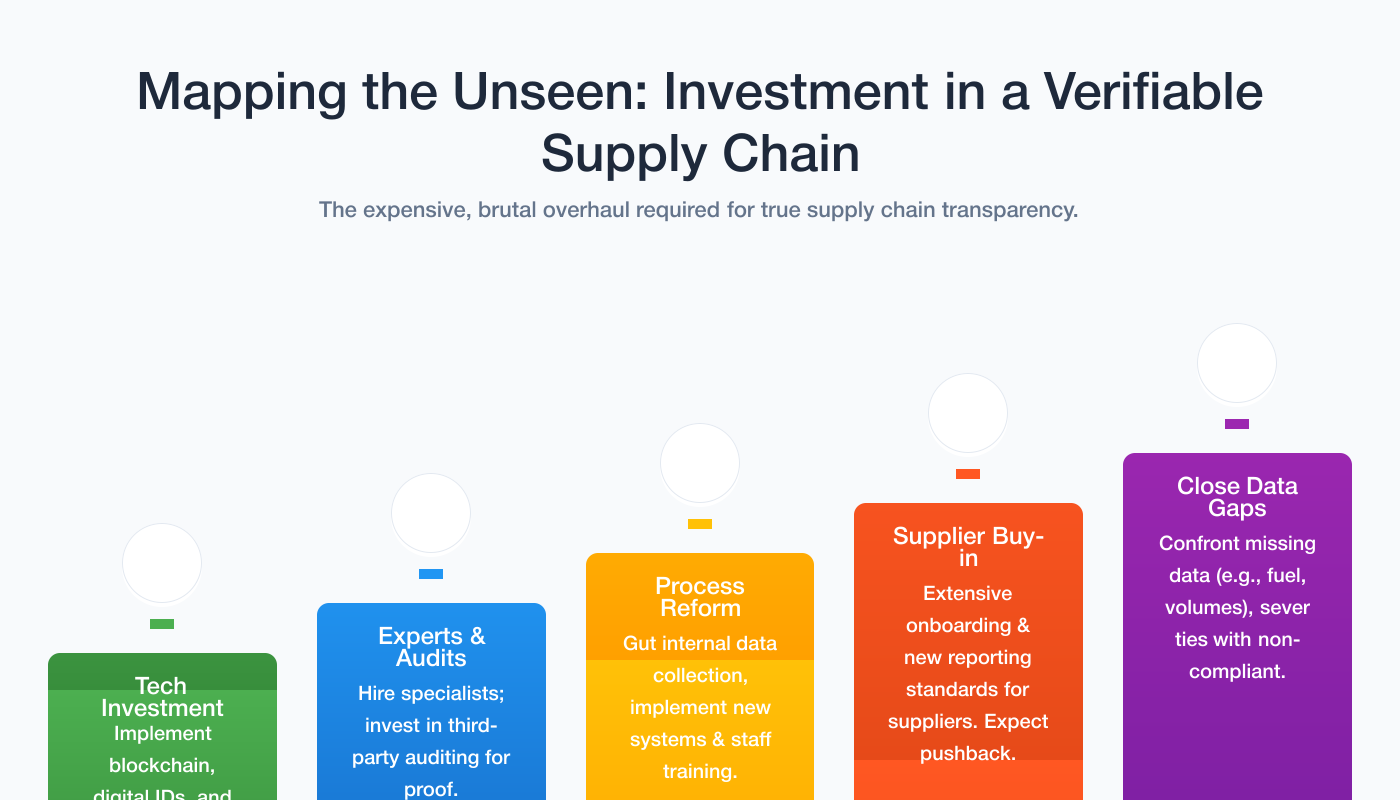
Look, you’re talking about serious cash upfront. First off, technology. You want traceability? You need to pay for it. Fancy blockchain platforms, digital IDs—the stuff that lets some kid in Seattle scan a sweater and see its entire life story (FibreTrace, for instance, promises that). And yes, brands like Yoox and Net-A-Porter, even Pangaia, they're playing this game, introducing those Digital IDs to track a garment's journey. But who's paying for that infrastructure? You are. Or your budget is. Then there's the third-party auditing. Because you can't just say you're clean. You gotta prove it. And auditors? They don't work for free. And their reports? Only 38% of brands actually disclose if those reports are even checked by someone independent. Think about that. So many just… don't. Or won't. You're also gonna need new bodies. People who actually know this stuff. Specialized sustainability pros. They're not cheap either. Suddenly, your HR department has a whole new wish list. But you need them.
Then we hit the operational headaches. And trust me, these are worse than a Monday morning meeting. You're looking at a complete gutting of how you collect data. Internal processes? Throw 'em out. Start over. Because what you thought was "good enough" for reporting before? It won't cut it. You'll need new systems. And training. Lots of it. For your own staff, sure. But then for your suppliers. The people who actually make your stuff. They need to get on board. Or get out. It’s extensive onboarding. New reporting standards. And they will push back. Oh, they will push back hard. Many can’t even begin to wrap their heads around it. Or don’t care to.
And this is where it gets truly ugly: relationship costs. You've had these suppliers for years. Decades, maybe. Family connections. Handshake deals. But if they can’t (or just won't) give you the data you need—the real, verifiable stuff—then you’re staring down the barrel of a hard decision. Severing ties. That’s a mess. Because finding new, compliant suppliers? It disrupts everything. Your entire established supply chain? Poof. Gone. Or at least, radically changed. It's a gamble, but you have to take it. Or risk looking like a fraud.
Because here's the kicker, the dirty secret no one wants to talk about: the data gaps. They're everywhere. Huge. We're still flying blind on so much. I mean, 94% of brands? They don’t even tell you what kind of fuel is used to power their factories. Think about that. Ninety-four percent. And 88%? They won't share their production volumes. That's crazy. This isn’t a small problem. This isn't a tweak. This is a gaping hole in the middle of the industry. The challenge isn't just big; it's astronomical.
So yeah, you want transparency. You want it real. But getting there? It’s not a project. It’s an expensive, brutal overhaul. From the ground up. And it stretches way beyond your own factory walls. Way beyond your comfortable little office. It goes into every single corner of that complicated mess you call a supply chain. And if you're not ready for that kind of pain and that kind of cash, you’re not ready for transparency.
Scarcity in the Spotlight: Can Luxury Be Both Exclusive and Transparent?
Luxury. It’s all about the secret, right? The whispered knowledge. The limited run. And that whole vibe? It built empires. Because traditional luxury, the stuff we know, it thrives on controlled information. Intentional scarcity. And that makes people want it. Badly. So, what happens when you’re forced to pull back the curtain?

Because now, with these new consumer protection laws popping up (especially in the EU), that old game changes. You can’t just say "limited edition" anymore. Not really. If you’re using scarcity as your big selling point? As your hook? Well, that suddenly becomes "essential information." And you know what essential information means? It means you gotta back it up. Clearly. Verifiably. No more smoke and mirrors. So, you can’t just tell a story about exclusivity. You gotta prove it.
And this isn't just about good vibes. Oh no. Brands are facing real legal risks now. Big ones. If you imply something is scarce, but it’s not accurate? Or you can’t show the paperwork, the evidence, to back it up? That’s misleading. That’s a commercial practice that can get you in deep trouble. Global Legal Post? They've been all over this, detailing the legal tripwires for "limited-edition" claims. So, your "storytelling" about some rare gem? It becomes "story-proving." Provenance. Verifiable craftsmanship. That's the new luxury narrative. That's where the real value is supposed to come from now. Not from some hidden secret, but from what you can show.
But this goes against everything. Historically, luxury brands were super secretive. About their supply chains. Their sources. Their techniques. Why? To protect the expertise. The craft. Their very identity. It maintained the mystique. Made it feel special. That's what kept people guessing. And wanting. But now? All those mandates for transparency? They're smashing that old model to pieces.
So, the whole idea of luxury? It's shifting. It's weird. You can’t just hide anymore. You must show. The data shows scarcity isn't some accident; it's core to luxury. But EU and Spanish rules? They make you spell out those limitations, clear as day. And those old academic papers? They all talk about luxury brands being more secretive than the mass market. Protecting that "special something." But when you suggest scarcity and you can't prove it? That's a misleading commercial practice. A big risk.
And if you can’t prove the story, the story ain’t worth telling (or selling) anymore.
The Transparency Dividend: How Openness Builds Lasting Brand Value
Okay, okay, I’ve painted a pretty grim picture so far, haven't I? All that talk about costs and headaches. But here’s the thing. All those "costs"? They’re not just money going out. They’re bets. Big bets. And they can pay off. Seriously. Because if you play it smart, transparency? It’s not just about avoiding legal trouble. It's how you actually build something that sticks. Something that matters.
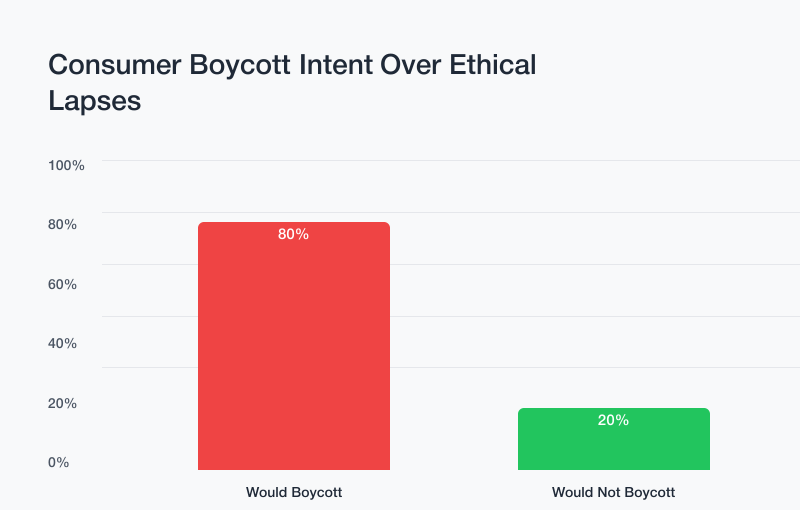
First, trust. And in this messed-up world, trust is gold. You think people don't care about ethical stuff? Think again. Over 80% of consumers would totally boycott a brand if they found out about dodgy procurement or ethical mess-ups. That’s not a small number. That’s your entire customer base. So, being open? It builds trust. It keeps them. It makes them feel good about giving you their money. And that’s powerful.
And you know who really cares about this? The young ones. Millennials. Gen Z. They’re not just buying stuff. They’re "voting with their wallet," as the data says. Conscious shoppers. They want to align with their values. So, if you’re transparent? You’re not just keeping old customers. You’re pulling in a whole new crowd. A crowd that actually cares. And has money.
Then there’s the whole risk thing. Huge. A transparent supply chain? It’s your early warning system. You find those human rights problems. Those environmental disasters waiting to happen. The compliance gaps. You find them before they blow up in your face. Before they hit the news cycle and tank your stock. It mitigates risk. It’s insurance, basically. The 2023 Fashion Revolution Index? It shows brands making progress, like Gucci jumping 21 points to 80%. OVS, that mass-market label? They hit 83%. They’re leading the pack.
And all that talk about justifying prices? Luxury prices? This is it. This is your proof. Ethical sourcing. Superior materials. Fair labor. When you can actually show all that? That's a damn good reason why your stuff costs more. It’s not just marketing fluff anymore. It’s verifiable value. It gives you ammunition.
So, what’s the takeaway? The real deal? Brands that actually lean into this—like a Gucci, an OVS—they’re getting recognized. Reputational gains. It cleans up their image. It makes them look good. Really good. This isn't just about jumping through hoops for some regulator. This is about building a brand that actually means something. It’s an investment. A painful one, sure. But it’s the only way to build a brand that lasts. Period.
Alright, so where does this all shake out? Transparency. It’s not some fluffy marketing buzzword anymore. It’s a bill coming due. And a mandate. Get used to it.
Look, this isn't about choosing to be open. It’s about being forced to verify every thread of that silk, every facet of that stone. You think "mystique" is expensive? Try ignoring an audit. Or facing consumer backlash when your claims crumble under a real microscope. The cost isn't just software. It’s a complete gutting and rebuild of how you do business.
Here's the deal, stripped bare:
- This isn't optional anymore. Regulations like the CSRD mean you can't just talk a good game. You need documented proof. And that kind of verifiable data? It takes serious cash, serious tech, and a serious re-think of your entire supply chain. It's a fundamental recalibration, not an add-on.
- Exclusivity shifts. The old velvet rope, based on obscurity, is fraying. Now, real exclusivity might just mean a provenance you can actually trace, a story you can actually back up. It’s a different kind of scarcity. One based on truth, not just marketing.
- Risk goes both ways. Pulling back the curtain exposes vulnerabilities, sure. But hiding them? That’s a guarantee of future collapse. Brands building lasting value are the ones willing to put their operations under the spotlight, proving their claims, owning their impact.
The market moved. It values proof over pretense now. It always does, eventually.
Stop deliberating. Start acting. Pinpoint where your real verifiability gaps are. Fix them. That's the only play. If you're bogged down in fragmented channels, trying to figure out what's actually legit, then find a partner that specializes in authenticating high-value assets and streamlining those complex transactions. Don't waste time.
