

Why Most Luxury Watch Buyers Never Return After the Sale
The Stellaris Journal
Nine point nine percent.
That's the repeat purchase rate in luxury and jewelry, according to Bluecore's benchmark data reported by Retail Brew. Less than half of apparel. Less than half of health and beauty. Nine out of ten customers who walk out of a luxury transaction, or click "confirm" on one, never come back. Not to the same house. Not to the same dealer. Not to anyone.
Read that again, because it matters more than any other stat in this business.
In a market where acquiring a single high-net-worth client can take months of courtship, where a single pre-owned Patek can move for six figures, and where the global luxury customer base just shrank by roughly 20 million people in 2025 alone (per the Bain-Altagamma Luxury Goods Worldwide Market Study), losing nine of every ten buyers is not a marketing problem. It's a structural one.
And the leak, almost without exception, is the silence after the sale.
That's the part no one wants to talk about. The 30 days, the 90 days, the six months, the year after the watch leaves the building. In that window, the client's mind is still warm. They are thinking about the piece. They are showing it to friends. They are noticing the way it catches light in a boardroom. They are, for lack of a better phrase, still in love. And in that window, most luxury operators say nothing. Or worse, they fire off a templated CRM email that announces, loud and clear, that the relationship just ended at checkout.
We're going to talk about what comes after. Specifically, what it looks like to re-engage a client months after a watch purchase, and why that single act is the dividing line between a luxury transaction and a luxury relationship. Not a drip campaign. Not a loyalty points scheme. A relationship. The kind we build at The Stellaris Collection, and the kind most of the industry has quietly abandoned.
\\
The Transaction Trap: Why Luxury Stops Talking to Its Best Customers
Let's get honest about what most luxury operators actually do after a sale.
A client purchases a pre-owned Rolex Daytona from an authorized channel, a grey market dealer, or an online marketplace. The watch ships. Insurance documentation arrives. Maybe there's a thank-you note, maybe not. Then, for the next 11 months, that client hears nothing from the source of the purchase except a quarterly newsletter they didn't ask for, an algorithm-driven product recommendation that's off-base, or the occasional "We miss you" email that lands in spam next to a Sephora coupon.
That's the model. And it's broken in a way the data now confirms.
Simon-Kucher's 2025 luxury study found that roughly 40% of US luxury shoppers are dissatisfied with CRM communications. In Europe and China, that figure hovers around 30%. These aren't casual buyers complaining about email frequency. These are the buyers being courted hardest, and the ones most likely to be ignored the moment the receipt prints.
Look at the broader picture. Bain-Altagamma's 2025 numbers tell us that 70% of consumers report dissatisfaction with the in-store experience, and a striking 90% say customer experiences feel largely the same across luxury brands. The differentiation problem at the top of the funnel is well documented. What isn't documented nearly enough is the differentiation problem at the bottom: after the purchase, almost no one bothers to differentiate at all.
So the same client who walked into a flagship boutique with bespoke attention, who was offered champagne, who had a sales associate memorize their name and preferences, gets reduced to a row in a database the moment the transaction clears. The next touchpoint, if it comes, is an automation.
And here's the part that should make anyone in luxury uncomfortable: the very clients who matter most are the ones disappearing fastest. Bain's research shows that high-net-worth customers, those spending more than €20,000 annually on luxury goods, now account for roughly 46% of global luxury spending, up from 30% in 2019. As aspirational consumers churn, the HNW segment has become the structural backbone of the entire industry. Losing them is not a recoverable mistake.
The 9.9% repeat rate isn't a failure of acquisition. It's a failure of imagination after the acquisition.
\\
What "Concierge" Actually Means at the Post-Purchase Stage
We've written before about what white-glove service truly means in luxury, and about the concierge approach to luxury asset management. These posts drew a clear line between the marketing version of "concierge" and the operational one. The post-purchase stage is where that distinction either holds or collapses.
A concierge is not a salesperson who stays in touch. A concierge is not a CRM workflow with a human name attached. A concierge is, by definition, the person who already knows your context when you reach out. They remember what you said you were collecting. They remember the conversation about why you hesitated between two pieces. They remember the spouse you mentioned in passing, the anniversary, the trip to Geneva. They are, in operational terms, a continuity layer between transactions.
For a luxury watch acquisition specifically, the post-purchase stage includes questions and concerns that almost no one addresses:
- Is there anything about this specific reference I should know in the next 90 days?
- The market for this model just moved. Should I be aware?
- I want to add a piece to the collection. Does this one change what would complement it?
- I'm thinking about a strap change, or a service interval, or a trade-in timeline.
- I'm traveling. Do I need anything for insurance documentation in a different jurisdiction?
None of these are transactional questions. They're all relational. And almost all of them go unanswered in the standard retail or marketplace model, because there's no one on the other side who actually remembers the first conversation.
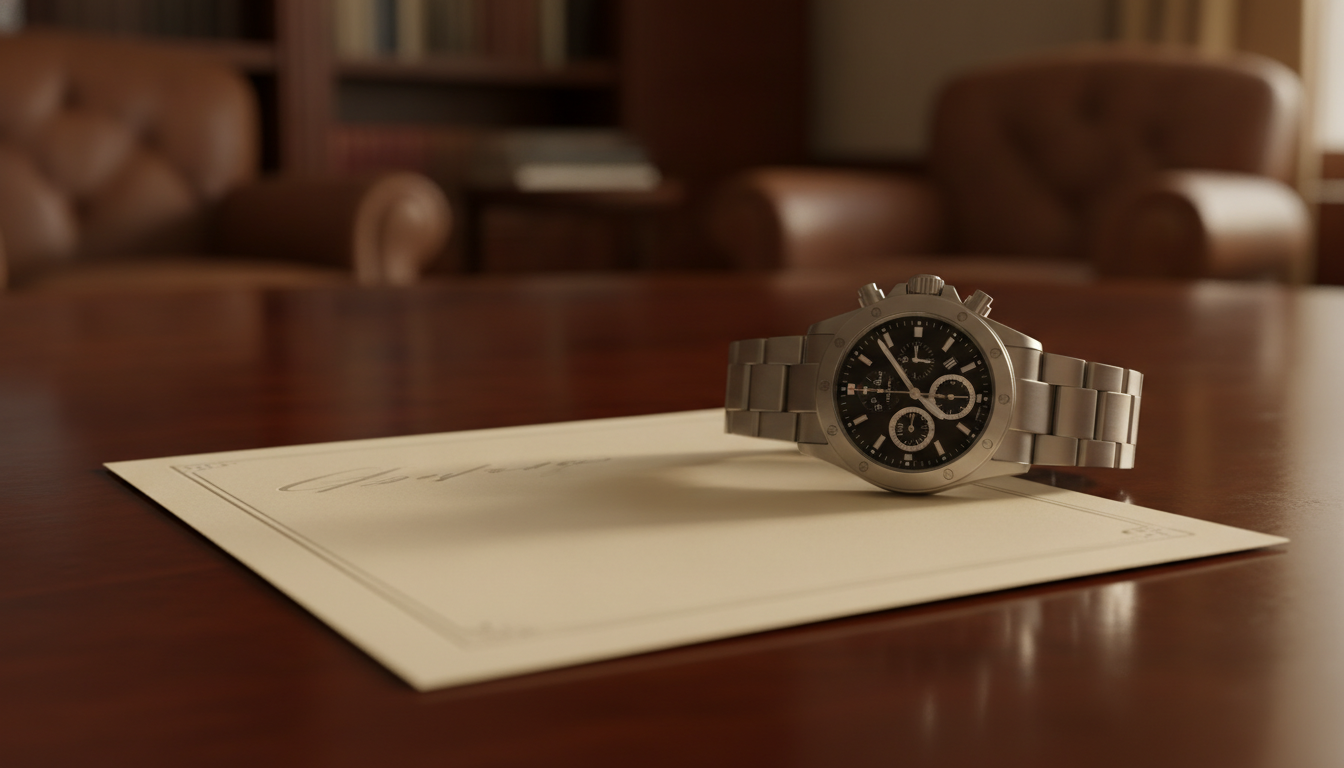
That's the gap. And that's the entire job of post-purchase concierge engagement.
\\
The Timing Question: Why Months, Not Weeks
Here's where most operators get the cadence wrong, and where a concierge model demonstrates its value through restraint, not volume.
A standard luxury retailer will fire off a thank-you email 24 hours after delivery, a feedback survey at the 14-day mark, and a "complete the look" product recommendation at 30 days. By day 60, the client is already flagged as "lapsed" in the CRM. By day 90, they're getting a reactivation discount code.
Every single one of those touches is a misread of the client's psychology.
A high-value watch purchase is not a candle or a piece of apparel. It's a considered decision, often researched for months, executed with a degree of emotional weight that the buyer may not even articulate. A client who spent six figures on a Patek Philippe does not want to hear from you 14 days later asking how they're enjoying it. They want to hear from you when there's something genuinely worth saying. And they want that message to know more about them than their purchase order.
In our own practice, the post-purchase rhythm follows a deliberately unhurried cadence:
- Around the 30-day mark: The watch has had time to be worn, to settle into the client's routine, to reveal its quirks. This is when we reach out, not with a survey, but with a brief, personal note from the specialist who handled the transaction. Often it's about the piece itself, a small detail about the movement, a recommendation on the first service interval, a question about how the bracelet is wearing in. Sometimes it's simply an invitation to reply if anything feels off.
- Around the 90-day mark: The market has had time to move. If anything significant has happened with the reference, the model line, or the maison's positioning, that's a legitimate reason to reach out. The note isn't promotional. It's informational. And it's specific to the piece the client now owns, not to the broader catalog.
- Around the 180-day mark and beyond: The conversation has matured. Now we're in territory where genuine collection-building begins. The client has lived with the watch. They know what they love about it. They know what they don't. This is the moment where the relationship transitions from "seller and buyer" to "advisor and collector."
Notice what's missing from that list: discount codes, abandoned-cart triggers, automated birthday emails, and "we noticed you've been away" reactivation campaigns. None of those belong in a luxury watch relationship, and every one of them confirms to the client that they've been reduced to a row in a database.
The luxury client's complaint is not "I haven't heard from you enough." It's "you've made it obvious that what you actually wanted was the sale, not the relationship."
\\
What Re-Engagement Actually Delivers
Let's get specific about what good concierge re-engagement produces, because this is where the abstract philosophy becomes operational reality.
Authentication and Provenance Continuity
Every watch we sell passes through independent authentication before it reaches the client. Months later, when the client wants to bring the piece to their insurer, their estate attorney, or a private vault, they shouldn't have to start that conversation from scratch. We maintain the full record. Box, papers, service history, authentication documentation, original point of contact. If a client needs anything reissued or verified, that request is handled by a person who already knows the file.
This is invisible work. The client only notices if it goes missing, which is exactly the point.
Market Intelligence Specific to Their Piece
The luxury watch market is not static. A reference that's hot today can cool in six months. A model that was overlooked can become the next collector focus. We track these movements because it's our job to do so. Months after a purchase, when the market for that specific reference moves, the client hears about it from us first. Not from a Reddit thread. Not from a Hodinkee article three weeks later. From the specialist who sold them the piece.
This is not a pitch for the next sale. It's market intelligence delivered to an owner who has a genuine financial stake in the information. The fact that it occasionally results in a conversation about adding to the collection, or trading up, is a byproduct of trust, not the goal.
The Collection Conversation
Most luxury watch buyers don't have a plan. They have a piece. Then another. Then a third that doesn't quite work with the first two. The reason so many collections feel scattered isn't because the buyer lacks taste. It's because no one with expertise has ever sat down with them to think about the collection as a whole.
This is one of the most valuable things a concierge can offer months after a purchase, because it requires knowing what they already own. That conversation doesn't happen at the point of sale. It happens once the client has lived with the piece long enough to know what they love about it and where the gap remains.
We've written before about the discipline of curating an exceptional watch collection, and the principles hold here: a thoughtful collection is a coherent statement, not a stack of receipts. Helping a client arrive at that coherence is a multi-year conversation, not a single transaction.
Trade-In Pathways Without the Hard Sell
Every watch has a chapter in the client's life. Some pieces become daily wearers for a decade. Others are rotated, traded, sold to fund the next acquisition. Months after a purchase, the conversation about what comes next is often more honest and less pressured than it would have been at the point of sale.
Our consignment and direct-sale process is structured to be transparent at every step, but the timing of when that conversation happens matters just as much as the structure. We don't push trade-ins. We let the relationship mature to the point where the client initiates it because they've come to trust us as the obvious next step. That's a different thing entirely.
Service and Maintenance Coordination
Mechanical watches require service. Some references have known quirks at certain age intervals. Some have parts availability issues. Some have service intervals that, if missed, materially affect the value of the piece.
These are not the kind of details a client should have to research themselves, particularly if they bought the watch from someone who claimed to be a specialist. Six months, twelve months, two years after the sale, the client should still have a direct line to someone who can tell them what their specific reference needs and when. That's the baseline of a continuing relationship.

\\
The Automation Trap: Why Algorithmic Re-Engagement Backfires
There's a reason luxury CRM technology has produced such poor retention results despite massive investment, and it's worth saying plainly: the more a brand scales personalization through software, the more impersonal the experience becomes.
The numbers tell the story. Average email response rates hover around 0.12%, per ANA (Association of National Advertisers) data. Physical mail, by contrast, generates response rates between 4% and 9%. That's not a small difference. That's the difference between shouting into a void and having a conversation.
But the deeper problem isn't open rates. It's what automation communicates about the relationship. When a client receives a "personalized" product recommendation that misses the mark, when an email arrives at a time they've trained their inbox to ignore, when their name is misspelled or used in a way that feels algorithmic, the violation of intimacy is worse than indifference. It tells the client, in machine language, that they've been seen as a database entry.
This is what some analysts have called the uncanny valley of luxury communication. Generic is bad. Algorithmic personalization that misses is worse. The only version that actually works is the kind that's clearly human, clearly specific, and clearly worth the client's time.
And that kind cannot be automated.
\\
What Clients Should Expect From a Concierge Months Later
If you've purchased a watch from a dealer that calls itself concierge, here's the honest test of whether they actually are:
They remember your name without looking it up.
They remember what you told them about why you wanted that specific piece.
They reach out months later, not because a workflow triggered them to, but because something genuinely relevant happened.
They can tell you, without checking a file, when your next service interval is due.
If a piece becomes harder to source or suddenly more desirable, you hear about it before you read about it in a newsletter.
If you want to trade, sell, or add to the collection, the conversation is a continuation, not a cold open.
If you disappear for two years, the next contact is warm, not desperate.
That last point matters most. The luxury client's worst experience with a brand isn't being ignored. It's being pursued in a way that confirms they were only valued as a transaction. A genuine concierge relationship doesn't chase. It remains available.
\\
The Discipline Behind the Relationship
None of this is accidental. A continuing relationship at the level we're describing requires operational infrastructure that most luxury retailers don't bother to build.
It requires that the same specialist who handled the acquisition remains the contact point. No transfers to a "client experience team." No bouncing between departments. The person you bought from is the person who calls you six months later, because the relationship is the product.
It requires detailed internal notes that go beyond CRM fields. Not just "purchased Rolex Daytona 116500LN, June 2024." Something closer to: "Client was choosing between the 116500 and a 126500. Mentioned the white dial had been his father's. Traveled frequently to Asia for work. Interested in vintage Rolex but uncertain about authenticity concerns. Discussed F.P. Journe briefly. Sent follow-up on a Centigraphe Souveraine when it became available."
That kind of note doesn't live in a standard CRM. It lives in the discipline of the specialist who took the call in the first place.
It requires restraint. Reaching out too often is worse than not reaching out at all. Every touchpoint has to be defensible: this is worth the client's attention, or it doesn't get sent.
It requires accepting that not every client will become a multi-piece collector. Some will buy one watch and never return. That's fine. The relationship was built correctly regardless. The 9.9% repeat rate is industry-wide. Our job is to be on the right side of it by earning the relationship, not engineering it.
We've documented the way we approach buying high-value assets, and the principles translate directly: simplicity, transparency, discretion, and personal accountability from inquiry to delivery and beyond.
\\
The HNW Client Doesn't Want Automation. They Want Continuity.
The Bain-Altagamma data made one thing clear: the future of luxury revenue belongs to the high-net-worth segment, and that segment now represents nearly half of all global luxury spending. These clients are not unreachable. They are not impossible to retain. They are, however, deeply intolerant of being treated like everyone else.
A client who spends €100,000 or more annually on luxury goods does not want to receive the same re-engagement email that a first-time buyer gets from a mass-market platform. They want continuity. They want the specialist who handled their acquisition to still be reachable, still knowledgeable, still personally invested in whether the relationship continues.
That's not an unreasonable expectation. It's the bare minimum of what concierge actually means.

\\
The Takeaway: Acquisition Is the Beginning, Not the End
Every piece of data in this industry points to the same conclusion: the luxury watch market has a retention problem, and the retention problem is concentrated almost entirely in the months after the sale. The 9.9% repeat rate. The 40% CRM dissatisfaction. The 70% in-store experience dissatisfaction. The 20 million consumers who walked away from luxury in 2025. These are not separate phenomena. They are symptoms of a single structural issue, which is that most luxury operators treat the purchase as the end of the relationship, when in reality it is the moment the relationship becomes possible.
A concierge approach flips the model. The acquisition is the introduction. The first six months are where trust is earned. The first year is where collection coherence develops. The multi-year arc is where the client becomes a partner in the curation, not just a buyer of inventory.
We don't have a 9.9% problem because we don't run a transactional model. We run a relationship. The difference is the difference between a luxury retailer and a luxury concierge, and the difference is most visible in the months after the box ships.
If you're interested in how we approach the post-purchase stage with our clients, or if you have a piece you've been considering adding to your collection, the private client specialists at The Stellaris Collection are available by phone, text, or direct message. The conversation doesn't end at delivery. In our practice, that's where it starts.
