

How Luxury Watch Dealers Should Ship High-Value Timepieces
The Stellaris Journal
Most people worry about whether the watch is authentic. They obsess over the reference number, the dial color, the service papers. They grill the dealer about provenance. Then, the moment that box leaves the dealer's door? Total radio silence. Nobody asks the right questions. And that's exactly where the risk lives.
Shipping is the part of the luxury transaction where most buyers check out mentally. It shouldn't be. Because the handoff is the moment your money becomes a package, and packages get lost, stolen, mishandled, and occasionally "delivered" to an empty front porch in the wrong zip code. If your concierge isn't obsessed with that handoff, they're not really a concierge. They're a sales clerk with good email etiquette.
Here's how we actually do it.

TL;DR
Shipping a five- or six-figure watch is not the same as shipping a pair of shoes. Carrier default liability is laughably low (typically $100), and most "declared value" coverage excludes or caps the exact items collectors care about: jewelry, watches, collectibles. Real protection means third-party insurance written for the transaction, packaging designed for the piece, signature-on-delivery protocols, and a single point of accountability from checkout to unboxing. We treat shipping as part of the concierge relationship, not a handoff to a third-party warehouse. Here's exactly what that looks like.
The Carrier Trap Nobody Talks About
Here's a number that should ruin your afternoon: $100. That's the default liability coverage on a standard FedEx or UPS package in the United States. Read that again. If you're shipping a Rolex Daytona and you don't declare a value, your maximum recovery in a worst-case scenario is one hundred dollars. For a piece worth more than some cars.
And the "declare a higher value" workaround? It has teeth. FedEx's published declared value terms cap most shipments at $50,000 on Express services and explicitly exclude or cap jewelry and collectibles at $1,000. UPS mirrors the logic with a default $100 liability and a High Value Shipment Report requirement once you cross $1,000 in declared value, plus a series of surcharges that stack with the value. USPS caps at $100 by default and only allows higher coverage on Priority Mail Express.
In other words: the carriers that move your packages every day are not in the insurance business. They're in the logistics business. Their rules are structured to protect them, not the Cartier bracelet inside the box. The data on luxury e-commerce shows 132 million Americans bought luxury goods online last year, and the rising volume is exactly what makes sloppy shipping protocols dangerous. Higher volume means more handoffs, more sorting facilities, more chances for things to go sideways.
If your dealer can't explain the difference between declared value and real insurance, your package isn't actually insured.
What "Insured" Actually Means (And What It Doesn't)
The single most important question you can ask before any luxury purchase ships is: Who is the underwriter? If the answer is "FedEx" or "UPS" or "USPS," that's not insurance. That's a contractual liability cap with a long list of exclusions, and it is not designed to make you whole on a Patek Philippe.
Real shipping insurance for luxury goods is written by specialty insurers. It covers the agreed value of the piece from the moment it leaves our hands until the moment you sign for it. It covers theft, loss, and damage in transit. It pays out without a fight when the documentation is clean.
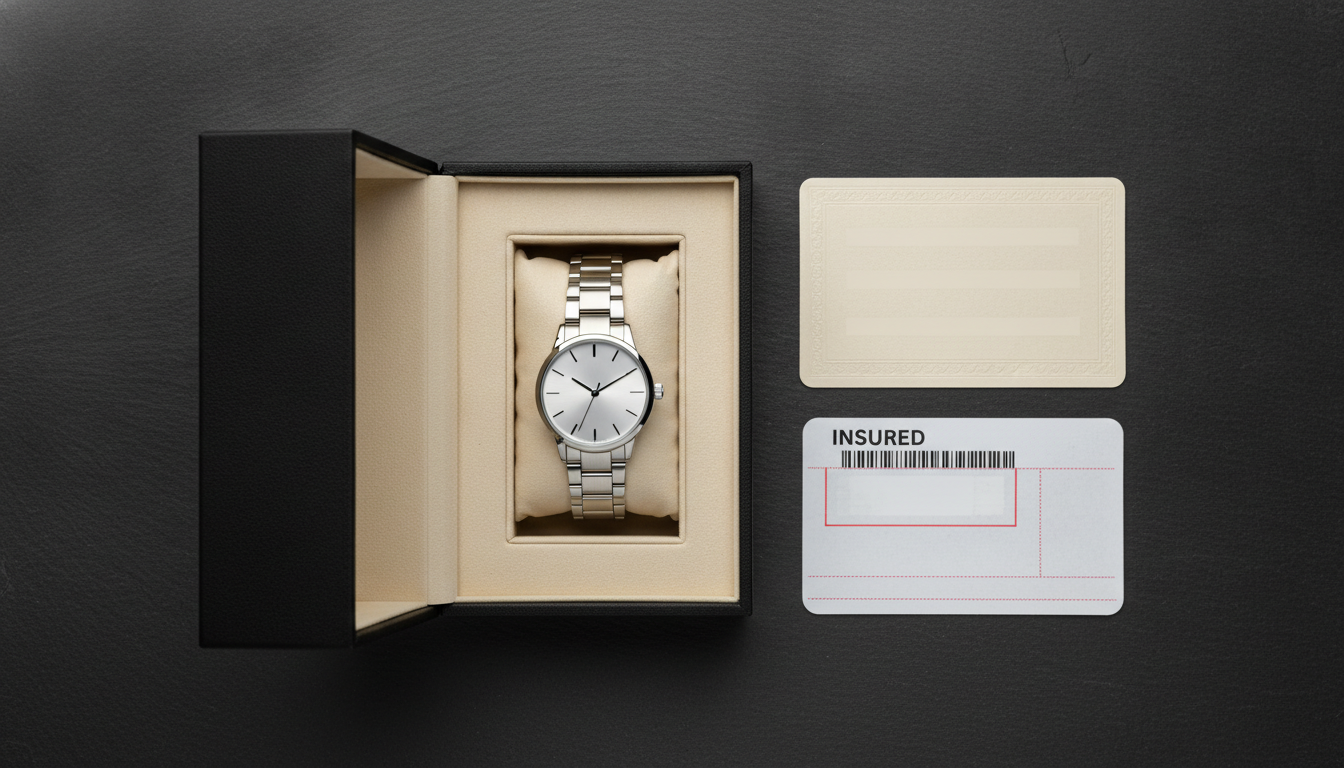
Here's what our coverage looks like in plain terms:
- Declared at full appraised value. Not at a discounted "wholesale" number. At the value the piece actually carries, so a successful claim replaces what you actually lost.
- No jewelry or watch exclusions. The exact items carriers cap or exclude are the items we ship, so we don't use carrier liability as the primary protection.
- Door-to-door coverage. From the moment the package leaves our facility until you (or your authorized signer) physically receive it and sign.
- Adult signature required. No "left at front door." No "left with neighbor." The carrier has to hand it to a real human who shows ID.
- Documented chain of custody. The same advisor who handled your purchase coordinates the handoff. No anonymous warehouse team guessing which box goes where.
That's the floor. Anything less, and the word "insured" on a product page is doing a lot of unearned work.
The Concierge Difference: Shipping Without the Handoff Gap
Here's the part most luxury dealers don't want to talk about. The person who sold you the watch is almost never the person who packs it, ships it, or handles a claim if something goes wrong. You've got a charming sales director on the front end and a warehouse crew on the back end, and the two have never met.
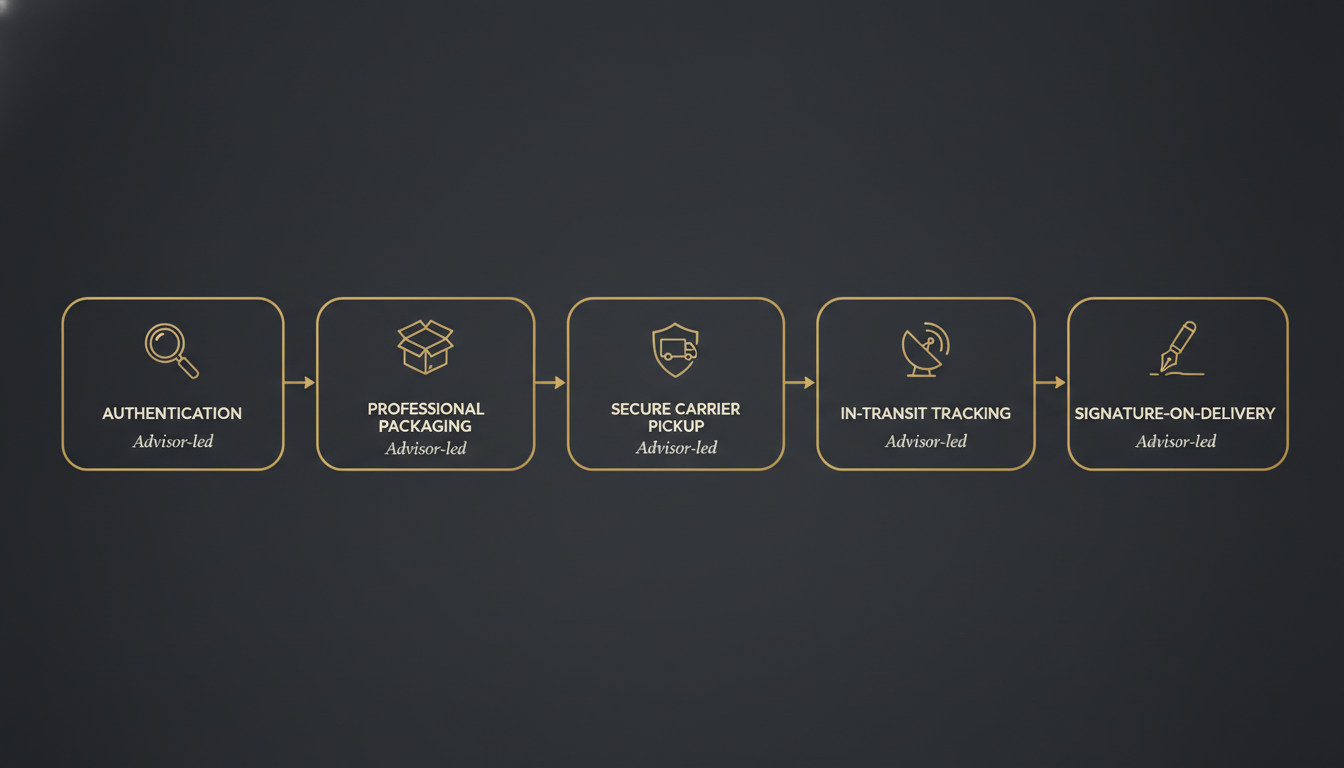
We built our operation differently. The advisor who guides you through selection, authentication review, and payment is the same person who oversees packaging, coordinates the carrier pickup, and stays on the line until you confirm receipt. If something goes sideways, you call one number and talk to the human who knows your transaction by name, not a ticket number.
That continuity sounds like a small thing. It isn't. It's the entire difference between a transaction and a relationship. It's also what makes the shipping process actually secure, because every decision (carrier, declared value, packaging protocol, signature requirement, timing) is made by someone with skin in the game, not a fulfillment algorithm optimizing for cost per box.

What that looks like in practice:
- Pre-shipment coordination. Your advisor confirms shipping address, contact number, and any building or doorman protocols before a label is printed. This is also where we flag signature or delivery-window requirements specific to your building, HOA, or travel schedule.
- Photographic documentation. The piece is photographed in its packaging state before sealing, and those photos are kept on file with the transaction record. If a dispute ever arises, we have the visual proof of how it left us.
- Tamper-evident packaging. Sealed cases, security tape, and outer cartons that show clear signs of any access attempt. This is non-negotiable for us.
- Coordinated hand-off. Once in transit, your advisor receives tracking updates and proactively contacts you with the ETA, not the other way around.
- Receipt confirmation. We follow up after delivery to confirm the piece arrived as described and matches your expectations. If anything looks off, that's where the conversation starts, not in a claims queue.
International Shipments: A Different Animal
Domestic shipping has its risks. International shipping adds customs, longer chains of custody, regional carrier variations, and currency/valuation declarations. The number of touchpoints multiplies, and so does the opportunity for something to go wrong.
For cross-border orders, we lean on established express carriers with dedicated high-value protocols (typically DHL Express or FedEx International Priority) and coordinate with the buyer on import duties, taxes, and any country-specific documentation required for personal importation of luxury timepieces or jewelry.
A few non-obvious things we watch for on international orders:
- Destination-side carrier handoffs. The express carrier may hand your package to a local postal service for final delivery in some regions. We track these handoffs carefully because the final-mile carrier is often the weakest link in the chain.
- Customs valuation scrutiny. We declare at full transaction value. Underdeclaring to save on duties is a terrible idea because it directly weakens any insurance claim and exposes the buyer to penalties.
- Regional signature requirements. Some countries and buildings require specific ID or proxy authorization. We confirm those requirements before the package leaves our facility, not after it gets stuck in customs.
- Longer transit windows. International orders can take 5–10 business days depending on destination and customs. We set expectations upfront so you're not refreshing a tracking page in a cold sweat.
If you're buying across borders from a dealer who treats international shipping as an afterthought, that's a red flag. The logistics are harder, the stakes are higher, and the dealer should be more involved, not less.
What Happens When Something Actually Goes Wrong
Honest answer: in years of operation, we have had very few claims. The protocols above are designed to make claims rare, not to make them easy when they happen. But rare isn't never, and you deserve to know what the process looks like.
If a package is lost in transit, we file with the underwriter immediately, not after a "wait 48 hours" cooling-off period. If a package arrives damaged, we request photos from you on the spot and pause the carrier acceptance protocol so the claim is filed from a clean evidentiary baseline. If a signature line shows a different name than expected, we treat that as a potential issue and contact you before any further action.
The point is: claims are handled by the same advisor who handled your purchase. No third-party call center. No "please hold while we transfer you to claims." No script.

The Standard You Should Hold Any Luxury Dealer To
Look, we're not the only dealer who insures shipments. Most legitimate ones do. The question isn't whether insurance exists. It's whether the insurance is real, whether the shipping process reflects the value of what's in the box, and whether the dealer treats the handoff as part of the service or as an afterthought.
Here's what to ask before you hand over a wire for a five-figure piece:
- Who underwrites the in-transit coverage, and what is the actual policy limit on this shipment?
- What is the declared value, and is it at the full transaction amount?
- Is the package sent with adult signature requirement, or can it be left without a recipient present?
- Who do I contact if something goes wrong, and is that person involved in the rest of my transaction?
- For international orders: which express carrier is being used, and is the final-mile handoff tracked?
Those five questions will tell you more about the dealer than any product page. If they can't answer all five clearly, your transaction isn't as safe as their marketing copy suggests.
Shipping isn't the boring part of buying a luxury timepiece. It's the part where everything you've paid for becomes a moving target. Treat it that way, and only work with dealers who do too.
If you're navigating a current purchase or sale and want to talk through how we'd handle the shipping leg for your specific piece, you can reach our concierge team directly or browse our current watch inventory to see what an end-to-end concierge transaction actually looks like.
