

The Stellaris Collection Process: A Guide to Selling High-Value Assets
The Stellaris Journal
You've got a Patek Philippe gathering dust? Or a diamond necklace tucked away for "special occasions" that never come? Good. Most folks think selling these high-value assets—your watches, your jewelry, your art—is a nightmare. A risky mess of shady buyers and bad deals. That’s the common wisdom, anyway.
But here’s the blunt truth: it’s not. It’s sitting capital. Unused money. And every day it collects dust, you’re losing out. (Yeah, losing. Plain and simple.) This isn’t about desperation; it’s about being smart with your assets. This guide cuts through the BS, laying out a clean, secure, five-step path to turn that clutter into cold, hard cash. No credit impact. No haggling with randos. Just a solid, professional transaction.
Stop letting valuable assets sit idle; unlock their true potential and convert them into immediate, tangible capital.
TL;DR
Those fancy watches? That jewelry gathering dust? That's not just "stuff"—it's dead money. You're sitting on a pile of cash, wasting its potential. Here's the core choice: Selling means a final transaction, cash in hand. Pawning is a temporary loan, secured by your item, which you get back only if you repay. Choosing the right path is crucial. Our guide outlines a simple 5-step process: inventory your assets, get a professional valuation, select a trusted partner, complete the transaction, and handle the paperwork. But the devil's in the details: demand solid security, real insurance (think Lloyd's of London (2024)-level coverage), secure vaults (no back-alley deals), and a discreet, private service that won't touch your credit score. Clean out your closets, get smart about your assets, and present them right to turn old junk into real money, fast.
Unlocking Hidden Capital: Why Liquidate Your Dormant Assets?
Got a safe full of diamonds? That fancy watch you never wear? Those designer bags shoved in the back of the closet? Here's the uncomfortable truth: that's not just "stuff." It's cold, hard cash, sitting idle, doing nothing. Every day it remains dormant, you're losing out on its potential, or at least failing to realize its true value.
Converting these dusty treasures into immediate spending power or investment capital is known as liquidation. People do it for a myriad of reasons: estate management, funding a new venture, clearing space, or simply freeing up capital. It's a straightforward process when handled correctly.
Engaging a professional for liquidation ensures a fast, secure, and discreet transaction. You bypass dodgy buyers and scams, and crucially, your credit score remains completely untouched. Many remain oblivious to the true worth of their dormant assets; as Similarweb (2024) data suggests, a significant number of individuals are sitting on untapped wealth. This oversight represents a colossal missed opportunity. Stop letting your unused luxury items bleed value; convert that dormant wealth into immediate, useful capital—it's smart, secure, and undeniably good business.
The Decisive Fork in the Road: Selling vs. Pawning
Alright, you've identified a valuable asset—a watch, jewelry, something significant. Now what? You face a critical choice between two distinct paths: selling it outright or pawning it. Understanding the fundamental difference isn't about determining which is "better," but rather which aligns precisely with your immediate needs and long-term objectives.
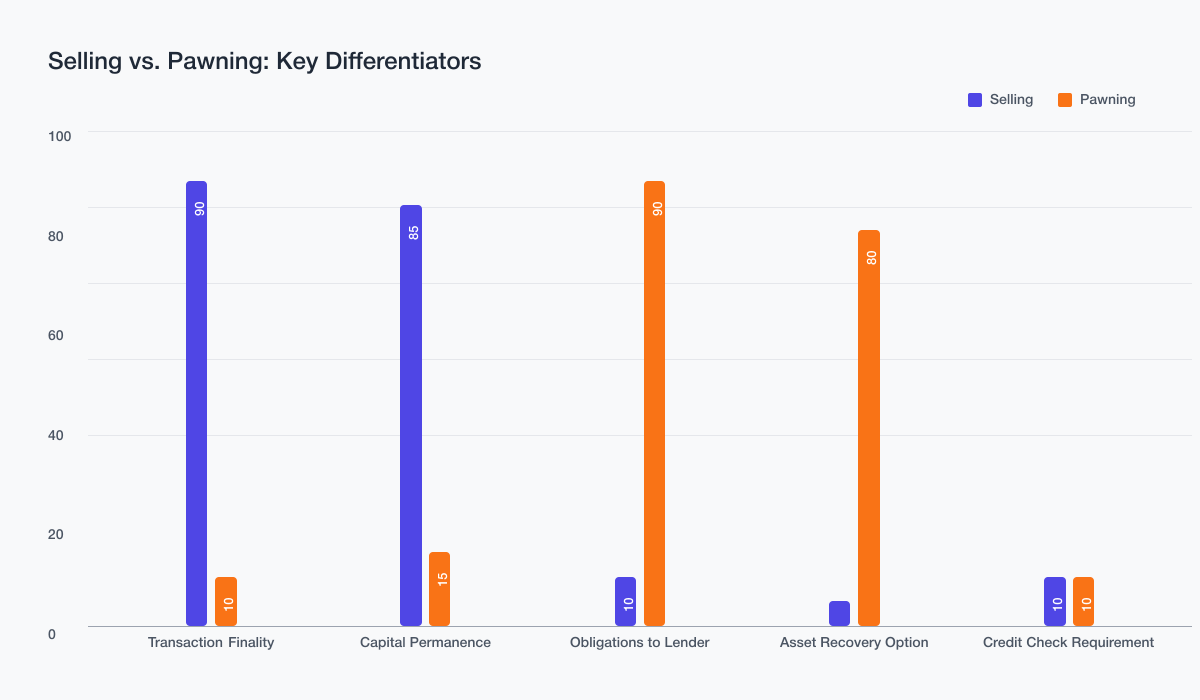
Selling is a clean, definitive transaction. You transfer ownership of the item in exchange for immediate capital, with no further obligations or strings attached. It's a permanent solution, ideal when you're ready to part with an asset for good or require substantial funds for a major investment or expense.
Pawning, conversely, functions as a short-term collateralized loan). Your valuable item serves as security. You receive funds, but to reclaim your possession, you must repay the loan amount plus accrued interest. Failure to do so results in forfeiture of the item. While it offers a quick cash injection without credit checks or bank statement scrutiny, it is a temporary solution with a clear cost. The decisive factor isn't the item itself, but your end game: do you seek a final divestment, or a temporary cash infusion with the option to retrieve your asset later? Reputable partners will offer competitive payouts for both, and neither option will impact your credit score. Selling is final, freeing you of the asset and providing immediate, permanent capital; pawning is a flexible, no-credit-check loan, but remember: repay it, or lose your treasure.
The 5-Step Asset Liquidation Playbook
You hold high-value assets—a luxury watch, exquisite jewelry. You want to sell them for cash. Many assume this is the easy part. They couldn't be more wrong. Countless individuals "wing it," accept the first offer, or engage with dubious buyers, and consequently, suffer significant losses. This isn't merely about selling an item; it's about navigating a complex, high-stakes minefield safely and profitably.
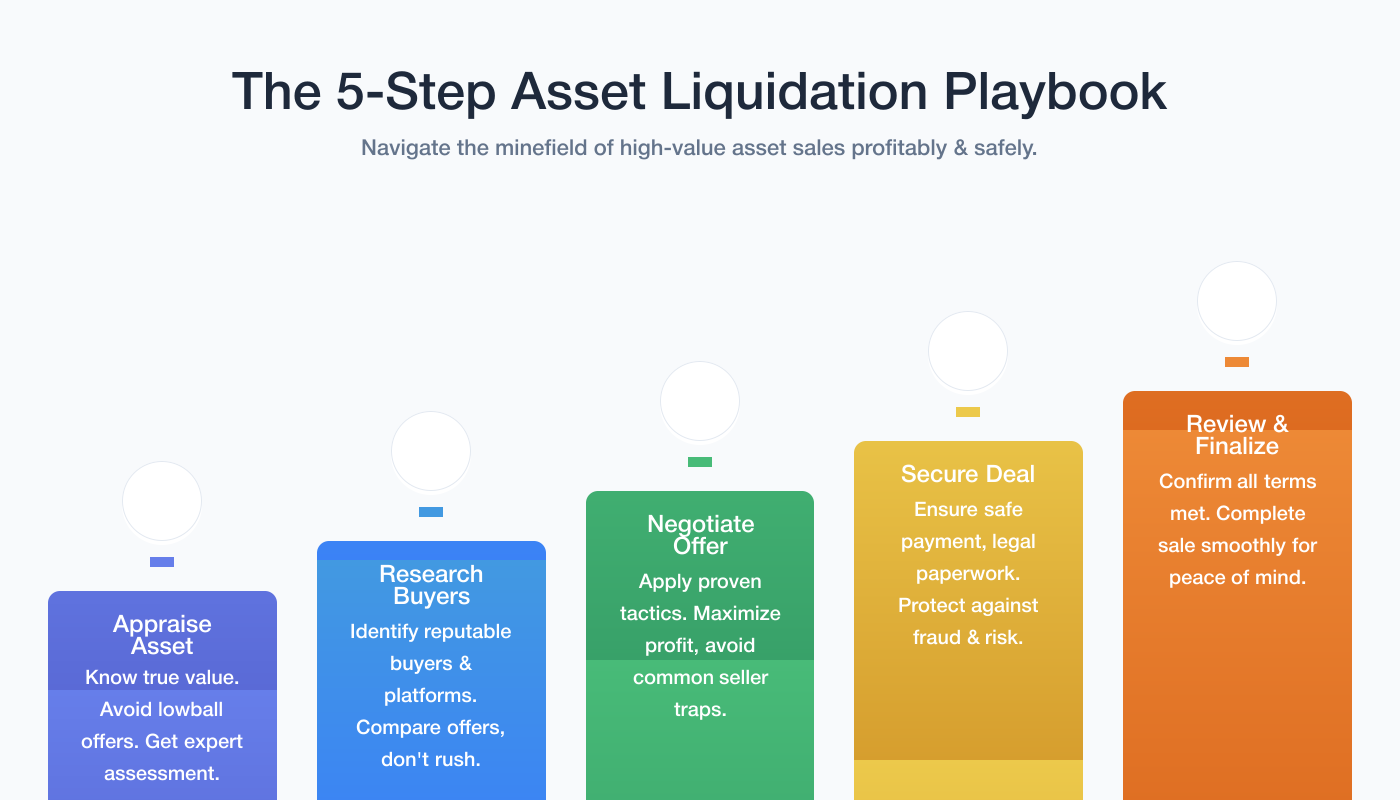
Without a structured approach, the liquidation process becomes a chaotic mess, leaving you vulnerable to exploitation. You need a meticulous plan, a blueprint mirroring the strategies of major commercial liquidation firms like Rabin. They don't just stumble through complex liquidations; they adhere to a formal, multi-step process because they understand the intricacies. This isn't optional; it's essential for success and protection.
Here are the five critical stages you must master, every single one.
Mastering asset liquidation requires a formal, five-step playbook to navigate its complexities safely and profitably.
Step 1: Inventory. Know What You Got.
Your first imperative is to meticulously list and document every single asset. This isn't a casual mental tally; it requires exhaustive detail. Simply stating "a watch" is insufficient. Serial numbers, precise condition reports (yes, even a tiny scratch matters), and the presence of original boxes or accompanying paperwork (which can significantly impact value) are all crucial. Any service records, certifications, or provenance documents must be included. If it’s not formally documented, for all intents and purposes, it doesn’t exist—and you will inevitably lose value.
Don’t just eyeball it; meticulously document every single specification, or you'll pay for the oversight later.
Step 2: Valuation. What’s It Really Worth?
With your comprehensive inventory in hand, the next step is to establish a precise market valuation. This goes far beyond a casual Google search—that's for amateurs. You require validated figures derived from multiple, independent sources, as everyone has an agenda. Consult accredited experts for professional appraisals, and cross-reference with current market data. Tools like Similarweb (2024) can reveal critical trends: what's in demand, what's depreciating, and where specific items are selling. Asset values are dynamic; they can fluctuate rapidly. Understanding your asset's current standing is non-negotiable.
Secure real, unbiased valuations from multiple experts; never trust the first number you hear.
Step 3: Partner Selection. Choose Wisely.
This is the undeniable make-or-break stage. Your choice of liquidation partner is paramount. The market is rife with opportunistic "sharks" eager to lowball you, engage in dishonest practices, or simply prove unreliable. You need a legitimate firm, not an anonymous individual, with an impeccable, verifiable track record. Demand transparency: interrogate their entire process, their security protocols (we'll dive deeper into this), and precisely who will be handling your high-value assets. Trust, professionalism, and robust facilities are non-negotiable. An incorrect choice here could jeopardize your entire investment and peace of mind.
Vet your liquidation partner with extreme prejudice, as the security and value of your assets literally depend on it.
Step 4: Transaction. The Deal.
With your trusted partner identified and a price agreed upon, the next crucial step is formalizing the transaction. This demands a comprehensive, legally binding written contract—not a handshake or a casual text message. The contract serves as your ultimate protection, meticulously outlining all terms: payment schedules, deadlines, dispute resolution mechanisms, and contingency plans for any unforeseen issues. Review every clause meticulously, scrutinize the fine print, and absolutely do not sign anything you don't fully comprehend. Once your signature is affixed, the agreement is final and legally enforceable; ensure it unequivocally safeguards your interests.
Always secure a rock-solid, legally binding written contract; it is your non-negotiable protection.
Step 5: Documentation. Close the Loop.
The transaction is complete, and funds have been transferred. However, your process isn't over. Post-liquidation, a final reconciliation statement is indispensable. This official document formally confirms the entire transaction, serving as critical proof for your personal records, for tax compliance, and for your absolute peace of mind. It verifies the transfer of asset ownership, the receipt of payment, and all pertinent details. Maintaining this comprehensive record ensures there are no loose ends, providing a clean, immutable history should you ever need to reference or substantiate the transaction in the future.
Never leave loose ends; always demand a full, final reconciliation statement for irrefutable records.
The Security Mandate: Ensuring a Safe and Confidential Transaction

Let's be unequivocally clear: your assets are more than just precious metals and stones—they represent substantial value. The moments they are in transit or undergoing evaluation are inherently high-risk. Therefore, security isn't merely a desirable feature; it is an absolute, non-negotiable mandate. Many providers promise security but fail to deliver, leaving you vulnerable to significant loss.
You must adopt a mindset beyond caution—one of justified paranoia. A truly professional partner will not only welcome your scrutiny but actively encourage hard questions. Any reluctance is a glaring red flag; walk away immediately. This isn't about impoliteness; it's about safeguarding your wealth and your privacy, without compromise.
The first rule: demand absolute discretion and confidentiality. Your financial affairs are strictly your business, not fodder for employee gossip or social media chatter. This requires ironclad protocols and formal agreements. Loose lips sink more than ships; they compromise your assets and reputation. Ensure these terms are formally acknowledged and signed.
Next, verify their insurance. What happens in the event of loss or damage during transit or appraisal? A reputable provider will offer full insurance coverage for your assets, backed by globally recognized entities like Lloyd's of London. Demand to see the certificate of insurance; verify that your high-value items are comprehensively protected. Accidents occur, and you must not be left exposed.
Consider their storage facilities. A back-office safe is wholly inadequate. Insist on high-security, purpose-built, insured vaults within dedicated, hardened, and continuously monitored facilities—think the International Gem Tower standard. If they are serious about security, they will have serious storage. Demand a demonstration; your assets deserve a fortress, not a makeshift box.
Finally, the transaction itself must be a direct sale, a pure liquidation, leaving absolutely no footprint on your credit history. Zero. Any request for your Social Security number for a "credit check" is an immediate red flag. This process pertains to their capacity to pay you, not your creditworthiness. It must be clean, direct, fast, and impeccably private.
Demand verifiable, ironclad security protocols encompassing absolute discretion, comprehensive insurance, and fortified storage—there is no wiggle room.
Frequently Asked Questions About Asset Liquidation
It’s natural to have questions about a process as significant as asset liquidation. It can feel complex, even unusual. So, here’s the essential breakdown—no jargon, no fluff, just direct answers to your most pressing concerns.
Navigating asset liquidation raises common questions; here are the no-nonsense answers you need.
How fast will I get paid?
Immediately. Upon your acceptance of an offer, funds should be wired within minutes, not days or weeks. The process is designed for instant liquidity.
Expect immediate payment; funds are transferred within minutes of offer acceptance.
Will this affect my credit score?
Absolutely not. This is a direct asset liquidation, not a loan or credit line. Therefore, no credit checks are performed, and your credit report remains completely unaffected.
Your credit score remains entirely untouched; asset liquidation is not a credit-based transaction.
What if I don't like the offer?
A reputable firm will securely return your item, fully insured and at their expense, if you decline the offer. You should incur no fees whatsoever for return shipping; any attempt to charge you indicates a fraudulent operator.
If an offer is unacceptable, a reputable firm will return your item securely, free of charge.
Can I change my mind after the sale?
No. Once the transaction is finalized, with mutual agreement and payment rendered, it is irreversible. There is no "undo" option in asset liquidation.
Once the sale is finalized and payment processed, the transaction is irreversible.
How do I know my asset is safe?
Your asset should be secured in hardened, continuously monitored vaults, backed by comprehensive insurance policies from top-tier providers like Lloyd's of London. It is, unequivocally, safer with a professional firm than in your personal possession.
Your asset's safety is guaranteed by hardened vaults and comprehensive, high-tier insurance.
Forget the corporate speak, the endless "synergies," and the "optimizing paradigms." What we’ve discussed boils down to this fundamental truth: real assets, real money, real decisions. You are either actively leveraging your wealth, or you are not. The brutal reality is that most individuals allow valuable assets—watches, jewelry, art—to gather dust, functioning as inert potential rather than active capital. This isn't about some profound revelation; it's about practical common sense: recognizing the immediate opportunities before you and acting decisively.
Here’s what truly matters:
- Those "treasures" in your safe are often just frozen capital, passively losing opportunity as markets and values shift.
- Selling an asset permanently frees its full market value, directly liquidating capital. Pawning offers a short-term, high-interest loan against it. Conflating these two distinct paths is a critical error for your financial health.
- A clean, secure transaction hinges entirely on a robust process and a trustworthy, professional partner. Without both, you're merely gambling with your assets, incurring unnecessary stress and risking substantial losses.
This process is not inherently complicated, yet it's frequently mishandled or, more commonly, entirely ignored due to inaction. It's not rocket science, but the consequences of error are significant. Don't be another statistic.
Cease merely admiring your assets. Begin actively assessing them. Secure an impartial, professional valuation, not one based on wishful thinking. Then, make an informed, strategic decision. If you need someone who actually knows how to get it done right—securely, transparently, and without compromise—a firm with a demonstrable track record in this specialized business, like Stellaris, then seek them out. But do not procrastinate. Time is money, and every day your assets sit idle, you're losing both.
