

Why Bigger Pre-Owned Watch Catalogs Quietly Cost Buyers More
The Stellaris Journal
Sixteen point seven billion dollars. That is how much value moved through the secondary watch market in 2025, according to EveryWatch's 2025 secondary market report. Up roughly thirty-six percent in a single year. And if you've shopped for a pre-owned Rolex, Patek, or AP in the last few months, none of that surprises you. The catalogs are enormous. The marketplaces are stuffed. The selection has never looked deeper.
Here's the part that rarely gets said out loud: a bigger catalog is not automatically a better experience for the person buying the watch. Sometimes it is the opposite. The volume feels like opportunity, but the loss happens quietly, in the hours you spend sifting, the second-guessing after you click, and the slow erosion of confidence in your own decision.
This is not an argument against scale. It is an argument for paying attention to what scale quietly takes from a buyer. Because when a catalog is unfiltered, what you are not seeing costs you more than what you are.
The Short Version
If you only have a minute, here is the core of it:
- A larger pre-owned catalog does not equal a more rigorous buying experience. It usually means more noise you have to sort yourself.
- The losses from unfiltered catalogs are not loud. They are the missing context behind a reference, the hours spent comparing similar pieces, the post-purchase uncertainty, and the absence of any editorial point of view.
- Unfiltered catalogs optimize for the seller's turnover. Curated selections optimize for the buyer's decision quality. These are different goals, and they produce different inventories.
- Curation is not gatekeeping. It is a buyer-side risk tool that compresses the time, energy, and second-guessing that a raw catalog imposes on you.
- You can evaluate a catalog before you commit an evening to it. A few targeted questions separate a real selection from a database dump.
- Reading condition notes carefully because the catalog cannot vouch for them
- Cross-referencing reference numbers because the descriptions can be generic
- Building a shortlist because the catalog has not given you one
- Deciding what "good" looks like, on your own, with no point of view to lean on
The biggest cost of an unfiltered pre-owned catalog is not a fake. It is the loss of the context you would have needed to make a good decision in the first place.
What "Unfiltered" Actually Means in This Market
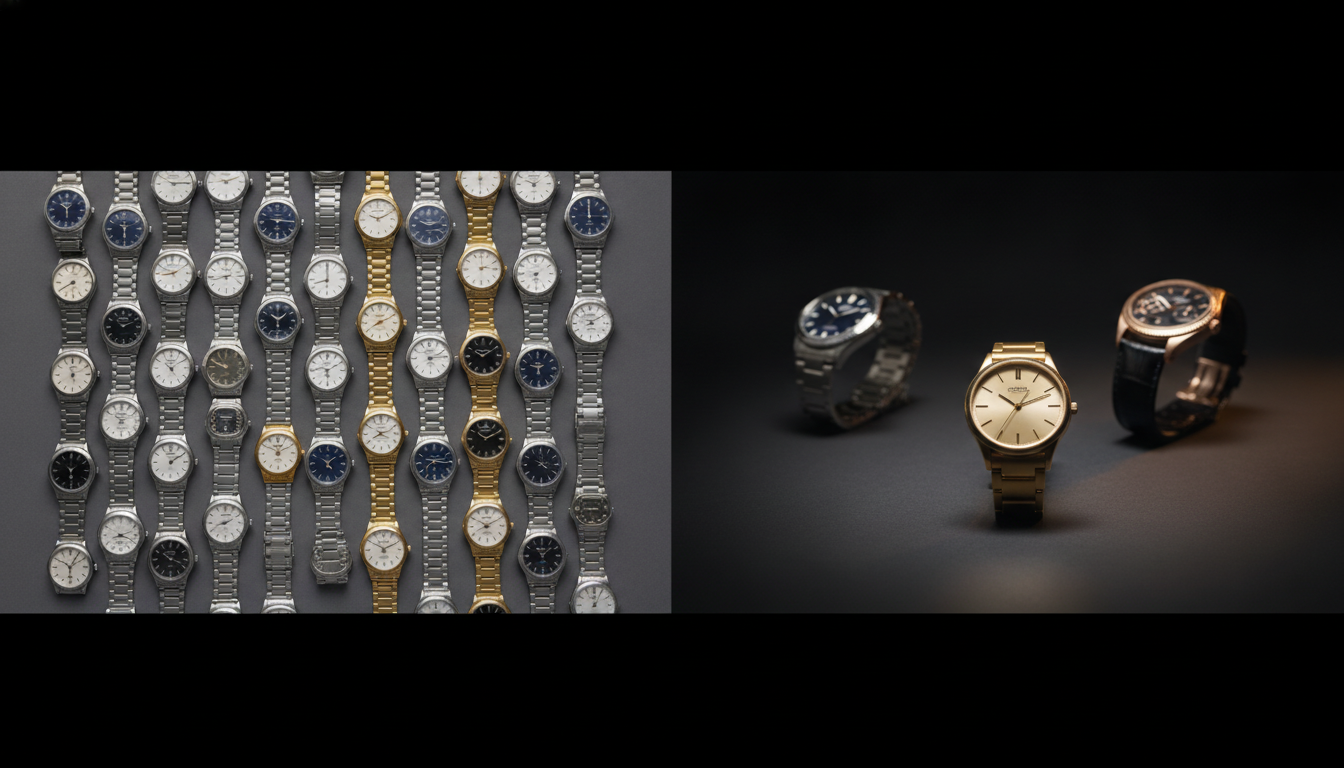
In a luxury watch context, an unfiltered catalog is a listing environment where every piece the dealer or marketplace acquires is published, regardless of condition, provenance depth, mechanical significance, or how it sits next to the rest of the inventory. The seller becomes a conduit. The buyer does the editorial work.
This is the dominant model in the secondary market for a reason. The market is large, fragmented, and competitive. Aggregators scrape listings. Marketplaces let any authenticated seller post. Dealers push whatever they can source, because the alternative is an empty page. The result is what Chrono24's H1 2025 Secondary Watch Market Report calls "a healthy mix of stability, shifting market shares, and selective growth" across more than 560,000 listed watches. That is a lot of inventory, and most of it is technically real.
The qualifier "technically" is doing a lot of work in that sentence.
The catalog is not the problem. The absence of an editorial filter is. When a marketplace publishes everything, the buyer has to do the curation that a specialist would otherwise have done. That sounds fair. It rarely feels fair at 11 p.m. on a Tuesday with twelve tabs open.
The Unstated Job the Buyer Inherits
In an unfiltered catalog, the buyer's job quietly expands. You are no longer choosing between a small set of qualified pieces. You are sorting the qualified from the merely available. You are:
This is not impossible work. It is real work, and most experienced buyers can do it. The cost is that the work is the same whether you are a first-time buyer or a seasoned collector. The catalog does not get smarter as you do.
A pre-owned catalog without an editorial filter asks the buyer to be a curator, a quality controller, and a reference librarian, all before they get to enjoy the watch.
The Four Losses You Don't See on the Listing Page
Most discussions of pre-owned watch risks focus on the dramatic one: counterfeits, frankenwatches, misrepresented condition. Those are real, and they are well covered elsewhere, including in our guide to authenticating pre-owned pieces and our breakdown of common authentication myths. But those are the losses you can see, the ones the market warns you about.
The losses from unfiltered catalogs are quieter, and they are often the ones a buyer only recognizes in hindsight.
1. Context
A pre-owned Patek Philippe 5140R-001 is not the same watch to a collector who knows its history as it is to a buyer who just sees "perpetual calendar, rose gold, brown dial." The reference number, the production run, the dial variant, the service record, the way it sits in the broader Patek lineup: these are the things that separate a meaningful acquisition from a generic one. In an unfiltered catalog, the listing tends to give you the second version. The first version, the version that makes the watch worth more than its components, is something you have to assemble yourself from forums, archive sites, and the occasional book.
When the catalog does not provide context, the buyer's knowledge of the reference has to come from somewhere. If it does not come from anywhere, the listing looks interchangeable with the next one. That is how people end up owning three Rolex sports watches and one quiet dress watch they never wear. The catalog gave them the menu. It did not give them the reasoning.
2. Time
Time is the easiest loss to underestimate. A buyer who knows exactly what they want can ignore a bad catalog. A buyer still forming a point of view pays for the catalog's lack of structure in the only currency the catalog cannot refund: evenings.
EW Watches' 2025–2026 market review describes a market that has moved from speculative frenzy to "deep knowledge over blind hype." That is a healthy direction, but it raises the bar. The buyer who walks into a 500,000-listing marketplace today is expected to know what they are looking at. The hours required to develop that fluency are not trivial. They are a real cost, and they fall entirely on the buyer when the catalog does not help.
A focused inventory of three hundred pieces, chosen with a clear point of view, can save a serious buyer ten, twenty, or thirty hours of research. That is a real number. It is also a number the unfiltered catalog does not acknowledge.
3. Conviction
The third loss is the one that shows up after delivery. Conviction is the feeling that you bought the right watch, not just a watch. It is the part of the purchase that makes the piece a long-term object in your life instead of an item you will quietly relist in eighteen months.
Unfiltered catalogs erode conviction in two ways. First, they make it easy to second-guess. Every listing is a "what if" in a different direction. Did I look hard enough? Is there a better condition example somewhere? Am I paying the right price? Without an editorial position to anchor the choice, those questions keep coming.
Second, unfiltered catalogs do not give the buyer a story to repeat. When someone asks you about the watch on your wrist, a curated piece usually comes with a narrative: who selected it, why this reference, where it sits in the maker's history, what to know about the dial. A generic listing has none of that. The watch is yours, but the context is not. That is a small thing, and a real one.
4. Comparison Anchor
This one is technical, and it matters. An unfiltered catalog publishes everything, including outliers. A buyer sees a Rolex Submariner at a price that looks too good and a Patek Nautilus at a price that looks too high, and the catalog gives them no way to know which is the anomaly. The extreme listings become the comparison anchor, and the buyer's sense of fair value bends toward whichever direction they were already inclined.
The EveryWatch 2025 report shows that pre-owned prices for identical specifications now vary only 8 to 12 percent across standardized secondary channels, down from 25 to 40 percent in 2019. That is a healthier market, but it is a healthier market for buyers who can see the standardized data. In an unfiltered catalog, the buyer cannot see the standardization. They see the spread, and they have to guess which end is right.
You do not lose money to an unfiltered catalog because a listing is fake. You lose time, context, conviction, and your sense of what "fair" even means.
What Curation Actually Does, and Why It Is Not Gatekeeping
There is a reflexive reaction to the word "curated" in luxury circles. It sounds like gatekeeping. It sounds like the dealer's taste standing between you and what you want. Sometimes it is exactly that, and the buyer should walk away.
But curation, done honestly, is a buyer-side service. It is the act of saying: we have already done the filtering, so the inventory you are looking at is the inventory we believe in. The selection criteria, if they are real, are doing the work the buyer would otherwise do alone.
In our case, the criteria are specific. Every timepiece in our pre-owned collection is chosen because it represents exceptional design, mechanical significance, or enduring collector appeal from a list of respected maisons, including Rolex, Audemars Piguet, Patek Philippe, Vacheron Constantin, F.P. Journe, and Richard Mille. Each piece is independently authenticated on arrival, goes through a multi-point inspection, and is reverified before shipment, which is how we back the 100% authenticity guarantee.
What this means for the buyer is that the catalog is not the whole world. It is a choice. When you see a piece on our site, you are not seeing every example of that reference that exists. You are seeing the one we chose to represent it. That is a smaller catalog, and it is a different experience.
Curation Reduces Decision Load
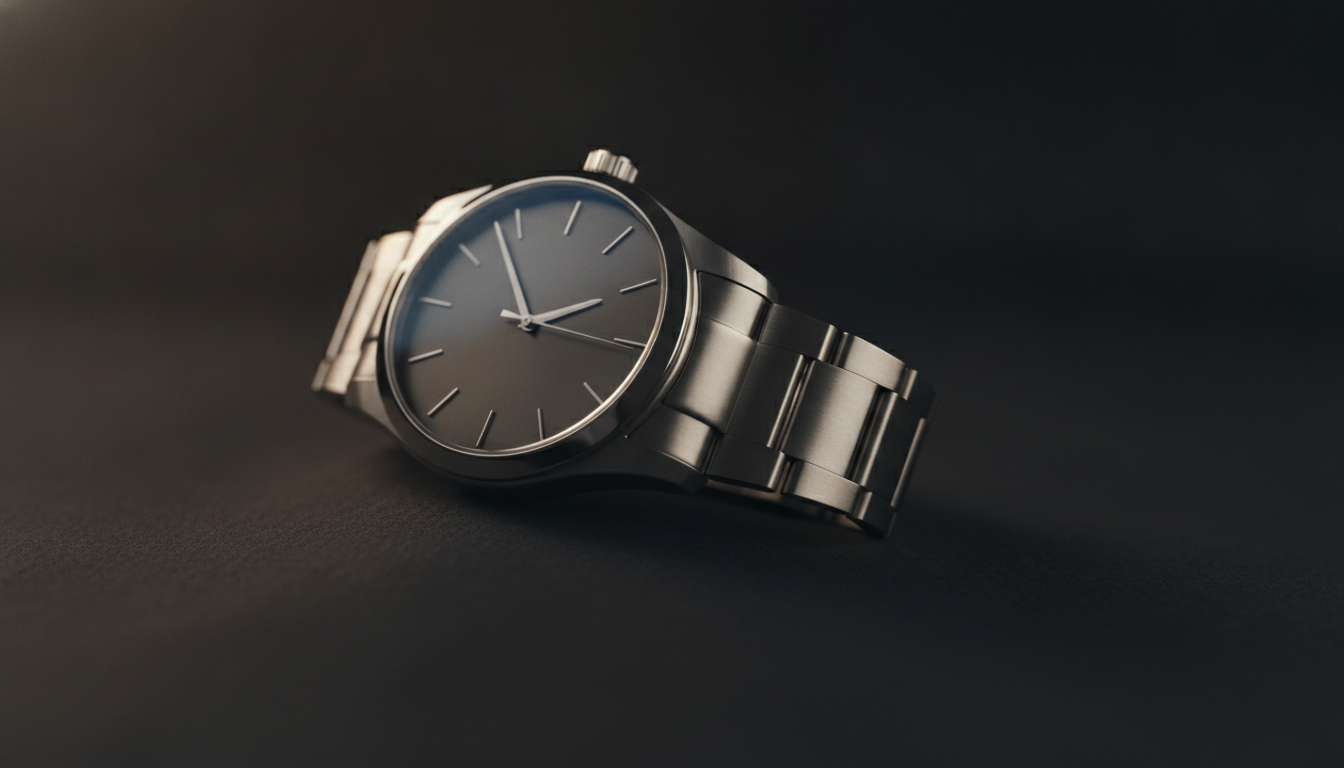
The most practical argument for curation is the simplest one. Fewer choices, each pre-vetted, produce faster and more confident decisions. That is not luxury marketing. That is a well-documented feature of how people make high-stakes purchases.
In watch collecting, this matters more than in most categories, because the downside of a bad decision is not just money. It is a piece you will live with, wear, service, store, and eventually try to sell. The compounding effect of a poorly chosen piece is larger than the compounding effect of a poorly chosen sweater.
Curation Is a Risk Management Tool, Not a Status Symbol
There is a persistent idea that curated means exclusive, and exclusive means expensive. In a healthy pre-owned market, curation is the opposite. It is the buyer's insurance policy. It moves the work of authentication, condition assessment, and reference evaluation off the buyer's plate and onto the dealer's. The dealer absorbs that work. The buyer gets a smaller catalog and a shorter path to a confident purchase.
The risk to the buyer in an unfiltered catalog is not that a piece is fake. That is a problem, but it is a problem the scam-avoidance frameworks already address. The risk is that the buyer is alone in front of a wall of inventory with no one to ask. Curation is the answer to that, not the cause.
How to Evaluate a Catalog Before You Spend an Evening on It
A reader who has made it this far is probably shopping now, or about to be. You do not need to take anyone's word, including ours. You can evaluate any pre-owned catalog in about ten minutes with five questions.
1. Can the seller tell you why this piece is in the catalog? Not why the watch exists. Why this example, this reference, this condition tier. If the seller can answer, the catalog is curated. If the answer is some version of "we had it, so we listed it," it is not.
2. Does the listing include more than reference numbers and a price? Honest listings talk about dial variant, service history, original components, and where the piece sits in the maker's lineup. A catalog that consistently omits this is a database, not a selection.
3. Is authentication disclosed, or just implied? Every piece in a legitimate catalog is authenticated, but only some sellers make the process visible. The ones that do, including the multi-point inspection and re-verification process we publish, are the ones you can hold to it.
4. Can you reach a human before you buy? Concierge-level support is a structural feature of how a curated dealer operates, not a perk. If the only way to interact with the seller is a checkout form, you are not dealing with a curated catalog. You are dealing with a storefront.
5. Is the inventory small enough to defend? This is the simplest test. A catalog of a few hundred pieces, chosen with a point of view, is defensible. A catalog of fifty thousand pieces is a database. Both are legitimate business models. They are not the same buying experience, and the buyer should know which one they are using.
You can spot a curated catalog the same way you spot a curated wine list. It is shorter than the alternative, and someone can tell you why every entry is on it.
The Real Cost Is the Decision You Did Not Make Well
The pre-owned watch market in 2026 is not a dangerous place. It is also not a place where volume automatically serves the buyer. Bain & Company's 2025 Luxury Study describes a luxury market that has stabilized after the post-Covid price run, with growth shifting toward an experience-led, values-driven audience. The reading from EW Watches' 2025–2026 review is that, within watches specifically, polarization has deepened at the top end. Chrono24's H1 2025 report shows collectors returning to fundamentals: design, mechanical merit, long-term relevance. The buyer in 2026 is better informed and more selective than the buyer in 2022.
That buyer does not need more listings. They need better ones. They need a catalog that has already done the work of choosing, so the buyer's remaining job is the part of the job that actually matters: deciding which watch belongs in their life.
The losses from unfiltered catalogs are not dramatic. They do not show up as a missed authentication or a bad transaction. They show up as the hours you spent, the references you were not told about, the second-guessing after the box arrived, and the quiet suspicion that the piece you chose was not really the piece you wanted. None of those are catastrophic. All of them are real.
If you are choosing where to shop, choose the catalog that is small enough to defend, specific enough to argue for, and accountable enough to reach. The size of the database is not the asset. The quality of the selection is.
For buyers who want to see what a small, defended inventory looks like in practice, our current pre-owned selection is organized around the maisons and references we genuinely stand behind, and our team is reachable directly at (213) 444-0926 for any piece you do not see listed. That is the model. It is not the only model. It is the one we built, and it is the one the unfiltered catalog quietly cannot offer, no matter how many listings it adds.
