

Spot the Fake: Your Guide to Buying Authentic Luxury Goods Online
The Stellaris Journal
Half a trillion dollars. That's the staggering scale of the counterfeit luxury goods market today – a full five hundred billion dollars. If you've purchased anything 'designer' online recently, there's a significant chance you've already been duped. In fact, one in four consumers unknowingly falls victim.
But it's not just about wasted money. We're talking toxic chemicals in your supposedly high-end skincare, or dangerously flammable components in what you thought were premium electronics. These fakes pose tangible risks to your health and home. So, how do you protect your finances and your well-being?
This comprehensive guide is your essential blueprint. We'll cut through the misinformation and equip you with the precise knowledge to identify counterfeits – both before you click 'buy' and after the item arrives at your door. You can absolutely learn to distinguish the genuine from the fake.
The $500 Billion Problem: Understanding the Scale of the Counterfeit Market
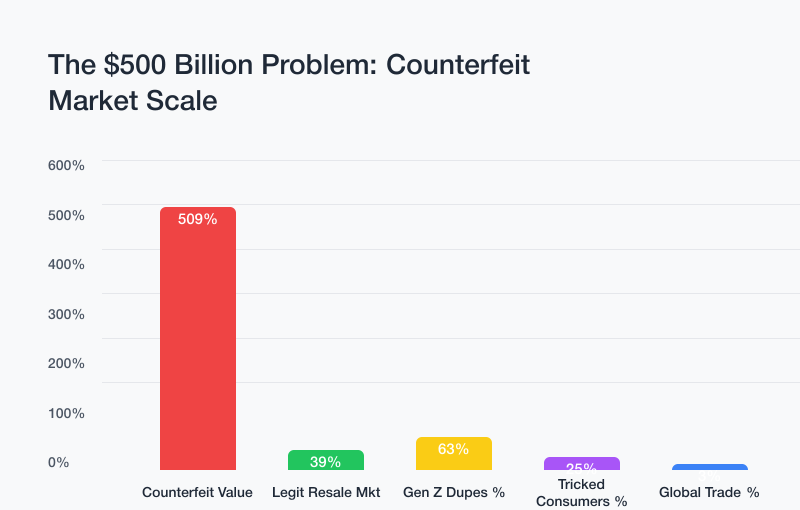
Think the counterfeit problem is confined to a few street vendors hawking fake watches? Think again. This isn't a petty nuisance; it's a colossal global enterprise that devours legitimate businesses and floods the market with substandard, dangerous goods. This shadowy economy is so vast it's mind-boggling, and its impact directly extends to you.
This isn't some marginal issue. The global trade in counterfeit and pirated goods accounts for a staggering 3.3% of all global trade. According to the OECD, that translates to $509 billion – half a trillion dollars simply vanishing. This isn't merely about major brands incurring losses; ultimately, it's a cost borne by consumers.
Compounding the problem, social media isn't merely complicit; it actively exacerbates the issue. The burgeoning 'dupe culture' prevalent on platforms like TikTok and Instagram intentionally blurs the lines between inspiration and imitation. Klarna reports that 63% of Gen Z shoppers are actively seeking 'dupes,' a trend BrandShield identifies as directly fueling the counterfeit market. This phenomenon moves beyond merely finding inspired alternatives; it’s about acquiring the closest possible replica for a fraction of the price, inadvertently paving the way for truly deceptive fakes to proliferate.
Consider the legitimate luxury resale market, valued at over $39 billion last year. This market's very existence relies on trust and meticulous authentication. However, the unchecked proliferation of counterfeits systematically erodes this essential trust. When consumers are repeatedly deceived, their confidence in purchasing secondhand items diminishes, ultimately harming the entire ecosystem.
The critical takeaway: More than one in four consumers – potentially you or someone you know – has been unknowingly defrauded. Incopro data confirms that many purchase counterfeits online without ever realizing it. This underscores the sophisticated nature of modern counterfeiting operations, which are far removed from simplistic back-alley transactions.
The counterfeit market isn't just big; it's a sophisticated, global con that bleeds you financially and shakes your trust.
More Than Money: The Dangers and Ethical Cost of Counterfeit Products
Beyond the financial drain, counterfeit goods pose genuine threats to your health and safety. This is far from a victimless crime against abstract corporations; these products can have direct and detrimental impacts on your personal well-being.
We're talking about genuinely toxic materials. Cheap accessories and jewelry, for instance, have been found by Corsearch to contain lead-based paint and harmful metal alloys. Direct skin contact can lead to severe allergic reactions or even more serious health complications. That 'cute' necklace could result in a persistent rash, or far worse.
Counterfeit cosmetics and skincare products present an even more intimate danger. Applied directly to your skin, these items often contain banned chemicals and undisclosed, harmful ingredients. Fake pharmaceuticals are a complete nightmare, either lacking active ingredients entirely or, more dangerously, containing hazardous substances that can actively harm you instead of offering relief.
The grim reality is that money spent on counterfeits doesn't simply vanish. It directly channels funds into sophisticated criminal organizations, not small-time operators. These syndicates operate factories where workers endure exploitation: long hours, meager wages, and unsafe working conditions, as highlighted by TheRealReal regarding severe ethical breaches. Their sole motivation is profit, with complete disregard for human welfare.
So, when you purchase that counterfeit bag, believing you've secured a bargain, you're actually funneling your money directly into the hands of criminals and inadvertently endorsing a morally bankrupt and dangerous industry.
Buying counterfeits isn't a clever shortcut; it’s a direct funding line to dangerous criminals and a gamble with your own health.
Your Pre-Purchase Checklist: 5 Red Flags of a Counterfeit Seller
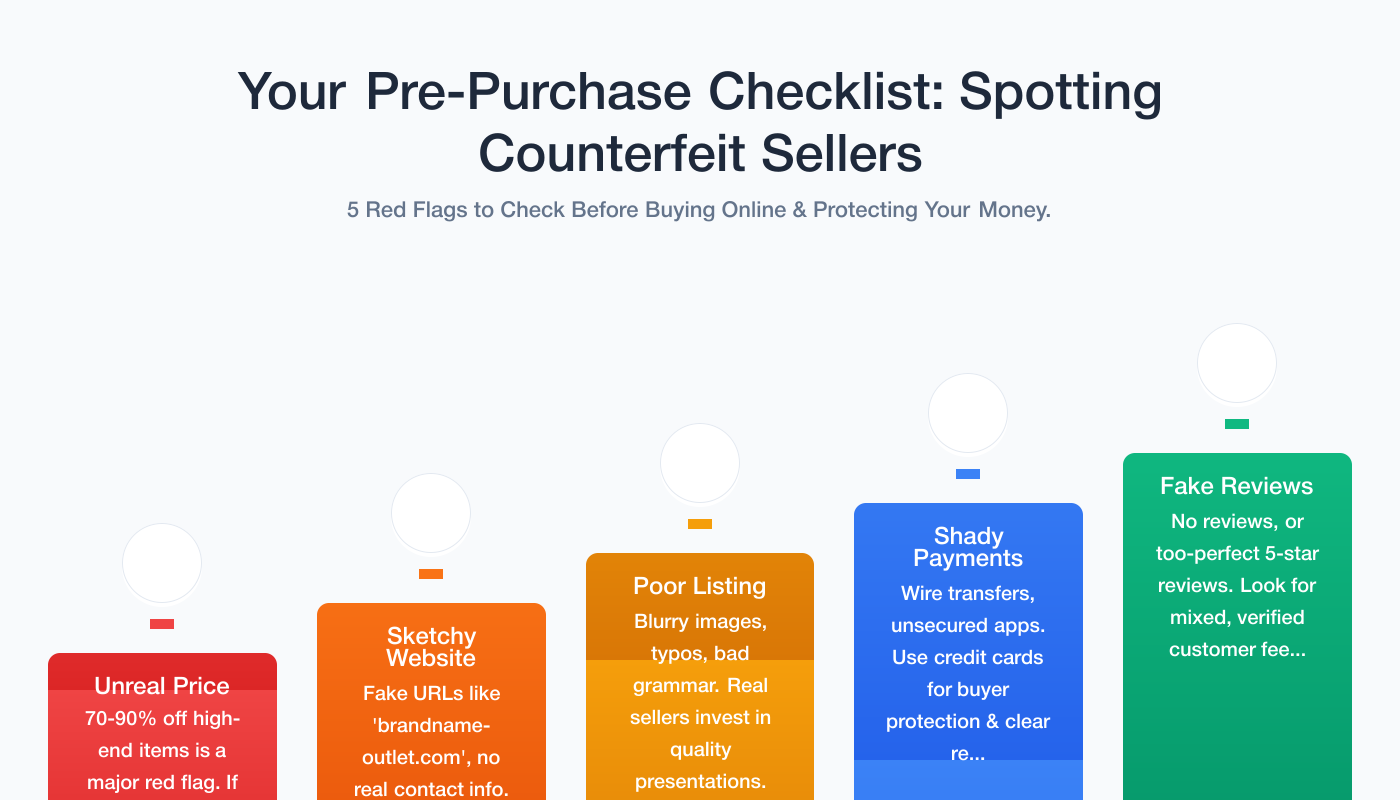
Having covered the gravity of the problem, let's pivot to proactive defense. The online marketplace is a minefield of deception, demanding vigilance. While no method is absolutely foolproof, recognizing key red flags is your most effective pre-purchase defense. Here are five critical indicators you must scrutinize before committing your funds.
- The Price Tag.
- The Seller and Website.
- Listing Quality.
- Payment & Policies.
- Reviews (or lack thereof).
- This issue transcends a mere bad purchase. It encompasses toxic chemicals in "luxury" cosmetics, flammable components in "designer" electronics, and substantial illicit funding flowing to criminal enterprises. The true cost extends far beyond the monetary price tag.
- Your primary defense is proactive vigilance. Meticulously scrutinize the seller, every product image, and every detail in the description. Should any red flag emerge, disengage immediately. The majority of fakes can be identified before a transaction even occurs, simply by attentive observation.
- Once an item is physically in your possession, conduct a thorough hands-on examination. Move past intuition and critically assess the stitching, serial numbers, material weight, and texture. If any doubt persists, professional authentication is warranted. Certainty should replace speculation.
The alluring price is often the initial draw, but a deal that appears too good to be true invariably is. Legitimate sellers simply do not offer high-end items at 70-90% discounts. As BrandShield consistently warns, an implausibly low price is a primary indicator of a counterfeit. Don't mistake a scam for a steal.
Vet your seller meticulously. Is the URL the official brand website, or a suspicious variant like "brandname-outlet-shop.com" or "authentic-brandname-sale.net"? Scrutinize the address for subtle misspellings or unusual domains, as consumer protection agencies frequently highlight these deceptive tactics. A lack of transparent contact information, such as a physical address or verifiable phone number (in favor of a generic email), is a significant red flag.
Inspect product images for blurriness, pixelation, or evidence of being lifted directly from official brand websites. Authentic sellers, particularly of luxury items, invest in professional photography. Furthermore, analyze the accompanying text: poor grammar, typos, or awkward phrasing are glaring red flags, indicating a lack of professionalism and often suggesting a non-native English speaker. As TheRealReal emphasizes, quality presentation reflects authentic merchandise; shoddy copy screams counterfeit.
Be highly suspicious of unusual payment requests, such as wire transfers or unsecured apps. Always opt for credit card payments, as credit cards offer robust buyer protection. Wire transfers provide no recourse once funds are sent. Additionally, scrutinize the return policy: legitimate businesses maintain clear, unambiguous terms without confusing language or hidden clauses. A vague or absent return policy is a strong indicator that the seller has no intention of issuing refunds.
Customer reviews provide crucial insights. A complete absence of reviews is suspicious, as are uniformly five-star, overly effusive testimonials that appear mass-produced or bot-generated. Seek out genuine reviews, which typically include a mix of feedback, reflecting real customer experiences. Always verify the source of reviews to ensure they come from actual, verified purchasers. For guidance on how scams operate, see the latest FTC warnings.
Before committing to a purchase, rigorously scrutinize every aspect of the seller and listing; your initial skepticism is your most powerful defense against counterfeits.
The Moment of Truth: A Hands-On Guide to Authenticating Your Item
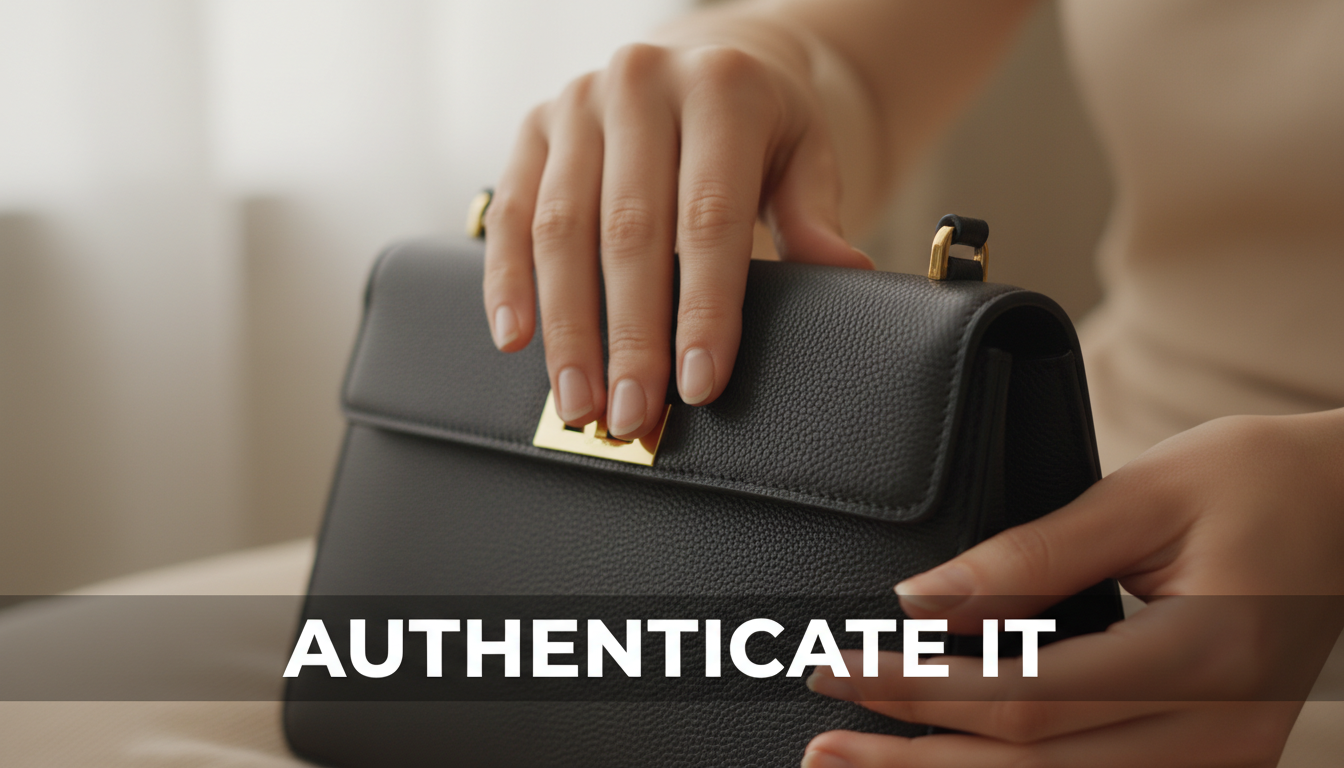
The package has arrived. While online images might have appeared convincing, the true test begins in your hands. This is the crucial stage where even the most sophisticated counterfeits reveal their flaws. Counterfeiters invariably cut corners; your task is to meticulously identify every single compromise.
Begin by removing the item from its packaging, deferring judgment on tags for now. Focus on tactile examination: feel the item. Pay particular attention to its weight. Authentic materials, such as genuine gold or high-grade leather, possess a distinct heft and density compared to their cheaper, synthetic counterparts. Next, engage your sense of smell. A distinct 'plasticky' odor is a definitive red flag, indicating the presence of synthetic materials like PVC rather than genuine leather or silk.
Next, scrutinize the stitching. Luxury brands are meticulously obsessive about this detail for excellent reasons. Use a magnifying glass if necessary to examine the uniformity of stitches, both internal and external. Look for perfect straightness, consistent tension, and the complete absence of loose threads or skipped areas, a point frequently emphasized by Libas Collective regarding uniformity and precision. For patterned items, especially monograms, ensure perfect alignment across all seams and panels – a hallmark of authentic craftsmanship. Similarweb data consistently shows brands prioritize this level of detail.
Turn your attention to the hardware: zippers, clasps, feet, and buckles. These are not merely decorative elements but precisely engineered components designed with substantial weight and a luxurious feel – never hollow or tinny. Authentic luxury hardware is solid, and any branding should be crisp, deeply engraved (not merely printed), and flawlessly finished. As documented by Bloc Magasin, even subtle inconsistencies, like a 'trying too hard' feel in a Prada plaque, can expose a fake.
And the details are paramount. Seek official hallmarks and purity stamps, particularly on jewelry; these minute markings convey an item's authentic history. For bags, locate the date code or serial number, often discreetly embossed in hidden corners or interior pockets. Legitimate brands meticulously track these identifiers; counterfeits either lack them entirely or feature obviously incorrect or poorly executed codes, a common observation within Reddit's DesignerReps community, whose members possess keen insight into replica nuances.
Finally, assess the materials themselves. As TheRealReal's authentication guide emphasizes, examine leather for suppleness, authentic grain, and how it typically ages. Counterfeit materials often feel stiff, overly shiny, or simply lifeless. Crucially, do not overlook the interior lining; it should possess a quality comparable to the exterior, not a cheap, crinkly texture, as every component contributes to the overall authenticity.
Here's the thing: High-quality counterfeits can fool your eyes at a glance. But your fingers, your nose, your critical scrutiny? They rarely lie. Trust your gut on the small stuff. That’s the ultimate test.
Calling in the Experts: How Professional Authentication Works
The Best Luxury Handbag Authentication Services Comparison and How to Use Them
Unlock the World of Authenticity | Learn How to Use Entrupy Luxury Authentication
Can AI really be used to authenticate luxury goods?
Can AI really be used to authenticate luxury goods?
You've meticulously completed your personal inspection – examining, smelling, and feeling every detail. Yet, a persistent doubt lingers, or perhaps the item's value is simply too high to risk a misjudgment. In such cases, the next logical step is to consult professional authenticators. For those who demand guaranteed peace of mind, shopping through trusted platforms like The Stellaris Collection remains the best way to avoid the stress of manual authentication.
Indeed, personal expertise has its limits, especially when specialized, brand-specific knowledge accumulated over years is required. Professionals offer two primary authentication pathways: digital and physical.
Digital authentication offers speed and convenience. You provide a series of high-resolution images capturing every angle, stitch, and component. Services like RealAuthentication and Libas Collective utilize human experts who meticulously analyze these images, cross-referencing them against extensive databases of authentic and counterfeit items. While incredibly effective, it's important to remember this method relies solely on visual evidence.
However, the gold standard remains physical authentication, where experts directly examine the item. This allows for tactile assessment – feeling weight, texture, and material quality – and the deployment of specialized tools such as microscopes or even X-rays. As noted by Bloc Magasin, advanced AI-assisted platforms are also integrating into this process, pushing the boundaries of authentication technology.
Innovations like Entrupy exemplify this technological advancement. Their system uses an AI-powered device that captures microscopic images of the item's surface. These incredibly detailed images are then analyzed and compared against a vast database of millions of authentic and counterfeit product records, identifying subtle nuances at a fibrous level – essentially a digital fingerprint. Services like Legit Check and LegitGrails leverage similar cutting-edge technology due to its proven efficacy.
Despite technological advancements, human experts remain indispensable. Their unparalleled, deep-seated brand knowledge—encompassing nuances like evolving serial number formats, heat stamp variations, or the precise tactile difference in zipper pulls across model years—is critical. Brands often implement subtle changes over time, and a seasoned expert possesses this historical production data. They synthesize all available information, never relying on a single isolated detail, to form a comprehensive authenticity assessment.
When your gut screams "danger" or the stakes are just too high, you bring in the pros. Because definitive peace of mind? It's worth every penny.
Behind the Scenes: How Brands Are Combating Counterfeits

The battle against counterfeiting isn't solely waged by consumers. Brands themselves are deeply entrenched in this fight, facing immense financial pressures. Projections indicate the fashion industry alone could incur over $50 billion in annual losses by 2030. This significant threat compels them to vigorously defend their intellectual property and market share.
Their strategy? Leveraging proprietary technology. The objective extends beyond merely identifying individual counterfeits post-sale; it's about prevention and significantly raising the barrier for entry for counterfeiters. Brands are making substantial investments in sophisticated online brand protection initiatives out of necessity.
Many deploy advanced AI platforms, such as BrandShield's AI.ClusterX. These systems act as digital bloodhounds, tirelessly scanning online marketplaces like eBay and Amazon, social media channels, and illicit websites. They relentlessly search for infringing listings, unauthorized logos, and any indicators of counterfeit activity. Upon detection, these platforms flag the content, enabling brands to initiate rapid takedown procedures. Just as we champion at The Stellaris Collection, transparency is the key to a better luxury market.
Furthermore, brands are embedding direct authentication mechanisms into their products. Increasingly, items feature NFC tags or scannable QR codes, allowing consumers to perform instant verification using a smartphone. This provides immediate confirmation of authenticity on your device. Some brands are even integrating blockchain records for immutable traceability. This strategic move empowers you with immediate, personal verification capabilities.
The brands are not passive victims. They're investing in advanced tech to protect their turf and give you the tools to spot a fake before you even open your wallet.
The statistics are undeniable: counterfeits are pervasive and increasingly sophisticated. We've established the monumental scale of this problem; it's evolved far beyond simple knock-offs to a half-trillion-dollar industry built on systemic deception. Your financial security and personal health are directly at risk.
To summarize the essential takeaways:
Authenticity is not a default; it is a state achieved through diligent scrutiny or, ideally, guaranteed by expert verification. This is no game for the unwary. To secure the genuine article, active engagement is required.
Therefore, for any high-value item – a luxury watch, significant jewelry, or anything demanding absolute certainty – do not rely on chance. Seek professional vetting from trusted experts who possess the nuanced knowledge to differentiate a high-quality replica from the genuine article. Anything less is a gamble, and luck is an unreliable commodity.
