

Editorial Standards on a Watch Floor: What Curated Really Means
The Stellaris Journal
Most people look at a dealer's published inventory and see a list. Brands, references, prices, photos. What they don't see is the longer list sitting behind it: the watches we passed on, declined, walked away from, or sourced and chose not to list. That second list is the actual editorial work. It's also the reason our floor looks the way it does.
The phrase "editorial standards" gets thrown around in luxury retail like a marketing flourish. Strip the language away and it means something much more specific. It means a written point of view that gets applied, consistently, before a piece goes live. It means saying no to inventory that would otherwise sell. It means telling a client, politely, that the watch they're asking about doesn't meet the floor's criteria, even when we could secure it.
This is what shapes the watches we choose to carry. Not aesthetics. Not fashion. Not what happens to be trending on Instagram this week. A set of documented filters, applied one watch at a time, with consequences you can see on the published page.
Editorial standards are the difference between a floor with a point of view and a catalog with a search bar.
TL;DR
- "Curated" is the most overused word in pre-owned watch retail. Editorial standards are what it should actually mean: a written filter, applied to every listing, with the rejections visible by inference.
- Our three filters are mechanical significance, exceptional design, and enduring collector appeal. Anything that clears one passes. Anything that clears none does not list.
- The hardest part of editorial discipline is not sourcing. It is rejecting pieces clients ask for because the example available does not meet the floor's standards.
- The trade-off of a curated floor is volume. The upside is what shows up on the page: a coherent shape, transparent disclosure, and a higher baseline of trust.
What "Editorial" Means on a Watch Floor
The word "editorial" comes from publishing. An editor decides what runs, what gets cut, what gets a headline, and what gets filed under a different section. The decisions are made before publication. Once something is on the page, the work is mostly invisible. The reader sees the result, not the reasoning.
Apply that to a watch floor. The editor decides what to source, what to decline, what to describe in detail, what to disclose about condition, what to price, and what to leave off the page entirely. Most buyers see the inventory. They don't see the work that produced it.
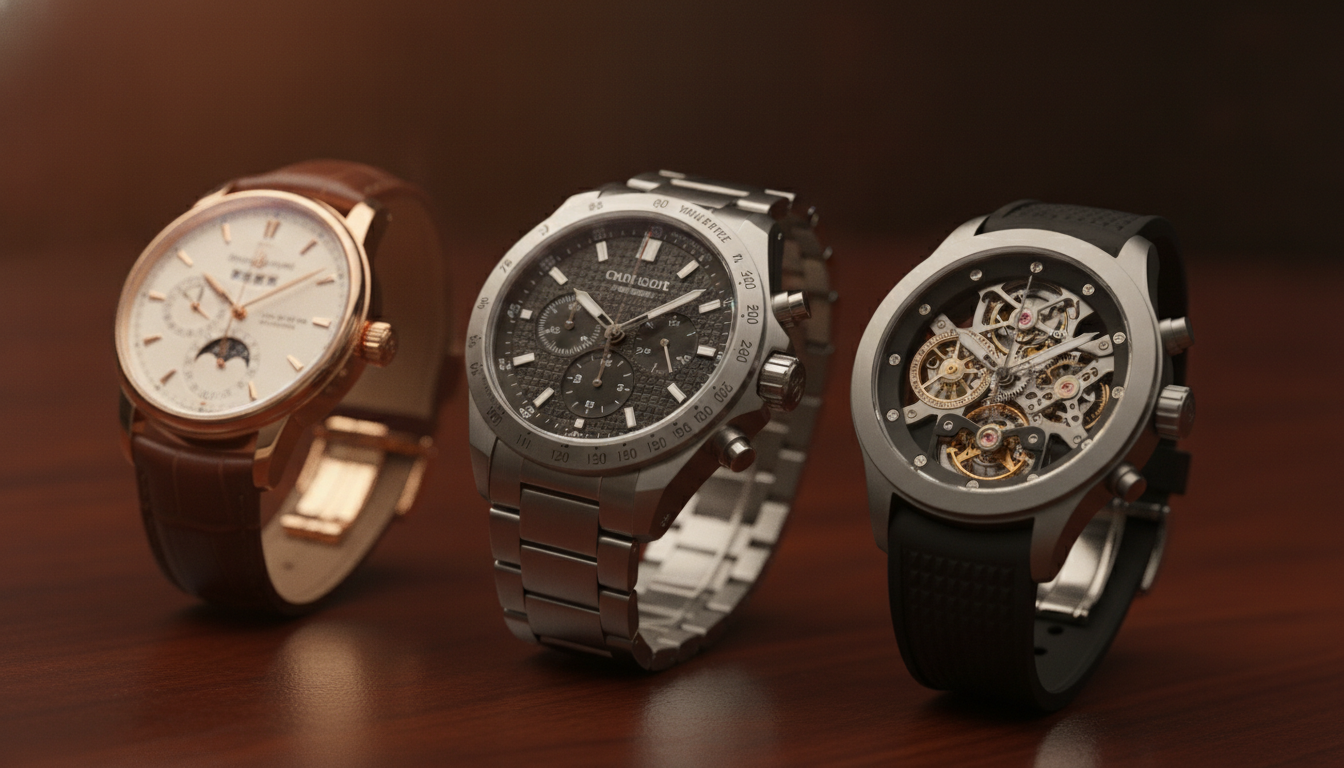
There is a meaningful difference between a curated floor and a catalog floor, and it isn't volume. A catalog floor lists everything that comes through the door. A curated floor applies a brief. Ours is short and explicit. Every piece we list is chosen for at least one of three reasons: exceptional design, mechanical significance, or enduring collector appeal. Anything that doesn't clear at least one of those bars is not on the floor, regardless of brand, regardless of demand, regardless of how easy it would be to move.
That brief is not aspirational. It is operational. It gets applied to every sourcing call, every consignment offer, every request a client makes through our concierge line. The discipline is in the consistency.
An editorial standard without a written filter is a slogan. With one, it's a practice.
The Three Filters, Explained
The filters sound simple. They aren't. Each one has produced arguments at our table.
Mechanical Significance
A watch passes this filter when what is happening inside the case is the reason it exists. A Patek Philippe perpetual calendar. A F.P. Journe chronomètre. An Audemars Piguet Royal Oak with a finely finished in-house caliber. A Vacheron Constantin Overseas whose movement architecture you can actually see through the dial.
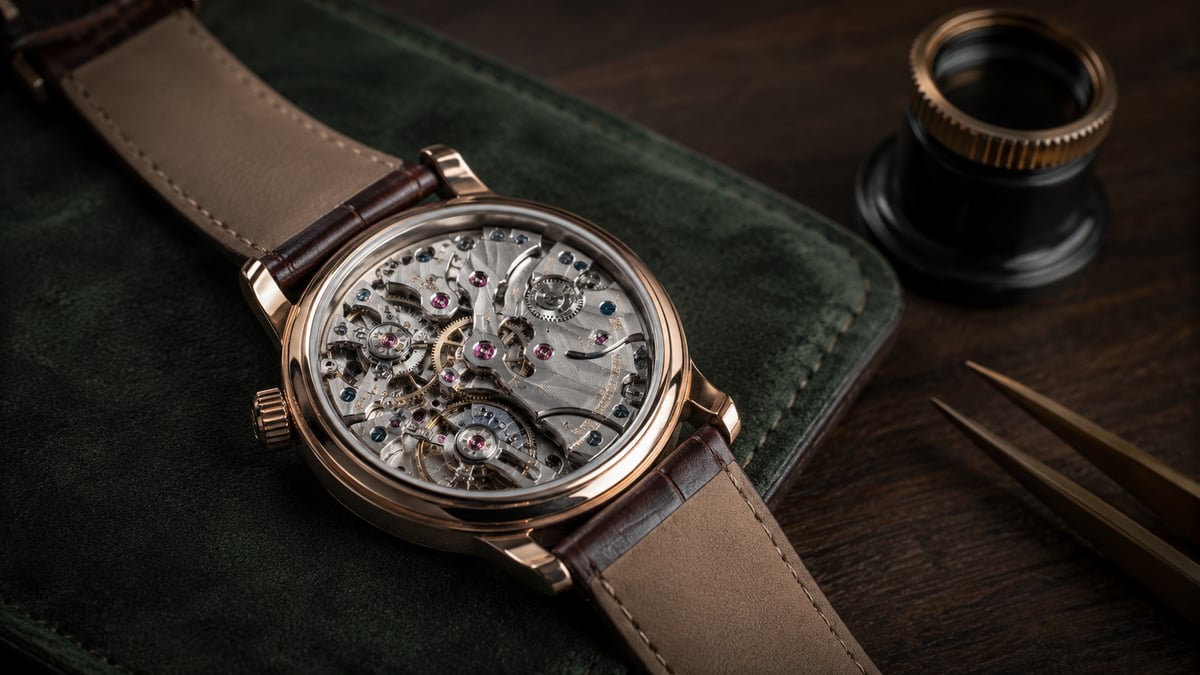
Mechanical significance is not the same as complexity for its own sake. A basic three-hand Lange & Söhne with a hand-finished movement clears this filter more easily than a heavily complicated watch whose components are mediocre. We have walked away from pieces with six complications because the finishing did not earn them.
We have also turned down references we love on principle because the example available did not match the maison's standard. A Patek Calatrava with a redialed dial is still a Patek Calatrava by reference, but it no longer carries the maison's mechanical argument. That piece does not list.
If a watch's reason for being is the movement, the movement has to deliver. Anything less and we move on.
Exceptional Design
Some watches earn their place on the floor because of how they look on the wrist. The Cartier Tank. The Royal Oak. The Rolex Daytona with the right dial configuration. The Lange 1815. These are pieces where the design has done cultural work. They have been looked at for decades. They have been imitated. They have become vocabulary.
Exceptional design is the most subjective of the three filters, and it is the one we argue about most. A design has to be specific to clear the bar, not merely expensive. A heavily embellished sports watch in a precious metal is not exceptional design. It is a sports watch with money applied to it.
We have declined pieces from houses we respect because the design was derivative, the proportions were off, or the configuration was a fashion-driven variant rather than a coherent expression of the maison's language. None of those pieces needed to be sourced. None were.
Enduring Collector Appeal
The third filter is the one that protects the floor against hype. Enduring collector appeal means a watch has held, or is reasonably expected to hold, meaningful collector interest over a long horizon. Not next quarter. Not this calendar year. Across cycles.
This filter is what separates our editorial position from a market-timing position. A reference that spikes because of a celebrity wearing it does not clear this filter. A reference that has quietly appreciated over fifteen years because collectors continue to want it, regardless of fashion, does.
We use a few tests. Is there an active secondary market for this reference independent of retail? Does the maison itself produce it consistently, or is it a one-off variant? Are collectors buying to wear, or buying to flip? If the answer is mostly flip, the piece does not list.
Any watch can clear one of these three filters. The pieces we carry are the ones that have cleared at least one.
What the Filter Actually Rejects
The filter is only real if it produces rejections. Here is what gets turned down on a regular basis.
Polished cases presented as "excellent condition." A polished case is not excellent condition. It is a case that has been abraded back to remove scratches, which removes material, which reduces the geometry the maison originally specified. We have walked away from otherwise desirable references because the case had been polished. The piece is still a valuable watch. It is no longer an original-spec watch, and that distinction matters on a curated floor.
Franken pieces, where components from different production years have been combined to simulate a complete watch. This happens more often than buyers realize, particularly on references with long production runs. The dial, hands, crown, bezel, and movement can each come from different years. Authentication will pass on each component individually. The piece as a whole is not what it claims to be. We pass.
References that are scarce but shallow. A limited edition of 50 pieces with no mechanical argument and no design distinction is still 50 pieces. Scarcity without substance is noise. We let the market carry those.
Heavily modified aftermarket pieces. Skeletonized aftermarket conversions, custom diamond settings applied after the fact, dial modifications that the maison never offered. Some collectors love these. They are not editorial-floor material.
Pieces with documentation gaps we cannot close. A watch missing its original certificate, with a service dial, with no clear provenance chain from the original sale to the present owner, is a research project, not a listing. We occasionally take on those projects. We do not pretend they are ready when they are not.
This list is not exhaustive. It is also not theoretical. Every category above has produced a declined offer in the last twelve months.
Editorial standards are measured by what doesn't make the page, not by what does.
How the Filter Changes What You See
A reader browsing our published watch collection will notice a few things, some of them consciously, most not.
The floor has a coherent shape. It is not the full universe of luxury watches. It is a specific subset: Rolex, Audemars Piguet, Patek Philippe, Vacheron Constantin, F.P. Journe, Richard Mille, and a tight group of independent and heritage houses alongside them. The selection is not random. It is the result of applying the three filters across every reference those maisons produce. The references that didn't pass are not listed. The reader doesn't see them.
The disclosures are specific. Listings on a curated floor name things by their proper term: "original tritium dial," "service replacement crystal," "unpolished case," "bracelet stretch consistent with age." A catalog floor says "mint." The difference is not vocabulary. It is the editorial decision to disclose the actual state of the piece rather than describe an idealized version of it. Buyers who want to evaluate a watch before committing to it need that specificity. A curated floor provides it because the editorial standard requires it. A catalog floor often cannot, because the seller has not done the inspection work that would justify the disclosure.
The pricing is set, not asked. Curated inventory carries a published price because the seller has done the work of evaluating the piece and arriving at a market-based number. Inquiries on a curated floor are usually about availability, condition nuance, or sourcing, not about haggling on the headline figure. A catalog floor's published price is often a starting point for negotiation, because the seller has not committed to a number in the same way.
The inventory reads as a portfolio, not a parts bin. A reader can scroll our floor and see a coherent curatorial argument. A Rolex Daytona sits comfortably near a Patek perpetual calendar sits comfortably near an AP Royal Oak. The coherence is not aesthetic. It is editorial. Each piece passed the same three filters and survived the same review.
These are the consequences a buyer experiences without ever seeing the rejection list that produced them. A buyer who wants to evaluate the floor critically, the way an editor would evaluate a publication, can apply the same read-the-dealer-like-an-editor framework we use internally. The framework works on our floor because the floor was built with it in mind.

The Trade-Off of a Curated Floor
There is a cost to this discipline, and it is worth being honest about it.
The cost is volume. A catalog reseller can list four or five times as many pieces as a curated dealer, because the filter is much weaker. More inventory means more search traffic, more chances for a casual buyer to land on a specific reference, more listings to show up in marketplace-style aggregators. We have chosen not to compete on that axis. The published floor will always be smaller than the largest catalogs in the market.
The second cost is the occasional "no" to a client. Someone calls asking for a specific reference that we can source. We evaluate the example available, and the example does not pass our filter. We decline to bring it in, even though the client is ready to buy and the commission is real. Those conversations are not fun. We have them regularly. We have them because the alternative is listing a piece that does not belong on the floor, which undermines the editorial position the floor is built on. Short-term revenue and editorial coherence cannot both be served by that compromise. We pick coherence.
The third cost is research time. Every consignment offer, every private trade, every sourcing request gets time spent on it before a decision is made. That time has a cost. It is a fixed cost of doing the work honestly. We accept it because the alternative is a floor that drifts toward whatever is easiest to acquire, and we have already seen what that floor looks like elsewhere.
These costs are real. The benefit is also real, and it is the reason the floor has the shape it does.
When a Client Asks for Something We Won't Carry
This is the test the filter gets graded on.
A long-time client calls asking about a heavily modded Daytona, aftermarket dial, custom case finishing. We can find one. It would be a fast transaction. The piece does not pass the editorial filter because the modifications have compromised what made the Daytona a Daytona in the first place. We tell the client that. We explain the reasoning. We offer to source an unmodded example instead. Sometimes the client takes the offer. Sometimes the client goes elsewhere. We are comfortable with both outcomes.
Another client asks about a reference from a brand we respect but whose current production we have chosen not to carry because the design language has drifted. We can source the piece. We decline to list it on the floor. We tell the client why: the design argument that used to make the reference significant no longer applies in the form currently produced. Some clients accept the reasoning. Some do not. The filter holds either way.
A third client brings us a piece to sell on consignment. It is an attractive watch by any objective measure, mechanically sound, fully authenticated. The reference itself has not historically held collector interest, and the price the client wants is not supported by the secondary market. We decline the consignment. We explain the pricing reality. We refer the client to our authentication and consignment process page so they can evaluate their options.
Each of these conversations is an editorial decision being made in real time, in front of a client. The decisions are not always popular. They are always consistent with the written filter. That consistency is the editorial standard.
The hardest moment for an editor is the moment a reader asks for the piece they don't want to publish. The hardest moment for a curator is the moment a client asks for a watch that doesn't pass the brief. Both moments are the test.
What This Means If You Are Buying From Us
A buyer landing on our floor should expect a few things, and not expect a few others.
Expect a floor that has been reviewed, piece by piece, against a written standard. Expect disclosures that name the actual state of the watch rather than describing an ideal version of it. Expect pricing that has been set after evaluation, not published as a starting bid. Expect conversations about a watch that involve its mechanics, its design, and its collector standing, not only its retail price.
Do not expect to find every reference from every maison we carry. The references that didn't pass the filter are not on the page. Do not expect us to source a piece we wouldn't list for a client who is willing to pay. The filter does not bend for transaction size. Do not expect inventory volume comparable to a marketplace. We are not running a catalog.
What you can expect, instead, is a floor that holds its shape. A Rolex Daytona that lists today is a Daytona that we believe meets our standards today. A Patek perpetual calendar that ships tomorrow is a perpetual calendar whose originality, condition, and provenance we have personally verified, through our independent authentication process, before it ever reached the page.
That is what editorial standards produce, when they are actually applied. Not marketing language. A floor you can read.
The Floor Is the Argument
A watch dealer's published inventory is an argument. It argues, through inclusion and omission, what the dealer believes is worth carrying, what condition is acceptable, what pricing is honest, and what disclosure is owed to the buyer. The argument is visible to anyone willing to read it. Most people don't read it. They scan it.
The work of an editorial floor is to make that argument legible, piece by piece, listing by listing. The work is in the rejections, the disclosures, the references declined, the consignment offers turned down, the sourcing requests redirected toward pieces that clear the brief.
The watches we carry are the result. They are not a collection assembled by accident or by market timing. They are the surviving pieces after a filter has been applied, repeatedly, to every candidate that came through the door. That filter is the editorial standard. It is the only reason the floor reads the way it does.
If you want a curated floor, you have to be willing to do the editing. The pieces you don't carry define the pieces you do.
