

Why Market Scarcity Is Often Misunderstood: Beyond 'Limited Stock'
The Stellaris Journal
Stop assuming a "limited edition" label implies the supply is actually thin. More often than not, it’s just a clever math trick designed to bypass your common sense. We’ve been conditioned to equate scarcity with a pure supply chain failure—like empty shelves or missing microchips—but that is a naive way to read a market.
True scarcity is rarely about physics; it’s about psychology.
It’s a strategic choice, not a natural accident. And when you can’t distinguish between an honest shortage and a manufactured squeeze, you aren't an investor—you’re a target. Let’s dismantle the four myths keeping you from making clear-headed decisions.
Myth 1: Scarcity Is an Act of Nature, Not a Business Strategy
Right, listen up. You think scarcity just happens, right? Like there isn't enough of something, so the price shoots up. But that's a myth. Mostly. Because much of what's labeled "scarcity" today is a masterclass in manipulation. A planned operation. A strategic mess.
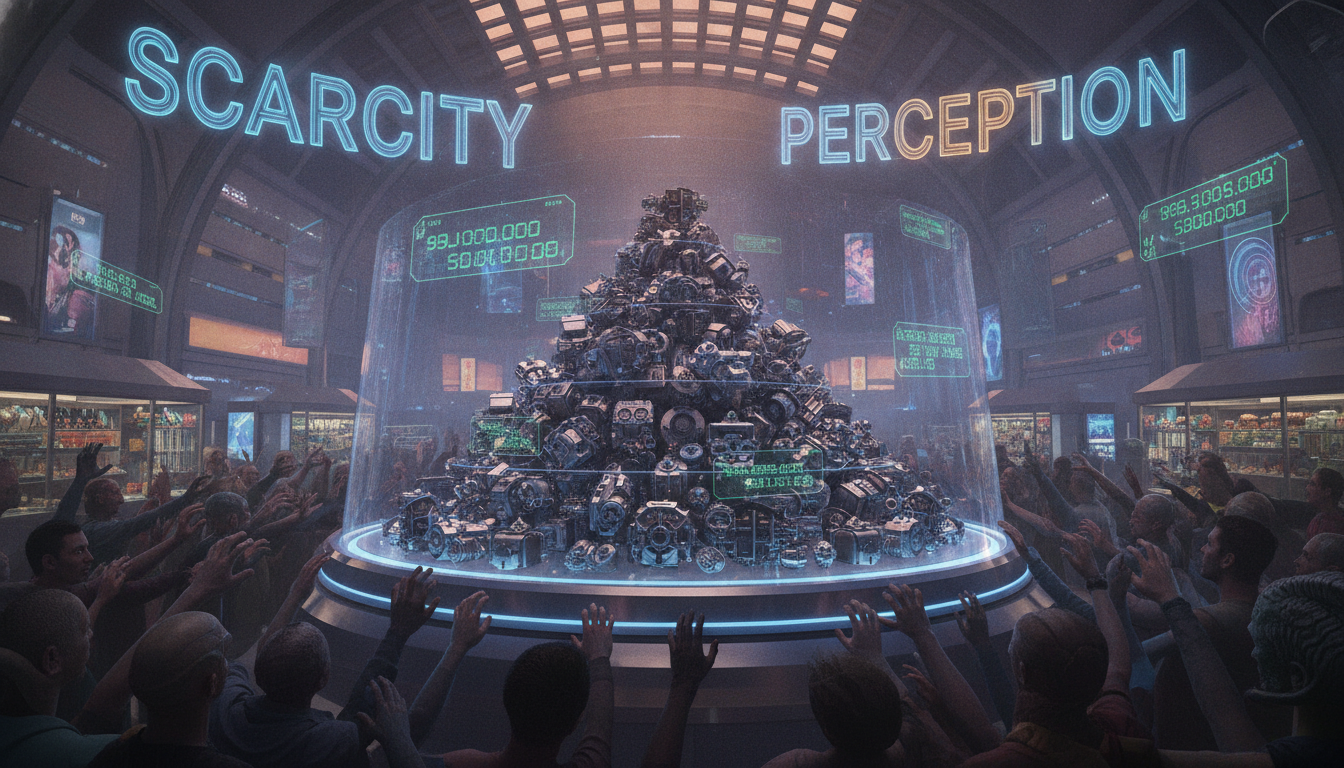
Businesses, they don't just find scarcity. They make it. On purpose. It’s rarely about running out of parts. Or some actual supply chain screw-up. No. It’s a trick. A brilliant, calculated trick. To make you want something so bad, it hurts. To make it feel exclusive. So they drip-feed products into the market. A limited drop, maybe. That’s the entire game. Think of streetwear brands like Supreme). They practically pioneered this strategy. A new collection, gone in minutes. Poof. And suddenly, it’s worth ten times as much on resale. It's a phenomenon you're compelled to chase.
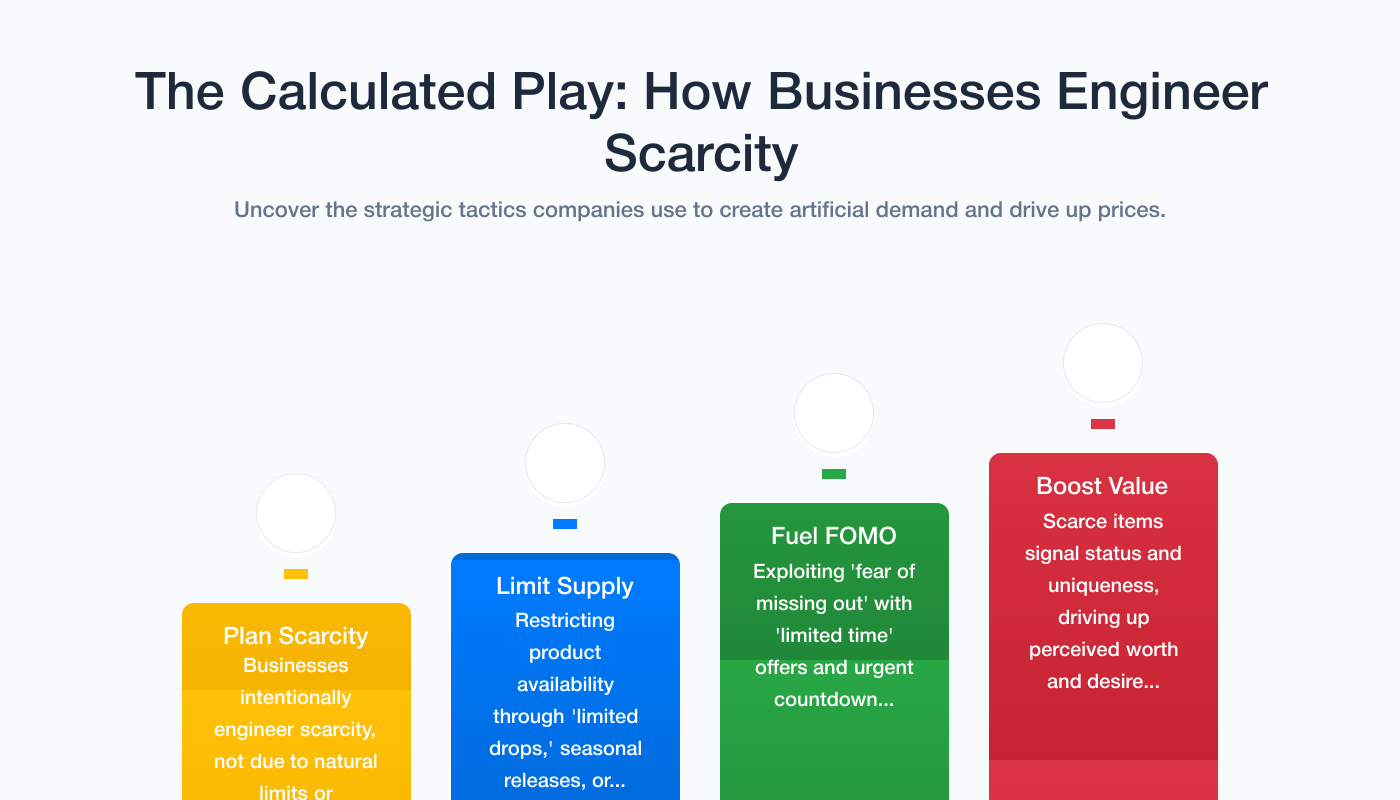
And you know the tactics. You've seen them. Everywhere. Seasonal releases? Pure theater. The Pumpkin Spice Latte. The McDonald's McRib. Suddenly available. Then poof, gone again. Until next year. Or those "limited time only" offers. A countdown clock. It’s not because they can’t make more. It’s because they know your FOMO – your fear of missing out – is a powerful thing. You want what you can’t have. And you’ll pay for it. Because it makes you feel special. Unique. (Research into human psychology shows this hunger for uniqueness is real. It drives crazy buying. Trust me.)
Or consider Disney. The "vault" strategy. Classic films locked away for years. Then released, briefly, before disappearing again. It wasn't about preserving history. Not really. It was about creating a buying frenzy. Compelling you to open your wallet immediately, or risk missing out. Because people want what sets them apart. What gives them a little edge. And scarce items do that. They signal status. A club. (This confirms scarcity as a status symbol. Proof. Right there.) Natural scarcity? That’s when the mines run dry. Or the harvest failed. It’s a genuine problem. This artificial manipulation? It's just a calculated ploy. A market grab.
They want you to think it's a treasure hunt. A lucky break. But really, they're just turning the screws on your wallet. Forcing your hand. So you pay more. For less. It’s a calculated move, always, to jack up perceived value and get a bigger chunk of your cash. Don't fall for it. Ever.
Myth 2: High Prices Are Just Greed, Not a Scarcity Signal
Alright, next up. High prices. You hear it constantly, right? "Greed!" "Price gouging!" Everyone thinks some fat cat in an office just decides to make things expensive. But that's lazy thinking. It's too simple, and largely incorrect. Because here's the actual thing: prices? They're talking. They're sending signals. Loud ones. Crucial ones, even.
See, prices don't just magically appear. And they're certainly not just some CEO's whim. No. They emerge from the intricate dance between the availability of goods (supply, or scarcity) and the public's desire for them (demand). So, when prices shoot up? That's the market screaming, "Hey! Not enough here! Or, too many people want it!" And that signal? It does two big things, immediately. One, it tells producers, "Ramp up production! There’s profit to be made! Act now!" And two, it tells you, the consumer, "Slow down. Maybe you don’t need that much. Or find something else. A substitute." It forces an adjustment. It forces behavior changes. (Even Econlib says politicians miss this simple fact, always blaming greed.)
People howl about "price gouging." Especially during a crisis. And yeah, some absolute vultures exist. They do. But more often, those high prices during a shortage reflect the market performing its often brutal, yet essential, function. It’s how limited goods get to the people who need them most. Or who are simply willing to pay for them. It actually keeps things from disappearing entirely off shelves. Think about it. If the price stays artificially low, everyone buys it all up. Instantly. Then nobody has any. So, a higher price? It’s actually helping allocate. Not just being evil. Even when Similarweb (2024) data shows a surge in demand for certain crisis-related products, the price jump reflects that scramble, that limited supply trying to meet crazy demand. It’s fundamental economics. (Econlib again, businesses are constrained, not just free to charge whatever they want. There are limits.)
And it goes beyond just products, you know? Think about jobs. "Baumol’s cost disease." Weird name, I know. But it makes perfect sense. Like, why do plumbers cost so much? Or nurses? Because their work? You can't automate it away. Not yet. So their supply is naturally scarce compared to, say, manufacturing widgets in some hyper-automated factory. And because demand for those essential skills stays high, their wages climb. It’s the market screaming for those hands. Because they're rare. And valuable. (Reddit's askeconomics section brings this up often. It’s a real dynamic.)
So next time you see a high price? Don't just shout "Greed!" Stop. Listen. It's the market talking. Yelling, even. Telling you something absolutely critical about supply. And demand. And what's really going on in the world. It's not just a number on a tag. It's the primary language of scarcity, orchestrating a hell of a lot more than you think.
Myth 3: The Impact of Scarcity Is Always Negative
You hear "scarcity" and immediately think of a disaster. A riot. Empty shelves. The panic of 2020 when everyone collectively lost their minds over toilet paper. But that’s only half the story. And honestly? It’s the boring half.
Scarcity is just a lever. It can wreck a market or it can build a brand. It depends entirely on how you pull it.

When you strip it back to the biology, scarcity triggers a "scarcity mindset." Your focus narrows. You stop thinking about next month and start thinking about right now. It induces stress. It causes people to act impulsively. Research (NCBI, PMC9520963) confirms that when people feel a threat of lack, it isn't just anxiety they feel—it's aggression. It causes people to compete for goods, sometimes violently.
But look at the other side of the coin.
A restaurant with a line out the door? You don't walk away. You get in line. Why? Because you assume the food is legendary. If it wasn't, people wouldn't be standing there. Even Similarweb (2024) data shows that high-traffic demand often signals legitimacy to consumers. When something is hard to get, we automatically upgrade its status in our brains. We don't see a lack of inventory; we see an abundance of value.
Here’s where framing makes all the difference:
- Demand-driven scarcity. You see "Sold Out" on a product. Your brain registers this as social proof. Everyone wants this thing. It must be good. You feel a pull toward the brand because other people beat you to it.
- Supply-driven scarcity. You see "Out of Stock" or "Unavailable" for weeks. You don't think, "Everyone loves this." You think, "These guys are incompetent." It feels like a failure of operations. It pushes customers away, and they never come back.
- Intangible assets are the new currency. You can always manufacture more plastic widgets. You cannot manufacture more time or genuine trust.
- The pivot is mental. If you are trying to sell a product, you are playing a losing game. If you are selling time-saving, attention-grabbing, or trust-building services, you have a product that people will prioritize.
The takeaway is simple: Framing is the difference between a waiting list and a bankruptcy filing. If you frame it as "we're popular," you win. If you frame it as "we're broken," you're done.
Myth 4: Scarcity Only Applies to Physical Things
Stop looking at the shelves. If you think scarcity is just about limited-edition sneakers or missing items in a warehouse, you are missing the entire game. The most potent, unforgiving forms of scarcity aren't physical; they are rooted in time, attention, and trust.
Take time, for example. We are all living in a constant shortage. This is why the entire "convenience" economy exists. People pay a premium—not for the food, but for the saved time. We are paying to bypass the scarcity of our own lives.
But let’s get into the dark stuff.
The attention economy is a war zone. Companies are investing billions to contend for the one resource they cannot manufacture: your focus. Every notification, every ad, every clickbait headline is a desperate attempt to mine a resource that is rapidly vanishing. If you aren't capturing attention, you aren't in business.
Then there is the "cognitive tax." When an individual faces financial scarcity, they aren't merely broke; their cognitive bandwidth is significantly impaired. They can't think long-term because they are too busy putting out fires. It’s hard to make a strategic decision when you are one emergency away from disaster. The scarcity of cash forces a scarcity of brainpower.
And don't get me started on trust.
Look at the used car market. Everyone wants a cheap, reliable vehicle. But finding one is a nightmare. It’s not that cars don't exist. It’s that trustworthy cars are impossibly rare. You're not paying extra for the engine; you’re paying a premium for the certainty that it won't fail catastrophically. That is a scarcity of trust.
Here is the thing to remember:
The real scarcity in the modern world isn't stuff. It’s the mental bandwidth to navigate the chaos. Stop selling objects and start selling the solution to the invisible shortages.
The "limited edition" sticker isn’t a badge of quality. It’s a psychological trigger, carefully placed to make you act without thinking. When you accept the scarcity narrative at face value, you hand the steering wheel over to the seller. Smart money doesn't operate on gut feelings or frantic clicking. It operates on the boring, often tedious, analysis of actual supply dynamics.
Stop reacting to the market's carefully staged theater; it's a deliberate distraction.
— Supply strategy—not nature—drives most shortages. If a brand limits inventory, it’s a business lever, plain and simple. Assess the policy, not just the stock count.
— Pricing signals aren't moral judgments. Calling a high price "greedy" is a waste of energy. Look at the asset's utility and market liquidity instead. That’s where the actual value hides.
— Everything is scarce eventually. Whether it's the raw materials in a Patek or the time you waste chasing hype, you must prioritize what you actually need to own versus what the market wants you to crave.
The market will always try to manufacture urgency. Your job is to stay indifferent to the noise.
If you want to bypass the games and stick to facts, we can help. At The Stellaris Collection, we don't play the "exclusive" shell game. We provide clear, high-trust valuations on the assets you actually care about. Reach out when you're ready to stop chasing the hype and start buying with certainty.
