

Watch Insurance: A Guide to Protecting Your Timepiece Investment
The Stellaris Journal
You bought the watch. Good for you. Probably dropped a decent chunk of change on it, right? Maybe even skipped a vacation or two. And you figure your homeowner's policy has your back if something happens. Wrong. So incredibly, frustratingly wrong.
That shiny piece of engineering on your wrist? It’s not just a watch. It’s an investment. A significant one, for most. And leaving it under the flimsy umbrella of a standard home policy? That’s like buying a Ferrari and only getting liability insurance. A bonehead move, frankly.
Look, the reality is stark. Your basic policy has limits. Laughably low ones, usually. And it probably doesn't cover half the stuff you actually worry about – accidental drops, mysterious disappearances, even just plain clumsy mishaps. This isn't about scare tactics. It's about protecting your damn money. And your time. So, let’s cut the crap and figure out how to actually protect that timepiece, a crucial step for any serious collector who appreciates the craft, much like the community at The Stellaris Collection.
TL;DR
- Your standard home insurance is largely useless for luxury watches, with sub-limits and limited coverage for common incidents.
- Specialized watch insurance offers comprehensive protection against theft, loss, accidental damage, and mysterious disappearance, with worldwide coverage.
- A professional, up-to-date appraisal is crucial; it’s the only way to ensure your coverage reflects the watch's current market value, not just its original purchase price.
- It's not about 'if' something happens to your valuable timepiece, but about 'when.'
- Loss & Mysterious Disappearance. This is the big one. Game-changer. Your watch? Gone. Vanished. No broken window. No mugging. Just… gone. Regular insurance? They'll laugh you out. But specialized outfits (the ones Reddit talks about, the ones people actually trust) — they get it. They covered it for users whose watches just... disappeared. No explanation. That's why you pay extra. Because sometimes, things just go missing.
- Worldwide Coverage. You travel, right? Business trips. Vacations. You don't leave your favorite watch locked up. But most basic policies stop at your front door. Not useful. A specialized policy from World Insurance, for example, follows your watch around the globe. To Paris. To Tokyo. You're covered, end of story. And that peace of mind? Priceless when you're 8,000 miles from home.
- Your standard home insurance? Pretty useless for real watches. Sub-limits will gut you. Accidental damage? Mysterious vanishing acts? Probably not even on the menu. It's built for toaster fires, not Rolexes.
- Actual specialized watch insurance? That’s where the money goes to work. Theft. Loss. The inevitable ding or drop. Even the "where'd it go?" scenario. Plus, it follows your wrist, wherever you are.
- And pay attention: the appraisal isn't a suggestion. It's the whole damn point. Insuring a watch for what you paid years ago, when it's now worth triple? That's insuring it wrong. Your coverage rides on current market value. Period.
The Insurance Gap: Why Your Homeowner's Policy Falls Short
You probably think your homeowner's policy has your back. For everything. Right? Wrong. Or maybe you're just hoping it does. Because let me tell you, when it comes to that fancy watch on your wrist, that's not how it works. Not even close. It's a dangerous assumption, and a costly one. This isn't about some scratched-up kitchen counter. It’s about real money. Your money. And the fine print? It’s a killer.
Here's the thing: most of those standard policies? They cap jewelry coverage. Low. I'm talking a measly $1,500 to $5,000 (if you're lucky). For a watch that costs ten grand? Or a hundred? Precision Watches spells it out clearly: pieces in that $10,000 to $100,000 range, they just aren't covered by those generic limits. And Policygenius? They've got the data, confirming those pathetic limits on single items. So you’re left holding the bag.
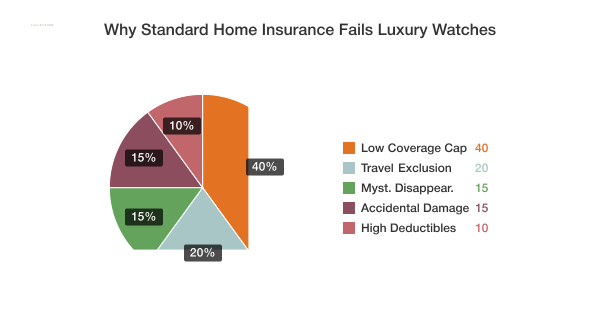
But wait. It gets worse. What if it just vanishes? Poof. Like magic. They call that "mysterious disappearance," but your policy? It probably calls it "not our problem." You can't prove theft? Good luck. No coverage. Zero. And accidental damage? Drop it. Shatter the crystal. Snap a bracelet. That's a bad day. Yet many basic home insurance policies just shrug. Because 'accidental damage' isn't on their list. Jewelers Mutual, they know this stuff happens. All the time. But your home policy? Nah.
And God forbid you do try to file a claim. Even for something "small" (which a watch isn't, but still). Bam. Your premiums go up. For years. Not worth it. Just not. Plus, those deductibles? They're often so high, you're paying a huge chunk out of pocket anyway before they kick in. Crazy. Reddit users on r/Watches, they get it. Many of them found specialized insurance was way cheaper than trying to add some piddly rider to their home insurer.
Oh, and that watch you wear everywhere? Around the world? Your basic policy probably stops at your front door. Or maybe the state line. It's a joke, honestly. No protection when you're traveling. So that trip to Geneva? Better hope nothing happens. Even Similarweb (2024) data points to how much people spend on travel insurance, often because their home policies are so limited. And that's the bottom line: standard homeowner's insurance is a complete mess for luxury watches. It’s designed for general risk, not the actual high-value stuff you own. You're dangerously under-insured.
Anatomy of a Specialized Policy: What's Actually Covered
So, you've heard 'get insurance.' But what the hell are you really getting? Or not getting? Because most of what's out there? It's a joke. A bad one. What you need, what you actually need, is something built for watches. Just the watch. The good ones, they call it 'all-risk' coverage. And that's exactly what it is. Or should be.

What a Real Policy Actually Fixes
Okay, so let's get down to it. What are you paying for? Because if it doesn't do this, it ain't worth the paper it's printed on.
Theft. Someone jacks your watch. Poof. Gone. Your regular homeowners policy? Probably some insane deductible. Or they deny it. But specialized outfits, like Jewelers Mutual or WPB Watch Co. (Similarweb 2024 confirms their reach, by the way)? They cover you. From your home safe. From your wrist. Even if some idiot breaks in. (It happens. Trust me.) It's when your* Rolex or Patek Philippe gets stolen. Period.
Accidental Damage. You drop it. Or your kid does. Crystal shatters. Movement stops. Water gets in. That warranty won't touch it. But a proper watch policy? That's what it's there for. They cover repair or replacement for the exact* model. So you're not stuck with a five-figure paperweight. (Finding some shady guy to fix it cheap? Always ends badly.) Even damage during shipment for repairs (via USPS Registered Mail)? Covered.
So, here's the deal. A specialized policy isn't some fancy extra. It's the only real safety net for something valuable. When the chips are down, you want more than thoughts and prayers. You want a check. Or a new watch. And a specialized policy? It's designed to deliver exactly that. Not just talk.
Valuation is Everything: The Role of a Professional Appraisal
You got the watch. Spent a chunk of change on it, didn’t you? Smart move. But here’s the thing, most folks stop there. They think that receipt, that old purchase price, that’s their protection. Wrong. So wrong it’s almost funny. (It’s not funny when your claim gets trashed, though.)
Because an insurance company? They don’t give a damn what you paid. They care what it’s worth today. Right now. And that's where your professional appraisal comes in. It’s the only piece of paper that counts. This isn't just some suggestion. No, this is the blueprint for your coverage. And without it, you’re just guessing. A wild shot in the dark, really. (A bad one, too.)
Think about it. Many of these high-end pieces, your Rolexes, your Pateks. They don't just hold value. They climb. They go up. Sometimes through the roof. Seriously. We're talking rarity, collector demand. Everything cranks up the price. A watch you snagged for ten grand five years back? It might be worth thirty now. Crazy market. Even Similarweb (2024) shows how volatile these luxury asset markets can be. But your old receipt? Still says ten. And that’s what your insurer will try to pay out if you let them. So you lose. Big time.
But, a solid appraisal. It changes everything. It’s documented proof. Current market value, stamped and signed. That’s what insurance adjusters rely on. Because Gregory & Appel states it plainly: "A professional appraisal is the cornerstone of accurate insurance coverage." And they’re not wrong. It sets the stage for an 'agreed value' policy. No surprises. No arguments later. Precision Watches notes this, saying it lets you agree on a value upfront, which truly combats those nasty disputes when you actually need to file a claim. And you will need to file one, eventually. Trust me.
So, you got the appraisal. Good. But you’re not done. These markets move. Fast. WPB Watch Co. gets it right. They recommend getting those watches looked at, re-appraised, every five years. Minimum. Maybe sooner if the market's on a tear, or if you just picked up something seriously special. This keeps your coverage dialed in. And it saves you from a world of hurt later. Your underwriting review? It relies on this stuff. Without it, you’re flying blind. And lack of proper documentation? It's the number one reason claims get ugly. Or get outright denied. Don’t be that guy.
Get the appraisal. Keep it updated. It’s not a cost; it’s the only way you protect what’s yours.
Calculating the Cost: How Premiums are Determined
So, you finally pulled the trigger. Got that watch. And now? Now you gotta protect it. Because stuff happens. Or, more accurately, people steal expensive things. So, yeah, you need insurance. But what’s it going to cost you, really? Always about the money, isn't it? (It usually is.)
Here’s the thing: most of these outfits, they’re pretty consistent. They usually hit you up for about 1-2% of your watch’s total value, every single year. Jewelers Mutual? They practically wrote the book on this, and they say rates start right there. A guy on Reddit, he said he paid $165 annually for a $12,000 collection. Checks out. And Precision Watches? Yeah, they confirm that 1-2% figure. So, look, it’s not some crazy mystery.
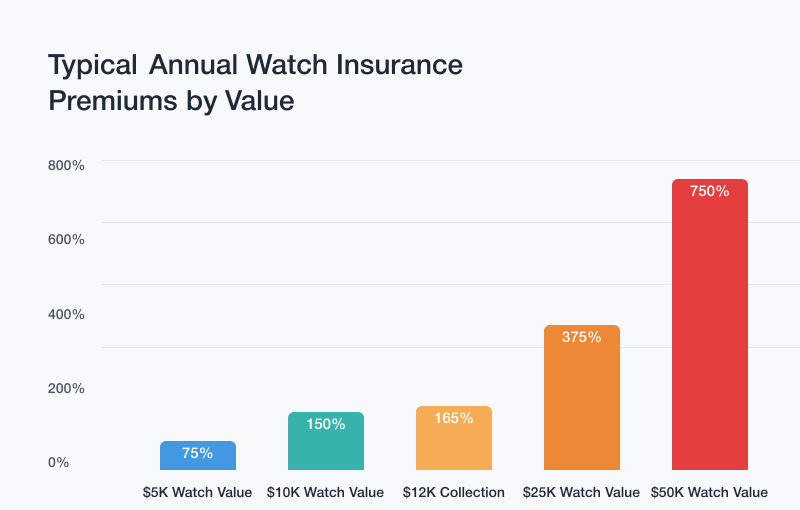
But don’t get it twisted. That’s just the baseline. They don’t just stamp a number on it. No, there are always variables. Factors, they call 'em. Your location, for one. You live somewhere that’s basically a hotbed for snatch-and-grabs? Yeah, your premium is gonna climb. Because crime, right? And the watch itself, too. A fifty-thousand-dollar piece? That could be five hundred to a thousand bucks a year. But a six-thousand-dollar watch? More like sixty to a hundred-twenty. Big difference.
And how you store it? That definitely matters. You got a high-security safe? Or maybe you actually put it in a bank vault? Good for you. They’ll usually give you a break on the rate. Discounts. Because less risk for them, obviously. An alarm system? Same deal. Your claims history, too. You keep filing claims every other Tuesday? Expect them to jack up your rates. Or just drop you. Because that's how this game works.
Or, you know, you can always go with a higher deductible. Yeah, that’ll shave some off the annual premium. But then you’re on the hook for more of the bill if something actually goes sideways. So you trade one risk for another. A Redditor on r/personalfinance, he summed it up perfectly: insurance, by definition, has a "negative expected value." You're paying for peace of mind, sure. But it’s a losing bet mathematically, long-term. It's never about saving money. It's about not getting utterly ruined.
Frequently Asked Questions
Alright, spill it. What else are you wondering about? Because everyone always has more questions. Understanding these common questions upfront saves you time and frustration.
Does my homeowner’s policy cover this stuff?
Usually, nope. Not really. Your typical homeowner’s or renter’s insurance? It’s a joke for high-value items. They'll give you a pittance. Maybe cover it up to a grand or two. Some crazy low limit. Or they’ll have a deductible so high it barely matters. So you need a separate policy. Or, you know, just pray.
What about when I travel overseas?
Totally. Most of these specialized policies? They cover you globally. Because you’re not just wearing your watch in your living room, are you? But, uh, maybe don’t wear your Patek in that back alley in Naples. That’s just asking for it. Insurance or not.
Do I need to get my watch appraised?
Yeah. You do. Because how else are they gonna know what it's worth? You gotta have an official number. And often, you need to update that appraisal every few years. Because market values, they move. Up, down, mostly up lately (for the good ones). So keep that paperwork straight. It’s a mess if you don’t.
What won't they pay for?
Negligence. Obvious stuff. You leave it on a park bench? You drop it off a cliff while taking a selfie? Yeah, no. They won't cover wear and tear either. That’s on you. And sometimes, they’ll have weird exclusions, like "mysterious disappearance." So read the fine print. Always. It’s always in the fine print.
How do I actually file a claim?
Call 'em. Immediately. Don't wait. Tell them what happened. They'll ask for proof—police reports, appraisals, whatever. And then you wait. Sometimes a long time. So make sure you’ve got all your docs in order. Because they love paperwork. Or, rather, they love your paperwork.
The Fine Print: Common Policy Exclusions and Limitations
Look, you think you’re covered for everything, right? You pay a premium. So, it should just work. But it doesn't. Not always. And that’s because every policy has its limits. Big ones. Understanding this stuff? It’s the difference between getting paid and just getting mad.
First up, the everyday stuff. Normal wear and tear. Your bracelet gets scuffed from wearing it (duh, you wear it). A scratch here, a dent there. Gregory & Appel makes it clear: they don't cover that. Why? Because you used it. It’s not damage; it’s just life. And bracelet stretch? Forget about it. But people still try to claim it. Crazy.
And then there's the stupid stuff. Unauthorized modifications. Or some random "watchmaker" (probably your cousin Tony) tries to fix it. Bang. Your coverage? Gone. WPB Watch Co. straight up lists unauthorized work as an exclusion. Because you messed with it. And what about intentional damage? You smash it in a fit of pique. Or you "lose" it in a suspiciously convenient way. That’s a hard "no." They won't pay for that mess. Ever.
So, here's another thing: acts of God. Or, more accurately, acts of humanity gone wrong. War. Nuclear incidents. Jewelers Mutual explicitly states these. If the world’s burning down, your watch is probably the least of your concerns. And pest infestation? Seriously. Rodents chew on your strap. (It happens, apparently). Still not covered, says Jewelers Mutual. It's weird, but it's in there. Mechanical breakdown, too. That’s not an accident. That’s a warranty problem. Or just bad luck. Gregory & Appel confirms it.
You gotta know the lines. Because they're not there to fix your carelessness. They’re there for genuine accidents. So, read the damn fine print. Always.
Your watch. It’s more than just a time-teller. It’s an asset. A serious one, for most of you reading this. And treating it like any old possession? That’s amateur hour. So, let’s cut through the noise.
Here’s what sticks, post-reading:
Look, you don't buy a collectible car and park it uninsured on the street. Why treat something that holds its value, often appreciates, any different? It's not about "if" something happens. It's about "when."
So, what’s next? Stop overthinking it. Get your pieces properly valued. (Not by some guy on a forum, either.) Then, find a policy that actually protects what you own. Whether you're a new owner or curating a significant investment like those featured at The Stellaris Collection, getting proper coverage is non-negotiable. Go get it done.
