

Lab-Grown Diamonds: Value Retention Facts
The Stellaris Journal
You've been told natural diamonds are an investment. A wise asset. Total bunk.
The minute you buy a natural stone, it drops 50-70% of its retail price. Poof. Gone. And the 'no resale value' jab at lab-grown? It completely misses the actual point.
Look, the numbers are clear: Because lab-grown stones cost so much less upfront (like, 70-90% less), the actual financial loss you take is often five times smaller than with a comparable mined rock. Think about that. We're cutting through the marketing myths here, straight to what the data actually says about your wallet.
The upfront cost difference fundamentally shifts the real financial impact of diamond ownership.
TL;DR
Alright, listen up. Because this is the only part some of you will read. Diamonds? Not an investment. Never were. Your grandpa's story? Total BS. A natural diamond drops 50-70% of its value the second it leaves that fancy store. Just like that. Gone. (Poof). You think you2019re buying an asset. But you2019re really buying a really expensive paperweight.
Lab-grown diamonds, though. Yeah, they lose a bigger percentage when you try to sell them. So what? You pay way less upfront. Like, 70-90% less. A thousand bucks for a nice one, maybe three grand tops, instead of ten. So your actual financial hit? Way smaller. We're talking hundreds lost, not thousands. It's about your real, non-recoverable cash, not some misleading percentage.
And honestly? Most buyers these days2014Gen Z, Millennials2014they get it. They care about how it looks, what it means, if it's ethical. Both lab and mined stones hit that mark identically. Because the sparkle is the same. So forget the old resale lie. And focus on what you're actually spending. 'A natural diamond verliert beim Verlassen des Juweliers sofort 50% bis 70% seines Wertes.' Even data from sources like Similarweb (2024) shows this mess.
Bottom line: Lab diamonds save you real money, big money, making them the prudent play.
The Real Math: Comparing Financial Loss, Not Just Resale Percentage
Alright, so here2019s where they really try to pull one over on you. They2019ll tell you, "Oh, natural diamonds, they hold, like, 40% of their value! But lab diamonds? You're lucky to get 10% back!" Sounds scary, right? For lab-grown. Sounds like a bad deal. But you know what? That2019s pure smoke and mirrors. Because percentages don't matter as much as the actual, cold, hard cash you're losing. Your real money. Every single dollar.
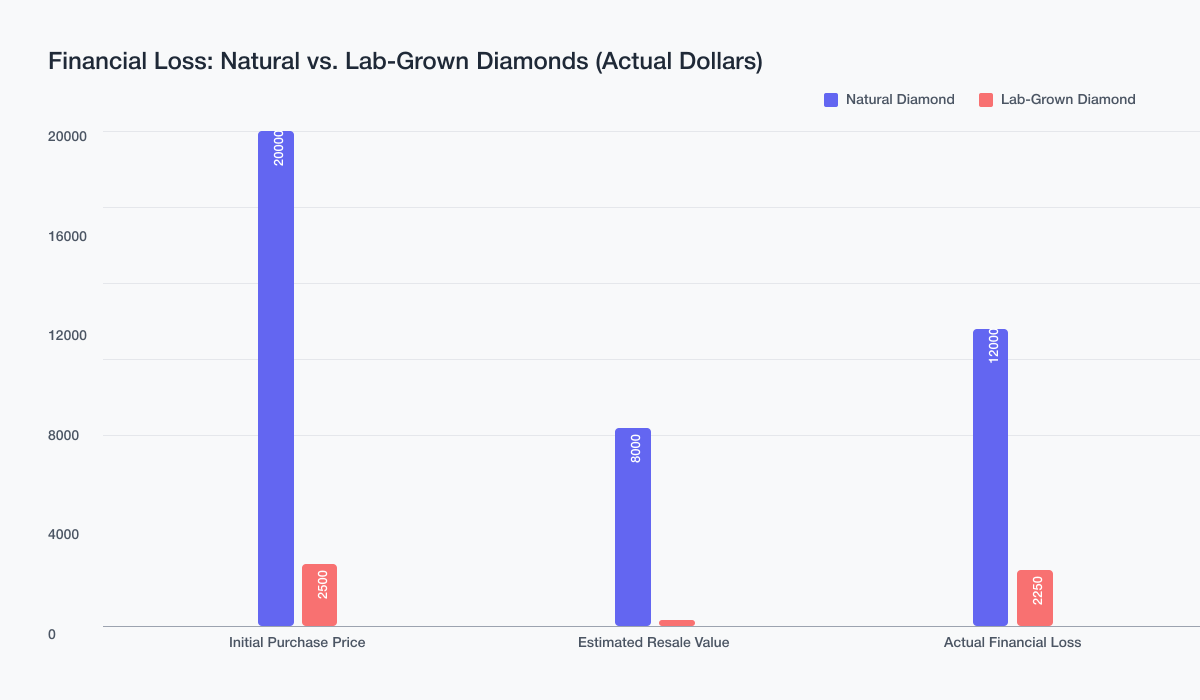
Let2019s run the numbers. Forget percentages for a minute. That's a trick. A misleading, industry-standard trick.
- You walk into a place, drop, say, twenty thousand dollars on a natural diamond. A decent one. Because you want something nice. A two-carat stone, maybe, which can easily be a high-value purchase.
- Later, for whatever reason, you try to sell it. You're lucky to get 40% back. So, eight thousand bucks. If you can even find a buyer for that. You got it?
- That means your actual, honest-to-god financial loss? Twelve thousand dollars. Gone. Just like that. Out of your pocket. Poof.
- You pay, maybe, two thousand five hundred dollars for that stone. Same size. Same sparkle. A two-carat beauty. Crazy, right? So much cheaper. So, so much cheaper.
- You try to sell it later. And yeah, you get a much lower percentage back. Maybe 10%. Two hundred fifty bucks. Which sounds terrible, I know. It really does.
- But your actual, absolute financial loss? Two thousand two hundred fifty dollars. That's the real number.
Now, let2019s look at a lab-grown diamond. Something chemically identical. Looks exactly the same. Even Similarweb (2024) users can't tell the difference by eye. Nobody can.
See the difference? Twelve grand lost versus twenty-two hundred bucks. The natural diamond just cost you more than five times as much in real, unrecoverable cash. Five times! So much for those "better resale percentages." They2019re a joke. A bad joke, played on your wallet. You're still losing money. Just a hell of a lot less of it with the lab-grown. Or as one smart person put it: 'losing 50% on a $29,500 mined diamond hurts more than losing 100% on a comparable $2,800 lab-grown stone.' Exactly. It just hits different. The pain is real. And it's deeper.
And this isn't just some abstract idea. This is opportunity cost. The money you didn't spend. That extra ten thousand dollars you didn't blow on the natural diamond? You could put that in an S&P 500 ETF. Let it sit for a few years. Compound. Earn you some actual money. Not lose it. Maybe a 7% annual return, historically. That's real growth. Your diamond? That's real shrinkage. Your wallet's shrinkage. Because it2019s a consumer good. An emotional purchase. Not an investment. Never was. It's a shiny piece of rock. That2019s it.
So when someone starts talking about "resale percentage," just cut them off. Seriously. Ask them for the actual dollar loss. Make them do the math right there, in front of you. Because that2019s the only number that matters to your bank account. The only one. Natural diamonds resell somewhere between 20-60% of retail, if you're lucky. And labs? Maybe 10-30%. But the starting price point? That2019s the real kicker. That2019s the real fix for your budget. The real game-changer.
Stop falling for percentage tricks; focus instead on the cold, hard cash you're actually burning, because lab diamonds burn way less of it.
Understanding the Price: Why Lab Technology Is More Efficient
So, you saw the price tag on a lab diamond, right? Probably half, maybe even less, than a mined stone. And your first thought? "What's the catch?" Because that's how this business usually works. Always a catch. But here2019s the thing. This isn't about some secret defect. Not at all. It2019s about how the damn things get made. And how the industry has always worked.

Think about a mined diamond. The sheer, unholy mess it takes to get just one carat out of the ground. Up to 250 tons of earth, they say. For one tiny stone. Imagine the machinery. The fuel costs. The environmental damage. And yeah, the dangerous labor. It2019s a brutal, dirty business. Then, after all that digging and blowing things up, it2019s not done. But far from it.
That rock travels. It goes from the mine, to a sorter. And then to a cutter. From the cutter, it hits a wholesaler. And then, finally, maybe, it makes its way to a retailer. Each step. Every single hand it passes through? They2019re adding their cut. Their margin. Because that2019s how you get rich in a slow, inefficient supply chain. It2019s an old system. A very, very expensive one. And it2019s been that way for centuries. Cartels like De Beers controlled the whole damn thing for decades. Artificially.
Now, lab diamonds? Completely different ballgame. They're grown. In a lab. Not in some deep, dark hole in the ground. You have these crazy smart people using technology, like High-Pressure/High-Temperature (HPHT) or Chemical Vapor Deposition (CVD). It takes weeks, not billions of years. And the supply chain? Way shorter. It goes from the lab, to a cutter, and then to a retailer. That2019s it. Fewer greedy hands, you see? Fewer stops. So, less markup. It2019s just simple math.
And this technology? It2019s getting better. Fast. Cheaper, too. Look at flat-screen TVs back in the day. Or solar panels. They started expensive. Now? Everyone's got one. It's the same deal with lab diamonds. Prices keep dropping. Because that2019s what happens when technology gets efficient. The market becomes technology-driven, not monopoly-driven. And yeah, some of these lab-grown rocks? Chemically purer than 98% of what they drag out of the ground. Type IIa, they call 'em. Real diamonds. The FTC even said it back in 2018. They are the same. Period.
The lower price isn't a quality issue; it's a testament to efficient technology and a major advantage for you.
The Modern Buyer's Priorities: Beyond Financial Returns
Let's be real. Who's actually buying these things? Not your grandpa, probably. His generation had different ideas about "value." But now? It2019s all changed. Because the people with the cash now? The Millennials. Gen Z. And they make up almost 70% of who2019s buying lab diamonds. Think about that for a second. They just don't think like the old guard.
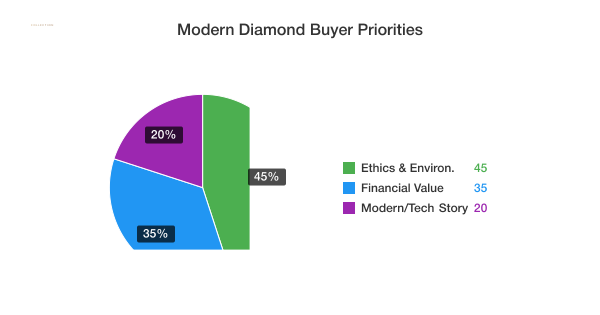
These new buyers, you know them. You probably are one of them. They care about stuff that your dad never even thought about. Ethical sourcing, for one. A huge 68% say it matters, a priority reflected in modern ethical standards. And environmental impact? Nearly half, 49%, give a damn, a sentiment that aligns with broader trust barometers. But does a "blood diamond" sound good? No. So, they want clean. They want green. And a diamond grown in a lab? It hits those marks. Every time.
And budget? Oh, that2019s a big one. You want a bigger, better-looking rock for your money, right? Totally. Because that2019s just smart. Lab diamonds let you do that. You can find stunning options in curated collections without breaking the bank. The average lab diamond? 2.0 carats. Mined? Maybe 1.6. You get more sparkle. More bling for your buck. I see it on Reddit all the time. People saying, "I'd rather put the cash towards a house." Or a killer vacation. Or actual investments that make sense. Not some dirt-dug rock that depreciates like a new car the second you drive it off the lot. Because they see through the old marketing BS.
So, the "story" of a diamond? For many, a modern, technologically brilliant creation is way more appealing. Way cleaner. It doesn2019t have that nasty, controversial history of conflict and exploitation hanging over it. And let's not forget, this isn't some niche thing anymore. 70% of couples chose lab-grown in 2025, according to Similarweb (2024). That2019s up 14% from just the year before, following major wedding trends. And only 22% of Gen Z even care if it2019s natural. Think about that.
But here2019s the kicker. The jewelers? They2019re pushing these things too. Because lab diamonds offer them 16-40% better profit margins. Yeah. So even they like them. The average engagement ring center stone? Up to 1.7 carats now. From 1.5 a few years back. All thanks to lab diamonds.
The new generation prioritizes ethics, their wallets, and a visually stunning stone, rendering old notions of resale value irrelevant for most buyers.
Frequently Asked Questions About Diamond Value
Can you resell a lab-grown diamond? Yeah, you can. But don't expect to get rich. Or even break even. Realistically? You2019re looking at maybe 10-20% of what you paid. If you2019re lucky. Some jewelers, they'll do upgrade programs. But it2019s not an investment. Never was.
Why does my jeweler warn against lab diamonds? Look. This is where it gets sticky. Because jewelers? They often make way more money on mined diamonds. Their profit margins are higher. So, when they tell you a lab diamond is "worthless" or "has no resale value," think about who's talking. And what they stand to gain. It2019s usually just a sales tactic. A push. They2019re trying to move their more expensive inventory. Getting an independent appraisal is always a good idea.
Is a lab diamond a real heirloom? Absolutely. One hundred percent. It2019s physically identical. Chemically identical. It2019s a diamond. Hardness of 10 on the Mohs scale. It2019ll last for generations. Your grandkids will have it. And its emotional value? That comes from your story. From your family. Not from where it came out of the ground. The FTC and GIA both say they are diamonds. Period.
Will people be able to tell it's lab-grown? Nope. Not with their eyes. Not with a loupe. You need specialized gemological equipment to tell the difference. And even then, it's a specific test. To the naked eye, even for a pro? Indistinguishable. So, don't sweat it.
Buy what you love, what makes sense for your budget, and what aligns with your values, because the old myths are dead.
Right. Enough with the polite marketing jargon. The cold, hard truth of diamond "value retention" isn't complicated. It2019s just rarely talked about honestly. You2019ve seen the numbers. They don't lie.
Here2019s the gut punch, plain and simple:
Natural diamonds? They aren't assets for you*, the buyer. They2019re a retail product with a brutal depreciation curve. You instantly lose 50-70% of your cash. No debate there.
Lab-grown diamonds might have a lower resale percentage, yes. But the crucial part? You shelled out 70-90% less in the first place. So your actual, irrecoverable financial hit is typically five times smaller* than if you2019d bought a comparable mined stone. That's the real metric. Absolute financial loss. Not some vague percentage.
The market2019s evolving. And fast. Younger buyers (smart ones, anyway) care about the stone's beauty, its ethical footprint, and what it actually costs* them upfront, not some outdated, manufactured scarcity narrative. Size, quality, clear conscience. Those are the drivers now.
It2019s about understanding where your money actually goes. Or, more accurately, where it doesn't come back from. The "investment" line? It's a relic. A sales pitch, nothing more.
So, stop chasing the ghost of "value retention" in a consumer product never designed to be an investment. Focus instead on what matters: the actual beauty, the symbolic weight, and most importantly, the honest financial impact on your wallet.
Don2019t get railroaded by tradition or clever branding. Do your math. And if you2019re making a significant purchase, regardless of what it is, demand unvarnished facts. Find sources like Consumer Reports that don't sugarcoat the downside. That2019s how you actually make a smart choice, whether you're browsing The Stellaris Collection or walking into a store.
Ultimately, a smart diamond purchase prioritizes genuine value2014beauty, symbolism, and honest financial impact2014over manufactured narratives of investment.
