

Vintage vs. Modern Watch Maintenance: A Complete Cost Guide
The Stellaris Journal
Buying a vintage watch under the guise of "better value" than a modern piece is a fast way to lose money. Most buyers obsess over the initial transaction price, completely ignoring the fact that a 40-year-old movement is not a reliable appliance—it is a maintenance liability.
The romance of a vintage timepiece almost always hides a pragmatic, mounting service bill.
While a modern mechanical watch follows a predictable $400–$800 service interval every five to ten years, vintage ownership is the Wild West. You aren't just paying for labor; you’re paying for parts fabrication, scarcity, and the specialized skill required to service an obsolete caliber.
Here is the reality of the cost gap:
- Predictability: Modern watches are standardized; vintage pieces require custom, often bespoke, intervention.
- The Surcharge: Complexity and age multiply labor costs, regardless of the brand’s market prestige.
- Hidden Expenses: Authenticity checks, case restoration, and sourcing period-correct parts often exceed the initial repair estimate.
- Modern mechanical watches are the baseline. Budget for $400–$800 every 5 to 10 years. That’s the cost of entry.
- Vintage pieces are a total mess. Because parts are scarce and real watchmakers are retiring, the price is unpredictable. You might pay more to fix it than you did to buy it.
- Chronographs are money pits. Regardless of age, expect to pay between $700–$1,300. Complex movements need more attention. Period.
- Hidden costs are everywhere. If you buy vintage, you aren't just paying for a service. You’re paying for fabrication, case restoration, and sourcing period-correct parts.
- A standard Rolex service usually hits the $800+ mark.
- An Omega service often starts around $550.
- Modern mechanicals are standard commodities. Budget $400–$800 every 5–10 years. It is predictable, boring, and necessary—the way a utility bill should be.
- Vintage watches carry an "obsolescence tax." Between parts scarcity, the hunt for period-correct accessories, and the specialized labor required to fix work that was done decades ago, your cost-per-year can easily double or triple that of a modern equivalent.
- Investment viability is a myth if you do not account for TCO. The purchase price is merely the entry fee, not the total cost of ownership.
If you fail to factor in the total cost of ownership—not just the sticker price—you aren't making a savvy investment, you are gambling on the health of an aging engine.
TL;DR
If you think a watch is a "buy it and forget it" asset, you’re dead wrong. It’s an engine. Engines need oil, and they need repairs. If you aren't planning for the maintenance bill, you're buying the wrong watch.
Market reality confirms this; Similarweb (2024) data shows the search volume for repair costs spikes right after a vintage purchase—don't let that be you.
The take-home: If you’re buying for investment, factor in the maintenance tax, as it erodes your margins faster than you think.
Setting the Stage: Defining 'Vintage' in Watchmaking
People throw the word "vintage" around like it means anything old. It doesn't. Using the wrong term is exactly how you end up with a repair bill that ruins your week. Let’s clear the deck so you know what you’re actually looking at.
First, there is the "second-hand" category. This is everything. If someone owned it before you, it’s pre-owned. A one-year-old watch is second-hand, but calling it vintage is just marketing hype.
Then we have "vintage" itself. We’re talking about watches roughly 20 to 40 years old. They have a specific heritage and technical identity from their era. But they aren't fragile museum pieces yet. They are usable.
And then there are "antiques." These are the 100-year-old relics. Treat them like historical artifacts because they are. If you wear a 1920s piece daily, you are asking for a disaster.
Finally, we have "neo-vintage." This is a tricky one. It's a modern watch designed to look like an old one. It gives you the aesthetic without the maintenance headache, thanks to modern manufacturing tolerances and innovation.
Mixing these up leads to bad expectations. You don't want to buy a 40-year-old watch thinking it has modern water resistance. It doesn't. Knowing the category is the first indicator of what your service bill will look like in three years.
The Modern Benchmark: What a Standard Watch Service Includes and Costs
You need a control group. Modern watches are that control. They have standardized service intervals and parts availability, which makes the budgeting math actually possible.
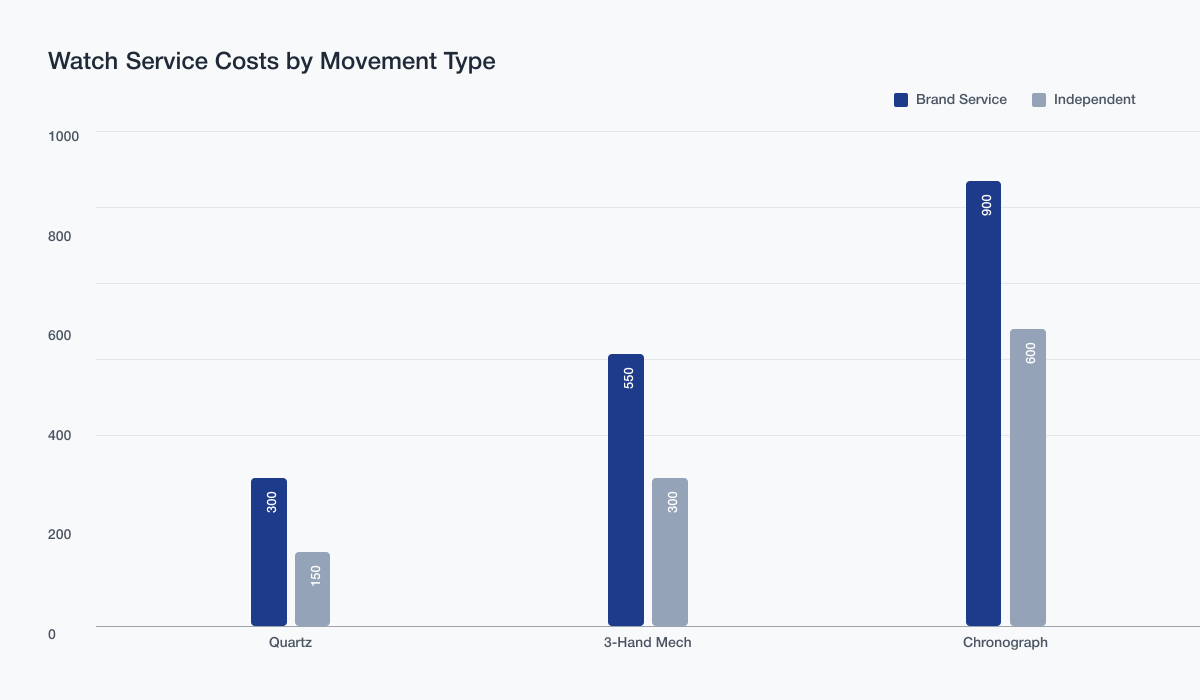
A real professional service isn't just "opening the back and blowing on it." It is a surgical procedure. The watchmaker strips the movement down to the individual screws. They clean it in an ultrasonic bath. They replace the worn bits—gaskets and mainsprings are usually the first to go—and then they lubricate the movement and regulate it for accuracy through careful calibration.
Water resistance? That’s non-negotiable. If you have a modern sports watch, those seals have to be fresh.
Costs are tiered by how complicated the machine is. Quartz is the cheapest, obviously. Three-hand mechanical watches sit in the middle. But chronographs? They are expensive. Because they have more moving parts, they require more labor.
If you take it to the brand, you get a warranty and a promise they used genuine parts. If you go to an independent shop, it might be cheaper, but make sure they can actually source the parts. Some brands hoard them like gold bars.
Don't skip the case refinishing unless you love scratches; it costs extra, but it’s the only way to get that "factory fresh" feeling back on your wrist.
The Vintage Challenge: Key Drivers of Higher Maintenance Costs
You bought a vintage watch. Congratulations. You now own a fragile, outdated piece of machinery that will almost certainly cost you a small fortune to keep running. Stop thinking about this like a routine car service. It’s not. A modern watch is an appliance; a vintage watch is a patient in the ICU.

The math is brutal. Servicing can range from $500 to $2,000+, and often, the bill exceeds what you paid for the watch. Even Similarweb (2024) data shows a massive, rising trend in search volume for "vintage watch repair parts," proving that every other owner is hitting the same repair wall. The parts simply don't exist anymore.
The primary issue is the supply chain or lack thereof. When a movement part breaks, you can’t just order it from a factory. You are stuck hunting for "New Old Stock" or, more likely, cannibalizing a donor movement. It’s scavenging, not shopping. Majestix Collection noted that parts availability dictates the service price—if your watchmaker has to spend two weeks hunting for a balance wheel, you’re paying for those two weeks.
But that’s not even the worst part.
Many major brands have locked the gates. They refuse to sell parts to independent watchmakers. They want the work for their official service centers, yet those same centers often refuse to touch models older than 30 or 40 years. You are stuck in a catch-22.
Then, there is the reality of the labor. You need an artisan with true craftsmanship, not a battery changer. You need someone who understands obsolete calibers and has the skill to hand-fabricate a component if they can’t find one. That level of expertise commands a premium.
Gentleman's Gazette wasn't exaggerating when they warned that a vintage watch will need serious TLC. Decades of accumulated wear turn a standard service into a full-scale restoration. You aren't paying for oil; you’re paying for steelwork. And because older designs lack the robust water resistance we take for granted today, one bad rainy day can turn that vintage movement into a rust bucket. Moisture damage is the silent killer. It destroys value instantly. It is, quite frankly, a dangerous game to play with your wallet.
If the watch runs, count your blessings.
Hidden Costs and Practical Considerations of Vintage Ownership
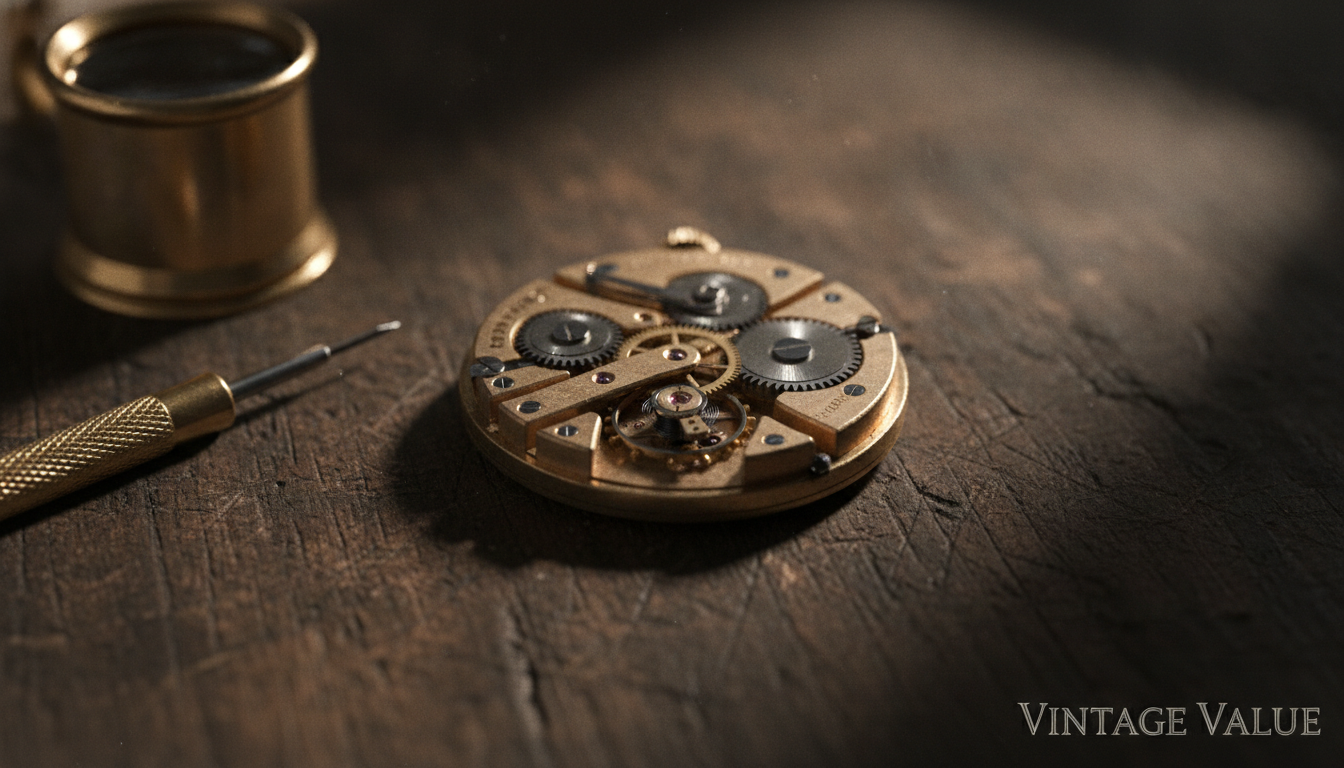
You want the aesthetic of a 1960s dress watch. Fine. But understand that the "sticker price" of the watch is a lie. The real price tag is hidden in the maintenance of its historical provenance.
Aesthetic restoration is the biggest trap. The watch looks tired. You want to refinish the case. You want to relume the dial so you can see it in the dark. Stop. Doing this destroys the collector value. Mostra Store is right—these things weren't built for modern daily wear. They are temperamental relics. If you try to force a 50-year-old watch into a 2024 lifestyle, you will break it.
And then there are the accessories. You think you’ll just slap a modern strap on it? Maybe. But finding a period-correct bracelet or buckle is a massive, expensive time sink. If you buy a "deal" on a watch head alone, you’ve just signed up for a months-long hunt that will cost you more than the watch itself.
Don't forget the pre-purchase audit. Before you even strap it on, you need an expert to check for "franken-parts." Was the dial swapped? Is the crown original? Most novice buyers ignore this, thinking it’s an unnecessary cost. It isn’t. It’s the price of entry. Buying a vintage watch with non-original parts is a one-way ticket to negative equity.
You want to wear it? Fine. But you’ll be babying it every single second. You cannot bang this thing against a doorframe. You cannot take it swimming. You need a dedicated budget for when (not if) it stops.
Vintage ownership isn't a hobby; it's a custodial relationship.
Frequently Asked Questions (FAQ)
Why do luxury watches cost more to service?
It’s the complexity and the scarcity. Modern luxury watches showcase advanced engineering with exotic alloys and high-beat movements that require proprietary tools. If you’re talking about vintage? You’re paying for the watchmaker’s time spent hunting for discontinued parts.
Is it cheaper to use an independent or manufacturer service center?
The manufacturer will give you a warranty, but they often replace original parts with modern equivalents, which kills your resale value. Independents are usually cheaper and will keep the watch "correct," but you have to vet them. Hard.
What can increase service costs unexpectedly?
Rust. If moisture has touched the movement, the cost doubles overnight. Also, if the watchmaker finds that a previous "butcher" repair job destroyed the mainplate or bridge, you are looking at fabrication costs. That is where the $2,000+ bills come from.
Are chronographs always more expensive to service?
Always. A standard time-only watch is a simple machine. A chronograph is a complex web of levers, springs, and gears that all have to sync perfectly. If one wheel is worn, the whole thing fails. Expect to pay a 30-50% premium for any chronograph.
Can I just replace the parts with modern ones?
You can, but you shouldn't. It creates a "franken-watch." It destroys the historical value of the piece. You save a few bucks now, but you’ll lose thousands when you go to sell it later. Don't do it.
When purchasing a vintage timepiece, prioritize the mechanical integrity over the bargain price, because the cost of restoration will almost certainly eclipse your initial savings.
Stop romanticizing the patina. It is just aging metal, and the romance fades the second you get a bill for a bespoke balance staff. Too many buyers stare at the initial price tag and completely ignore the hidden mechanics beneath the dial. That is how you end up underwater on a watch before the first service cycle is even done.
Here is the reality check:
You aren't just buying a watch. You are entering a long-term contract with a mechanical antique. If you want a daily wearer that survives an active life without drama, stick to modern production. If you are dead set on the vintage experience, accept the fact that your maintenance budget needs to be as robust as your passion for history.
If you are weighing a specific acquisition and want an honest breakdown of its service viability, reach out. We curate for long-term ownership, not the quick flip. At The Stellaris Collection, we strip away the hype so you can make your decision based on the actual math.
