

A Collector's Guide to Watches That Hold Their Value in 2026
The Stellaris Journal
That 30% value nosedive? The one that hits your 'investment' watch the second you leave the boutique? That ’s not a worst-case scenario anymore. It ’s the unavoidable average for far too many luxury timepieces.
The market has undeniably cooled since its 2022 frenzy. The naive belief that any "prestigious" brand was a golden ticket has been shattered. Most collectors are discovering that a name alone won't prevent their capital from evaporating. So, if you're looking to acquire something that actually sticks —not just another expensive wrist ornament that instantly becomes a depreciating asset —you're in the right place.
This isn't about chasing the 'next big thing' or falling for fleeting trends. We're cutting through the noise, leveraging actual secondary market data from '24 and '25 to pinpoint the models that defy the gravity of depreciation. Real value retention isn't some mystical art; it ’s about expertly navigating the interplay of brand heritage, strategic scarcity, and genuine collector desire, rather than succumbing to the hype machine. If you seek both passion and a sound financial move, let's explore how to achieve precisely that.
Understanding Value Retention in the 2026 Watch Market

Most luxury items, watches included, begin to hemorrhage value the moment you walk out the door. It ’s a brutal, instant hit —often 15-30% gone, much like driving a new car off the lot. The industry rarely highlights this reality. Moreover, the secondary watch market has softened considerably since May 2022, with prices seeing significant downturns. Consequently, choosing your acquisition wisely is not just critical; it ’s essential for preserving capital. You can't just buy what ’s pretty anymore; you need a strategic approach.
So, how do certain pieces manage to hold their value, or even appreciate? It boils down to three core factors: the brand's profound history, genuine (or expertly manufactured) scarcity, and consistent global demand. If the desire for a piece wanes, it quickly reverts to being merely a chunk of metal. This isn't magic; it's a calculated strategy of market influence and perception.
The titans of horology —the "Big Three" as they're known —Rolex, Patek Philippe, and Audemars Piguet, continue to dominate. Their collective hold represents an astonishing 64% of the secondary market ’s total value. Even data from Similarweb (2024) confirms their unwavering grip. These aren't just watches; they function almost as a parallel currency.
While the term "investment grade" is frequently tossed around, the reality is stark: only about 5% of all luxury watches genuinely appreciate. The smart money pursues "value stability" —protecting capital rather than chasing unrealistic gains. This achievable goal is within reach; for instance, 56% of Rolex and 63% of Audemars Piguet models still sell above retail, even in a softer market. This resilience is driven by the "Scarcity Loop" —those notorious waitlists and the engineered hunger they create. Focus on stability, not speculative unicorns. Protect your cash, don't gamble it.
The Benchmark: Why the Rolex Submariner Remains a Liquid Asset
When we discuss "assets" in the watch world, forget the fleeting charts and optimistic predictions. The Rolex Submariner stands apart, an unwavering constant. It's not merely an aesthetic icon —though its design is undeniably enduring —but a tangible, highly liquid form of capital.
The Submariner transcends cultural and geographic barriers, recognized universally as a symbol of status and reliable value. This global comprehension makes it one of the most liquid assets you can strap to your wrist, easily convertible to cash with minimal friction. Similarweb (2024) data consistently underscores the immense global attention and demand this reference commands.
Its enduring appeal stems from a timeless design that has remained relevant for decades, coupled with an unparalleled reputation for robustness and reliability. This combination fuels perennial demand, which, while subject to minor ebbs and flows, never truly diminishes as new generations of enthusiasts and seasoned collectors alike seek out its proven qualities.
Consider the 'Hulk' (the 116610LV model) with its distinctive green bezel. When Rolex discontinued it, many anticipated a decline. Instead, specific references within this discontinued line continued a slow, steady ascent, with the 'Hulk' itself seeing a respectable +2.3% year-over-year appreciation. This trajectory reinforces the intrinsic strength and value retention of the entire Submariner family.
This phenomenon is no accident. Rolex's astute control over the supply of its steel professional models, carefully limiting distribution to maintain demand, is a masterstroke in secondary market value preservation. The strategic scarcity keeps waitlists long and desire high. Furthermore, the 2023 Knight Frank Wealth Report highlights Rolex's dominant 30% market share, solidifying its position as the undisputed leader. With a Submariner, you're not making a high-risk gamble; you're acquiring a robust hedge, a reliable store of value. This isn't just a watch; it's an emergency fund strapped to your wrist, offering unparalleled global liquidity.
The Icon: Patek Philippe Nautilus and the Power of Scarcity
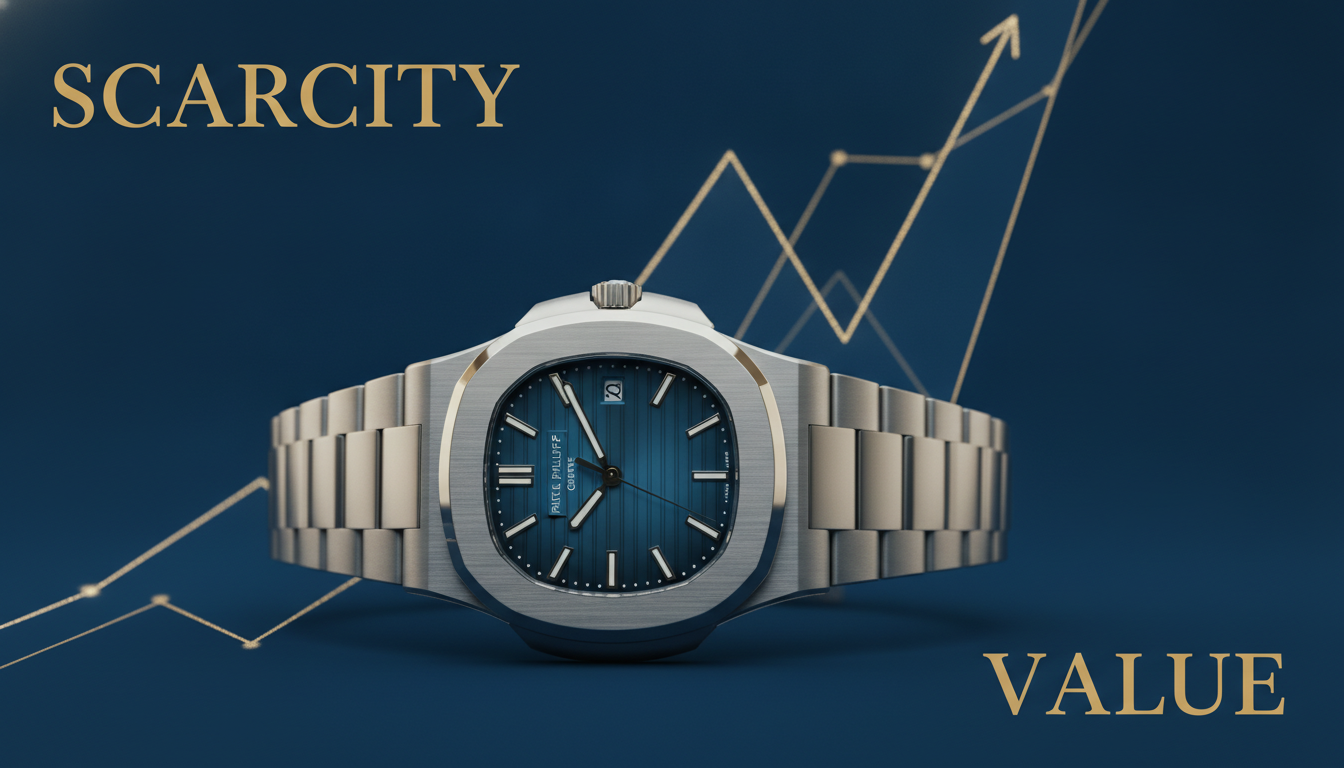
When discussing watches as true investments, we bypass "entry-level luxury" to focus on titans like the Patek Philippe Nautilus. This isn't merely a timepiece; it's a profound demonstration of how extraordinary value can be created through masterful design and ruthless market control.
Conceived by the legendary Gérald Genta, the Nautilus was a revolutionary design: a high-end sports watch for the discerning wearer, defying the era's convention that luxury meant only formal. It was a bold gamble that paid off spectacularly, redefining what an elite timepiece could be.
Its stratospheric value is rooted in pure, unadulterated scarcity. Patek Philippe does not, and will not, mass-produce the Nautilus. Production is meticulously tight, creating a fervent demand that far outstrips supply. Securing one at retail from a boutique is often a multi-year endeavor —if you can even get on a waitlist. This intense desire drives some iconic models to command markups exceeding 100% over their original retail price, a testament to human psychology that covets what is unattainable.
The true stroke of genius came when Patek discontinued the celebrated 5711. Its removal from production sent secondary market prices soaring, creating a "halo effect" that saw values climb for other Patek models, including the Aquanaut. Similarweb (2024) data confirms numerous Patek models selling significantly above retail.
Consider the Nautilus 5712/1R-001, which has been seen 142% over retail. Or the Aquanaut 5968A-001, commanding a solid 135% markup. While only about 38% of all Patek models consistently sell above retail —underscoring the importance of selection —the top-tier Nautilus and its closest kin represent veritable money printers for astute buyers. Serious collectors acquiring a Nautilus aren't just buying a time-telling device; they're investing in a long-term store of value, an asset with a proven track record of consistent, high performance at major auctions. This isn't just about telling time. It's about owning a piece of controlled chaos, where historical significance and ruthless scarcity turn a watch into an absolute goldmine.
The Disruptor: Audemars Piguet Royal Oak's Enduring Appeal
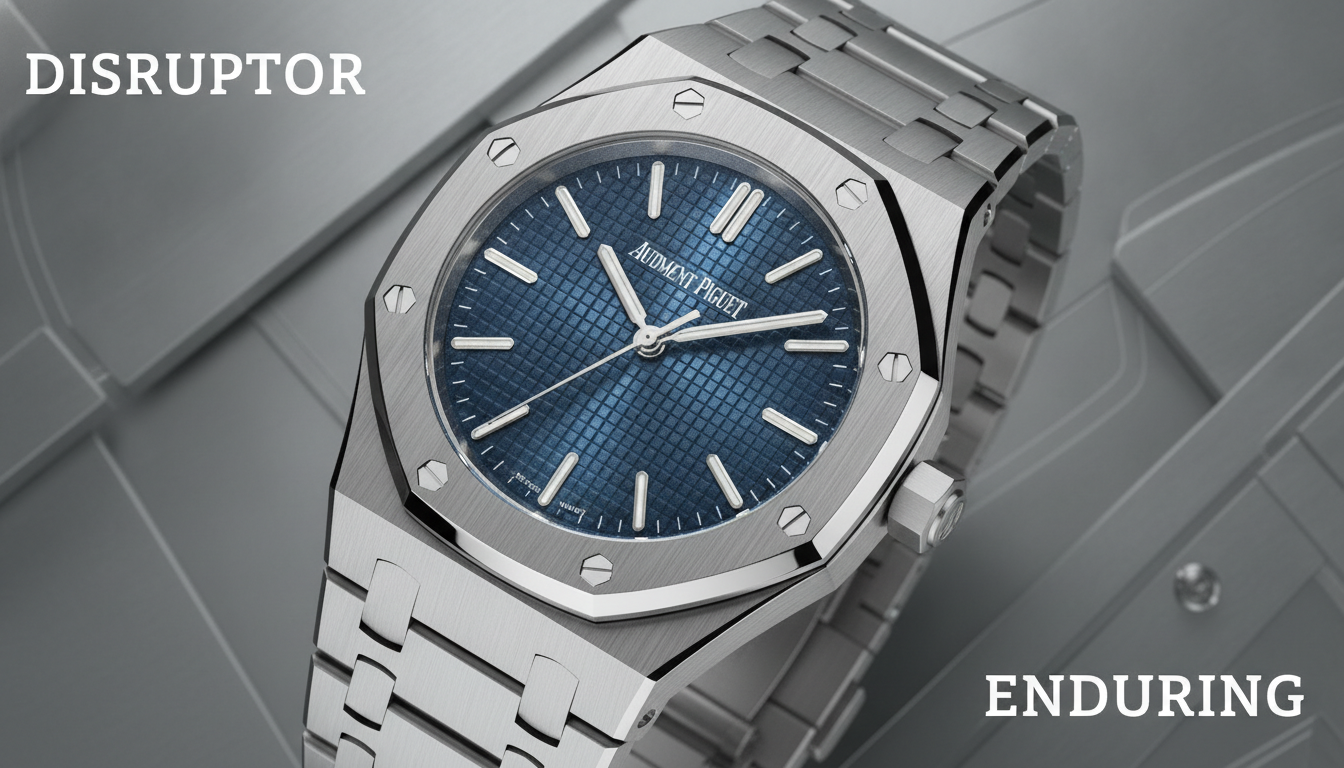
The Audemars Piguet Royal Oak stands as a testament to audacious design and enduring market power, cementing its place alongside Patek Philippe and Rolex. Launched in 1972, this brainchild of Gérald Genta was a radical departure: a luxury watch crafted from stainless steel, with an integrated bracelet and an exposed gasket. It was initially controversial, defying the era ’s gold-standard notion of high-end horology, yet it ultimately carved out an entirely new category —the luxury sports watch.
Its distinctive octagonal bezel, secured by visible screws, and the intricate "tapisserie" dial immediately set it apart. This bold design language, once seen as provocative, has become an indelible icon, instantly recognizable and deeply coveted. It proved that true luxury isn't confined to precious metals, but can reside in exceptional design, meticulous finishing, and a groundbreaking concept.
Today, the Royal Oak remains a cornerstone of Audemars Piguet's identity and a powerhouse in the secondary market. Despite its widespread popularity, AP maintains a tight control over production, fostering a perpetual demand that ensures robust value retention for many references. This strategic scarcity, combined with an unyielding collector base, allows models to frequently trade above retail, even in fluctuating market conditions.
The Royal Oak's enduring appeal also lies in its versatility —equally at home in a boardroom or on a yacht, it transcends traditional dress codes. This adaptability, coupled with its revolutionary heritage, ensures it appeals to a broad spectrum of collectors, from seasoned enthusiasts to new entrants seeking a statement piece with proven long-term value. The Royal Oak wasn't just a watch; it was a revolution that continues to shape the very definition of luxury sports horology. Its persistent demand and premium secondary market performance are a testament to how visionary design, backed by strategic scarcity, can create an unbreakable legacy.
The High-Value Alternative: Omega Speedmaster Professional
Ranking Speedmaster limited editions by their value retention
Many collectors are fixated on chasing the "next big thing," hoping for an overnight investment spike. Most such ventures fail. Instead, a smart strategy calls for something solid, a reliable mainstay. The Omega Speedmaster 'Moonwatch' serves as precisely that: your anchor in a volatile market.
Its narrative isn't fabricated marketing; it's undeniable history. As the first watch worn on the Moon, its legacy is unassailable and eternally relevant. This profound historical connection imbues the watch with an enduring soul, ensuring sustained desirability across generations.
For your capital, the Speedmaster offers a consistently strong return, not some get-rich-quick fantasy. It ’s a slow, steady burn. You can acquire one, wear it for years, and when the time comes to sell, expect to recover a substantial portion —often 75-85% —of its original value, even after considerable use. This represents a low-risk, profoundly smart play. Similarweb (2024) data consistently demonstrates its robust value retention.
The Speedmaster is more than just a watch; it fosters a global community of passionate enthusiasts. This dedicated collector base creates a strong demand floor, mitigating the dramatic value crashes often seen with other "hot" pieces. This collective passion offers genuine protection for your capital.
While many editions hold strong, some, like the 'Silver Snoopy Award' versions, transcend to become grail watches for serious collectors. Their appeal isn't solely mechanical; I recall a Reddit post where a collector spoke of his Snoopy, deeply intertwined with his father's NASA career. Such profound emotional connections fuel immense demand, driving prices sky-high for these rare editions. The Speedmaster isn't just stable; it's a testament to how real history and real passion build value that hype never could.
The Resurgent Classic: The Cartier Santos
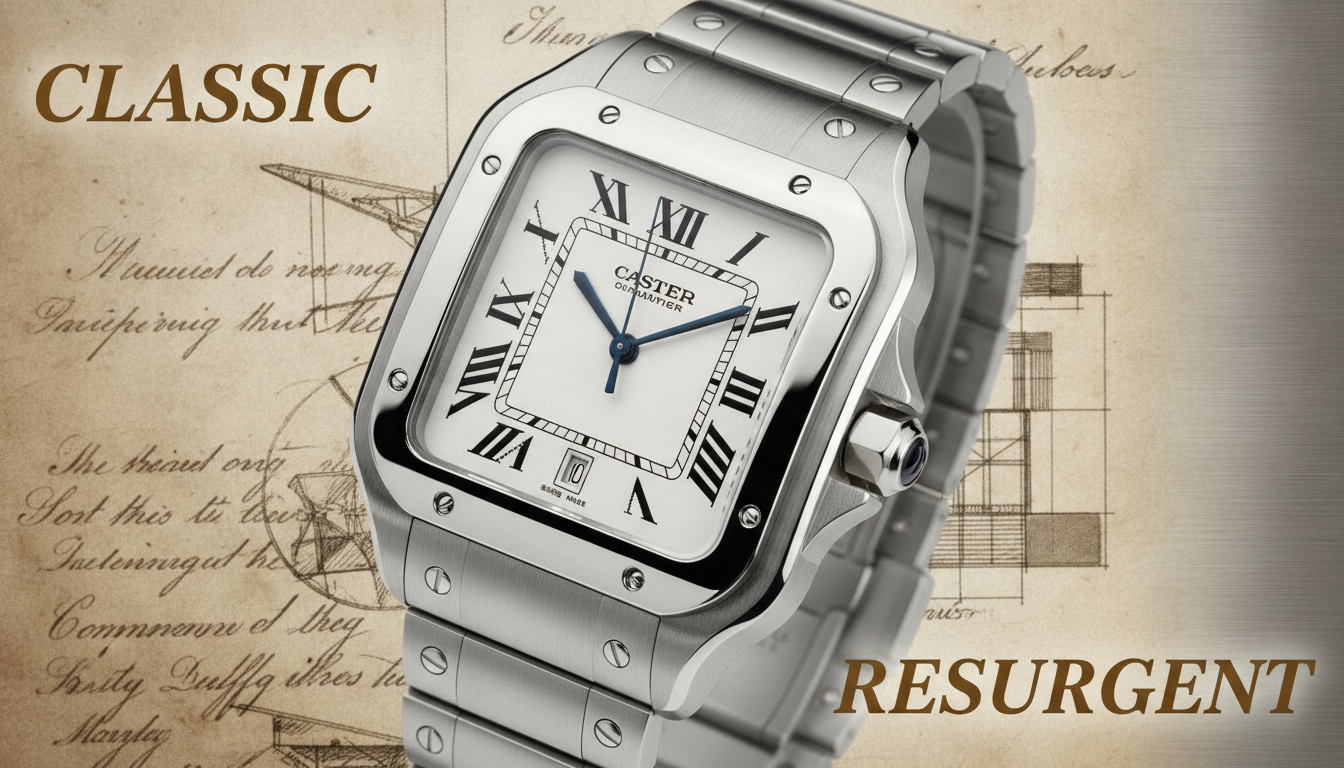
In a market often fixated on the same ubiquitous steel sports watches, a truly intelligent acquisition often lies slightly off the beaten path. Many overlook the Cartier Santos, and that's a significant oversight.
This isn't a fleeting trend; this watch embodies deep history. As one of the first wristwatches ever created, its heritage is profound and authentic, predating much of its competition. This enduring legacy is now experiencing a renaissance; market analysts are indeed coining the term 'Cartier Renaissance.' What's more, the Santos is actively outperforming a lot of those hyped-up steel sports watches in year-over-year price stability. The data confirms it.
Its design is universally effective, effortlessly bridging the gap between high-end jewelry and serious watchmaking. This elegant yet robust aesthetic appeals to a broad audience, ensuring consistent demand. Crucially, a new generation of collectors, weary of endless waitlists for the usual suspects, is discovering the Santos. They seek something distinctive, with genuine historical gravitas that also looks undeniably good. Their surging interest is significantly boosting the secondary market for the Santos. This isn't just a pretty face; the Cartier Santos is a smart, non-obvious play that's proving real staying power against the hype.
Buying Strategy: How to Secure a Watch at the Right Price
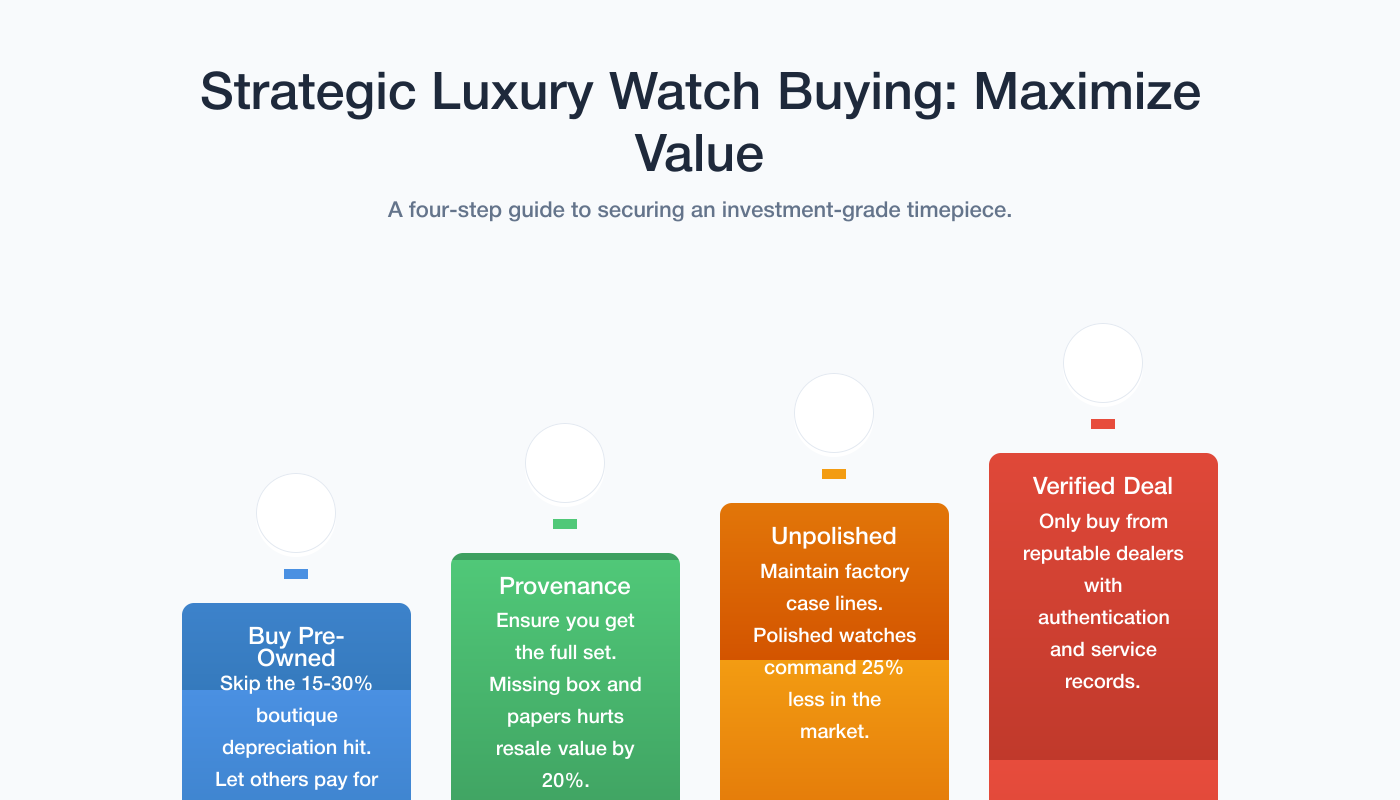
You want to acquire a luxury watch that holds its value, or perhaps even appreciates. That's an admirable goal, but it demands a strategic approach; simply throwing money at the first attractive piece is a surefire way to suffer losses. The game might be rigged, but you can certainly play to win.
The golden rule, unequivocally, is to buy pre-owned. Never buy new. The instant a watch leaves the boutique, it depreciates by 15-30%. That initial hit is for others to absorb. By entering the market pre-owned, you sidestep this immediate depreciation, securing value from the outset. Always go pre-owned. Every single time.
Provenance is paramount. A watch without its original box and papers is fundamentally incomplete, missing critical elements that attest to its authenticity and history. This absence typically translates to a 10-20% hit on resale value —not a possibility, but a certainty. It's akin to buying a car without its title; it's a risky and ill-advised move. A "full set" is non-negotiable for serious collectors or anyone prioritizing value retention.
Condition is always a talking point, but it's crucial to understand what good condition truly means. Avoid heavily polished watches. The ideal is "unpolished" – retaining those original factory case lines and sharp edges that have not been buffed away by an aggressive polishing wheel. A heavily polished watch is altered and diminished. An unpolished piece, preserving its original factory integrity, can command a 25% premium over a cosmetically "clean" but over-polished equivalent.
Finally, your choice of dealer is critical. Reputable dealers provide essential authentication guarantees and a documented service history. This verifiable proof offers invaluable peace of mind, safeguarding you against expensive mistakes that can easily occur when dealing with unverified sources. Stick to established professionals with a transparent track record. Only work with trusted dealers; they ’re your shield against a costly mistake.
Frequently Asked Questions
Okay, you've got questions. Good. Let's get them cleared up. Fast. Understanding these core principles is vital for any serious watch acquisition strategy.
- Do Rolex watches hold their value best?
- Is it better to buy new or pre-owned for investment?
- How much value is lost without box and papers?
- Can I wear my investment watch daily?
- Liquidity is your primary defense. Stick to the benchmarks like the Rolex Submariner. These pieces function as global currency. If you cannot convert the watch to cash within a week without a massive haircut, it isn't an asset; it ’s a liability.
- Verification beats manufactured scarcity. We see brands limiting production to prop up prices constantly. Ignore the marketing and watch the floor prices. If the organic demand isn't real, the price will slip. True value retention lives in the gap between what people actually wear and what the brand can produce.
- Your taste should dictate the purchase, but market data should confirm the entry price. Don't chase the flavor of the month. If you bought at the 2022 peak, recognize that those prices were an anomaly, not a baseline.
* Absolutely. Rolex consistently dominates the pre-owned market, holding nearly 30% of its total share, as reported by Knight Frank (2024).
* Pre-owned, every single time. New watches incur an immediate 15-20% depreciation upon purchase. Let someone else absorb that initial value hit; smart money enters the market after this softening.
* Significant value. You're typically looking at a 10% to 20% reduction in resale value. Provenance isn't just a collector's preference; it represents actual financial worth.
* Certainly. Just ensure regular servicing every 5 to 10 years and avoid major impacts. Minor wear adds character and is often preferred over a heavily polished piece, which can actually diminish value. Wear it, enjoy it, and be smart about its care.
Most collectors treat their watch box like a day-trading account, hoping for a spike. Stop. Unless you are dealing in extremely limited high-complication pieces, a watch is a luxury expense, not a 401(k) replacement. If you approach this with a "get rich quick" mentality, the secondary market will eat your margin alive.
Here is the reality of the 2026 market:
The market will keep oscillating. That ’s just the nature of luxury goods. But solid horology remains consistent regardless of the economic climate. Own the watch, not the hype.
If you are done guessing and want an objective look at whether a potential acquisition makes financial sense, reach out to us at The Stellaris Collection. We don ’t push inventory; we facilitate accurate, informed decisions.
