

Authorized Dealer vs. Grey Market: Which is Right for Your Next Watch?
The Stellaris Journal
Everyone talks about "grey market savings," but most of the time, that’s just noise. If you are chasing a hot steel sports watch, plan on shelling out 20–30% above retail. Period. But when you look at certain precious metal models, you might find them thousands under retail. It is a confusing landscape.
This isn't a simple "Authorized Dealer (AD) good, grey market bad" debate. It is about understanding the mechanics of the market so you don't get hosed. Ultimately, success in the watch market isn't about choosing one channel over the other; it’s about identifying which game you are playing so you can execute your purchase with eyes wide open.
The Modern Watch Buyer's Dilemma: An Overview
You are here because you want the right watch, and you are staring down two distinct paths. There is the clean, well-lit street of the Authorized Dealer (AD), and then there is the alleyway of the grey market—a mess, frankly, but sometimes a necessary one.
ADs are the official, brand-picked partners. When you buy from them, you get the real deal: guaranteed authenticity and a full manufacturer warranty at MSRP. However, the catch is the waitlist. For anything desirable, the list is long, and instant gratification is usually off the table.
Conversely, the grey market consists of unauthorized resellers. Here, you can often acquire a watch immediately. Sometimes you save money, but often you pay a premium. A Rolex Submariner (retail around €10,000, Similarweb (2024) confirms demand) can hit €15,000+ on the grey market, while some solid-gold pieces trade for thousands below retail. The market dictates value, not the brochure.
Your fundamental choice is a trade-off between price and speed on the grey market versus safety and provenance at an Authorized Dealer.
Understanding the Official Route: The Authorized Dealer

The AD route is the "safe" path—the one the brands want you to take, and for good reason. When you walk into an AD, you are getting the real deal. No fakes, no questions. Everything comes straight from the source, and that piece of paper you receive is an iron-clad, undisputed manufacturer warranty. If your watch malfunctions, they fix it.
You also get the full retail experience: the box, the papers, and the legitimacy of an official network. Rolex and other major brands direct you to these authorized dealers because they are licensed and receive stock directly from the factory. In this volatile market, that assurance of 100% authenticity is invaluable.
The flip side, however, is significant. Want a popular model like a new Daytona or GMT-Master II? Get in line. Waitlists often stretch for years, which many enthusiasts view as a tax for "safety" or a symptom of artificial scarcity. Furthermore, the "relationship" you are encouraged to build often requires spending significant cash on inventory you don't actually want just to earn the right to buy what you do.
While the Authorized Dealer offers the peace of mind of a manufacturer warranty, the trade-off is often a frustrating waitlist and the necessity of building a purchase history to access the most desirable models.
Exploring the Alternative: The Grey Market Explained
The "grey market" sounds illicit, but it is not the market for counterfeits. These are authentic goods that have taken a detour. It exists because dealers need to clear inventory or private collectors need liquidity.
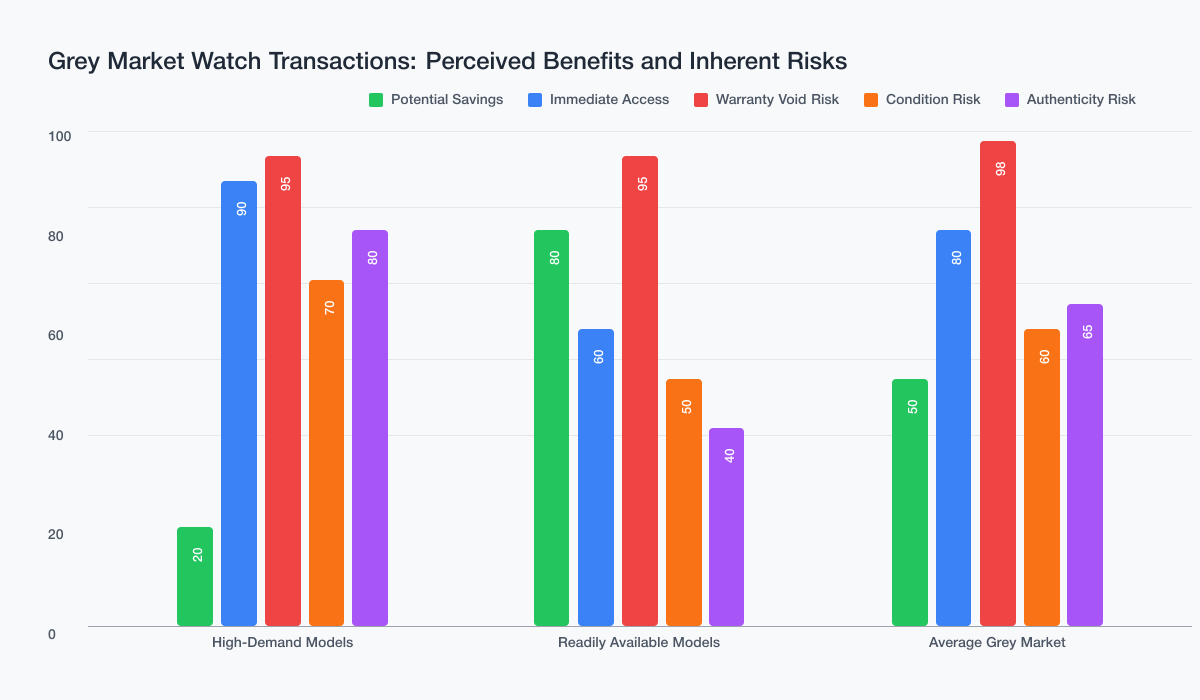
The primary appeal is simple: you want a deal, or you want the watch now. You bypass the years-long waitlist, but you pay for that luxury—either with a massive markup on hot steel models or by risking the loss of the manufacturer's warranty. Because you did not buy from an official channel, if the watch fails, you are on your own. "Seller's warranties" exist, but they are often limited, restrictive, or functionally useless.
Beyond the warranty issues, the grey market requires vigilance. You may encounter watches with polished, compromised cases, removed serial numbers, or "Frankenwatches" containing non-original parts. You have to be a detective. While data like Similarweb (2024) suggests that platforms like Reddit’s r/watchexchange or Chrono24 can offer better pricing for brands like IWC, Cartier, or Omega, the onus of verification is entirely on you.
The grey market offers immediate access and potential savings, but it shifts the entire burden of verification, risk, and service onto you.
Warranty and Service: The Most Critical Difference
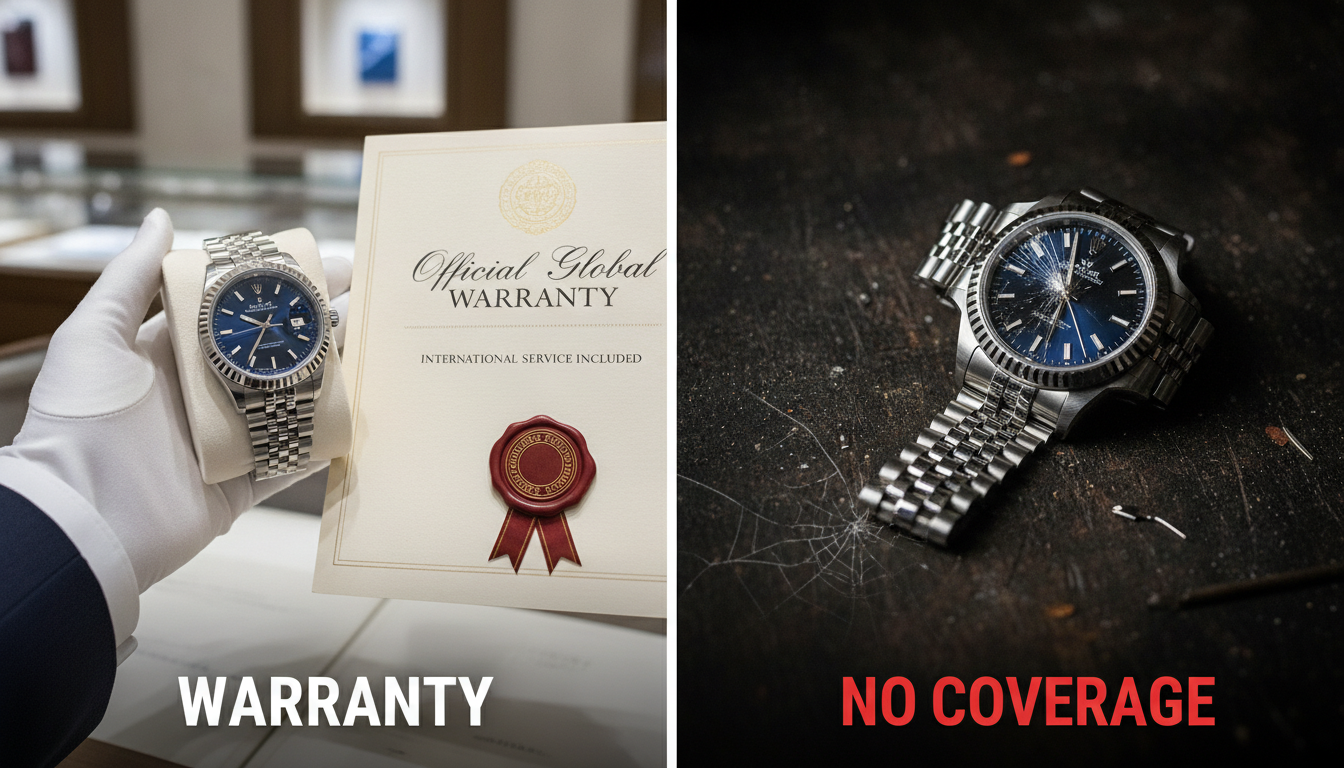
You can play roulette with many things, but not your timepiece. An Authorized Dealer provides a multi-year, global manufacturer warranty. Whether you buy in Paris or New York, an official service center will address your issues—free of charge. It is an ironclad promise.
In contrast, a grey market warranty is often a handshake deal with a dealer who may not exist in five years. Most brands refuse to service watches that were not purchased through their official network, even if you offer to pay. We have seen collectors left with "bricks"—defective, non-functional watches that official service centers refused to touch, leaving the owner with zero recourse.
An Authorized Dealer warranty is your insurance policy, whereas a grey market purchase often leaves you with zero recourse if a high-end, precision-engineered timepiece requires service.
How to Buy Safely on the Grey Market
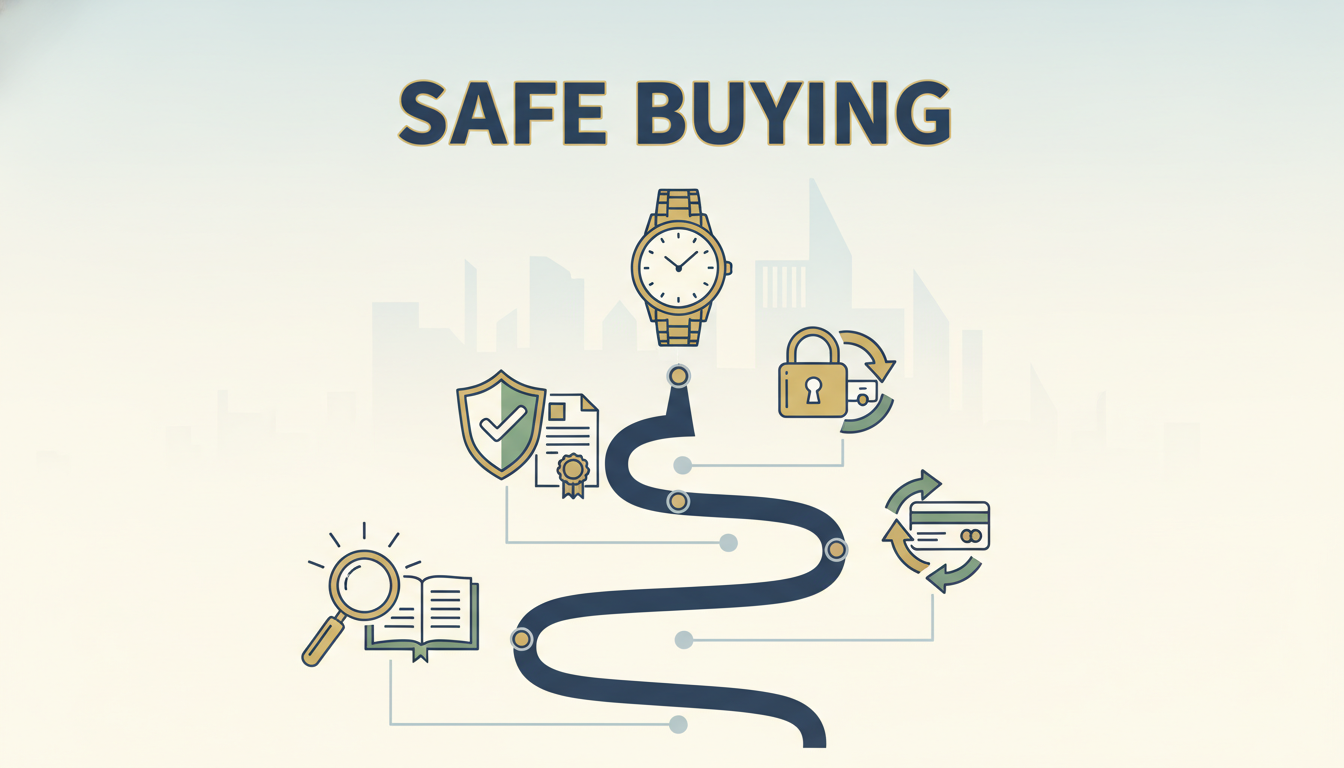
If you decide the grey market is your best route, you must mitigate your risk through strict due diligence:
- Vet the Seller: Check feedback on forums, review independent rating sites, and look for dealers with a verified physical presence. For a benchmark on what a reputable dealer looks like, consider established platforms such as The Stellaris Collection.
- Verify Authenticity: If the price looks too good to be true, it is. Ensure the watch comes with original box and papers, and cross-reference the serial numbers.
- Inspect Service History: Ask for proof of service if the watch is pre-owned.
- Use Protected Payment Methods: Never pay via wire transfer to an unknown party. Use platforms that offer escrow services or credit card protections.
- Request High-Resolution Photos: Demand macro shots of the movement, the dial, and the bracelet to spot imperfections or replaced parts.
- The First-Time Buyer: Head straight to an Authorized Dealer. Pay the retail price as an entry fee for peace of mind. Do not be a hero on a forum.
- The Patient Value-Seeker: The AD is your only play. If you can wait a year or three, stay in line. If you cannot wait, stop kidding yourself.
- The Impatient Trophy Hunter: The Grey Market is the only place where money solves the "availability" problem. You are paying a premium to skip the line—it is expensive, but it is instant.
- The Collector of Rare/Discontinued Gear: The AD cannot help you. Dive into the secondary market, but act as a detective. Authenticity is the only thing that matters.
- It boils down to your priorities. Peace of mind and a full factory warranty? You pay the AD premium and play the waiting game. Immediate gratification? That is grey territory.
- Forget simple logic on price. Hot steel sports models often command a 20–30% premium on the grey market, but precious metals can trade well under retail. Demand dictates the numbers.
- The grey market is not a free-for-all. It demands serious due diligence. Authenticity, seller reputation, and service history are not footnotes; they are the entire story.
Vetting the dealer is the most crucial step in any grey market transaction; if the seller's reputation isn't impeccable, the deal isn't worth the risk.
Decision Framework: Which Path Is Right for You?
Your buyer profile determines the game. You must be honest about your tolerance for risk, your patience, and your ultimate goals.

Matching your buyer profile—whether you prioritize risk mitigation, patience, immediate gratification, or finding discontinued pieces—will dictate exactly which channel is the right fit for your goals.
Frequently Asked Questions
Are they fakes? Most are not, but you are playing with fire. You are buying from a private entity, not the brand. If you don't vet the seller, you are buying a potential problem, not a watch.
Why do prices swing so wildly? It is simple supply and demand. If nobody wants a specific model, you get a deal. If everyone wants it, you will pay through the nose. The market dictates the pain (or pleasure).
Can I get it serviced? Generally, no. Brands protect their network. If you didn't buy from their guy, they likely won't touch it. You are on your own for repairs.
Is Reddit safe? It is the Wild West. You are trusting a stranger with no escrow and no official backing. Assume you are taking a leap of faith, because you are.
Because the watch market is driven by supply and demand, understanding the nuances of authenticity, service policies, and price volatility is the only way to navigate these channels effectively.
*
We have laid it all out. There is no "easy button." Anyone telling you one side always wins is selling something or doesn't understand the nuance. This isn't a popularity contest; it is about knowing the rules and playing your specific game.
Here is the brutal truth:
You want a watch; the market dictates how you get it. Your choice isn't about what is "best," it is about what is smartest for your specific situation. Don't chase trends blindly; identify what you value most—be it peace of mind or immediate access—and execute your purchase through the channel that aligns with your specific situation. For those seeking a curated and trustworthy experience, exploring collections from vetted sources like The Stellaris Collection can provide a reliable alternative.
