

Investing in Watches vs. Jewelry: A Clear-Eyed Guide to the Risks
The Stellaris Journal
The $50 billion luxury watch market. The 'timeless asset' promise of jewelry. These phrases echo with the allure of easy money, often amplified by those with a vested interest in your purchase. But beneath the headlines of 'record-breaking sales' lies a stark, unglamorous reality: for every success story, countless individuals find themselves burned, stuck, or watching their 'investment' simply collect dust. This isn't an aspirational guide to luxury. Instead, we're pulling back the curtain to dissect precisely how these tangible luxuries can transform into financial quicksand. From unpredictable market crashes and pervasive fakes to an endless stream of hidden costs and the daunting struggle of resale, we're stripping away the hype to expose the risks, clear-eyed and unvarnished.
The Investor's First Hurdle: Understanding Value vs. Price
Forget the dazzling store tag. Seriously, mentally tear it off. Because that figure isn't true value; it's the retail price. For you, the investor, these are fundamentally distinct concepts. New entrants consistently confuse them, assuming the initial price reflects stable worth. This misconception is your first critical error.
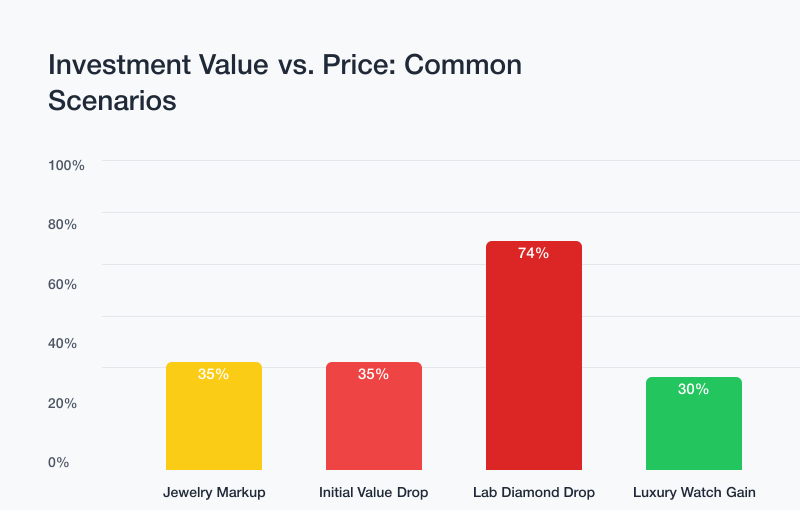
Consider a piece of jewelry. You admire its sparkle, but what you're truly paying is a substantial markup. Retailers frequently impose premiums of 35% or more over the actual cost of materials and craftsmanship, as highlighted by MarketWatch (via Empower.com). The moment you purchase and exit the store, its 'value' immediately depreciates. You've acquired a retail item, not an investment-grade asset.
Luxury watches, however, can sometimes follow a different trajectory. Brands like Rolex or Patek Philippe occasionally command prices far exceeding retail on the secondary market. This phenomenon is driven by factors like scarcity, intense hype, and overwhelming demand. But heres the crucial distinction: genuine investment value originates solely from this secondary market, never from the retail store. An insurance appraisal, for instance, reflects replacement cost, not resale potential, a point ECI Jewelers has consistently emphasized.
For a stark illustration, look at lab-grown diamonds. Marketed as sustainable, brilliant, and more affordable, their prices have plummeteda staggering 74% drop from 2020 to 2025, according to Empower.com. Does their initial retail price now seem like an accurate predictor of lasting value? It was merely a figure you were persuaded to accept.
The price you pay at the register bears almost no relation to an item's intrinsic worth as a financial asset.
Riding the Wave or Wiping Out: Navigating Market Volatility
If anyone tells you luxury watches or jewelry are 'stable investments,' they're either selling you a fantasy or profoundly misinformed. This market, like any other asset class, is prone to significant movement and dramatic swings. It can elevate you on a wave of speculation or utterly wipe you out. To believe these items are immune to bubbles is a dangerous delusion.

The luxury watch market offers a recent, vivid example. Prices soared from 2020 to early 2022, attracting a frenzy of buyers. Then, inevitably, a sharp correction occurreda speculative bubble, as ECI Jewelers accurately predicted. Those who bought at the peak were left holding depreciating assets. Even natural diamonds, despite their 'timeless' reputation, aren't immune to market forces; they saw a 26% drop from 2023 to early 2025, according to Empower.com. The promised stability is nothing but a myth.
Consider the pervasive influence of hype. An influencer sports a new piece, a celebrity shares a photo, and suddenly, prices surgeoften temporarily. Investing based on such social media frenzies is inherently risky; you're betting on fleeting noise. And when that noise inevitably subsides, prices plummet. Remember the GameStop saga and the Reddit investors who got burned? Hype always has an expiry date.
Furthermore, these markets are not isolated from global events. Geopolitics, such as the 'China Factor' or regional instability (like the Taiwan market discussions on Reddit), exert considerable influence. Global economic shifts impact consumer confidence, which in turn dictates half the battle in luxury markets.
This market is not a secure vault; it's a volatile, unpredictable journey where unprepared investors will inevitably get submerged.
The Liquidity Trap: Why Cashing Out Is Never Guaranteed
So, you've made your purchase. Now what? When it's time to reclaim your capital, or ideally, profit, prepare for a significant challenge. Luxury watches and jewelry are far from cash. They are inherently illiquid assets, meaning you can't simply click a button for instant funds. Attempting a quick sale almost invariably results in a substantial loss, often a 'buzzcut' to your initial outlay.
Contrast the sale of a Rolex with that of a stock or even physical gold. You'll find yourself waitingand waiting. DiamondBanc highlights that watches are considerably less liquid than conventional investments. You require a highly specific, niche buyer who desires your exact piece. Locating such a buyer demands significant time and persistent effort. Specialized marketplaces like The Stellaris Collection can sometimes bridge this gap. As Maddox Gallery confirms, liquidating assets like art or luxury watches is rarely a swift process.
And those initial figuresyour appraisal, the retail price paid? Discard them. The cash offer from a dealer will likely be a jarring revelation. Empower.com explicitly cautions that resale offers can be dramatically, even ridiculously, lower than your retail purchase price. An item appraised at ten thousand might fetch three thousand in a real-world sale. This is the stark reality of the secondary market.
Considering an auction, consignment, or private sale? Each route involves additional fees, inherent risks, and extended timelines. Any notion of a swift, profitable exit strategy is likely unfounded.
The harsh reality is that your profit remains theoretical until the cash is secured in your hand, and it's this final hurdle where many investors falter.
Beyond the Price Tag: The Hidden Costs of Ownership
Youve acquired that exquisite watch or gleaming necklace, perhaps believing it a shrewd deal or a genuine 'investment piece.' Yet, the sticker price is merely the entry fee. The true financial drain begins the moment you leave the store and continues relentlessly.
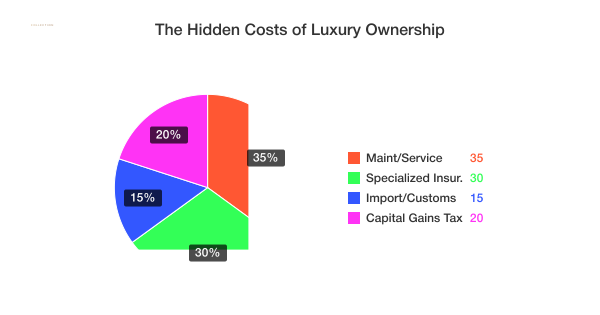
These aren't 'set-and-forget' assets like a savings account or a passive stock. A luxury mechanical watch, akin to a miniature engine, requires periodic, professional care. ECI Jewelers estimates that every five to seven years, you'll face servicing costs ranging from hundreds to thousands of dollars just to maintain its intricate mechanicsan expensive 'oil change' for your wrist.
Then there's the ever-present, yet frequently overlooked, risk of theft. A staggering $1.9 billion in watches alone are stolen annually, as reported by Maddox Gallery. Don't assume your standard homeowner's policy offers adequate protection; it will likely offer meager compensation. Specialized collectibles insurance is a necessity, representing another ongoing expense that erodes potential gains but is vital to protect your asset.
The perils extend to online purchases. What appears to be a straightforward acquisition from 'Canada' or 'Italy' can arrive with an unwelcome surprise: a customs bill. One Reddit user recounts a $150 customs charge on an $810 bracelet from a seller they believed was U.S.-based. These 'hidden' fees remain invisible until they land squarely in your lap.
Finally, even if you successfully manage to retain, service, insure, and eventually sell your luxury item for a profit, the government claims its share. The IRS, as Empower.com notes, subjects 'collectibles' to a higher capital gains tax rateup to 28% in the U.S.significantly reducing your actual net profit compared to standard income or other investment gains.
While buying is simple, the true gamble lies in the ongoing costs of ownership, which can systematically erode any perceived investment value.
The Authenticity Minefield: Fakes, Frankensteins, and Frauds
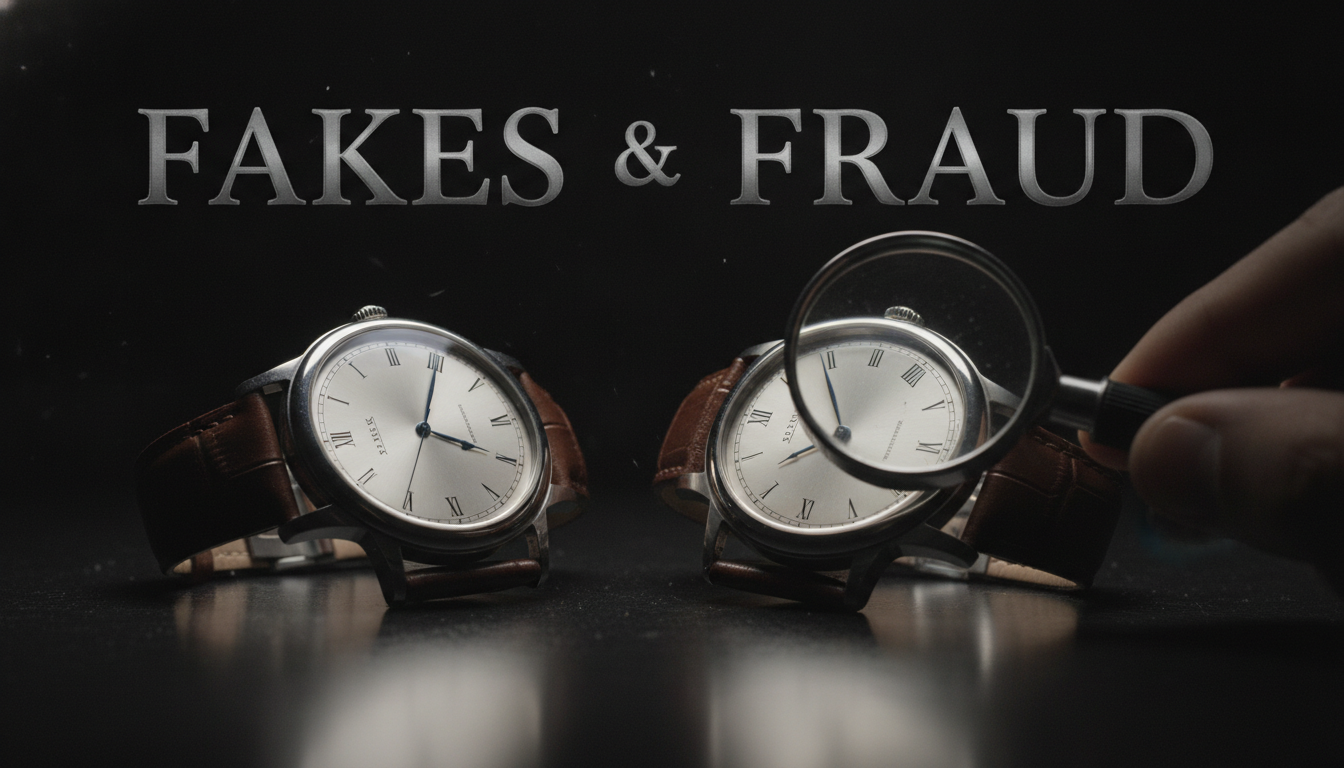
Let's be blunt: the secondary luxury market is a treacherous swamp. You might consider yourself astute, capable of identifying a counterfeit. The truth is, you likely can't, not anymore. The counterfeit industry is no longer a rudimentary back-alley operation; it's a multi-billion dollar, sophisticated machine producing fakes of terrifyingly high quality.
Consider the sheer scale: Watchfinder & Co. (via Maddox Gallery) estimates over a million fake watches are circulating in the UK alone, a significant portion being Rolex due to their immense popularity. Distinguishing these expert replicas from genuine articles demands the discerning eye of a seasoned professional, far beyond the capabilities of an amateur with a loupe.
The problem isn't confined to outright fakes. It's more insidious. We have 'Frankenwatches,' a term ECI Jewelers uses to describe watches assembled from a mix of genuine components and aftermarket junk, or even authentic parts salvaged from different timepieces. These cobbled-together 'Frankensteins' often appear legitimate enough to deceive, yet their true value is severely compromised, leaving you with a costly, unauthentic hybrid.
Beyond the product itself, the seller can be the primary source of fraud. Recall the unfortunate Reddit user who believed they were purchasing from a U.S. company, only to find the item shipped from Dubai, incurring unexpected customs fees and offering no recourse. Deceptive practices are rampant; individuals, businesses, and websites frequently misrepresent their products and origins.
If you're considering investing in this market, independent, expert verification of authenticity is not optional; it's essential, or you risk significant financial loss.
Frequently Asked Questions
What about lab-grown diamonds? Good investment?
No. Absolutely not. Their prices are plummeting; Empower.com projects a 74% drop from 2020 by 2025. This isn't complex economicsit's simple supply and demand. When something can be mass-produced quickly and indefinitely, its value inevitably diminishes. So, purchase them for their beauty, but never mistake lab-grown diamonds for a sound financial investment.
Okay, so if I'm looking to invest, vintage or modern watches?
Always vintage, but with a critical caveat: deep expertise is required, either your own or from a trusted professional. DiamondBanc and other experts concur that genuine returns are found in rare, historically significant pieces because their finite supply drives scarcity and, thus, value. Modern watches, by contrast, are largely mass-produced accessories, attractive but rarely do modern watches hold significant investment potential.
What about taxes when I sell a watch or jewelry? Its complicated, right?
It is, and it's a common oversight. The IRS classifies these items as 'collectibles,' subjecting them to a higher capital gains tax rateup to 28% in the U.S. This isn't taxed at your ordinary income rate, meaning any realized profit will be significantly diminished by this specialized tax implication.
Honestly, is all this "luxury investment" talk just a bunch of hype?
Predominantly, yes. A significant portion is overinflated hype. As one candid Reddit thread on r/watches bluntly states, mechanical watches are "overpriced wrist jewelry... it's all meaningless and entirely bullshit." For most, these are aspirational wants, not financial necessities, and certainly not a guaranteed path to wealth. So, buy what genuinely brings you joy, but don't delude yourself into believing luxury goods are a consistently smart financial maneuver.
*
Having thoroughly examined the realities of investing in luxury watches and jewelry, the overriding takeaway is clear: this is unequivocally not a get-rich-quick scheme. Anyone touting these as "safe" investments is either actively trying to sell you something or has never personally navigated the complexities of liquidating a high-value piece. This market operates with sharp, unforgiving edges.
When you engage with luxury goods, you aren't simply "investing"; you're acquiring a volatile, tangible asset inherently susceptible to market whims, economic shifts, and a multitude of risks. Consider these critical points:
- Market value is fluid. It fluctuates dramatically, driven by fickle trends, speculative bubbles, and often irrational exuberance. Today's 'grail' watch can easily become merely 'another nice watch' when you need to sell it.
- Ownership is a continuous drain on capital. Insurance premiums, routine servicing, and secure storage are not negligible expenses. These ongoing costs chip away at potential gains, frequently transforming paper profits into net losses. You must pay to play.
- Liquidity is often a myth. The act of buying is invariably easier than selling. Identifying a trustworthy buyer, ensuring authenticity, navigating potential scams, and negotiating a fair price is a demanding, often protracted, ordeal. You might find yourself waiting months or forced to accept a significant loss just to finalize a sale.
The bottom line: if your primary objective is financial investment, more transparent and less complicated avenues exist. If your motivation is passion, collecting for personal enjoyment, that's commendablejust don't conflate the two. This isn't passive income; it's active risk management.
So, what action should you take? Dispel the pervasive hype. Be brutally honest about why you're buying. And if you decide to enter this market, understand that a genuine professional is indispensable. You need someone who can verify authenticity, possesses a deep understanding of real market dynamics, and can execute a sale without you being financially exploited. Attempting to navigate this complex landscape alone, without consulting a trusted source like The Stellaris Collection, is a recipe for potential financial disappointment and regret.
