

How to Tell if a Rolex Is Real: Layered Inspection
The Stellaris Journal
You cannot prove that a Rolex is real through one photograph, serial number, document, sound, weight check, or visible detail. Start with the exact reference and era. Then assess whether the configuration, condition, identifiers, papers, service history, seller evidence, and qualified findings agree.
A visible inconsistency is a reason to investigate, not an automatic verdict. Rolex states within its Certified Pre-Owned process that only Rolex can confirm the authenticity of a Rolex watch. An independent dealer’s guarantee or specialist opinion has a different scope and should be described that way.
The Short Answer: A Real Rolex Must Make Sense as a Whole
Buyer screening and official confirmation are different stages.
A buyer can establish the represented reference, compare the external configuration, review actual-watch photographs, match identifiers with documents, investigate the seller, and identify unresolved questions. That work can reveal a clear conflict or build a coherent evidence record.
It cannot make every internal conclusion from a screen. Movement identity, earlier intervention, water resistance, and some component questions require qualified physical examination. Generated images, stock photographs, and compressed seller images should be used to form questions, never as authentication evidence.
Modern and vintage Rolex watches also require different context. Features changed across model families and production periods. Authorized service can introduce genuine replacement parts. Older watches may lack original papers or contain period repairs. A cue that is expected for one reference may be absent from another genuine watch.
Keep four conclusions separate from the beginning:
- Authenticity: whether the watch and represented components are genuine Rolex.
- Originality: which components remain from the watch’s original production configuration.
- Condition: wear, damage, corrosion, refinishing, mechanical state, and current function.
- Completeness: the box, warranty paper or card, booklets, tags, links, receipts, and service records included.
- case material, size, and construction;
- bezel and crown configuration;
- dial variants documented for the period;
- calibre and intended functions;
- bracelet, end-link, and clasp configuration;
- crystal and date-display details where applicable; and
- known changes during the reference’s production run.
- that photographs show the actual watch;
- which components and accessories are included;
- known service, replacement, modification, or refinishing;
- who owns the description and guarantee;
- who receives payment and which protection applies;
- the inspection and return terms; and
- how the approved watch will be identified through delivery.
- original to the represented watch;
- genuine Rolex service replacement;
- period-correct replacement without confirmed original association;
- aftermarket or modified; or
- unknown.
- an external buyer screening;
- an independent watchmaker’s scoped opinion;
- a dealer’s written authenticity guarantee;
- documented Rolex service; and
- official Rolex Certified Pre-Owned certification.
“Authentic” does not automatically mean original, unpolished, complete, recently serviced, waterproof, or correctly priced.
Start With the Exact Rolex Reference and Era
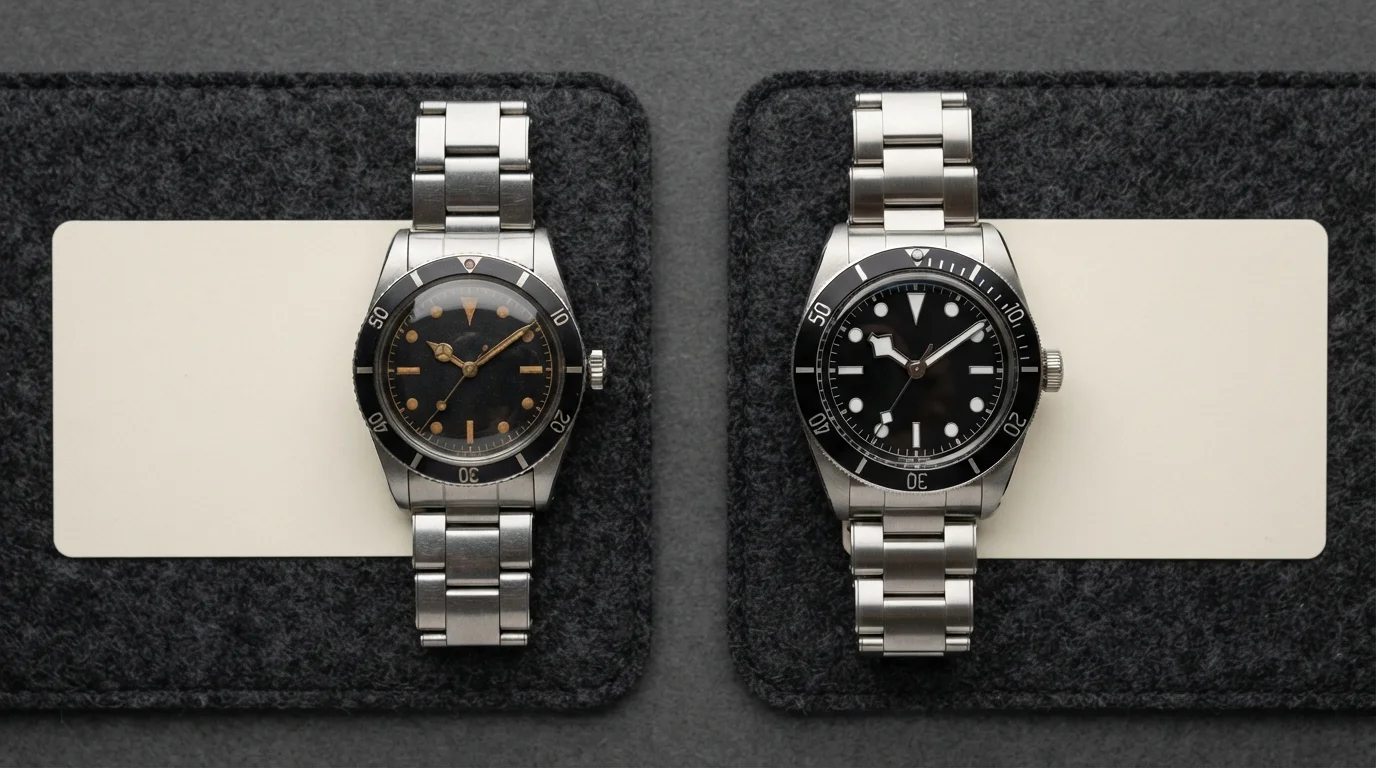
Do not begin with a broad family name such as Submariner, Datejust, GMT-Master, Daytona, or Explorer. Record the full represented reference and the production period supported by the available evidence.
Build a reference sheet from reliable sources:
A model can evolve while keeping the same basic reference. A feature correct early in production may change later. Service components can add another legitimate variation. This is why a reference check should define the expected range before any detail is called wrong.
Unofficial serial charts may help estimate a period, but they are research aids, not Rolex certificates. Do not treat a public lookup result as official production proof. Deep questions about serial locations, reference markings, and chart limitations belong in a separate identifier guide.
Ask the seller which source supports the represented configuration and period. Request clear actual-watch photographs of the front, sides, crown, bezel, caseback, bracelet or strap, clasp, and included documents. If a conclusion depends on information that is not safely visible, preserve that limit for qualified review.
An inconsistency can indicate a genuine service part, a period-correct replacement, an aftermarket component, a mismatched assembly, or an incorrect listing. The evidence must distinguish those possibilities before the watch is described as original, untouched, or factory-correct.
Inspect External Details in Reference Context
External inspection should test the complete configuration, not search for one theatrical “tell.”
Dial, hands, date, and crystal
Compare layout, typography, indices, hands, luminous material, date display, and crystal with reliable information for the exact reference and period. Print quality or alignment can expose a question, but a copied dial detail cannot authenticate the movement, case, or papers.
Cyclops magnification is often promoted as a universal shortcut. In practice, the crystal, date display, camera angle, replacement history, and exact reference all matter. The laser-etched coronet is also reference- and production-dependent and can be imitated. Neither is standalone proof.
Case, crown, bezel, and finishing
Review shape, lug geometry, bezel, crown, caseback, wear, corrosion, and signs of refinishing. A polished case can be genuine. The question is whether the work and current geometry are represented accurately.
Weight and material feel are useful only in a controlled reference-specific comparison. The case metal, bracelet, links, movement, and configuration affect the result. “Heavy means real” and “light means fake” are not defensible rules.
Bracelet, clasp, and rehaut
Compare bracelet construction, end links, clasp, fitted components, and rehaut details where applicable with the correct period and reference. Different wear between the watch head and bracelet may suggest replacement, refinishing, or simply different use. It does not prove one explanation.
Sound and motion
A Rolex movement does not become authentic because the seconds hand appears smooth or because a recording lacks an obvious tick. Frame rate, audio quality, calibre, display, and condition all affect what a short clip shows. A counterfeit movement can imitate visible behavior, and a genuine watch can perform poorly when service is overdue.
Photographs and video should therefore produce specific questions: Is this dial expected? Is the case over-refinished? Is the bracelet period-correct? Is a service crystal disclosed? They should not produce a final verdict from appearance alone.
Request neutral lighting and more than one angle for any detail that affects the decision. Warm light can make luminous material look older, sharpening can exaggerate printing, and reflections can conceal refinishing. Compare the wide view with the macro view so a plausible isolated detail is not separated from the rest of the watch. If an image cannot resolve the question, label the observation preliminary.
Check Identifiers, Papers, Provenance, and the Seller
Read the watch, documents, and transaction as one evidence set.
Where identifiers are legitimately available, compare the reference and serial information with the warranty paper or card, service records, receipts, and represented history. A matching number strengthens the connection between records and watch, but a number can be copied and a genuine document can be paired with a different watch.
Original papers can support the first sale. Service documents can record later work. Receipts, dated photographs, and insurance records may extend the supported timeline. Each item should be described only within its scope.
A genuine Rolex can lack its original papers. Missing documents reduce the available provenance and may affect demand, but they do not decide authenticity by themselves. Conversely, a complete-looking box and papers set cannot compensate for a conflicted physical watch.
The seller and transaction matter because even an accurate reference guide cannot protect a buyer from a substituted item or misleading description. Confirm:
The Stellaris FAQ says listings use actual-watch images, identify included items, provide condition information, and include an authenticity guarantee. Stellaris is independent and not affiliated with or authorized by Rolex. Its dealer guarantee is not Rolex certification.
Save the listing, photographs, invoice, and material correspondence. If an identifier, accessory, or condition statement changes during the transaction, the written description should be corrected before payment.
Ask the seller to distinguish what is documented from what is assessed. “Rolex service invoice lists a replacement crown” is a documented statement. “Hands appear consistent with the period” is an assessment. “Earlier service history is unknown” is a limit. Keeping those categories visible prevents an informed opinion from turning into an unsupported historical fact.
Separate Authenticity From Originality and Condition
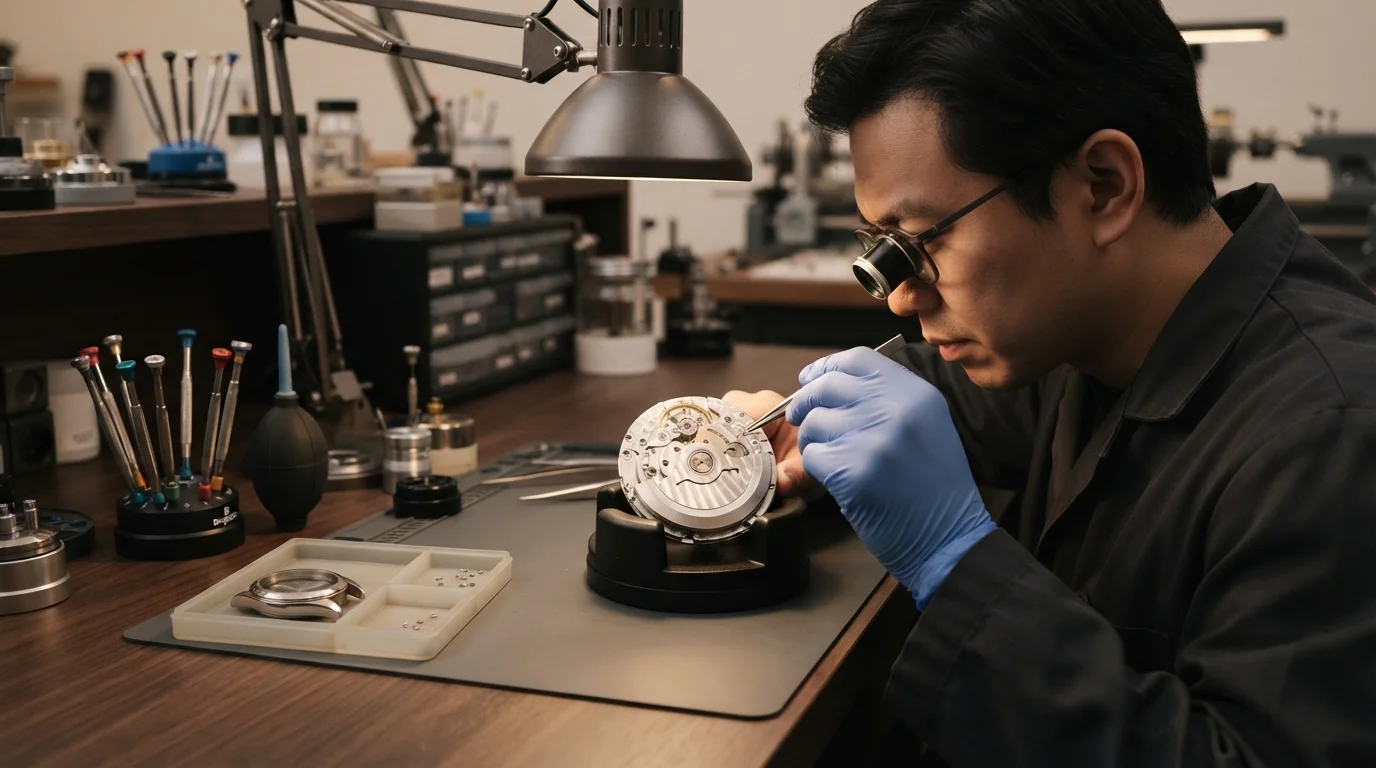
This distinction becomes especially important with serviced and vintage watches.
Rolex’s watch-care FAQ explains that components that no longer meet its functional or aesthetic requirements may be replaced with genuine Rolex parts during a complete service. Cases and metal bracelets may also be refinished.
A genuine service dial, hands, bezel, crown, crystal, or bracelet can remain authentic to Rolex while no longer being original to the individual watch. That may be entirely appropriate for a watch intended for reliable daily use, but it changes the description a collector needs.
Ask the seller to classify material components where possible:
Do not hide uncertainty inside “all original except service parts.” Name the known changes. If the status cannot be established, “unknown” is better than a confident adjective.
Rolex’s World Service history describes a Restoration Atelier for exceptional historical watches. It combines historical research and period techniques and may restore or recreate components. A carefully restored watch can be genuine, important, and desirable. It should still be represented as restored rather than untouched.
Condition deserves its own record. Scratches, dents, corrosion, bracelet wear, dial damage, water exposure, refinishing, and current operation affect the individual example. A sharp-looking case can result from preservation or refinishing. Matching dial and hand color can be coherent but does not authenticate what is inside.
Completeness is separate again. Box, papers, tags, spare links, and booklets can support history and desirability. They do not repair condition or establish component originality.
Use Qualified Examination for Internal or Conflicting Evidence
Do not remove a bracelet, open a case, pressure-test a watch, or handle a movement simply to complete an online checklist. Incorrect handling can damage the watch and still fail to produce a reliable conclusion.
Rolex states that Official Rolex Jewelers and Official Rolex Service Centers have the training, equipment, and expertise to guarantee the authenticity of every part. Within the Rolex Certified Pre-Owned certification process, Rolex says eligible watches return to its workshops for checks of original configuration and components and that only Rolex can confirm authenticity.
That official RCPO process should not be confused with an independent seller’s assessment. Distinguish:
Each can be useful, but none should borrow another’s authority.
Qualified examination is appropriate when the movement or internal identifier matters, evidence conflicts, modification is suspected, service claims need support, the watch is historically important, or the purchase value makes unresolved uncertainty material.
Provide the examiner with the complete representation: claimed reference, photographs, documents, known replacement parts, service history, and the exact questions that remain. Ask what was examined, what conclusion was reached, and what stayed outside scope.
The report should be specific enough to support the intended claim. A movement-identity finding does not decide case originality. A pressure test does not authenticate the dial or papers. A service recommendation does not establish ownership history. If photographs or identifiers are recorded, confirm how they will be handled and which values should remain private.
A service record can support work performed without proving that no earlier intervention occurred. An Official Rolex Service Center may focus on authenticity, function, and work needed to meet current specifications, while a collector may separately need an originality and refinishing account.
Rolex Authentication Checklist and FAQs
Before paying for a pre-owned Rolex, confirm:
1. The exact model, reference, material, configuration, and likely era are established.
2. External details were compared with the correct reference and production context.
3. Serial and reference information, documents, service records, and provenance agree or discrepancies are disclosed.
4. Original components, genuine service parts, aftermarket parts, modifications, and unknowns are separated.
5. Present condition, refinishing, mechanical status, and completeness are described independently.
6. Actual-watch photographs, seller identity, payment path, inspection, return, and delivery terms are clear.
7. Qualified examination is arranged for any internal, conflicting, vintage, modified, or high-value uncertainty.
The current Stellaris Rolex collection is the relevant commercial next step after the evidence framework is understood. Review the exact listing and ask for any missing support before payment.
Can a serial number prove a Rolex is real?
No. It can support reference and document consistency, but a plausible or copied number does not authenticate the complete watch. Public charts are research aids, not Rolex certificates.
Can a real Rolex tick or have replaced parts?
Visible or audible behavior depends on the movement and recording. It is not a universal test. A genuine Rolex can also contain genuine service replacement parts, which must be distinguished from original-to-the-watch components.
Are box and papers enough?
No. They can support the original sale, service, and provenance, but they must match the physical watch and cannot establish current condition or every component’s originality.
Can photos authenticate a Rolex?
Photos can reveal inconsistencies and support an external comparison. They cannot establish every internal component, prior intervention, or mechanical condition.
What is Rolex Certified Pre-Owned?
It is Rolex’s official certification program for eligible pre-owned watches sold through participating Official Rolex Retailers. It has a separate Rolex process, card, seal, and guarantee. It is not a generic term for any dealer-authenticated watch.
What changes for a vintage Rolex?
Reference evolution, lost papers, earlier repairs, genuine service parts, restoration, wear, and incomplete records become more likely. The evidence should preserve those limits rather than force the watch into a modern checklist.
