

Watch Collecting Guide: How to Choose Each New Piece
The Stellaris Journal
Watch collecting works best when every piece has a clear personal or functional reason to be there. Before shopping, define the collection’s purpose, budget, real-life use, and desired focus or variety. For each candidate, first evaluate the exact watch, then use design integrity, mechanical significance, and collector appeal as three decision lenses.
No framework makes a watch a guaranteed investment, and no collection requires a prescribed number of pieces. The goal is simpler: understand why the next watch belongs before it enters the box.
Start With Purpose, Budget, and Real-Life Use
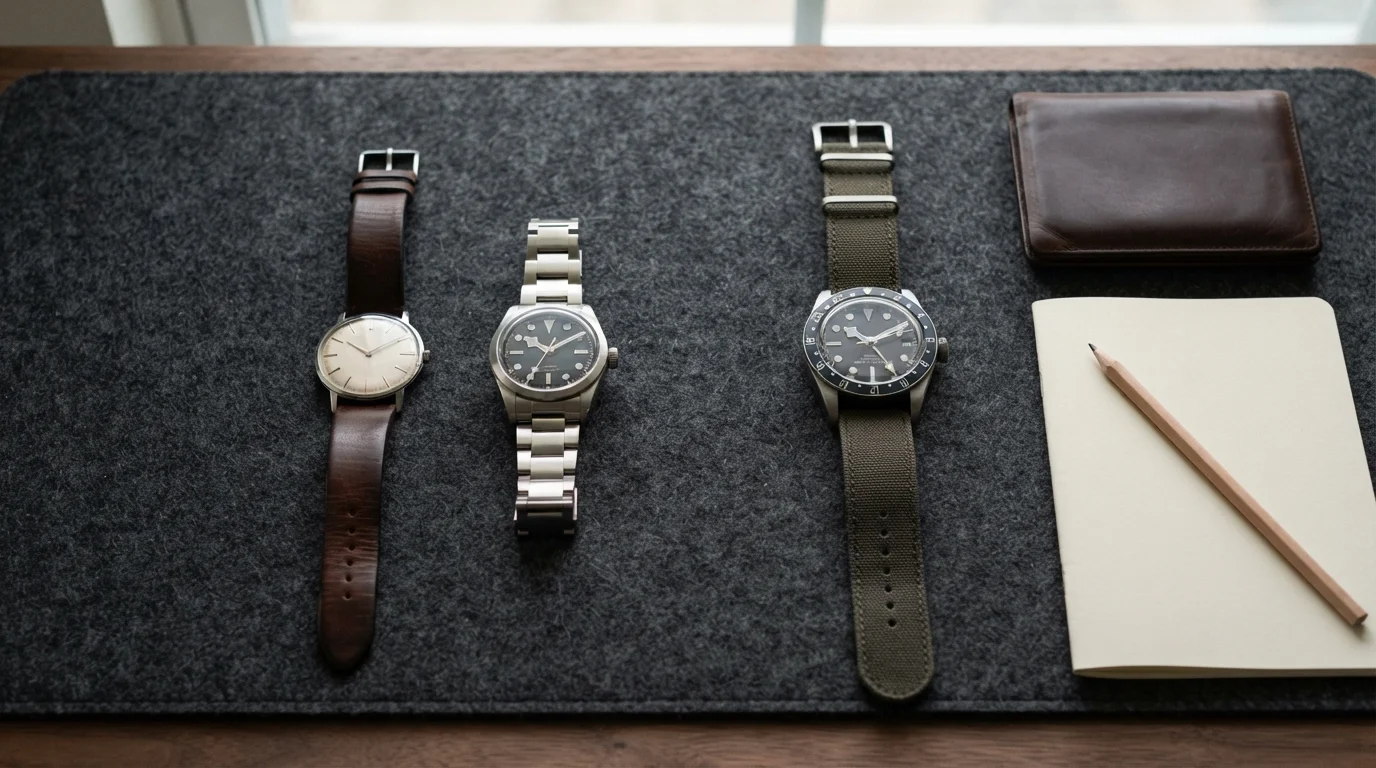
A collection can begin with one watch. What makes it a collection is intentionality, not a minimum count.
Start by writing down what interests you. It may be daily wear, a design language, technical watchmaking, a particular era, milestone purchases, one maison, or a narrow category such as chronographs. A focused single-brand collection can be as deliberate as one spanning different functions and periods.
Next, describe how the watches will actually be worn. A formal watch that never suits your life may remain untouched even if it is admired. A travel complication offers little practical value if you prefer a simple time-only display. A high-complication watch may be fascinating but bring ownership responsibilities that do not fit frequent use.
Set an all-in purchase ceiling rather than looking only at the asking price. Depending on the transaction and watch, the total may also involve tax, shipping, insurance, an immediate service need, bracelet links, straps, or secure storage. These costs are reference-specific and policy-specific, so fixed salary formulas and universal ownership estimates are not useful.
Keep a separate reserve for ownership rather than using the entire budget on acquisition. The correct amount depends on the reference and your circumstances, but the principle is stable: a watch should not become impossible to insure, maintain, or use because the purchase consumed every available dollar.
Fit deserves attention before a purchase decision. Diameter is only one measurement. Lug span, thickness, crown position, bracelet articulation, weight distribution, and dial opening all affect how a watch wears. Try the watch on where possible. If the purchase is remote, request exact dimensions, wrist photographs if available, and clear return or inspection terms.
The result of this first step should be a short brief:
- the purpose of the collection;
- the role the next watch should fill;
- where and how often it will be worn;
- the maximum all-in budget; and
- any size, material, movement, or service constraint that matters.
- the full reference and represented production period;
- movement and intended functions;
- case and bracelet or strap materials;
- published dimensions;
- meaningful production variations;
- likely service path and specialist requirements; and
- commonly disclosed component or configuration changes.
- identity and represented reference;
- present condition and refinishing;
- originality and genuine service replacements;
- known service and modification history;
- documents, box, links, straps, and other included items;
- seller identity and accountability;
- price in relation to comparable examples; and
- payment, inspection, return, shipping, and delivery terms.
- What does the candidate add that is not already present?
- Is the overlap intentional and important to the theme?
- Which existing watch would receive less wrist time?
- Would waiting produce a better answer to the same goal?
- Does the candidate still fit the all-in budget and ownership capacity?
Research the Reference Before You Shop
Learn the reference before comparing individual listings. Manufacturer information can establish the intended movement, functions, materials, dimensions, and configuration. Reliable historical material can help identify production changes. Seller descriptions and collector discussions may raise useful questions, but they should not be presented as manufacturer facts.
For a candidate reference, record:
Compare actual-watch photographs and listing details, not only polished stock imagery. Two examples of the same reference can differ materially in condition, refinishing, service history, documentation, and included components.
Separate four types of information while researching:
1. Manufacturer fact: a published specification, current service statement, or reference detail.
2. Seller claim: a statement about the exact watch, its condition, history, or contents.
3. Collector opinion: a view about importance, rarity, desirability, or aesthetics.
4. Market evidence: current or completed transactions that may differ in condition and terms.
The buying channel also changes which questions matter. An authorized retailer, independent dealer, marketplace seller, private owner, and auction house do not have the same relationship to the watch or transaction. At this stage, simply identify who owns the description, who holds the watch, who receives payment, and which written protection applies. The full channel decision belongs in a dedicated buying guide.
The Stellaris watch-brands page and current watch collection can help narrow the references and maisons you want to examine. Availability is not a reason to skip reference research.
Use Three Criteria to Judge Each Watch
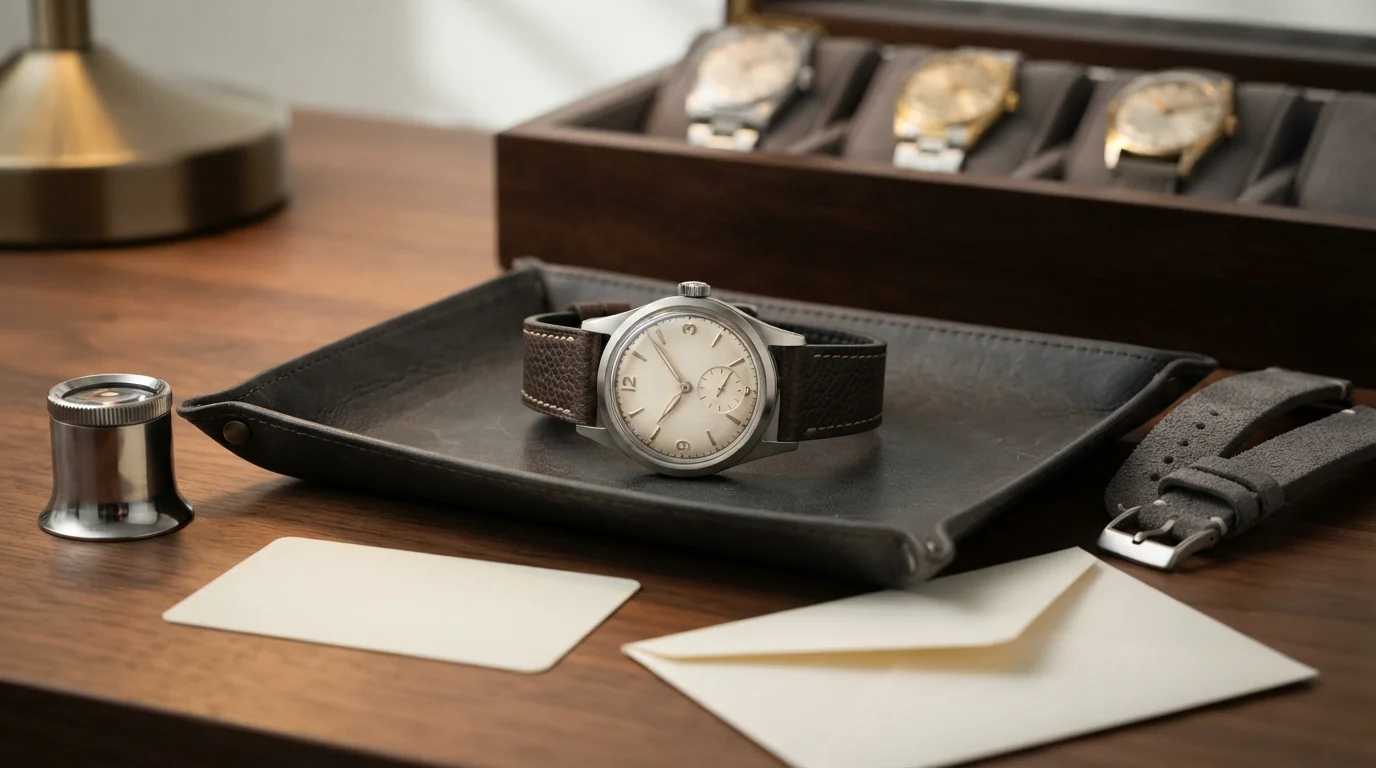
The following three criteria are an editorial framework for making the decision visible. They are not a universal scoring system and are not presented as a proprietary Stellaris process.
Design integrity
Design integrity is the relationship between proportion, function, material, finishing, and identity. A coherent watch does not need to be minimal, but its parts should support the same purpose.
Look at dial hierarchy, legibility, case shape, bezel, bracelet or strap integration, and how the watch sits on the wrist. Then examine whether the individual example still preserves that design. Heavy polishing can soften case geometry. A replacement dial, hands, bezel, crown, or bracelet may change the visual balance. A genuine service component is not automatically undesirable, but it should be disclosed and judged in context.
The useful questions are concrete: Does the form support the function? Is the current condition accurately represented? Are later changes known? Does the watch still express the design that attracted you to the reference?
Mechanical significance
Mechanical significance asks what the watch does, how the movement supports that purpose, and whether the execution matters within the reference or maison.
Complexity alone is not quality. A well-executed time-only calibre may be more coherent than a complication added mainly for spectacle. A technically important movement may also require specialized service or handling that makes it unsuitable for a particular owner.
Check the correct calibre and context, intended functions, current operation, known service history, and practical serviceability. Ask whether the mechanics strengthen the watch’s identity and whether you are comfortable with the responsibilities that follow.
Collector appeal
Collector appeal is the reason a reference continues to matter beyond a short market moment. It may come from design, mechanics, documented history, provenance, an unusual configuration, or a combination that is difficult to reproduce.
Scarcity alone is not enough. A watch can be rare because initial demand was limited. Visibility is not enough either. A heavily discussed reference may be passing through a temporary cycle. Asking-price momentum is not evidence that future value is guaranteed.
A better question is whether the piece would still make sense in your collection if public attention and price stopped rising. If the answer is yes because of its design, function, history, or personal significance, the collecting reason is clearer.
| Design integrity | Mechanical significance | Collector appeal | What the combination suggests |
| ---------------- | ----------------------- | ---------------- | ------------------------------------------------------------------ |
| Strong | Strong | Strong | A balanced candidate, subject to the exact watch, price, and terms |
| Strong | Moderate | Strong | Design and reference identity may be the main reasons to own it |
| Moderate | Strong | Selective | Technically compelling, but suited to a narrower purpose |
| Strong | Strong | Unclear | Worth judging on its merits without relying on market recognition |
| Compromised | Strong | Strong | The individual example may not represent the reference well |
This table is not a valuation model. Two collectors can use the same criteria and reach different decisions because their collections serve different purposes.
Evaluate the Individual Example, Not Just the Model
An excellent reference can be represented by a poor individual example. Authentication and accurate identity are the threshold, not the final decision.
Review the following as separate conclusions:
A famous model does not excuse an unresolved identifier. A complete-looking set does not correct a heavily altered watch. A recent service record does not establish the entire earlier history. A low price does not compensate for weak transaction protection.
Stellaris states in its FAQ that listings use actual-watch photographs, identify included items, provide condition information, and offer an authenticity guarantee. Those are useful inputs for evaluating the specific example. They do not turn the three editorial criteria into a company workflow or remove the buyer’s need to read the exact listing and terms.
Keep this stage proportionate. The collection guide needs enough individual-example review to prevent a model-only decision. A complete pre-owned-watch evaluation should remain a separate, deeper task.
Build a Collection Without Repeating Yourself
Before adding a watch, ask what changes when it joins the watches you already own.
The answer may be a new function, design language, movement type, material, era, maison, wear context, or personal association. It may also be a better example of a category you intentionally collect.
Variety is not mandatory. A focused collection of one model family can contain meaningful differences in period, material, movement, dial, or provenance. Conversely, a collection spread across many brands can still be repetitive if every watch serves the same visual and practical role.
Distinguish intentional overlap from substitution. Owning two related references may deepen a theme. Buying several near-matches because the desired piece is unavailable can consume budget without answering the original goal.
Use a simple comparison before committing:
An empty space is not a defect. Waiting can be the most disciplined collecting decision when the available watch does not add a clear role.
Common Watch-Collecting Mistakes
Buying attention instead of a watch
Social visibility, scarcity language, and projected resale can make a reference feel urgent. None establishes that the watch suits your life or collection. Remove the market narrative and ask whether the piece remains interesting on its own terms.
Confusing “full set” with quality
Box, papers, tags, booklets, and links may strengthen documentation and completeness. They do not repair poor condition, prove every component is original, or authenticate the current watch by themselves.
Ignoring fit and ownership responsibility
A watch can be admired but impractical. Size, weight, fragility, service access, insurance, storage, and how often it will be worn all affect whether the purchase works after the first week.
Treating asking prices as completed market evidence
Listings can remain unsold, and apparently similar watches may differ in condition, set contents, service history, and transaction terms. Compare like with like and avoid turning one visible asking price into a valuation rule.
Buying substitutes repeatedly
Several compromises can cost more than waiting for the watch that answers the actual brief. A candidate should be judged against the original purpose, not only against what is available today.
Repeating seller or forum language as fact
Terms such as “rare,” “unpolished,” “investment grade,” or “all original” need evidence. Record what is documented, what is an informed assessment, and what remains unknown.
A Checklist Before Adding the Next Watch
Use this final review before approving a purchase:
Write the answers down. A short collection record makes later overlap, tradeoffs, and changes in purpose easier to see.
1. Purpose: What personal, functional, or thematic role will the watch serve?
2. Budget: What is the maximum all-in cost, including immediate ownership needs?
3. Reference: Have the movement, materials, dimensions, variations, and service implications been researched?
4. Fit: Have the actual dimensions and on-wrist behavior been considered?
5. Design: Does the watch remain coherent in its present condition and configuration?
6. Mechanics: Do the movement and functions add meaningful interest, and are their responsibilities understood?
7. Collector appeal: Is the reason grounded in design, mechanics, history, provenance, or personal significance rather than promised returns?
8. Individual example: Are identity, condition, originality, service, documents, seller, price, and terms clear?
9. Collection role: What does this watch add, and is any overlap intentional?
10. Patience: If material questions remain, is waiting the better decision?
How many watches make a collection?
There is no required number. One deliberately chosen watch can begin a collection, and adding more is useful only when each supports the purpose you defined.
Should a collection follow one brand or theme?
It can, but it does not have to. A narrow theme can produce depth, while a varied collection can serve different uses. The important distinction is intentional focus versus accidental repetition.
Is new or pre-owned better for collectors?
Neither is universally better. New and pre-owned purchases offer different availability, condition, documentation, warranty, pricing, and transaction considerations. Judge the exact watch and terms.
Are collectible watches guaranteed to hold value?
No. Collector interest and market value can change. Design, mechanics, history, provenance, and condition may support an informed purchase, but they do not guarantee a financial outcome.
The Stellaris About page describes a standard built around authenticity, clear representation, and direct accountability. Apply the same discipline to your own collection: choose the next watch for reasons the watch itself can support.
