

Beyond the Display Case: A Practical Guide to Sourcing Rare Watches
The Stellaris Journal
The luxury watch market? A twenty-nine-billion-dollar beast this year. Big numbers, yeah. But good luck finding your watch. That specific discontinued Rolex you’re chasing. Or a birth-year Omega that isn’t dinged to hell. You won't see it gleaming behind glass in some sterile boutique. Not the truly sought-after stuff, anyway.
Because the real grail pieces? They don't hang out on the main street. They’re tucked away. Off-market. And if you’re serious about owning one—not just dreaming, actually pulling the trigger—you need more than blind luck. You need a guide. Someone who knows the back alleys. This isn't about endlessly scrolling forums; it's about cutting through the crap. Getting to the source. And finally putting that elusive timepiece on your wrist.
Why Your Grail Watch Isn't in a Store
You’ve been there. Walked into that fancy Authorized Dealer, probably. Looked around. Saw nothing. Or maybe a few models collecting dust (the ones nobody actually wants). And you thought, "What the hell?" Yeah, I get it. This ain't your dad's watch market. Not anymore. Because that "grail" watch you're dreaming of? It was spoken for long before your foot ever hit the showroom floor.
Seriously. It's a complete mess. Rolex, Patek Philippe, Audemars Piguet. Those brands? Their high-demand pieces? They go straight to the "established clients." The big spenders. The guys (and gals) with purchase histories so long, they're practically family. So, you want a specific reference. A hot one. Guess what? It never even gets displayed. Limited releases? Special editions? Forget about it. They're usually gone. Sold. Allocated. Before anyone even announces them publicly. It's wild.
And the secondary market. Oh man. That’s a whole other beast now. It’s grown so damn big. Crazy complex. You try to go at it alone? Good luck. You’ll either overpay. Or worse, end up with a fake. A really good fake. So, navigating that without a pro? It’s a real disadvantage. Because unlike back in the day, when a cool pre-owned piece popped up online, you had a minute. Hours, maybe days. Now? Poof. Gone. Sometimes in an hour. Even Similarweb (2024) shows this global market is projected to hit USD 37.0 billion by 2033, and that just means more hungry buyers for the same limited pie.
The whole retail experience? It's almost beside the point for anything truly desirable. If you're not on the inside, you're just looking at empty cases. And wasting your time.
The Sourcing Process: A Three-Step Framework
Alright, so you finally gave up on staring into those empty display cases. Smart move. Now what? You think you just scroll online and poof, your dream watch appears? Nah. That's not how this works. This isn't some voodoo. It's a system. A process. And a damn good one, if you ask me.
Here's the thing. It’s structured. It’s transparent. But it takes a certain kind of network to pull off. Because I'm talking about turning an overwhelming hunt into something manageable. Something focused, just for you.
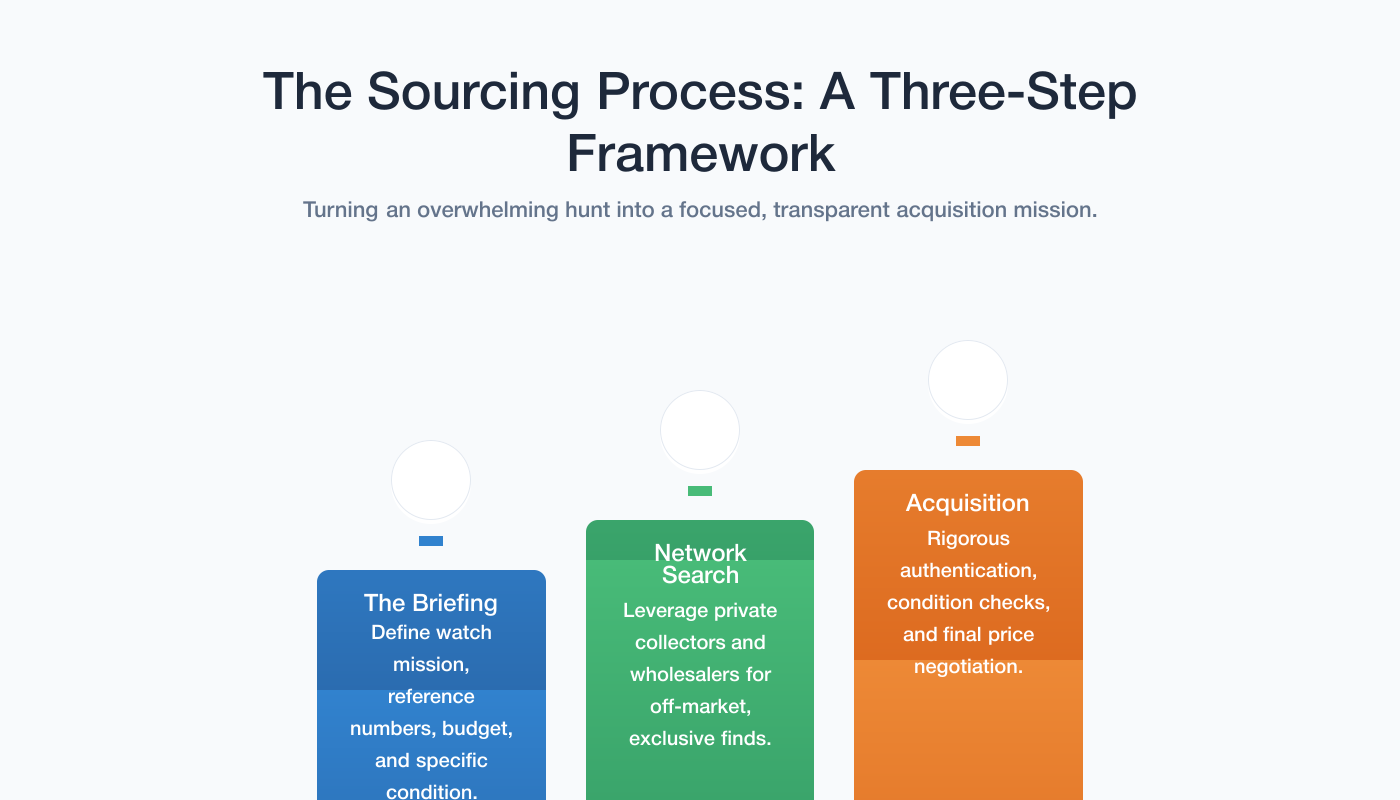
Step 1. The Briefing. This is where we start. A real conversation. About your watch. Not "a nice watch." But the* watch. What's the exact reference number? What condition are you really looking for? New? Mint pre-owned? And a year range. Important stuff. And of course, your budget. No point in chasing ghosts, right? Pucks & Timepieces starts exactly the same way. Defining the mission.
Step 2. The Network Search. This is where the heavy lifting happens. My global network. It's not Google. It's private collectors. Wholesalers. Trusted dealers you’ve never heard of. Channels that aren’t visible to the public. Because the best stuff? It stays off the mainstream radar. This is where a sourcer really earns their keep. And yes, sometimes, a small, refundable deposit shows me you're serious. Dedicated search. Hammatime Collection does it that way. It means I'm not just window shopping for you. I'm hunting*.
Step 3. Vetting and Acquisition. Finds start coming in. But I don't just dump them on you. Oh no. Every single potential match? It gets hammered. Rigorous authentication. First thing. Always. Is it real? Is it what you asked for? Then, condition. Price. Is it fair? Is it truly a good deal for you? TNS Diamonds talks a lot about this careful evaluation. Because only the pre-vetted options. The ones that pass my* smell test. Only those get presented to you for approval. Simple.
This isn't magic, but it feels like it when the right piece finally lands on your wrist. You’re not just buying a watch. You’re navigating a messed-up market with someone who knows where the bodies are buried. And where the treasures are.
The Expert Advantage: Access, Authentication, and Appraisal
You wanna know what an "expert" actually does? Not what some slick website tells you. I'll tell you. They're your eyes and ears in a game that's mostly played in the dark. Because the best stuff? The real deals? They don't ever see a public listing. Never.
So, yeah. That means access. It means tapping into a whole unseen mess of connections—collectors trading whispers, dealers moving pieces before they even hit the back of a safe. And because of that, you hear about it. Before anyone else. It's not magic, it’s just knowing the right people. Or, more accurately, knowing the people who know people.
But that’s just step one. Because finding a watch? Easy. Finding the right watch, the real watch? That's the trick. And let me tell you, the market is crawling with pieces that look "fine" to the untrained eye. But they’re not. They're a disaster waiting to happen. Refinished dials? Over-polished cases that have lost all their sharp edges? (Even GQ notes that an inexperienced polisher can ruin the sharp lines of a Royal Oak, basically trashing its value.) Swapped movements? You bet. And a specialist? They see it. They smell it. They know it’s wrong the second it’s in their hands. TNS Diamonds even says an expert saves you from the expensive screw-ups you'd never spot yourself. That subtle flaw? It'll kill your value. Dead.
And pricing? Oh, the wild west of pricing. You see a number online, you think that's it. But that's just an asking price. And sometimes? Most times, it’s inflated garbage. An expert? They know what these things are actually trading for. Right now. Not last year. Not what some hopeful seller wants. But what the market will bear. And that protects your wallet. From the nonsense. That’s the real talk. You’re not just buying a watch, remember? You’re buying the dealer. Always. Christie's Head of Sale? They'll tell you, talk to people you trust in the industry. Not some anonymous jabroni on a forum. So you get a real price, on a real piece, from a real source. Or you don't buy it at all.
Sourcing for Investment vs. Sourcing for Sentiment
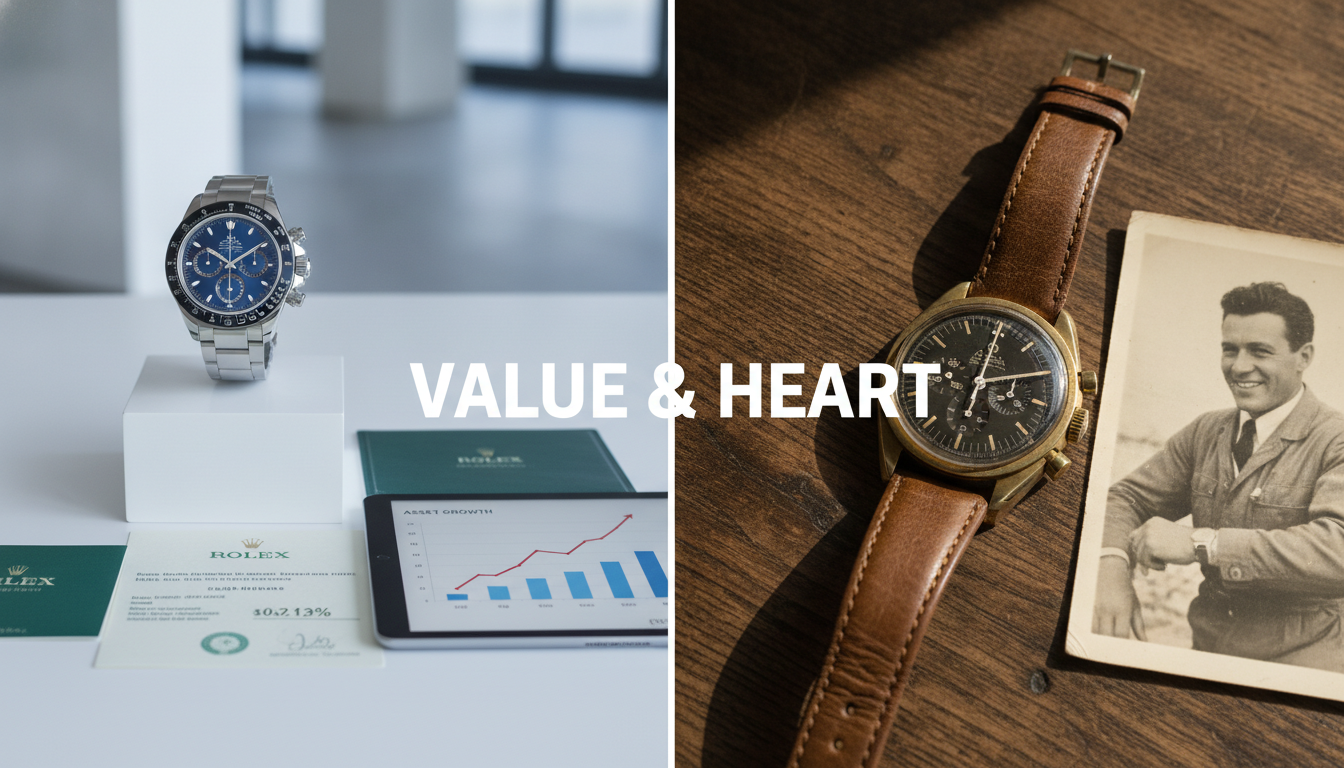
Here's the thing about watches: some people want a piggy bank, others want a memory. And your strategy? It's gotta be different for each. Seriously.
If you’re in this for the money—a straight-up investment—then you're playing a different game. You’re looking at the big dogs. Rolex. Patek Philippe. Audemars Piguet. The ones that hold their value, sometimes even jump. We’re talking limited runs. Pristine condition. And yes, all the damn papers. Because when it's about investment, that stuff matters. Every little piece of proof. Because the pre-owned market? It’s booming. People are hunting these discontinued models like crazy. They’re like gold. Or a hedge against inflation (Similarweb 2024 shows how much the market is growing for luxury goods.)
But then there's the other side. The heart side. Maybe it's a watch from your birth year. Or one your old man wore every single day. That Tag Heuer Link that some guy on Reddit was desperate to find after his dad passed? Yeah. That kind of story. And for that? Condition is secondary. Not irrelevant, but secondary. The goal isn’t profit. It's connection. The scratches, the wear—they might even be part of the story. You don’t need a perfectly preserved museum piece. And papers? Honestly, who kept those things 20, 30 years ago? Almost nobody. So for sentimental pieces, chasing 'box and papers' is often a wild goose chase. GQ's experts even say prioritizing documentation over the actual quality of the watch is a mistake. Because the value isn’t in the resale. It’s in you. Because you should always, always buy what you love. That’s the true value. And if you love it, that's the only metric that matters.
Frequently Asked Questions About Watch Sourcing
How long does it take?
Look, it's like asking "how long is a piece of string?" Common stuff? Days. Maybe a week. But if you’re hunting for some unicorn, some super rare piece? Weeks. Months even. So be patient. Or forget it.
Is there a fee for sourcing?
No separate charge. Most of us just build it into the final price. So, you see the number, that’s it. And if we don't find the watch? You don't owe me a dime. Pucks & Timepieces confirms this. Some places, yeah, they might ask for a deposit, like 10% (Hammatime Collection does this), but it usually gets credited to the purchase or refunded if no watch. Smart, right?
How is authenticity guaranteed?
Every. Single. Watch. Is inspected. By actual humans. Not some AI scanning a photo. We only work with people we know, trust. And who we’ve done business with for years. It's how you sleep at night.
Can you find watches with specific requirements?
Totally. That’s exactly what this is for. You want a full set—box, papers, the whole shebang? A specific year? Or something barely worn? That's our bread and butter. We find the weird, the specific.
Because in this mess of a market, you need someone on your side. Someone who knows the dark corners. Someone who cuts through the noise. Get someone. Tomorrow. Don't waste another minute.
So, you still browsing those pristine displays? Stop. You want that specific reference, the one with history, the one no AD ever sees? That’s not a retail problem. It's a sourcing challenge. And frankly, most people doing it wrong just waste time and cash.
Here's the score:
- The watch you actually want? Not on a website. Not in a window. It lives in private hands, in networks, in dusty safes. You need access.
- Authentication isn’t a nice-to-have. It’s the entire game. Without stringent vetting, you’re just buying a story. A very expensive, potentially fake story.
- Fair pricing comes from market intelligence, not wishful thinking. You pay what it’s worth, not what some hopeful seller dreams up. Because knowing the real value protects your capital.
And this whole process? It’s not some mystical quest. It’s logistics. Diligence. Knowing where to look (and, more importantly, who to trust). Because you’re not just buying time. You’re buying certainty. It boils down to trust and an ironclad process.
Ultimately, the market rewards action backed by expertise, not endless speculation.
So, if you’re done with guesswork and ready to actually acquire that piece, stop browsing and start acting. Get clear on what you need. Then, engage someone who understands these back channels, someone who can execute without the usual BS. (Otherwise, you’ll just keep looking at pictures of watches you’ll never own, while the smart money moves.)
