

Rolex Market Corrections: What 2026 Data Shows for Value
The Stellaris Journal
Everyone's yammering about the "Rolex market correction," as if it's a fire sale. It absolutely isn't. January 2026 just saw Rolex hike retail prices again, an average of 7% across the board. Gold models? Up nearly 9%. That's not a market in retreat; not by a long shot.
The post-COVID speculative mess? That's gone, and good riddance. But thinking this means cheap Daytonas for everyone is foolish. This market runs on new rules, driven by entirely different forces. And about damn time, frankly.
It's not just basic inflation pushing these numbers. Gold prices are through the roof, their CPO program is finally hitting its stride, and demand remains relentless. So what's actually happening to value? What models are climbing, and which ones are just dead weight? This breaks it down, no BS.
The Rolex market isn't collapsing; it's strategically recalibrating to new, higher baselines.
The 2026 Rolex Market: A Summary
Prices are up. Again. By January 2026, you're looking at Rolex retail costs climbing an average of 7% in the US. And the real kick in the teeth? Gold models, which jumped a brutal 8-9%. Just savage.
So what's the mess here? Three things keep twisting the knife. First, gold prices are soaring. Second, Rolex's Certified Pre-Owned (CPO) program isn't a deal; it's establishing a new, higher price floor, as JFJCo’s analysis confirms. And third? Supply. Still constrained. Always. That Daytona 'Panda'? Up another $2,000 on the secondary market in just two months. Crazy. The GMT-Master II 'Pepsi' and that rose gold Day-Date 'Olive Dial'? Soaring, too.
But here’s the thing, Gen Z is messing with the game. Happy Jewelers shows they’re sparking a "dress watch renaissance" (Cartier, anyone?). They're either blowing cash or pinching pennies, with no in-between. So you want a watch? Good luck. Authorized Dealers mean endless waits. CPO means you pay 25-35% more than other used ones. Or the grey market, which is a gamble, but maybe worth it.
This market isn't stable; it's just a new kind of chaos, defined by strategic pricing and evolving demand.
The New Price Landscape: Understanding the 2026 Retail Hikes
The January 2026 retail price adjustments by Rolex mark a significant shift, cementing higher valuations across the entire catalog. The average 7% increase isn't just a minor tweak; it's a calculated move that recalibrates the brand's position in the luxury segment. For gold models, the nearly 9% hike is particularly impactful, directly reflecting the sustained surge in precious metal prices and Rolex's intrinsic material costs. This means that a new watch purchased directly from an Authorized Dealer now carries a substantially higher price tag, setting a new benchmark for secondary market valuations.
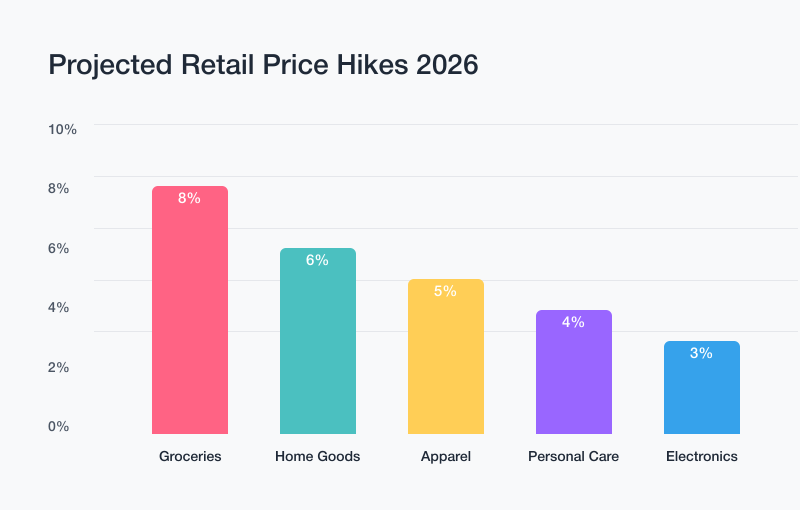
These increases aren't isolated; they ripple through the entire ecosystem. They validate existing grey market prices, making the premium for immediate acquisition seem less drastic, and they push up the floor for Rolex’s own Certified Pre-Owned program. Rather than seeing prices correct downwards to pre-speculative levels, Rolex is actively raising the baseline, effectively baking in much of the prior market appreciation into its official pricing structure. This strategy ensures that while the frenzied flipping may have subsided, the overall value proposition of a new Rolex remains robust and, in fact, continues to climb.
Rolex's consistent retail price hikes are a deliberate strategy to establish and maintain a permanently elevated market floor.
Three Forces Reshaping Rolex Investment Value in 2026
The investment landscape for Rolex watches in 2026 is being fundamentally reshaped by three powerful, interconnected forces, moving beyond the simple supply-and-demand narrative of previous years. First, the relentless rise in gold prices is a crucial factor. As a tangible asset, gold's market performance directly correlates with the value of Rolex's precious metal offerings, pulling up their intrinsic worth. Watches with significant gold content, like the Day-Date or two-tone models, are seeing their value climb not just due to brand cachet, but also the underlying commodity.

Second, the maturation and expansion of Rolex's Certified Pre-Owned (CPO) program is a game-changer. This isn't just a sales channel; it's a powerful mechanism for market control. By officially authenticating and selling pre-owned watches, Rolex sets a new, authoritative price floor for the secondary market. This program reduces arbitrage opportunities and validates higher prices for used models, transforming what was once a more volatile grey market into a more structured, higher-priced segment. It signals Rolex's direct involvement in controlling the value of its watches long after they leave the AD.
Finally, while the speculative frenzy has cooled, underlying demand remains incredibly strong, yet supply remains tightly controlled. Rolex's production capacity, though significant, cannot match the global appetite for its most desirable models. This persistent scarcity, particularly for iconic tool watches and in-demand configurations, means that true market value continues to be driven by a genuine imbalance. This isn't just hype; it's a fundamental economic reality that ensures certain models will always command a premium, making strategic acquisitions vital for investors.
The convergence of rising gold prices, the CPO program, and controlled scarcity is forging a more structured, yet fundamentally higher, investment value for Rolex watches.
Market Spotlight: The Five Hottest Rolex Models of 2026
So, you think you know Rolex? Think the market’s cooled off? Not quite. While the entire catalog is generally appreciating—that's just how this game works—a handful of models are just running away with it. Call it hype, call it scarcity, call it whatever. But they're moving, and moving fast. Gamzo & Co's report on "5 Rolex Watches Skyrocketing in Price" proves it. You wanna know which ones? I'll tell you.
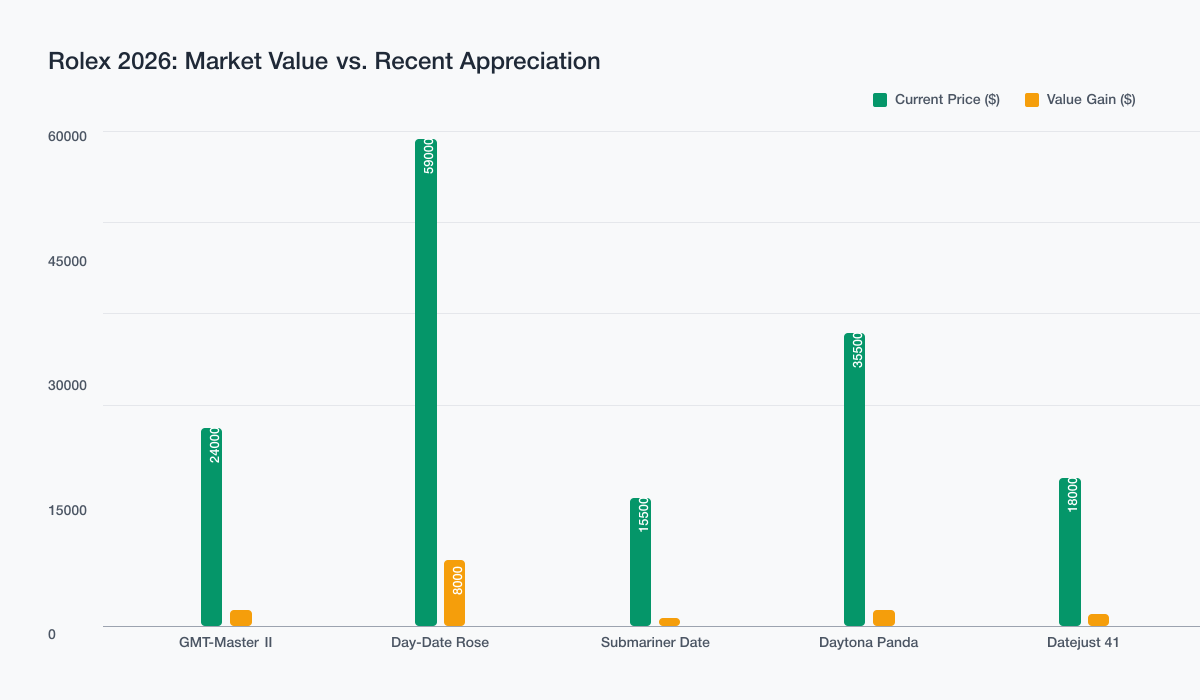
- The Pepsi GMT-Master II (126710BLRO). That thing? It just keeps going. And you know why: everyone keeps whispering about it being discontinued. So, what happens? Prices surge. Another grand or two, easy. Maybe more. It’s a mess, really. This isn't just a watch; it's a rumor mill, with persistent discontinuation rumors driving this thing through the roof.
- The Day-Date 'President' (Olive Dial, Rose Gold). Oh, that olive dial. It's not just pretty. It’s gold. Pure gold, climbing. So, the watch climbs with it. Up from about fifty-one grand, now almost fifty-nine. Yeah, that's eight thousand bucks. Just like that. Because gold prices are up a lot, and this watch? It’s a chunk of it, with rose gold’s rise pulling the Day-Date value right along.
- The Cosmograph Daytona 'Panda' (116500LN). You knew this one, didn't you? Of course, you did. The Panda. It's the hype machine. The ultimate hype machine. A couple of months? Two grand up. Now sitting at thirty-five-five. It’s nuts. Absolutely crazy. Because everyone still wants it. And getting one from an AD? Forget about it. The 'Panda' Daytona remains the undisputed king of hype, demand defying all logic.
- The Datejust 41 (Rhodium Diamond Dial). This one, though. It’s kind of a weird outlier. But a good one. Because people are looking for something different, right? Not the usual black or blue. So, the rhodium dial, with diamonds? Yeah. It's commanding more. A premium. Shows you how specific tastes, those little micro-trends, can really make a difference. Even Similarweb (2024) shows this specific variant popping off.
- Prices are still high. Why? Hype’s over, right?
- Should I just wait for prices to drop?
- Grey market's full of new watches. How? Rolex punishes flippers!
- Is it true Gen Z prefers Cartier over Rolex?
The Submariner Date (126610LN). Look, the Sub. It’s the Sub. What can I say? It just holds. Always has, and always will, apparently. It jumped over a thousand bucks in a few months. Seriously. Now sitting around fifteen-five. Because even when things get weird, people still want that* Sub. It's the core model, still bulletproof. And Reddit wait time threads? Still packed.
But here’s the thing. While all Rolex is good Rolex for appreciation, these five? They're the ones you watch. The ones making the big moves. Because of hype, sure. But also because they're just that desirable.
Keep an eye on these specific models; they’re beating the wider market, big time.
Frequently Asked Questions
So, you've got questions. Good. Most people do. This market? It's a mess of rumors and facts. But I'll tell you straight.
Nah, not quite. The speculative hype, the crazy flips? That cooled. Absolutely. But the actual value? That's been systemically cranked up by Rolex itself. Official price hikes. Every year. That lifts the whole market floor. Every single one. So, no, they’re not crashing back down. Rolex’s official price hikes underpin the market, not just hype.
Drop? Seriously? Highly unlikely. So unlikely it's almost funny. Because Rolex controls supply like nobody else. Tighter than ever. Plus those annual price bumps I just mentioned. And the CPO program? That puts a concrete floor under everything. A major, market-wide drop? Not happening. The post-COVID graph shows a correction from a peak, sure, but not below historical trends. Waiting for a major price drop is a gamble you’ll likely lose.
Look, Rolex makes over a million watches every single year. A million. Even if just a tiny percentage of those get resold? It’s a huge volume. A massive flow onto the grey market. The system is just too big. Too vast. They can't perfectly control every single watch. It’s a pipe dream. Rolex produces massive volumes; some grey market supply is inevitable.
Cartier? Yeah, Gen Z likes their design. It’s clean. It's different. But you know what? Rolex is still the king. The undisputed champ. Across all demographics. Even the younger buyers. Happy Jewelers data? Shows Rolex is still the #1 most requested. Hands down. So no, not true. Rolex remains the dominant brand, even with Gen Z's interest in Cartier.
The fundamental drivers of the Rolex market—scarcity, strategic pricing, and enduring brand desirability—remain firmly in place.
Forget the old narrative. The 'market correction' isn't some free-fall, despite what the doom-sayers screamed a year or two back. It's a re-calibration. A hardening. Rolex didn't just bump prices because they felt like it, either (that's just naive). This 2026 data spells out the story clearly: fundamentals over hype. Not a crash. A reset.
Here's the takeaway:
- That retail jump? Concrete. Not a minor tweak, but a strategic play locking in higher floor values. Especially for anything gold (and gold itself climbing, mind you).
- The CPO program isn't just window dressing. It’s a controlled secondary market, an official channel siphoning off supply. Dictating terms. Less arbitrage, more structured pricing.
- Value now hinges less on speculative frenzy. More on actual scarcity, specific model demand (think tool watches, certain metals), and whether you truly grasp what you’re buying. Not just a flip.
So, the wild west is gone. What's left is a more mature, but still fiercely competitive arena. Buyers better get sharp.
The 2026 Rolex market rewards informed decision-making and long-term vision over short-term speculation.
Don't just stare at charts. Understand what your watch is truly worth. Or what the one you want should cost. And if you’re not sure, get someone in your corner who actually knows this stuff. Not just quoting forum prices. Someone who backs it up. (Like us, if you’re serious about making a move.)
