

Identifying Emerging Value in Collectible Timepieces: A 2026 Market Analysis
The Stellaris Journal
Eleven quarters. That’s how long the secondary watch market has been in the ditch. Everyone’s screaming ‘downturn.’ Wrong. This isn't a crash; it's a goddamn reset. The hype-train's derailed, finally, and all those "influencers" pushing steel sports watches? They're quiet now. Good. (About time, honestly).
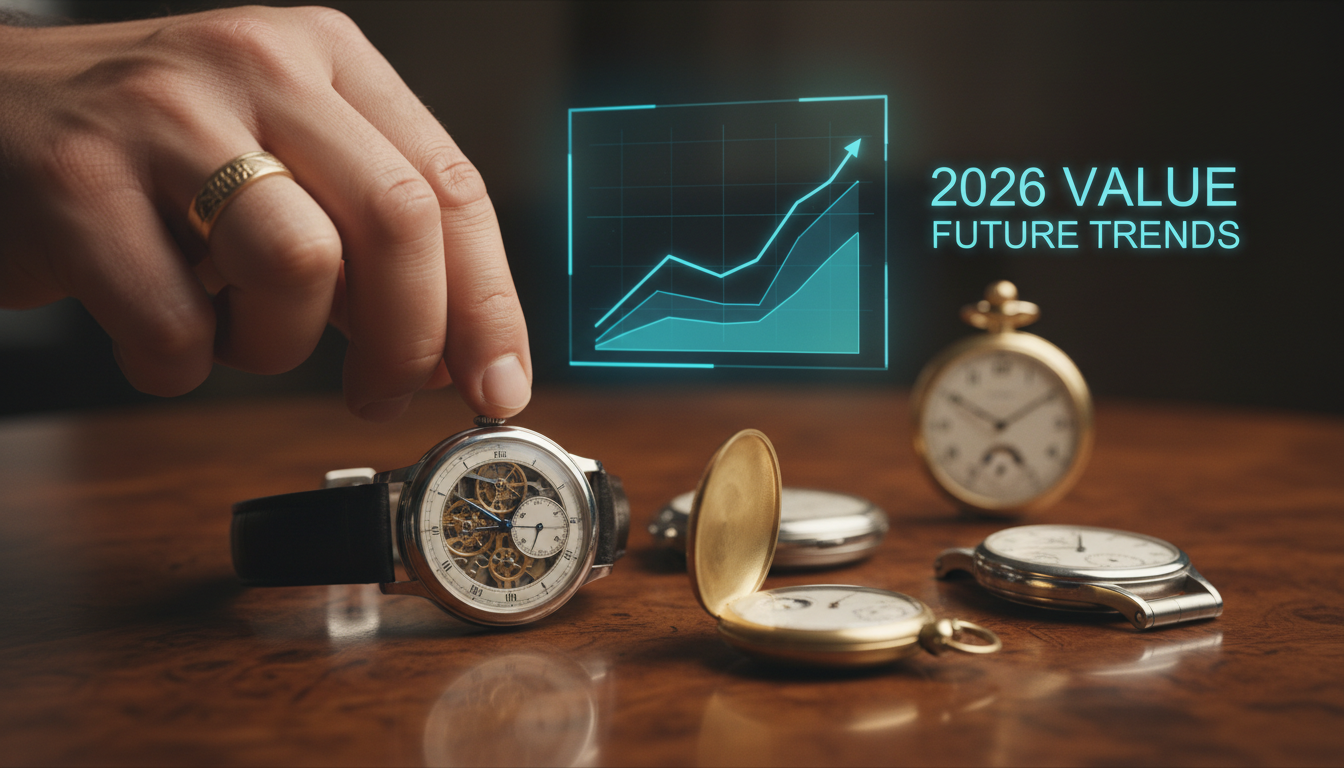
But what we're seeing isn't just a mess. It's a wide-open shot at actual value. You want to know what’s next for 2026? Not what the herd thinks. This analysis cuts through the noise. We'll show you where the smart money is moving: smaller cases, vibrant dress watches, the independent makers. That's where the enduring principles – quality, scarcity, storytelling – are making a comeback. That’s where the billionaires and seasoned enthusiasts are actually putting their cash. Not chasing fleeting trends. Buying legacy.
Executive Summary: Key Watch Collecting Trends for 2026
Prices have been sliding for eleven straight quarters. That hurts if you’re holding bags, but it’s a goldmine if you’re actually buying. As Gabe Arik said, "Whenever the market cools off and prices begin to dip, a lot of people look to liquidate." That creates opportunity.
Stop chasing the hype. The billionaires are already moving on. They aren't looking for mass-produced steel sports watches anymore. They want rarity. They want F.P. Journe. They want Moser. And if you’re still hunting for a 42mm chunk of steel, you’re looking at the past. The market is shrinking the case sizes—37mm to 39mm is the sweet spot now.
Even data confirms the shift in search intent toward smaller, more refined pieces. Provenance and sustainability? They aren't just buzzwords. They’re the baseline for value now.
The 2026 market rewards the educated. If you prioritize personal enjoyment and long-term craftsmanship over the next quick flip, you’ll be the only one left standing when the dust settles.
Context: Navigating the 2026 Watch Market Correction
The secondary market is correcting. Prices dropped another 5.7% in 2024. And for eleven quarters in a row, the trajectory has been down. Why? Because the speculators finally ran out of gas. They flooded the market with inventory they couldn't afford to hold, and now, the supply-demand balance is actually making sense again.

So, is the sky falling? Hardly. It’s a correction, not a crash. The "Big Three"—Rolex, Patek, and Audemars Piguet—still control 64% of the secondary value. But the bubble is leaking. You can buy models today for prices that make 2022 look like a fever dream.
But look closely at the data. Even with the correction, 56% of Rolex and 63% of AP models are still trading above retail. That isn't a dying market. It’s a tiering of the market. The garbage is being filtered out. And the best part? You don't have to grovel at an AD or pay a 300% premium to a grey market shark to get a solid piece anymore.
The gap between retail and resale is closing. That’s good for you. It means if you buy today, you’re paying for the watch, not the hype.
Stop treating watches like crypto. The era of the speculative flip is over. Focus on the pieces that actually hold value because they are well-made, not because they are currently popular on Instagram.
The New Blue-Chips: Why Dress Watches and Classic Proportions Are Trending
The era of the hulking, 42mm sports watch is hitting a wall. And good riddance. Collectors are waking up. They want comfort. They want something that fits under a cuff. The new sweet spot is 37mm to 39mm. It’s not just a trend. It’s a return to sanity.
But it’s not just size. The dials are getting weird. We aren't talking about another black-on-black chrono. We’re seeing copper, sand, beige, and vibrant green dominating the conversation. Reddit threads are full of guys losing their minds over a unique Green OP 41 dial. And they're right to be excited. It shows personality.
Dress watches are back, too. They’re absolutely crushing the sports models at auction. Why? Because a steel sports watch is common. A vintage-inspired dress piece? That’s a statement. People are even hunting for cushion cases again. It’s about standing out, not blending in with the crowd of people wearing the same diver.
"Neo-vintage" is the term people are using. It just means well-made pieces from the 90s and 00s that weren't designed to be billboards for a brand.
If you want to build a collection that lasts, stop buying what everyone else buys. The market is shifting toward subtlety, wearability, and unique design. Chase that.
Independent Watchmakers: The Frontier of Horological Value
Forget the usual suspects. Honestly. Everyone does the big brands. But the smart money? The really smart money? It's gone indie. Because that’s where the actual value is being built right now. It’s where the future sits, plain and simple. And I'm not talking about some niche thing, either.
Look, you’ve got billionaires. Not just collectors, but the guys who move serious cash around. And what are they doing? They’re buying F.P. Journe. Or they're fighting for a Philippe Dufour. Or they're snatching up H. Moser & Cie. (The ones with the crazy fumé dials, you know them.) They're diversifying, yeah. But more important, they’re chasing something real, not just another branded badge. Because this whole segment, it’s not just growing fast. It’s critical.
Why the shift? It’s simple arithmetic, really. Scarcity. These independent makers? They don't churn out millions of watches a year. Not even thousands, most times. It’s small-batch production. Hand-finished. Sometimes just a few hundred pieces. And that creates a natural scarcity. A real one. Not some marketing trick. "The biggest shift in 2026 is the rise of independent watchmakers," Investment Watches Inc. just said. And they aren't wrong.

So, you get unparalleled craftsmanship. And it's not some assembly line nonsense. It’s someone's life’s work in your hand. Then there's the design innovation. These guys aren't shackled by corporate committees. They try weird stuff. They push boundaries. (Sometimes it's wild, sometimes it’s genius.) But that’s how art happens. You get a watch that actually feels unique. Because it is.
And it goes deeper than just the watch itself. You’re not just buying a product. You’re getting a piece of a story. A personal connection to the actual watchmaker. You can almost feel it. And there’s a whole community around this. A real one. Not the soulless masses chasing the same five watches. You talk to other collectors, they get it. They understand the passion. It’s not like dealing with some big, cold luxury corporation.
These watches, they don't just hold their value. They often outperform traditional brands. Especially in these specific, hungry niche markets. Because people want them. And that demand isn't going anywhere. This isn't just about a trend. It's the future of horological art. It's the next big thing, actually. I even heard about a Reddit user who went grey market for an F.P. Journe. Why? Because the authorized dealer experience was so bad. That’s how much people want these pieces. That’s how far they’ll go.
Independent watchmakers? They're the absolute pinnacle of collecting right now. They offer this crazy blend of rarity, pure artistry, and forward-thinking design. That's what defines true long-term value for the 2026 market, not just some name you recognize. If you’re not looking at independents, you're missing the damn boat.
Beyond the Movement: Valuing Story, Sustainability, and Scarcity
Alright, so you’ve learned to look past the logo. Good. But the movement? The shiny bits inside? That’s not the whole story anymore. Not even close. You need to look beyond the pure technical specs. Because the market, it’s evolving. Fast. And a lot of what drives value now, it’s not about gears. It's about something else entirely.
Provenance. It's paramount. A watch with a documented history? A known previous owner? The actual story of its creation? That stuff adds serious value. It’s not just a watch, it’s a piece of history. A conversation starter. (You know, the kind of conversation that ends with a bigger price tag.) Provenance isn't just a nice-to-have. It’s a must-have for serious collectors. And Investment watches with compelling provenance, they always command premiums at auction. Always.
And sustainability? Look, I know. It sounds like a buzzword. But it’s not. Especially for the younger collectors coming up. They care. They really do. Brands using recycled metals, doing eco-friendly practices? They’re gaining an edge. It’s a purchase criterion now. Not just a marketing gimmick. Because if you want to connect with that next wave of buyers, you better care about what they care about. It’s part of the narrative.
So, you also need to think about unique pieces. This isn't about mass production, obviously. I’m talking about collaboration editions. Bespoke commissions, those custom jobs. And genuinely limited series. They offer exclusivity. A mass-produced model? It just can't touch that. Never will. Like Bremont's MBI watch. You can only get one if you're a pilot who's actually ejected using a Martin-Baker seat. That's value through story and exclusivity. That’s the real deal.
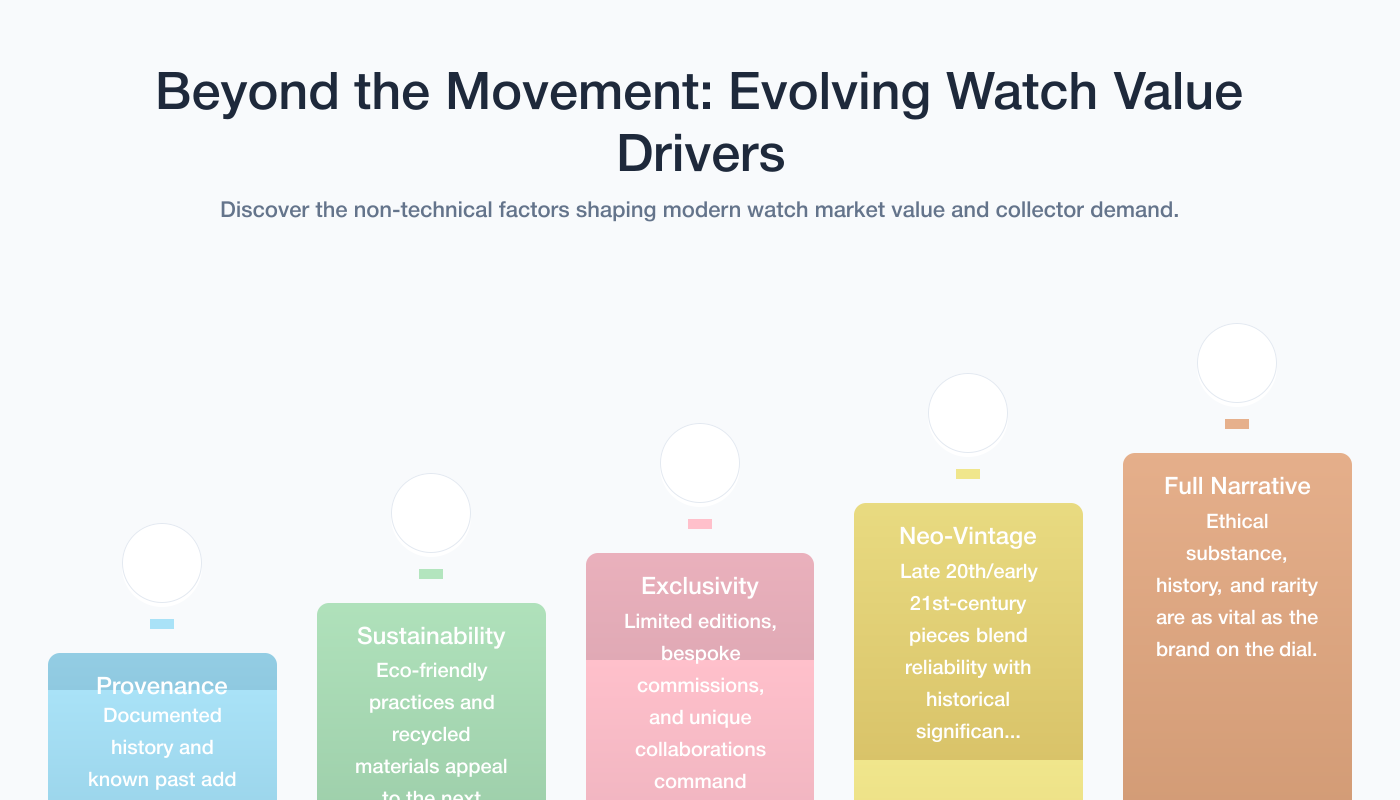
And here’s a weird one: 'Neo-vintage' watches. Late 20th century. Early 21st century. These pieces are an emerging value category. They get appreciated for this odd blend. Modern reliability, yeah. But also historical significance. Not quite "vintage" vintage, but not new either. They’re finding their own place. And it’s a growing one.
Here’s the thing: The market is becoming transparent. And the narrative, the ethical substance behind a watch? Its history, the materials it uses, how rare it truly is? That’s becoming as important as whatever name is on the dial. You need to look beyond the obvious if you want to find the next big thing.
Frequently Asked Questions
What about Rolex? Still a good investment in 2026?
Yes. Absolutely. But it’s concentrating. The value is really in the ultra-exclusive stuff. Platinum Daytonas. Meteorite dials. Not just your standard steel models anymore. Their brand heritage keeps things stable. Gives it a floor. But the crazy growth? The biggest potential might be elsewhere.
What is ‘neo-vintage’?
It means watches from the 1980s, 1990s, and early 2000s. These pieces offer this great mix. You get vintage aesthetics. But then you also get modern materials and better reliability. And compared to older vintage, they’re often undervalued. Seriously. Look into them.
Too late to invest in independent brands?
Totally not. The top names? Sure, Journe is expensive already. We know this. But the sector is growing. The key is research. You need to identify the next wave. Find those talented watchmakers. Their work is gaining recognition, but it hasn't hit peak market valuation. Yet. Don’t wait too long. The market is always moving. You better move with it.
Look, the frothy years are done. Good riddance. Anyone still chasing steel sports watches like it’s 2021 needs a reality check. We just laid out where the smart money is moving. (Not for the faint of heart, maybe). But for those who actually get it. This isn't rocket science, just common sense finally hitting the fan.
You want the guts of it? Here’s what you ought to remember:
- Forget the hype-beast garbage. Real value now sits squarely in verifiable craftsmanship, bulletproof provenance, and genuine rarity. This isn't about flashing a brand anymore. It’s about owning something truly exceptional.
- Stop staring at the obvious. The market’s finally matured enough to appreciate proper dress watches, smaller cases. And independents? That’s not just "niche" anymore. That's the frontier of horological innovation – and where the real upside, if you play it right, is bound to appear.
- This isn’t some market crash to panic over. It's a necessary purge. A clarification. The noise got filtered out. What’s left? Pure, unadulterated merit. Deal with it.
So, yeah. The easy money is gone. Fine. Good. That means actual research matters again. Understanding what you're buying. Not just blindly following some anonymous forum chatter. The real players are positioning now. While everyone else is still whining about their plummeting "investment."
It’s simple, really. Stop listening to the echo chamber. Start looking for pieces with genuine substance, actual stories, and a build quality that stands up. And for God’s sake, get proper, independent verification before you commit a dime. Blind faith is for suckers, not serious collectors. If you're not absolutely sure, find someone who is, like the experts at www.thestellariscollection.com. That’s how you actually win in this market.
