

A Guide to Ethical Sourcing in Luxury Jewelry
The Stellaris Journal
Seventy-eight percent. Let that sink in. That’s the number of luxury buyers now actively chasing ethically sourced diamonds. Forget just carats and clarity. The game changed. (Or, more accurately, we finally pulled back the curtain.) True value in fine jewelry isn’t about the sparkle anymore; it’s about a clear conscience. It’s about transparency.
And good riddance to the old way. The traditional jewelry industry has a history—a dirty, ugly history of environmental messes, like mercury poisoning rivers from gold mining, and rampant human exploitation through unfair labor practices. There's zero glamour in that.
If you’re done with hidden costs and want your jewelry to truly align with your values, you're in the right place. This isn’t a fluff; it’s a roadmap. A practical guide to ethical sourcing in luxury jewelry, breaking down what it actually means, showing you smart alternatives like recycled metals and lab-grown stones, and how to buy beautiful pieces with confidence and integrity.
The modern luxury consumer demands more than just beauty; they demand a clear conscience and undeniable transparency in every purchase.
The Hidden Costs Behind a Diamond's Sparkle
That sparkle you're chasing? Most of the time, it’s just covering up a whole lot of ugly truth. You bought the story, didn't you? The romance. The "forever." But here’s the reality: the traditional brilliance you see in a diamond, and much of that fancy gold, often comes with a brutal, undisclosed price tag.
Nobody wants to talk about it, but the mess is real, and it’s immense. Digging these materials out of the ground is far from clean or pretty. Traditional mining for both gold and diamonds devastates the planet, causing widespread deforestation, soil erosion, and irreversible landscape damage. Worse still, toxic water pollution is rampant, with nasty chemicals like cyanide and mercury used to extract precious metals), poisoning water sources, soil, and nearby communities.
The human cost is equally appalling. "Exploitative labor practices" is a polite term for what some workers endure. We’re talking about death traps, abysmal wages, and sometimes even slavery, especially in small-scale mining operations. Child labor is a dirty secret, but one the industry quietly knows. Don't think the 'conflict-free' label fixes it entirely; it's a start, perhaps, but it doesn't cover environmental impact or ensure a child wasn't forced to dig it out. As Similarweb data indicates, true transparency in these supply chains remains an elusive dream for most.
Beyond that, the energy consumption is staggering. Burning insane amounts of power for extraction and refinement leaves a massive carbon footprint for a single piece of jewelry. A tiny rock, a big footprint—it's truly unsustainable.
That "sparkle" is often just a cover-up for environmental ruin and profound human misery.
*
The Pillars of Modern Ethical Jewelry
You see the mess. Now, how do we fix it? Because "ethical jewelry" isn't just vague marketing fluff; it's a paradigm shift, a fundamentally different way of doing business. And frankly, it has to be, because the old system is irrevocably broken.
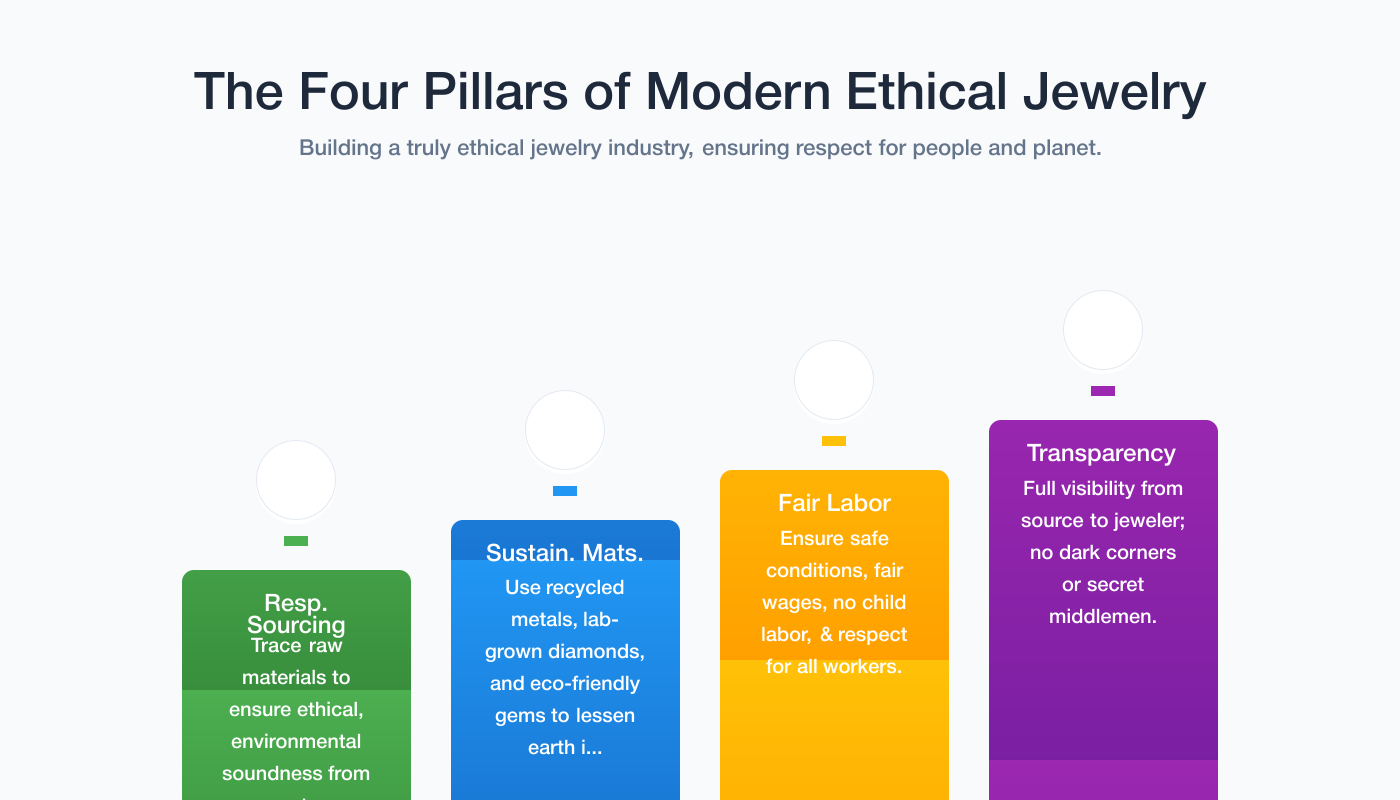
True ethical jewelry stands on four solid, unwavering pillars. Deviate from these, and you’re just engaging in more greenwashing.
First, there's responsible sourcing. This is about knowing the true origin of every raw material. It’s not enough to say "it's a diamond"; you need to know which mine, who dug it, if they were paid fairly, and if the land was respected. This requires meticulous tracing of every metal and every stone, ensuring real ethical and environmental soundness, or you're simply deluding yourself.
Then comes the sustainable materials angle. Why continue tearing up the earth when we have alternatives? This pillar advocates for using recycled metals, lab-grown diamonds (which are chemically identical to mined ones, but without the mining baggage), and other sustainably sourced gems. The planet has finite resources, so we must prioritize using what's already available or creating smart, eco-conscious alternatives.
But people always come first. The third pillar is fair labor practices. Every individual deserves a decent wage and the right to return home safe at the end of the day. This goes beyond avoiding child labor—a critical baseline—to encompass safe working conditions, proper contracts, and treating workers as human beings, not mere tools. There can be no corner-cutting on this; it’s the bedrock of sustainable luxury.
And finally, the big one: supply chain transparency. If you can't see it, it's not ethical. You need to know every single step of the journey, from the mine or lab to the jeweler. No dark corners, no secret middlemen. This holistic approach ensures every component, from the stone to the metal, respects both people and the planet. This isn't disposable fast fashion; these pieces should last for generations, not just a season.
Ethical jewelry isn’t merely a trend; it's a total industry overhaul, a profound commitment to doing things right from the ground up.
A Conscious Consumer's Guide to Buying Ethical Jewelry
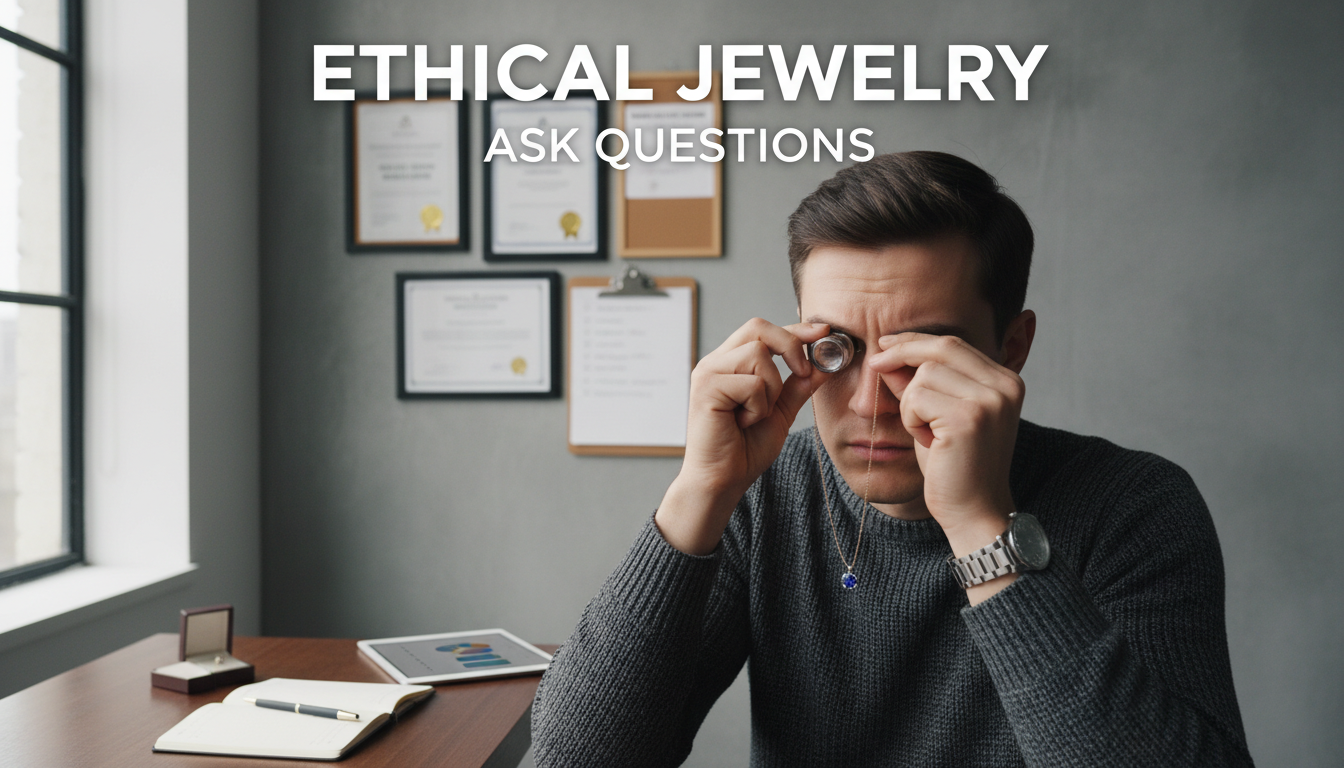
Sick of the greenwashing? Me too. Everyone's suddenly "ethical" or "sustainable," and much of it is pure PR. But you don't have to fall for it. You can arm yourself with real questions and demand tangible proof. So, next time you’re eyeing a piece of sparkle, don't just stare at the price tag or the design—ask the tough questions. You have to, and they better have answers.
First, hit them with it: "Where did this stone come from? Really?" They’ll likely give you a vague answer, so push back. Make them tell you. Or ask about their metals, and I mean really ask: "Are you using recycled metals? All of them, or just a small percentage for show?" Recycled gold, for example, drastically reduces the need for fresh mining, leading to less environmental damage and better outcomes for everyone. Data shows that 78% of luxury diamond buyers (Similarweb, 2026) want proof of ethical sourcing, and 65% are willing to pay more for it. You're not alone in demanding what's fast becoming the industry standard.
Then, check their credentials—not just a receipt. I’m talking about certifications. You need to see actual third-party verification, like from the Responsible Jewellery Council (RJC) or Fairmined. Anyone can claim to be doing good, but these organizations independently audit and verify. If a brand displays an RJC logo, it means something. If they don't have one, or if they waffle when asked, consider it a significant red flag.
Don’t overlook pre-owned pieces either. Vintage and upcycled jewelry offer an inherently sustainable choice, giving existing pieces new life without adding to the demand for new materials or mining. Reddit users, a discerning bunch, frequently recommend secondhand or thrifting as often the most sustainable option—and they’re right. Explore estate sales or consignment shops; you might discover something truly unique and genuinely ethical.
Finally, do your homework. A little independent research goes a long way. Brands genuinely committed to ethical practices won't hide their efforts; they’ll proudly showcase their supply chain and public sourcing policies, making them easy to find and understand. If information is buried under a dozen clicks or reads like generic corporate speak, it’s probably just talk—or worse, they're hiding something. This is why trusted platforms that do the vetting for you, such as The Stellaris Collection, are becoming invaluable.
Don't just buy it. Dig. Ask. Demand proof. Only then can you genuinely feel good about what you wear.
The Future of Fine Jewelry is Transparent and Transformative
Think this industry is stuck in the past? Think again. The ground is shifting, finally, and it’s about damn time. We’re moving past the "don't ask, don't tell" era of gemstones and gold. Technology is changing the game, and consumers are getting smarter. The old ways are dying—slowly, painfully, but dying nonetheless.
Blockchain and digital fingerprinting are no longer just buzzwords for tech startups; they're becoming the standard, the baseline for tracking everything. Every diamond, every piece of gold, can now have a verifiable, digital story—a tamper-proof record from the ground to your hand. This means you’ll know its entire journey, ensuring it's clean and legitimately sourced. No more guessing, no more "mystery origin." The future of fine jewelry is about knowing the whole damn journey.
Using blockchain to bring transparency to the gold supply chain
What does the future of fine jewellery look like?
And you, the buyer, are driving this change. Your increasing awareness is forcing brands to adapt or face obsolescence. People are starting to care deeply about where their products come from, who made them, and how. "Sustainable luxury" is no longer a niche; it's becoming mainstream. A brand's commitment to ethical practices is now as critical as its design or craftsmanship. Younger buyers, in particular, gravitate toward brands with clear documentation (Similarweb, 2026)—they want to know, and they deserve to know.
My Linjer Jewelry Collection | Sustainable Luxury ✨
Big brands that grasp this reality are putting their money where their mouth is. They're investing in innovations like closed-loop water systems, allowing them to recycle up to 95% of the water used in cutting, or powering factories with renewable energy, and even adopting biodegradable packaging. They understand this isn't just about PR; it’s about staying relevant and remaining in business. Some luxury pieces now incorporate up to 100% recycled steel —that's not just talk, that's action. This isn't a fleeting trend; it’s the only viable path forward.
Ethical Jewelry Basics
DIY Make UPCYCLED Jewelry NECKLACE Bracelet EARRINGS ❤️ Jewellery Making
Adapt or die—that's the real story of tomorrow's jewelry.
Frequently Asked Questions about Ethical Jewelry
Got questions? Good. You should. There’s a lot of noise and confusion out there, but we can cut through it. You need clear answers, not more fluff.
Ethical versus Sustainable?
Look, it's not overly complicated. Sustainable focuses on the planet—reducing environmental impact through practices like using recycled metals. Ethical, on the other hand, centers on people—ensuring fair wages and safe working conditions. These two concepts often, and ideally should, overlap. You want both.
Lab-grown diamonds? Are they "real"?
Absolutely. Yes, they are. Chemically, physically, and optically identical to mined diamonds, there’s no real difference in composition. The only distinction is their origin: one grew in the earth, the other in a controlled lab environment. This typically means less environmental mess, less human drama, and generally a much more ethical choice.
Is ethical jewelry always more expensive?
Not necessarily. It's a nuanced situation. While ethical practices like fair wages can sometimes add to the cost, alternatives like recycled metals or lab-grown diamonds can actually make pieces more affordable. It’s a trade-off. However, as one Reddit (2026) user put it, "ethical and cheap don't belong in the same sentence" when discussing brand-new, high-quality items. So, manage your expectations.
How do I actually verify a brand’s claims?
It's simple: look for proof. Demand third-party certifications like RJC. Read their sourcing policies—are they publicly available and detailed? Do they provide specific information about the origin of their materials, beyond vague statements? Transparency is the critical indicator. If a brand is hiding information, they're probably hiding something problematic.
Know this stuff. It makes you smarter, and it saves you from being played.
*
Okay, so we've talked about what a mess the old industry was, and frankly, it still is in plenty of corners. But you, the buyer, you’ve got leverage—more than you think. This isn't just some feel-good trend, either; it’s the new standard. And if a jeweler isn't meeting it, they're selling you a story, not genuine value.
Forget the romanticized nonsense. That’s for brochures from 1980, and pure fiction if we're being honest. The real deal, the stuff that truly holds its weight, comes from a clear chain. From dirt to finger, you should know its journey. If you don't, you're paying for opacity, period.
Here’s the thing to remember:
- The jig is up for hidden costs. Environmental damage and exploited labor are not "luxury"; they are liabilities. And buyers are finally calling them out.
- Transparency isn't a perk; it’s table stakes. If a brand can't prove where their metal came from or how their stones were cut, walk away. Don't even bother with vague reassurances.
- Your wallet talks. Every decision you make, every piece you buy (or don't buy), actively shapes the market. So, decide wisely.
It's not about being "ethical" for a pat on the back; it's about buying smart and frankly, avoiding future headaches. So, what now? Stop pretending ignorance is bliss. Go beyond the marketing spiel. Ask hard questions. Demand answers. Because ultimately, the responsibility for what you wear, and how it came to be, sits squarely with you. And if you’re still in doubt about a vendor's claims, find a reliable intermediary—someone built on authentication and a clear process, such as The Stellaris Collection. Don't just hope for the best.
Your power as a conscious consumer is the driving force behind a more transparent and responsible jewelry industry; wield it wisely and demand the integrity you deserve.
