

Audemars Piguet: A Guide to Investment Value and Rarity
The Stellaris Journal
Bloomberg just shrieked about a 19% nosedive in Swiss watch prices. Predictable. It sent a lot of folks scrambling, no doubt. But for anyone serious about Audemars Piguet? That’s not a crash. It’s an entry point.
Market dips happen. They separate the real players from the flash-in-the-pan hype. Audemars Piguet isn't hype. Between 2020 and 2021, while everyone else was guessing, the Royal Oak Jumbo Extra Thin (the 15202ST, if you know what you’re looking at) rocketed 376% over retail. Not bad for a "fragile" asset, right?
Forget the noise about market "corrections." This article isn't about chasing fleeting trends. We're talking about Audemars Piguet – a brand that consistently beats the odds. Why? Tight production. Real horological significance. And a global hunger for those iconic designs that just doesn't quit.
For serious collectors, Audemars Piguet represents not just a luxury asset, but a strategic long-term investment.
Briefing: Why AP Watches Command Enduring Value
You want to know why Audemars Piguet watches still hold their ground, even when the rest of the market falters? It's not magic; it’s a meticulously crafted strategy. This brand’s legacy dates back to 1875, a testament to its profound history. They maintain an exceptionally tight production, releasing only about 40,000 watches annually. This deliberate scarcity isn't a byproduct; it's a foundational pillar.
While the broader market experiences significant volatility—a brutal 19% drop across Swiss watches in recent times (as confirmed by Similarweb (2024))—iconic AP models defy the trend. The Royal Oak Jumbo Extra Thin, for instance, surged an astonishing 376% over retail between 2020-2021, far outpacing inflation.
Therefore, the smart money looks beyond new releases. The pre-owned market offers immediate access to these coveted pieces, including discontinued models. The significant depreciation hit has often already occurred, allowing for a cleaner entry. However, vigilance is key: condition, rarity, and crucially, box and papers—these are your absolute lifeblood.
And don't limit your focus solely to the Royal Oak. Diversify your holdings with Offshore models or vintage dress watches to protect your capital.
Audemars Piguet maintains its fortress-like value through strategic scarcity, unparalleled brand prestige, and an insatiable global demand.
The Pillars of Audemars Piguet's Investment Strength
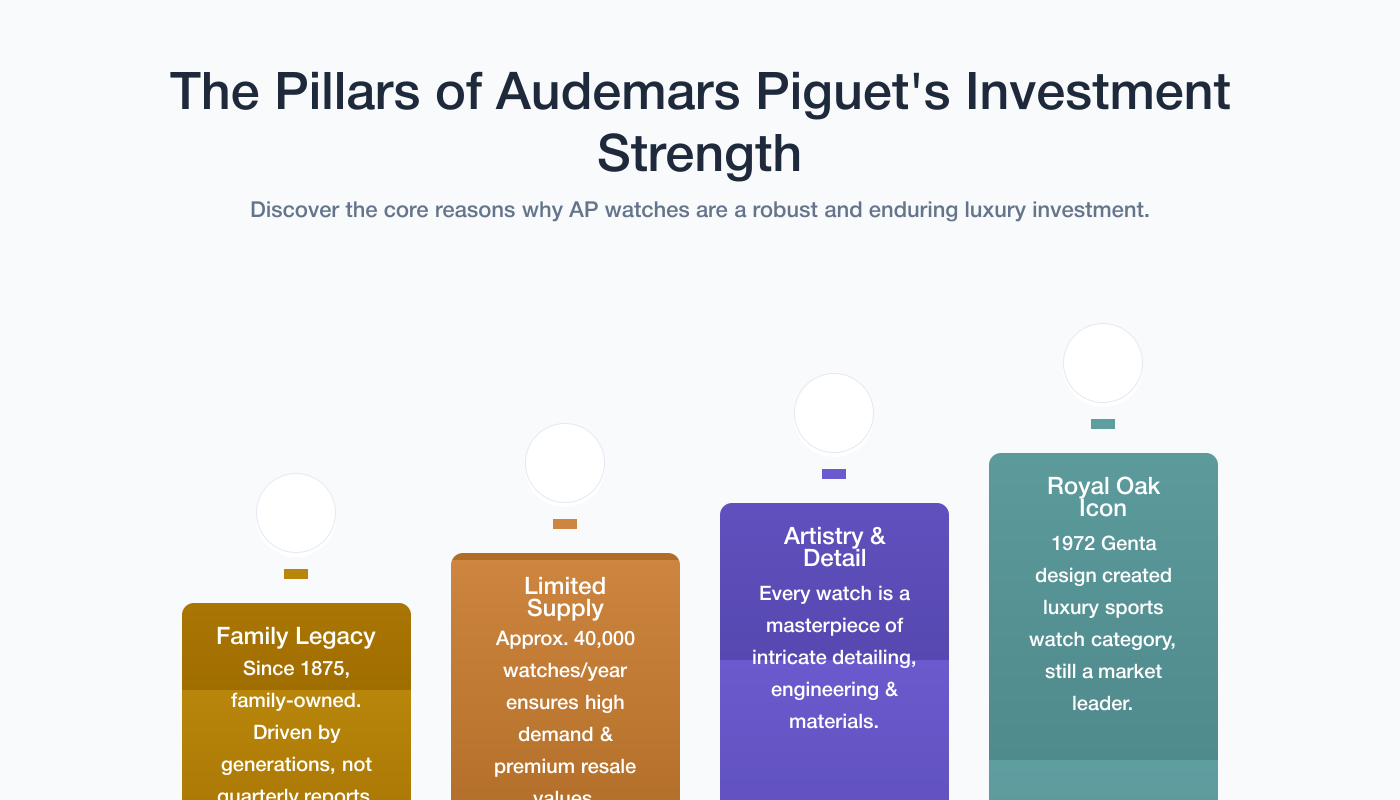
Audemars Piguet is not a fleeting trend or mere hype; it’s built on foundations that withstand market shifts. Having observed countless luxury watches rise and fall, I can attest that AP is inherently different, possessing genuine guts that ensure its longevity as a serious luxury investment.
Its lineage stretches back to 1875, and remarkably, it remains family-owned. This independence means Audemars Piguet doesn't answer to corporate boards demanding quarterly profits or constant strategic overhauls. Their vision is inherently long-term, driven by generations, not immediate financial metrics.
Crucially, AP avoids mass production. With an output of approximately 40,000 watches annually, it's a mere trickle compared to competitors like Rolex, which produces over a million units a year. This deliberate scarcity ensures that demand consistently outstrips supply, a fundamental driver of its exceptional resale values.
Every single Audemars Piguet watch is a masterpiece. This isn't just hyperbole; it’s a reality born from intricate detailing, innovative engineering, and superior materials. You feel the quality and craftsmanship the moment you hold one. It’s not just about telling time; it’s about the profound artistry within.
The Royal Oak is the undisputed legend. Designed by Gérald Genta in 1972, it didn't just become a watch; it pioneered an entirely new category: the luxury sports watch. Decades later, it remains a cultural icon, setting the benchmark for the industry and commanding significant premiums in the secondary market.
Audemars Piguet's enduring strength is built on its independent heritage, meticulously controlled scarcity, unparalleled horological artistry, and the timeless icon that is the Royal Oak.
Investment Pathways: Navigating the New vs. Pre-Owned Market
The choice between a new Audemars Piguet directly from an authorized dealer (AD) or a piece from the pre-owned market is a critical decision, each path presenting its own unique set of advantages and challenges for the discerning investor. Navigating this landscape requires more than just capital; it demands market intelligence and a clear strategy.
Whether pursuing new or pre-owned, understanding market dynamics is paramount for strategic AP acquisition.
Identifying Investment-Grade Models: From Icons to Sleepers
Forget what the glossy brochures tell you. When it comes to Audemars Piguet, there’s what they want you to buy, and then there’s what truly holds value or generates returns. That's the real game, not some marketing fantasy.
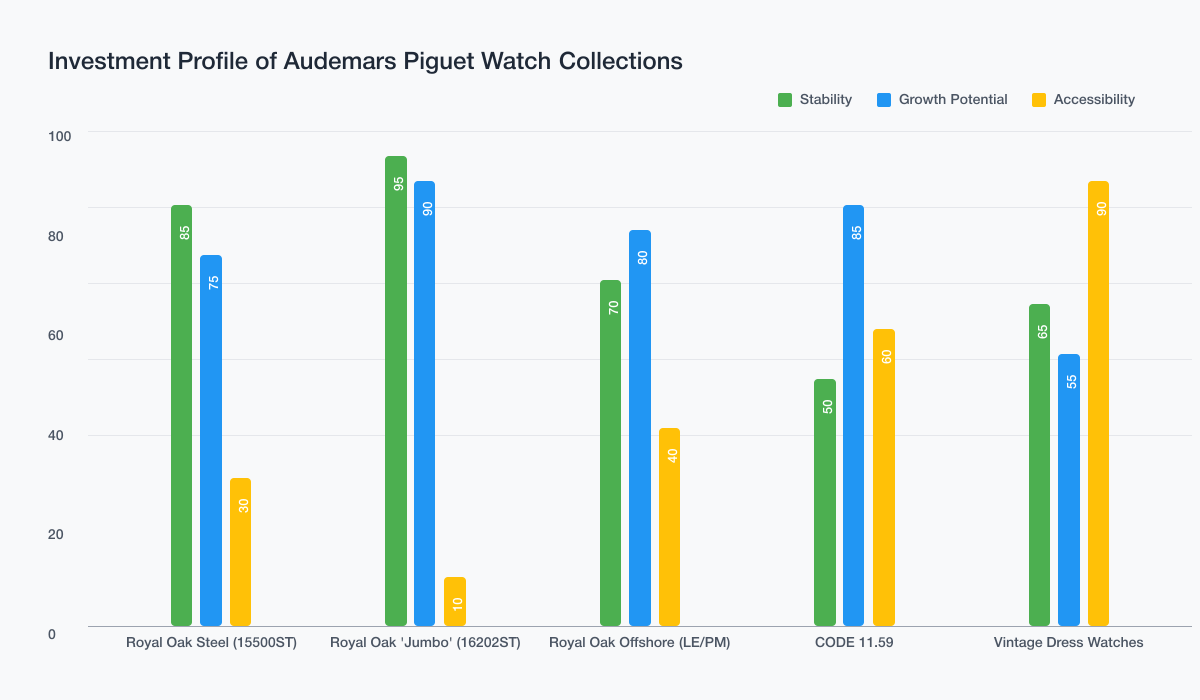
The Royal Oak family is your bedrock. For stability and a relatively safe bet, you start there, every single time. These aren't entry-level pieces; they are core assets, blue-chip investments within the horological world.
Specifically, the steel models consistently perform. The 15500ST, for instance, offers solid, predictable value, akin to a high-yield savings account. The true original, the 'Jumbo' 16202ST, is the icon, pure investment gold that continually climbs in value due to its rarity and immense demand. Acquire one if you can.
However, intelligent portfolio construction dictates diversification. You cannot go all-in on a single model, even within AP.
Next, consider the Royal Oak Offshore collection. These pieces are bolder, larger, and, while not universally appealing, deliver significant returns, especially the limited editions. These special runs, alongside precious metal variants like rose gold or platinum, often see rapid appreciation driven by extreme scarcity.
Then there's the CODE 11.59. Initially met with widespread criticism, sentiment is demonstrably shifting. Similarweb (2024) data indicates a clear uptick in positive discussions. This collection, once an industry punchline, is slowly evolving into an emerging classic or at least a serious contender, signaling substantial potential as a true sleeper investment.
For those not looking to mortgage their home for a watch, or who appreciate genuine value, vintage dress watches from the mid-20th century offer accessible entry points. You can secure serious AP prestige without the Royal Oak price tag. I’ve seen 1970s Ultra Thin 18k White Gold models listed under $4000 on WatchExchange—a genuine steal for the smart investor.
Strategic diversification within AP’s portfolio, beyond just the Royal Oak, reveals significant opportunities for discerning investors.
A Clear-Eyed View of the Risks: Volatility, Fakes, and Upkeep
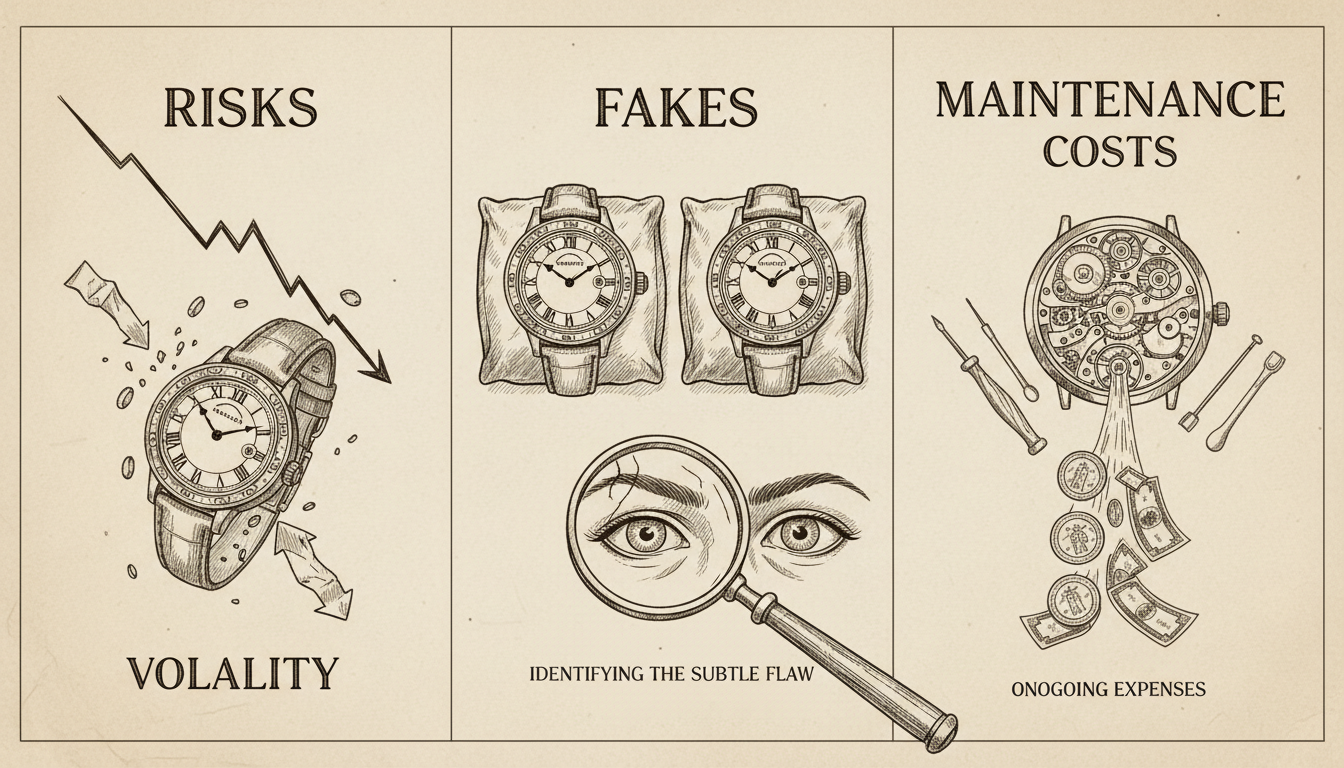
So, you’re eyeing an AP, perhaps feeling quite confident about it. Thinking it’s a sure thing, eh? Not so fast. Look, nothing in this game is a guaranteed win. Nothing. And anyone who claims otherwise is trying to sell you something. So, let’s talk about the ugly truth.
The market, it bites hard. Prices don’t just magically keep climbing; they drop, and they can drop rapidly. A brutal 19% slide across all Swiss brands in just the last year is not a whisper; it's a blaring alarm (Bloomberg). Your investment, no matter how prestigious, is not immune.
Furthermore, the threat of fakes is omnipresent. Counterfeits are becoming alarmingly sophisticated, far beyond cheap mall knock-offs. Even seasoned dealers issue constant warnings about the increasing difficulty of detection. You absolutely require a real, trusted expert for authentication every single time, or you risk a catastrophic loss—a five-figure paperweight, or worse.
And once you’ve (hopefully) acquired a genuine piece, your obligations are far from over. These aren’t mere time-telling devices; they are complex, precision machines demanding meticulous care. A standard service alone will cost you upwards of a thousand dollars. For a complicated piece, such as a perpetual calendar, you're looking at several thousand dollars every three to five years, purely for maintenance. User reports on Reddit forums consistently confirm these significant recurring expenses, directly impacting your total return.
Navigating the Audemars Piguet market requires acute awareness of inherent price volatility, the pervasive threat of sophisticated counterfeits, and the non-negotiable costs of meticulous long-term maintenance.
Protecting Your Asset: A Practical Guide to Value Preservation
Alright, you’ve finally acquired your AP. Congratulations. But that’s just the beginning. A luxury watch isn’t merely a purchase; it’s a substantial asset that demands protection. Here’s how you preserve its aesthetic and monetary value long-term.
First, service it religiously. Neglecting routine maintenance is a rookie mistake. These complex machines require check-ups every three to five years by a certified specialist. Numerous horology experts and dealers affirm that this keeps the movement precisely regulated and prevents far more expensive future repairs.
Consider its home when not on your wrist. Don’t simply toss it on a nightstand. Preserve the original box, or invest in a proper watch winder. Store it in a dry, dark environment; direct sunlight is a silent killer, fading the dial over time and significantly eroding resale value. This is a well-documented phenomenon.
Above all, heed this advice: the papers. All of them. The original box, certificate of authenticity, warranty cards, and service records constitute a "complete set." This documentation is crucial, as a watch-only piece will sell for a significantly lower price. Secondary market platforms consistently demonstrate that a substantial premium is attached to complete sets. Guard these documents diligently.
Finally, wear it. It’s a magnificent machine meant to be experienced. But exercise common sense. Avoid harsh environments like saltwater or sand, which cause corrosion and micro-scratches. Such damage directly diminishes the watch’s condition grade, which will unequivocally kill its value faster than you can express regret.
Diligent service, secure storage, complete documentation, and responsible wear are indispensable for preserving the long-term value of your Audemars Piguet.
Frequently Asked Questions
You’re considering an AP, perhaps for the first time? Don’t mess this up.
A lot of newcomers eye the Royal Oak 15500ST as a benchmark, a killer piece. But securing one at a first-time buyer price directly from an AD is exceptionally difficult. Consequently, many serious new collectors often pursue a vintage Audemars Piguet dress watch instead. While not a "hype beast," it provides an entry point into the brand's heritage, allowing you to wear that esteemed nameplate without draining your savings on the grey market.
Is it an investment? This isn't your average stock portfolio. Audemars Piguet offers higher potential returns due to its ultra-limited production of roughly 40,000 watches annually, making it significantly rarer than Rolex, which churns out over a million units. However, Rolex typically offers greater liquidity; you can usually offload one quickly if cash is urgently needed, as more people seek out common luxury goods, a trend supported by Similarweb (2024) data on secondary market activity.
Is it hard to buy new? This isn’t accidental; it’s Audemars Piguet’s deliberate strategy: scarcity. They don’t want you to simply walk into an authorized dealer and purchase a watch. They cultivate desire, demand patience, and encourage a "relationship." This manufactured exclusivity maintains sky-high prices, reinforces its elite status, and creates a bottleneck where collector demand perpetually outstrips production. It’s a classic case of supply and demand, aggressively manipulated.
And service cost? You thought the purchase price was the only hit? Prepare for ongoing expenses. A basic service for an AP will comfortably exceed a thousand dollars. For a complicated piece, such as a perpetual calendar, you’re looking at several thousand dollars every three to five years. This isn't optional; it's essential maintenance for a high-performance machine, not a disposable item. User-reported costs on Reddit forums consistently corroborate these recurring fees.
Successfully navigating the Audemars Piguet market demands a strategic approach to acquisition, an understanding of its unique liquidity profile, an acceptance of its engineered exclusivity, and a budget for continuous, essential maintenance.
Look, the headlines are screaming about market drops. Fine. But for Audemars Piguet? That noise is mostly static. You didn't come here for fluff; you came for the brutal truth on where your capital sits. So, here it is:
Three things stick:
Value isn't some abstract marketing spiel. It's engineered scarcity. It’s horological pedigree that’s not just talked about, it’s proven*. And frankly, it’s the Royal Oak being a legitimate design icon, perpetually in demand. They don't just print more of these things.
- Market dips? They're entry points for those who know what they're doing, not a signal to bail. The 2020-2021 surge wasn't a fluke; it showed deep, underlying demand that corrects, then rebuilds. The weak hands get shaken out. Good.
- But don't be a fool. This isn't a set-and-forget deal. Volatility happens. Fakes are sophisticated. And upkeep isn't cheap. Ignore these at your peril. It’s part of the game.
Ultimately, you’re not buying some speculative tech stock. This is hard asset territory. A physical thing, expertly made, that holds weight, even when everything else feels flimsy.
So, what now? If you’re serious about moving capital into one of these pieces—or offloading one smartly—you need an actual expert. Someone who cuts through the forum chatter and dealer hype. Someone who verifies every single cog, every document. Get serious about it. Find someone who deals in facts, not feelings.
Ultimately, Audemars Piguet remains a tangible asset for the astute, demanding not just capital, but an informed, strategic approach to acquisition and preservation.
