

Discerning Luxury: A Guide to Understanding Watch Movement Types
The Stellaris Journal
You can drop a fortune on a watch, and that's fine. But if you don't truly understand what powers it
– what's inside that case
– you're simply wearing expensive jewelry. And frankly, that misses the point entirely. The true engineering marvel, the very essence of a timepiece, is its movement. It's the beating heart, the complex brain that dictates everything from accuracy to aesthetic. Whether you're drawn to old-world mechanical winders, the modern convenience of automatics, or the unwavering precision of quartz, understanding these core technologies is paramount.
This isn't about superficial 'exquisite craftsmanship' marketing. This is a no-nonsense breakdown of manual, automatic, and quartz movements: what they are, why they matter (or don't), how they compare, and what your choice genuinely represents. Because understanding the mechanism isn't just about buying luxury; it's about discerning it.
Brief and TL;DR
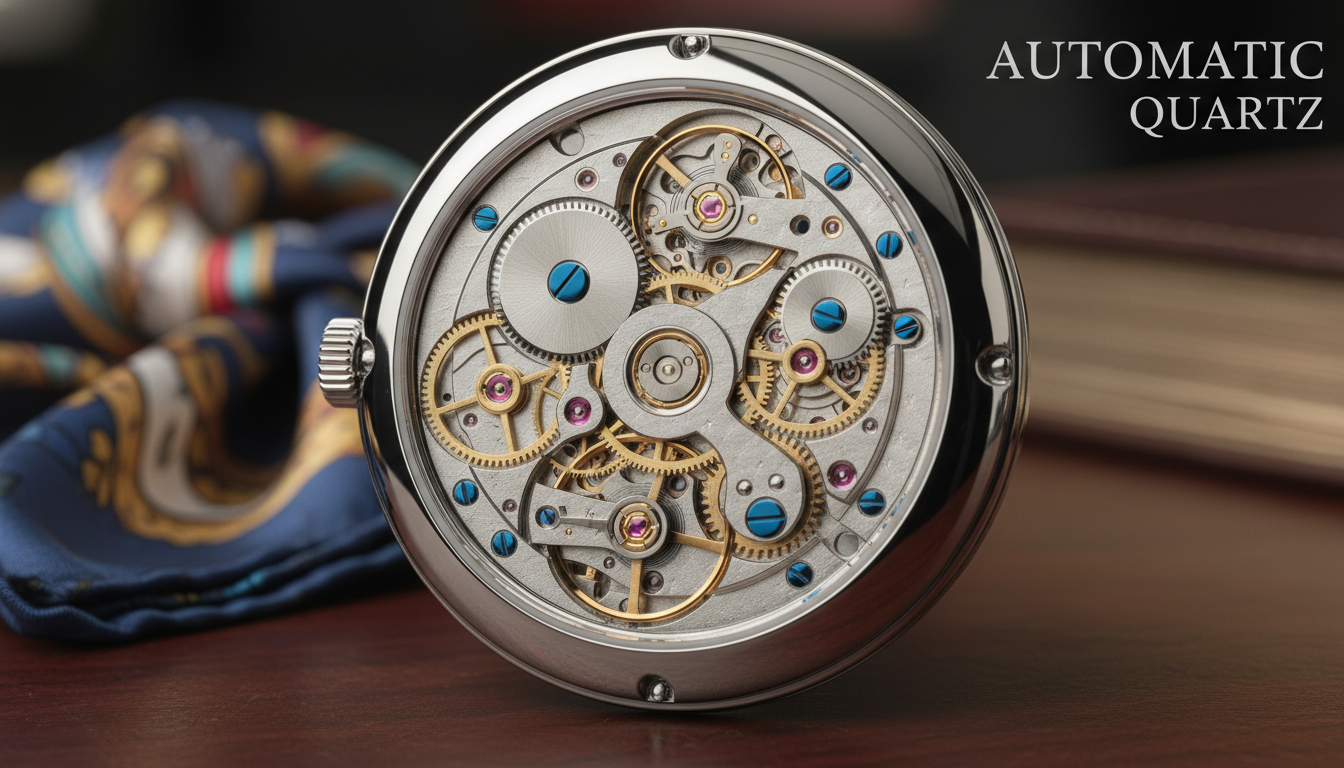
At its core, a watch's movement is its engine, defining everything from its accuracy and reliability to its inherent value and the daily interaction it demands. This guide cuts through the marketing to explain the three primary types: manual-wound (traditional, intimate, requiring daily winding), automatic (self-winding mechanical, convenient for daily wear), and quartz (battery-powered, exceptionally accurate, and low-maintenance). Each offers a distinct experience and set of compromises, impacting everything from your wrist to your wallet.
Choosing your movement isn't just a technical specification; it's a fundamental decision about your relationship with timekeeping itself.
The Heart of the Matter: What Is a Watch Movement?
Beyond the polished case or the intricate dial, the soul of any watch lies within its engine
—the movement. Often referred to by enthusiasts as the caliber, this complex assembly of gears, springs, and power sources is what truly makes the hands sweep, the date change, and any other complication function. It is the crucial element that elevates a mere accessory into a precision instrument.
This intricate mechanism is the defining characteristic of a genuine timepiece. A watch with a poorly engineered movement is, at best, a glorified bracelet. Broadly, movements derive power in two principal ways: a mainspring (the classic mechanical approach, either hand-wound or self-winding) or a battery (the modern quartz method). Mechanical movements, though often less precise (measured in seconds per day rather than per month) and more demanding in terms of care, are revered for their artistry and historical lineage, often commanding significant respect and higher prices. Quartz movements, conversely, offer unparalleled accuracy, often within seconds per month, with minimal fuss and greater affordability, though purists may argue they lack "soul."
The movement fundamentally shapes every aspect of watch ownership: its accuracy, service intervals, initial cost, and long-term value. It’s not a singular component, but a symphony of often hundreds of minuscule, meticulously finished parts. Key components typically include a power source, a gear train to transmit that power, a regulating organ (a balance wheel for mechanicals, a quartz crystal for quartz) to maintain precise time, and a display mechanism to indicate the time. While seemingly simple in concept, the execution is a marvel of micro-engineering.
The movement isn't just a part; it's the very soul of the watch, dictating its performance, pedigree, and intrinsic value.
The Purist's Choice: Manual-Wound Mechanical Movements
For those who cherish tradition and an intimate connection with their timepiece, the manual-wound movement represents the pinnacle of old-school watchmaking. It’s a choice that demands engagement, a daily ritual that connects wearer and machine.
At its core, the manual-wound engine operates on a principle both ancient and elegant. The wearer manually turns the crown, a deliberate action that tightens the watch's primary power source: the mainspring. This coiling action stores all the kinetic energy the watch will need, typically for the next 36 to 48 hours. There are no automatic rotors or external power sources; it's a direct, tactile interaction between you and the mechanism.

Once wound, the mainspring slowly, controllably unwinds, releasing energy through a sophisticated gear train. This energy then reaches the balance wheel and escapement, the true genius of mechanical timekeeping. This regulating organ meticulously parcels out the energy in precise, rhythmic impulses, creating the characteristic "tick-tock" that is the watch's heartbeat. It’s a pure, unadulterated mechanical rhythm, initiated and sustained by the human hand.
Why embrace this daily ritual? Beyond heritage and tradition, it fosters a unique sense of ownership and appreciation. Unlike a set-it-and-forget-it quartz or even an automatic, a manual-wound watch requires your attention. It's a meditative practice for some, a charming daily chore for others, but forget to wind it, and it will simply stop.
This commitment comes with distinct advantages. Without an oscillating rotor, manual movements can be considerably thinner and more elegant, making them a favored choice for refined dress watches. Many of the most iconic and coveted pieces from revered brands like Patek Philippe, Rolex, and Audemars Piguet feature manual-wound calibers, signaling a deep respect for foundational watchmaking.
However, this purity comes with its own set of considerations. Manual movements are inherently delicate, susceptible to shocks and magnetic fields that can disrupt their precise functioning. Furthermore, consistent maintenance is non-negotiable. Like any fine machine, these watches require regular servicing
—typically every two to four years
—for cleaning, lubrication, and inspection. Neglect this, and tiny metal parts grinding without proper oil will inevitably lead to costly damage and extensive overhauls. A simple yet crucial tip: always wind your watch off your wrist to avoid putting undue stress on the crown stem, preventing a potentially expensive repair.
The manual-wound watch isn't just a timepiece; it's a daily commitment
—a beautiful, demanding, and potentially costly dance with pure mechanics that deepens your connection to the art of horology.
Convenience Meets Craft: Automatic Mechanical Movements
For those who appreciate the intricate soul of a mechanical watch but crave modern convenience, the automatic movement stands as the unrivaled champion. It elegantly bridges the gap between traditional craftsmanship and the demands of daily wear, eliminating the ritual of manual winding while retaining the captivating dance of gears.
An automatic movement is essentially a manual mechanical movement with a clever addition: a weighted rotor. This half-moon-shaped component, typically visible through a display case back, rotates freely with the natural motion of your wrist. As you move throughout the day, the rotor spins, automatically winding the mainspring and keeping the watch powered. It’s a self-sufficient system, entirely independent of batteries, relying solely on your movement to maintain its beat. This ingenious self-winding mechanism ensures that as long as the watch is worn regularly, it will continue to run, embodying the "Perpetual" spirit that brands like Rolex famously championed.
This blend of intricate machinery and sheer practicality has cemented automatics as the industry standard for mechanical timepieces. They offer the romance of countless tiny components working in harmony, alongside the undeniable convenience of a watch that simply keeps ticking without daily intervention. It transforms a luxury item into a genuinely wearable and practical luxury.
Modern automatic movements typically offer a power reserve of 40 to 72 hours when fully wound and unworn. This means you can often take it off for a day or two without it stopping. However, for longer periods of inactivity, it will eventually cease to function. Many enthusiasts choose to let their watches rest to minimize wear on components, or utilize a watch winder for specific pieces in a larger collection.
Despite their robust design for daily use, automatic watches are still delicate machines. They are susceptible to strong magnetic fields (from phones, laptops, or even certain speakers) which can magnetize hairsprings and cause significant timekeeping errors. Impact, such as dropping the watch, can easily damage delicate pivots or jewels, leading to expensive repairs. Proper care and common sense handling are essential.
Water resistance, a common feature, also requires vigilance. The gaskets that seal a watch against water ingress degrade over time. Regular pressure testing
—ideally annually
—is cheap insurance against water damage, especially before activities like swimming. And, like any precision machine, automatics require periodic servicing (typically every three to five years) to clean, lubric lubricate, and adjust components, ensuring decades of reliable performance. This is not an optional expense but a vital part of ownership.
An automatic watch isn't just a purchase; it's an ongoing commitment to actual mechanical engineering, serving as a reliable, self-powered tool designed for the rhythms of modern life.
The Apex of Precision: Quartz Movements
While purists often romanticize mechanical movements, the undeniable truth is that for sheer, unadulterated precision and reliability, quartz reigns supreme. It's a technology that prioritizes flawless functionality, making it the practical choice for countless watch wearers.
The operation of a quartz movement is elegantly simple yet incredibly effective. A battery provides power to a microchip that sends an electric current through a small, precisely cut quartz crystal, often shaped like a tuning fork. This crystal then vibrates at an astonishingly consistent frequency
—typically 32,768 times per second. The microcircuit acts as a "brain," counting these vibrations and converting them into precise one-second electrical impulses, which then drive a small stepper motor to move the watch's hands. No complex gears or mainsprings are involved; just pure, consistent electronic accuracy.

This groundbreaking technology was spearheaded by Japanese manufacturers in the late 1960s, notably with the introduction of the Seiko Quartz Astron. Its unparalleled accuracy and cost-effective production sparked what became known as the "Quartz Crisis," a period that severely challenged and reshaped the traditional Swiss watch industry, nearly collapsing many established brands unable to compete with this new benchmark of everyday perfection.
The advantages of quartz are manifold and significant. They offer exceptional accuracy, typically within
±15 seconds per month, a feat that mechanical movements struggle to match. Quartz watches are generally far more durable and shock-resistant due to fewer moving parts. Their affordability makes precise timekeeping accessible to everyone, and maintenance is minimal
—usually just a battery change every two to three years. (Crucially, always replace a dead battery promptly to prevent leakage and corrosive damage to the movement, and consider a mini-service with new seals and a pressure test during battery replacement.)
The primary "con," often voiced by traditionalists, is the perceived lack of "soul" or intricate craftsmanship compared to mechanical movements. The second hand often moves with a distinct "tick" rather than a smooth sweep, a visual cue some find less appealing. However, this debate, often seen raging on forums like Reddit, overlooks the fact that even high-end brands like Cartier and Grand Seiko produce exquisite, high-performance quartz models. Grand Seiko's 9F quartz movements, for example, are legendary for their hand-assembled quality, thermoregulation, and accuracy, proving that "quartz" doesn't inherently mean "lesser."
Quartz technology fundamentally changed what we expect from a watch, democratizing precise timekeeping and forever altering the landscape of horology.
Choosing Your Movement: A Decision Framework
Deciding between manual, automatic, or quartz movements boils down to aligning a watch with your personal values, lifestyle, and priorities. There's no single "best" option, only the one that's best for you. Consider the following framework to guide your choice:

- Lifestyle & Convenience:
- Accuracy & Precision:
- Craftsmanship & Connection:
- Maintenance & Cost:
- Automatic movements? Yes, they’re brilliantly clever. Your own motion powers it. Still that intricate mechanical soul, but with a concession to modern life: less fuss, more convenient. For daily wear, it's often the sensible choice, blending tradition with practicality.
- Quartz. Don't scoff. It’s precision incarnate. Battery-powered, practically indestructible (compared to its mechanical cousins), and accurate down to the second. It does its job, damn well. If you want uncompromising time, not just a conversation piece, that’s your ticket.
* Quartz: Ideal for maximum convenience and reliability. Set it and forget it, with minimal interaction beyond occasional battery changes. Perfect for active individuals or those who simply need accurate time without fuss.
* Automatic: A great blend of mechanical charm and daily wearability. Requires consistent wear to stay wound, or a watch winder if you rotate watches frequently. Still low-effort for most daily users.
* Manual-Wound: Demands the most engagement. A daily winding ritual forms a personal connection. Best for enthusiasts who appreciate the interaction and don't mind the routine.
* Quartz: Unmatched precision, typically within seconds per month. If absolute accuracy is your top priority, especially for professional or timing-critical applications, quartz is the clear winner.
Automatic & Manual-Wound: Inherently less accurate than quartz, typically within several seconds per day*. While higher-end mechanicals can be regulated to excellent precision, they will never match quartz without constant re-adjustment.
* Automatic & Manual-Wound: These movements are miniature works of art, showcasing intricate gears, springs, and often hand-finishing. They offer a deep connection to horological tradition and mechanical genius. Many wearers appreciate the "living" nature of a mechanical watch.
* Quartz: While highly functional and technologically advanced, the internal electronics offer less visual artistry or a traditional "craft" feel for purists, though high-end quartz can still be beautifully made.
* Quartz: Lowest maintenance, primarily battery changes every 2-3 years, often with a seals check. Initial purchase price is typically lower for comparable quality.
* Automatic & Manual-Wound: Require periodic servicing (every 3-5 years) which can be expensive, ranging from hundreds to over a thousand dollars depending on the watch. Initial purchase price is generally higher due to the complexity of production.
Ultimately, the ideal movement is the one that brings you the most satisfaction, whether that's through unwavering precision, a deeply personal connection, or seamless everyday functionality.
Frequently Asked Questions (FAQ)
Here are answers to some common questions about watch movements:
Q: Which movement is the most accurate?
A: Quartz movements are by far the most accurate, typically losing or gaining only a few seconds per month. Mechanical movements (manual or automatic) are generally less accurate, measured in seconds per day, though high-end mechanical movements can achieve impressive precision.
Q: Are mechanical watches better than quartz watches for investment?
A: Not necessarily. While many high-end mechanical watches, especially from prestigious brands, can retain or increase in value, this is due to factors like brand heritage, limited production, and market demand, not solely their mechanical nature. Most mass-produced mechanical watches will not be "investments." High-end quartz watches from brands like Grand Seiko also hold their value well. Investment potential depends more on specific models and brands rather than the movement type alone.
Q: How often do I need to service a mechanical watch?
A: Most manufacturers recommend servicing a mechanical watch (manual or automatic) every 3 to 5 years. This involves cleaning, lubricating, and inspecting components to ensure long-term performance and prevent costly damage.
Q: What about kinetic or solar watches?
A: Kinetic and solar watches are variations of quartz movements. Solar watches use a solar cell to charge a rechargeable battery, while kinetic watches (Seiko's term) use a rotor similar to an automatic watch to generate electricity and charge a capacitor/battery. Both offer the accuracy of quartz with extended periods between battery replacements, often functioning for decades with proper care.
Understanding the nuances of watch movements empowers you to make informed decisions, ensuring your timepiece truly resonates with your needs and expectations.
*
Alright. You’ve had the tour through the guts of it all. Good. Because understanding what makes a watch tick isn't just trivia. It’s the fundamental difference between buying a label and truly owning a piece of actual engineering. Here’s the bottom line, stripped bare:
A mechanical movement, manual or automatic, demands something from you: engagement, appreciation for hundreds of tiny, interlocked parts doing their perpetual dance. It’s heritage. It's work*. And that's precisely why some of us cherish it.
So, where does that leave you?
No movement is inherently "better" than another; it's about what resonates with your priorities and your lifestyle. Pure and simple. Not what some glossy advertisement tells you, nor the dogma of a vocal online forum.
Your choice of watch movement is a deeply personal statement about what you value in the intricate dance of time.
Now, go touch some watches. Feel the weight. Listen to the tick. (Yes, you can actually hear it on some.) Ask the blunt questions. And when you're ready to actually acquire something, especially in the secondary market? Don't be a fool. Get it authenticated. Understand its real market value. The world's full of sharks selling air. You need solid ground. (That’s what we do, by the way. Stellaris. We cut through the noise, give you the facts. Because a luxury watch isn't just about the wrist; it’s about the underlying asset.) Pick smart. Or pay for it later.
