

Luxury as an Asset Class: Performance & Portfolio Fit
The Stellaris Journal
Forget what you think you know about fancy watches and classic cars. Your rich neighbors? The ones buying that stuff? They're not just showing off anymore. No. Seventy percent of the ultra-wealthy piled more money into luxury investments last year. Let that sink in.
This isn't just about status symbols; it's about smart money. These tangible assets—art, rare watches, vintage rides—are moving from mere eye candy to essential portfolio components. The numbers reveal something compelling: returns often disconnected from the usual stock market gyrations, acting as a potential hedge against the next economic wobble.
But don't get it twisted. This isn't some "game-changer" easy button. It's complex, full of unique risks, and it absolutely demands deep expertise. Or at least, finding someone who has it. That’s what we’re exploring today.
TL;DR
Let's be direct. You're busy, we get it. "Luxury investing" isn't just for showing off anymore. High-net-worth individuals (UHNWIs) are actively using art, exceptional automobiles, and rare watches (the ones that truly hold value, not your mass-produced wearables) to diversify their portfolios. Diversification isn't just a buzzword; it's a strategic imperative.
Why? Because these tangible assets often move independently of the traditional stock market. When stocks tank, your vintage Ferrari might not. Or consider pink diamonds, which have jumped 399% since 2005 according to Fancy Color Research Foundation data. It's touted as a hedge against inflation and market volatility. But here’s the caveat: this market is complex and largely opaque. It demands deep expertise, either your own or that of trusted advisors. Unique risks abound: theft, damage, high maintenance costs, and the significant challenge of illiquidity during resale. Despite these hurdles, 70% of UHNWIs piled into this stuff last year, as reported by the Knight Frank Wealth Report (2024). They seek tangible value, resilience, and perhaps, a lasting legacy beyond a spreadsheet entry.
It's a wild ride. But the big money sees the real play here: it's not just a toy. It ’s a tool. A complicated, risky tool.
Defining Luxury: Beyond Price Tags and Prestige
Many conflate "luxury" with anything expensive. But in the context of investment, a true luxury asset is a different beast entirely—far removed from a mass-produced luxury item that depreciates significantly upon purchase. These are tangible assets: fine art, rare watches (distinct from their disposable counterparts), vintage automobiles, and even private jets, as highlighted by Saffery Trust. Unlike hedge funds or private equity, which are often financial instruments and promises, these are physical items you can touch, use, and admire.
Their value isn't derived from an algorithm or quarterly earnings report. Instead, it stems from scarcity, brand history, exceptional craftsmanship, and proven provenance. It's about what's rare and important, not just what's shiny. While HudsonPoint defines alternative assets broadly, these luxury items possess a unique intrinsic value, a 'soul' if you will, making them particularly distinct and valuable.
This isn't the stock market. It's unregulated, highly opaque, and you can't simply look up a ticker symbol. Valuing a masterpiece or a limited-edition watch demands specialized knowledge, not amateur guesswork. Given that demand for such unique items increases with rising incomes—a basic economic principle—wealthy individuals will always covet these assets. It's a complex, distinct market where value, for the right asset and buyer, is enduring.
Because true luxury assets aren't just expensive things. They’re physical pieces of value, built on history, scarcity, and a market only the experts understand.
The Modern Portfolio: Why Go Beyond Stocks and Bonds?
Let's be candid. That old 60/40 portfolio, long considered the holy grail, is showing its vulnerabilities. While once a reliable safe bet, when inflation persists above 2%, bonds often lose their safe-haven status, and stocks begin to move in lockstep. J.P. Morgan analysis confirms that rising stock-bond correlation is not merely a theory—it's actively undermining traditional diversification.

But investors need options. This is where luxury assets, those distinct, tangible things we discussed, come into play. They often have little correlation to the S&P 500. "Uncorrelated" simply means they operate on their own distinct market dynamics. So, when traditional markets are experiencing volatility, your art or vintage car might hold its value, or even appreciate. Saffery Trust describes them as a buffer and a shield against economic storms.
Inflation is another critical factor. It erodes the value of cash and conventional investments. Tangible assets, like gold (the classic hedge), offer an independent asset class with low correlation to stocks and bonds. Similarly, your art, rare wine, or coveted timepiece can retain or increase its value. Investors seek tangible assets when the purchasing power of fiat currency diminishes, valuing scarcity as a distinct form of protection.
Experts—the ones providing genuine insights, not just hype—are advocating to re-evaluate conventional portfolio wisdom. For the right investor (and a significant capital commitment is required to participate meaningfully), allocating 15-30% of your portfolio into alternatives is recommended by HudsonPoint. This includes assets beyond traditional stocks and bonds, offering resilience and tapping into diverse growth mechanisms. In an unpredictable market, continuing with the same strategies and expecting different results is no longer viable.
Forget the 60/40. The market's changed. You need to change with it. Diversify with the weird stuff, the tangible stuff. It’s the only way to build a portfolio that actually survives.
Performance Under the Loupe: A Look at Key Luxury Markets
Beyond the gloss and magazine features, you're here for the numbers—the cold, hard proof that some of these unique assets actually pay off. And they do, sometimes with astonishing returns.
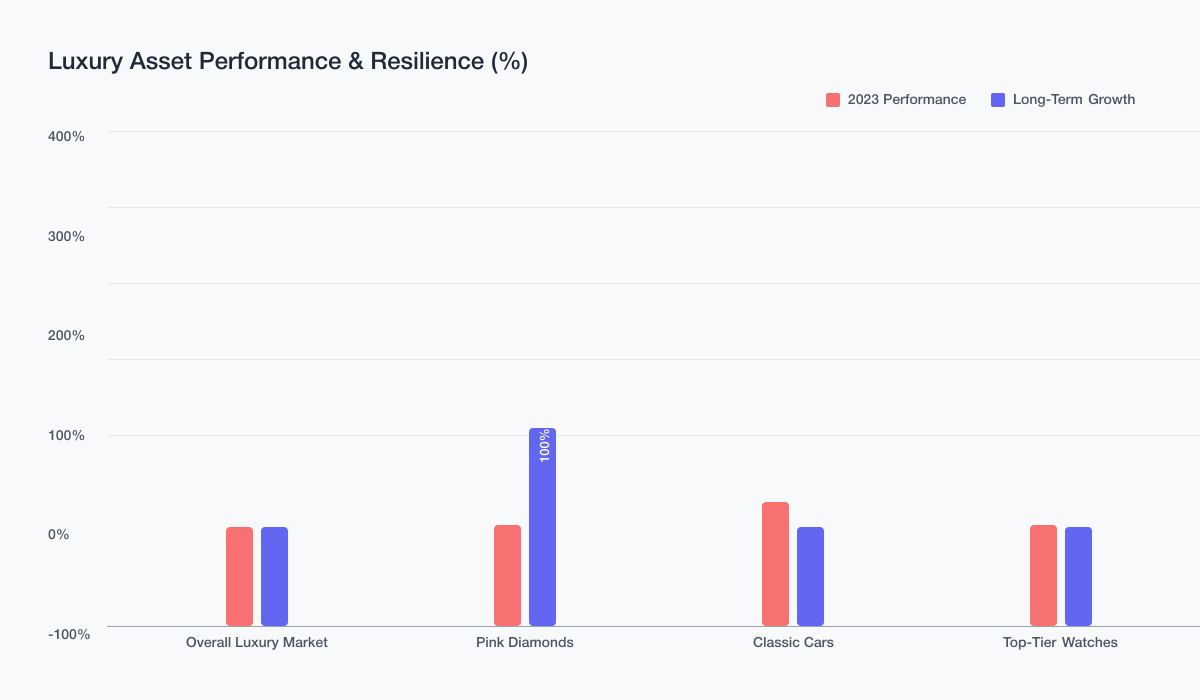
So, what's performing? What's driving this market?
- Classic Cars. These assets are both captivating and exceptionally valuable. While many cars depreciate, the global classic car market is projected to expand by over US$10 billion this year alone (Statista). This represents substantial growth, not chump change. Consider a 1962 Ferrari 250 GTO, which recently sold for a staggering seventy million dollars, exemplifying the market's high valuations. This isn't just about one-off unicorns; it's a category demonstrating significant, sustained growth.
- Fine Art & Jewelry. These aren't merely pretty things; they are potential bunkers for wealth. Take pink diamonds, for instance: their value has shot up by 399% since 2005, according to the Fancy Color Research Foundation.
- Rare Watches. This is a nuanced and often complex market segment. While iconic brands like Rolex and Patek Philippe are well-known, the market is characterized by significant consolidation, with major groups like Richemont, LVMH, and Swatch forming vast empires. This creates a distinct market stratification where discontinued models and limited editions often hold the most value. However, navigating this space requires extensive knowledge, as many watches remain purely consumer items.
- Physical Risks. These are tangible assets. They can be stolen, lost, damaged, or destroyed by fire, flood, or improper storage. Potentially rendered worthless. For instance, a million-dollar painting is valueless if destroyed by fire or water damage. Unlike a mutual fund, a piece of art, a car, or a jewel presents an entirely different risk profile. Proactive planning for such eventualities is critical and costly.
- Illiquidity and High Transaction Costs. Think you can sell that Patek Philippe on a whim? Think again. It can take months, even years, to find the right buyer. And then come the fees: auction houses take substantial commissions, and dealers also demand their margin. A significant portion of your potential profit can evaporate. You are locked in, your capital illiquid (HudsonPoint) for extended periods. Unlike publicly traded securities, these assets cannot be quickly liquidated.
- Reputational & Security Risks. This is a peculiar yet very real consideration. Ownership of ultra-high-value assets inevitably draws attention, not always positive. Consider the case of Taylor Swift: her private jet ownership sparked public discourse on carbon emissions and raised security concerns when her travel data became public (Saffery Trust). For private citizens, not just celebrities, conspicuous ownership of, say, a half-million-dollar timepiece or a specific piece of art, can make one a target, imposing a significant personal and security burden. Some UHNWIs are even reducing their private jet travel due to this increased scrutiny, prioritizing privacy and security over convenience.
- Maintenance and Insurance. These assets do not appreciate passively. They demand ongoing care and significant financial outlay. A classic car requires specialized servicing; fine art needs climate control and security. This requires specialized, expensive insurance policies that are perpetual, far exceeding standard homeowner's coverage. These are not "buy and hold" assets in the traditional sense; they are "buy and continually invest in" assets.
- Professional Oversight. It's indispensable. These aren't ETFs; they are unique, individual assets requiring specific knowledge for proper management. Attempting self-management is ill-advised.
- Trustees. Leverage their expertise. Appointing a professional trustee is a strategic move. Trustees mitigate physical and financial risks, and crucially, protect your privacy. By taking legal ownership, they shield assets from other claims, offering significant security.
- They handle the boring stuff. And the critical stuff. Trustees manage both routine and critical aspects like storage, insurance, and maintenance. They ensure proper execution, offering expert advice on valuation, optimal selling periods, and future acquisitions. Their specialized experience is invaluable.
- Vet 'em. Hard. Do not select just anyone. An art expert, for instance, may not possess classic car market expertise. You need partners with specific, proven experience in that exact asset class. Furthermore, ensure they are regulated in jurisdictions with robust trust laws, as you are entrusting them with control. They must demonstrate verifiable competence.
- It's part of the big picture. Do not treat these assets in isolation. They must be integrated into your overall wealth strategy, including succession planning and estate considerations. If unforeseen circumstances arise, critical questions regarding asset transfer, care, and insurance must have pre-planned answers.
- These assets—fine art, rare watches, classic cars—largely operate independently of traditional market indices like the Dow. This offers genuine diversification, far beyond a marketing buzzword, providing a potent counterweight when traditional markets experience volatility.
- While some pieces have delivered exceptional returns, the market itself is an opaque market, often riddled with counterfeits and speculative bids. Navigating this market successfully demands deep personal expertise or, more accurately, trusted professional guidance.
- Owning these isn't like holding an ETF. There are significant hidden costs: specialized insurance, secure storage, ongoing maintenance, and rigorous authentication. The greatest risk often lies in a lack of comprehensive understanding of the asset, and the pathways for timely liquidation.
Notably, 2023 saw a period of slight adjustment, with overall luxury investments dipping approximately 1% (Knight Frank Wealth Report 2024). Yet, even with this minor market correction, top-tier assets—such as rare Ferraris, pink diamonds, and coveted Pateks—demonstrated remarkable resilience, with some even appreciating. They act like high-rise structures in a flood zone: still standing. This resilience underscores that the ultra-wealthy maintain their investment strategies, often continuing to acquire high-value assets.
The significant capital flow into luxury assets is undeniable. While no investment is guaranteed, the evidence of substantial returns is pervasive, driven by scarcity and the sustained demand from high-net-worth individuals.
The Hidden Costs: Navigating the Unique Risks of Tangible Wealth
The allure of substantial returns and exquisite assets is powerful. However, it's crucial to confront the less glamorous reality. For all their impressive returns, luxury assets are far from a passive investment. This arena is complex, and can rapidly present significant challenges.
Owning these luxury assets isn't just about the purchase price. It’s a whole damn headache of physical risks, slow sales, public scrutiny, and endless bills. Get smart. Or get burned.
Strategic Management: Protecting and Growing Your Luxury Portfolio

So, you've acquired a coveted asset. What's next? Merely acquiring it and hoping for appreciation is a recipe for substantial loss, or even losing the asset entirely. This asset class is inherently complex, and few possess the comprehensive expertise required. Professional guidance is not just advisable—it's essential.
Here’s the strategic approach:
Look, you bought these things to hold value, right? To maybe even make you more. So protect them. Get a pro. Or you’re just gambling. And you’ll probably lose. Tomorrow. Find someone good.
The landscape of wealth management has fundamentally shifted. Luxury isn't just about showing off anymore; it's a strategic allocation decision for portfolios that matter. Not everyone grasps this evolution; most simply see a high price tag. But the astute investors are looking at the data, recognizing the value of uncorrelated returns. This isn’t about chasing ephemeral trends; it’s about cultivating portfolio resilience.
To summarize, these fundamental truths must be internalized:
This is not a passive play; it's an active management proposition demanding relentless vigilance and genuine expertise. Thinking you can just "buy the dip" on a Patek Philippe without a deep understanding is pure delusion.
So, what's the next step? Avoid making impulsive moves. Seek partners who prioritize authentication, pricing transparency, and flawless execution. Partners who can cut through market noise and meticulously manage complexities. Because the margin for error, with these significant sums, is effectively zero.
