

How an Independent Dealer Curates a Rolex Inventory
The Stellaris Journal
Every independent dealer's Rolex shelf is an editorial decision. Whether the piece is in the display case, listed online, or quietly set aside after a private inquiry, that decision reflects a filter. For us, the filter is the same one we apply across the collection: a piece earns its place because of design integrity, mechanical significance, or enduring collector appeal. It doesn't earn a place because it's a Rolex.
That distinction matters. We are not an authorized dealer, and we have no affiliation with the brand. The only reason a Rolex shows up on our shelves is that it passes a set of standards we apply to every maison we carry, from Patek Philippe to F.P. Journe. And like any working filter, it produces both acceptances and refusals.
The Three Filters Behind a Reference
The decision to carry or decline a specific Rolex reference runs through three questions, in this order.
Does it have design integrity? Rolex has built its reputation on continuity. The Cyclops lens, the Mercedes hands, the Oyster case, the fluted or Cerachrom bezel. These design signatures have held for decades. Some modern references honor that continuity. Others lean on novelty in ways that work against it: oversized cases, decorative sub-dials that don't belong on the model, dials that date a watch to a single era of fashion. A reference with weak design integrity is the first kind we quietly set aside.
Is there mechanical significance? Rolex movements are technically accomplished across the catalog, but not every reference advances the conversation. The Caliber 4130 inside the Daytona, the Cerachrom bezel patents, the Parachrom hairspring, the newer 32-series movements, these represent real engineering choices. A reference that carries one of these, or that documents a transitional moment in Rolex's mechanical history, has weight. A reference that's mechanically identical to its predecessor but wears a new dial does not, at least not by this filter.
Will collectors still want it in ten years? This is the question that separates reference from trend. A watch that matters in 2026 but won't matter in 2036 is, for our purposes, a watch to leave on someone else's shelf. A watch whose relevance compounds over time is the kind of piece a curated inventory is built around.
These three filters come from the selection logic we publish across the Stellaris collection and apply equally to every reference we evaluate.
References We Actively Seek Out
The Rolex section of our current inventory reflects what passes these filters. A few examples, with the reasoning behind each.
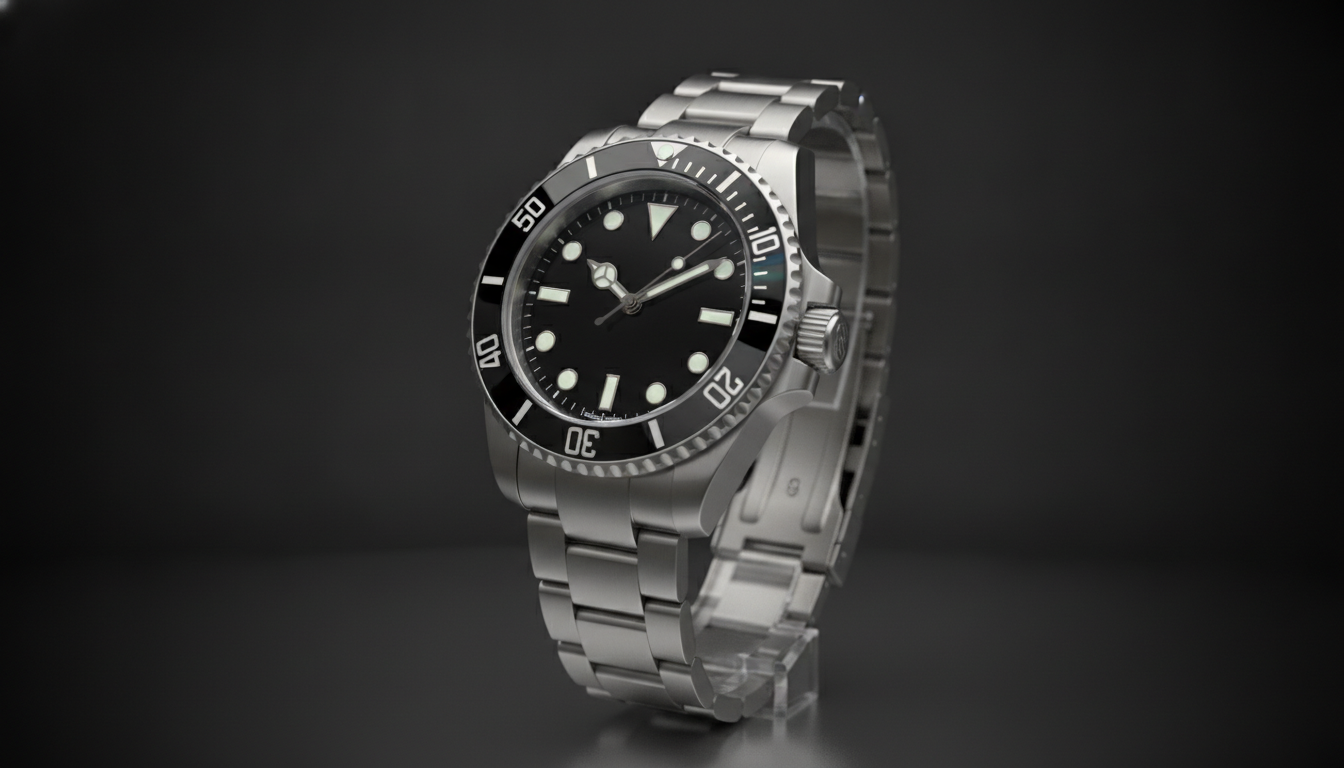
Submariner No Date 124060. The no-date Submariner is the purest expression of the model. It removes the Cyclops and the date complication, leaving a tool watch that's closer in spirit to the 1953 original than any current-production Sub. According to WatchCharts data cited by WatchesOff5th, the no-date 124060 trades above retail with steady demand. The reference has design integrity, mechanical significance, and a collector base that crosses generations. It's a reference we actively source.
Cosmograph Daytona, multiple generations. The Daytona is the reference Rolex built its modern collector base around, and the four-generation stack of 16520, 116520, 116500, and 126500 has held its position even through a market correction. Our current inventory spans this range: a Daytona 126515LN in rose gold with a meteorite dial, a yellow gold 126518LN also with a meteorite dial, and a discontinued 116518 in yellow gold with a blue racing dial. The 116518 is the kind of transitional piece that fits our mechanical significance filter. It documents a moment when Rolex was moving from aluminum to Cerachrom bezels and refining the Daytona case. Carrying multiple generations of a reference with this kind of longevity is exactly what a curated inventory is for.
GMT-Master II 116710LN with white meteorite dial. The 116710LN is the transitional GMT. It carried the first-generation ceramic bezel on a stainless case and preceded the Jubilee-bracelet Pepsi and Batman references. The meteorite dial configuration we currently list isn't a baseline model, and we'll discuss aftermarket modifications in the next section. But the underlying reference represents a documented shift in Rolex's GMT design language and remains a reference collectors still ask for, particularly as the Pepsi 126710BLRO has appreciated roughly $3,000 since January on discontinuation speculation.
Explorer II 226570 Polar. The current-production Explorer II is the quietest of the Professional collection. It doesn't carry the same waitlist pressure as a Submariner or a Daytona, which means it's frequently available on the secondary market at reasonable premiums. For a buyer who wants a Rolex with real tool-watch heritage and a complication (the 24-hour GMT hand), it's a reference that earns its place on a three-filter review. The Polar dial variant is the version collectors tend to prefer.
Day-Date 40 228345RBR with chocolate and diamond bezel. The Day-Date is a dress watch with a complicated market profile. Most configurations sit flat on the secondary market. A few, particularly those with precious-metal dials, diamond-set bezels, or material configurations that move beyond the standard catalog, hold value better because they document Rolex's material capabilities rather than serving as everyday dress pieces. The 228345RBR in Everose with a chocolate dial and diamond bezel we currently list falls into that second category.
References We Quietly Decline
The list of what we don't carry is longer than the list of what we do, and that's by design.
Generic Datejust configurations. The Datejust is one of Rolex's foundational models, and the 36mm and 41mm references have been in continuous production for decades. They are well-made watches. By WatchCharts and WatchesOff5th's March 2026 dealer analysis, most Datejust configurations are widely available with high production volume, and the secondary market treats them accordingly. They are watches to wear, not watches to flip. A Datejust without a specific material or dial configuration that pushes it past the catalog default doesn't pass the third filter for us.
Steel and two-tone Sky-Dweller. The Sky-Dweller is technically one of Rolex's most complicated production watches, with a true GMT function and an annual calendar. That should make it a collector favorite. In practice, secondary demand for steel and two-tone Sky-Dweller references hasn't matched retail pricing on most variants. The complication is real, but the market hasn't rewarded it. Pieces in this category tend to sit longer on the shelf and require deeper discounting to move. We source selectively here.
Standard-dial Yacht-Master. The Yacht-Master occupies an awkward position between the Professional collection and the dress line. The 40mm Rhodium dial is an exception, but most configurations trade near or slightly under retail. That makes them difficult to source and resell responsibly. The 226658 in yellow gold Oysterflex is an exception we currently carry because the material configuration places it in a different market segment than the baseline steel and Everose references.
Watches with undisclosed aftermarket modifications. The current market is full of pieces with replacement dials, bezels, hands, or bracelets. Some modifications are well-documented and add value. Others are assembled to look like rare factory configurations using standard parts. We carry a Submariner Date 116610LN with a meteorite "Cookie Monster Conversion", and that piece is listed honestly as a conversion, not as a factory configuration. A watch with undisclosed modifications is a watch we decline regardless of how rare the combination appears to be. The authentication process that backs our 100% authenticity guarantee covers originality as well as identity.
Pieces without provenance where provenance should exist. A modern Rolex without its box, papers, warranty card, and original purchase receipt can still be a genuine watch. It can also be a watch that has been refinished, re-braced, or serviced with non-original parts. When a reference at our price point lacks documentation, we decline unless the seller can account for the gap. A complete set consistently commands a premium over a watch-only sale, as the WatchesOff5th dealer analysis confirms. That premium exists because complete sets reduce the buyer's authentication risk. We're not interested in shifting that risk to our clients.
Why the Refusals Stay Quiet
The decision to decline a specific piece, or even an entire reference family, is rarely public. We don't publish a list of what we won't carry, and we don't name sellers or consignors when we pass. There are a few reasons for that discretion.
First, a decline is usually about a specific watch, not a reference family. A generic Datejust in average condition with no papers isn't the same watch as a Datejust with an unusual dial configuration and a complete set. Declining the first doesn't mean declining the model. Publicly refusing references by name confuses the two.
Second, the secondary market is small and relationships matter. A piece we pass on this month may come back in better condition next quarter, from the same seller. Treating declines as final judgments burns bridges that the curation process depends on.
Third, and most practically, a public refusal list would be a marketing liability. The pieces we decline tend to be the pieces other dealers list aggressively. Calling them out by name means aligning our brand against listings our competitors depend on. That's not a productive use of the editorial.
The quietness is part of the discipline.
The 2026 Market Context
The reference-level decisions we've made over the last several years have been validated, uncomfortably, by the current market. Per WatchCharts data cited in the WatchesOff5th dealer analysis, 65% of the current Rolex lineup now trades below retail on the secondary market. The pieces that hold or gain value share a few characteristics: stainless steel sport references, constrained supply, and references where demand exceeds available allocation. The pieces that don't, the Datejusts, Sky-Dwellers, standard Yacht-Masters, sit because supply has outpaced collector demand.
That's the same separation the three-filter framework produces. A reference that scores well on design integrity, mechanical significance, and enduring appeal tends to be a reference the market also supports at retail or above. A reference that fails one or more of those filters tends to be a reference that the secondary market has quietly repriced downward.
The market isn't always right, and it can swing. But over a multi-year horizon, the references that pass a thoughtful filter are the references that hold their value through corrections. Our role isn't to predict the next cycle. It's to apply a filter that produces the same answer the market eventually arrives at, just earlier and more quietly.
What This Means for a Buyer
If you're considering a Rolex, the same three filters apply whether you're buying from us, from another dealer, or from a private seller.
Start with the reference, not the configuration. A Submariner 124060 in standard configuration will hold its value better than a Submariner Date with a boutique-only dial that nobody else has heard of. A Daytona 116500LN will outlast a Daytona with a factory-customized dial configuration. Reference is the durable variable. Configuration is the variable that cycles with fashion.
Look for mechanical significance. A reference that represents a moment in Rolex's manufacturing history, a movement upgrade, a bezel material change, a case redesign, will continue to interest collectors. A reference that's mechanically identical to its predecessor and only differs in dial color will interest fewer collectors each year.
Treat the box and papers as part of the price. Complete sets command a premium because they reduce authentication risk. A watch without papers at a discount is only a good deal if you've independently verified its provenance.
Buy what you want to wear. This is the advice every credible dealer repeats, and it's not a hedge. A Rolex that holds its value is a luxury. A Rolex you'll wear daily, regardless of what it does on the secondary market, is a watch. The first is harder to find than the second, but the second is what makes the first worth owning.
If you're evaluating a specific reference and want a second opinion, our concierge team can walk through how that piece scores on the three filters, what the current secondary market for it looks like, and whether it's a reference we would carry ourselves. That conversation is free, doesn't require you to buy from us, and is part of how we work.
The Inventory as Editorial
The cleanest way to think about a curated dealer's Rolex shelf is as an editorial position. Every piece on it is a vote for that reference, that configuration, that material, and that seller. Every absence is a vote against the alternative.
We don't carry every Rolex. We carry the references we've evaluated against the three filters and concluded earn their place. When a piece fails one of the filters, condition, provenance, mechanical significance, design integrity, collector trajectory, we pass. The pass is quiet because it usually involves a specific watch, not a judgment about an entire reference family.
Our Rolex inventory isn't a catalog. It's the visible part of a longer working process. The longer part, the declines, the quiet passes, the documentation checks, the waiting for a better example of a reference we already believe in, is what makes the visible part trustworthy.
If a piece earns its place, you'll see it listed. If it doesn't, you won't. That, ultimately, is the answer.
