

How to Buy a Luxury Watch as a Gift: A Concierge Guide
The Stellaris Journal
A luxury watch given well is one of the most considered gifts a person can receive. It is worn, often daily, for years, sometimes decades. It accumulates memory: the first time it catches light in a boardroom, the patina on a leather strap, the small scratches from a life lived with it on the wrist. That is why the decision deserves more than a checkout button and a tracking number.
It also deserves more than a guess.
Buying a luxury watch as a gift is structurally different from buying one for yourself. The buyer has the budget. The wearer has the taste. The two sets of information rarely sit in the same head. And that gap, between what the giver knows and what the receiver will actually wear, is where most gifting mistakes are made: the wrong case size, the wrong metal, the wrong complication, the wrong moment. A concierge exists to close that gap.
This is a guide to how we approach that work at The Stellaris Collection, and what a buyer should expect from any specialist handling a gift purchase at this level.
TL;DR
- A luxury watch is a long-arc gift. Match the reference to the recipient's wrist, lifestyle, and taste, not the buyer's taste.
- The most useful first move is a direct conversation with a specialist, not a browse through listings. Decisions get sharper when a human translates the recipient's profile into a short list of references.
- Sizing matters more than brand recognition. A 44mm sports watch on a 6-inch wrist reads as awkward; a 34mm dress watch on a 7.5-inch wrist reads as lost.
- For gift scenarios, "Available Upon Request" sourcing is often more useful than in-stock inventory, because the right piece matters more than the fastest one.
- Presentation, insurance, and discretion are part of the gift, not separate logistics. They should be coordinated, not improvised.
Why a Gift Purchase Is Its Own Decision
A watch purchase usually starts with a reference. The buyer knows what they want, they have been thinking about it, sometimes for years. A gift purchase starts in a different place. It starts with a person.
The buyer knows the recipient's wrist size in inches, or roughly. They know whether the recipient wears a watch at all, or whether this is a first entry into the category. They know the dress code of the recipient's work and weekends. They might know a single model the recipient has been photographed in, or a sentence dropped at dinner about "one day."
What they often do not have is the technical vocabulary to translate that profile into a reference. They know "they like the Rolex their father wore." They do not necessarily know whether that was a Datejust, a Day-Date, or a Submariner, and whether the father wore it on a five-link Jubilee or a three-link Oyster. Each of those decisions changes the answer.
The concierge's first job, in our view, is not to push inventory. It is to listen long enough to turn that scattered knowledge into a few clean parameters. From there, the short list becomes very short.
Translating What You Know About the Recipient Into the Right Reference
This is the part of the process where most online marketplaces fall short. A watch is rarely the right gift if it is chosen the way one chooses a book: by cover, rating, and category. It is closer to choosing a tailored garment, except that the recipient will not try it on until the moment of unwrapping.
Three variables drive the answer more than any other.
The recipient's existing relationship with watches. Someone who already owns a luxury watch is almost certainly signaling taste through what they wear now. The gift should either complement that existing collection (different case size, different complication, different metal) or, if the moment is significant enough, deliberately raise the bar in a direction they have not gone themselves. A first-time luxury watch buyer, by contrast, is best served by something versatile enough to handle a suit, a weekend, and the gym parking lot without feeling out of place. The Rolex Day-Date, the Cartier Tank, and the Omega Seamaster are common answers in this category for a reason: they are forgiving across contexts. The current watches collection is a useful starting point for browsing the range of references we actively carry, from Rolex and Patek Philippe to Audemars Piguet, Richard Mille, Vacheron Constantin, and F.P. Journe.
Wrist size and case diameter. This is the single most overlooked variable, and the easiest to get wrong. Standard guidance from retailers and watch writers suggests that wrists under 6.5 inches tend to wear 34mm to 38mm best, wrists in the 6.5 to 7.5 inch range handle 39mm to 41mm comfortably, and wrists above 7.5 inches are the natural home for 42mm and larger (Phigora, WatchWorks). A 44mm sports watch on a smaller wrist does not read as "bold." It reads as borrowed. A 34mm dress watch on a larger wrist does not read as "refined." It reads as small. The fix is simple in principle: measure, or estimate against a watch the recipient already wears, then choose accordingly. In practice, it requires the buyer to actually have that conversation, which is where a specialist's questions earn their keep.
The occasion and what it is allowed to say. A graduation, a promotion, a wedding, a milestone birthday, a retirement, and a 10th anniversary are not the same gift. A graduation watch can be more flexible, even playful, because it marks a beginning. A retirement watch tends to lean dressier and more conservative, because the recipient is no longer optimizing for visibility in a workplace. An anniversary watch often carries the most emotional weight, and is the one where originality matters most: a reference the recipient would not have bought for themselves. WatchWorks's occasion-based framework captures this well: each life moment has a register, and the watch should match the register without overshooting it (WatchWorks).
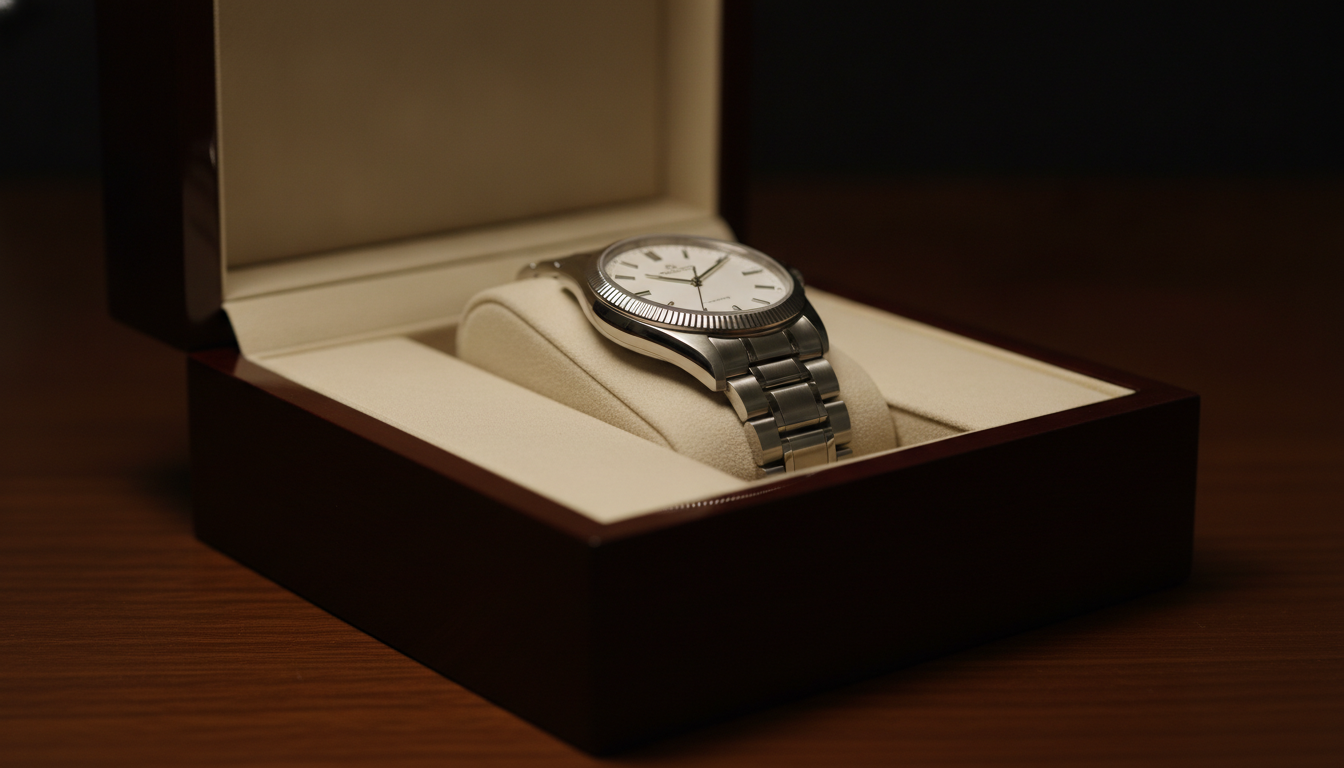
How the Concierge Process Adapts to a Gift Purchase
A standard luxury transaction, whether online or in a boutique, tends to assume the buyer and the wearer are the same person. The gift scenario breaks that assumption, and a good concierge workflow is built around the gap.
In our process, a gift conversation typically opens with a direct call or message to our contact line, which routes to a specialist rather than a call center. From there, the conversation is structured around three questions rather than a catalog: who is the recipient, what is the occasion, and what does the buyer already know. The point is not to gather perfect information; the point is to surface what the buyer does not yet know they know.
From that conversation, the buyer receives a short list rather than a long one. The instinct to offer a wide selection is tempting, but it usually pushes the decision back onto the buyer in a way that recreates the original problem. A short list, usually around three references, gives enough to compare without overwhelming. If the buyer is uncertain even at that point, the conversation extends rather than the list.
For most gift scenarios, sourcing through our "Available Upon Request" network is more useful than buying from in-stock inventory. The reason is structural: gift purchases reward the exact reference, not the fastest ship. Our Available Upon Request program sources through vetted partners with a 10% fully refundable deposit, and most requests are fulfilled within 24 to 72 business hours, with rare or highly sought-after models sometimes taking up to 14 days. The buyer reviews and approves the specific piece before the balance is collected, and if the right watch cannot be sourced within seven days, the deposit is returned in full.
That approval step is the one most worth paying attention to. It is the moment the buyer is actually presented with the watch, with full documentation, and given the chance to say no. For a gift, that step is the difference between a transaction and a decision.
Practical Considerations: Authenticity, Sourcing, and Presentation
A few details, handled well, separate a thoughtful gift from a merely expensive one.
Authenticity is non-negotiable. Phigora's gifting guide makes the point bluntly: provenance, paperwork, and an authenticity guarantee are the floor, not the ceiling, for any luxury watch purchase (Phigora). We share that view. Every timepiece we offer carries a 100% authenticity guarantee, is authenticated on arrival, undergoes a multi-point inspection, and is reverified before shipment (Authenticity FAQ). For a gift, that documentation does more than protect value; it gives the buyer a clean answer when the recipient later asks where it came from.
A "full set" is preferable, but not at any cost. Original box, papers, and warranty card add value and provide continuity, but they are not the soul of the watch. A vintage piece without a full set is still a genuine vintage piece if it has been authenticated and the seller is transparent. The buyer's task is to weigh the documentation premium against the desirability of the reference itself.
Warranty and brand coverage are worth clarifying. Most major maisons offer two to five years of coverage on new watches, with some extending longer (Phigora). For a gift, this means the recipient does not need to think about early servicing. For a pre-owned gift, the question becomes whether any remaining manufacturer warranty applies to the new owner. A specialist should be able to answer that for the specific reference.
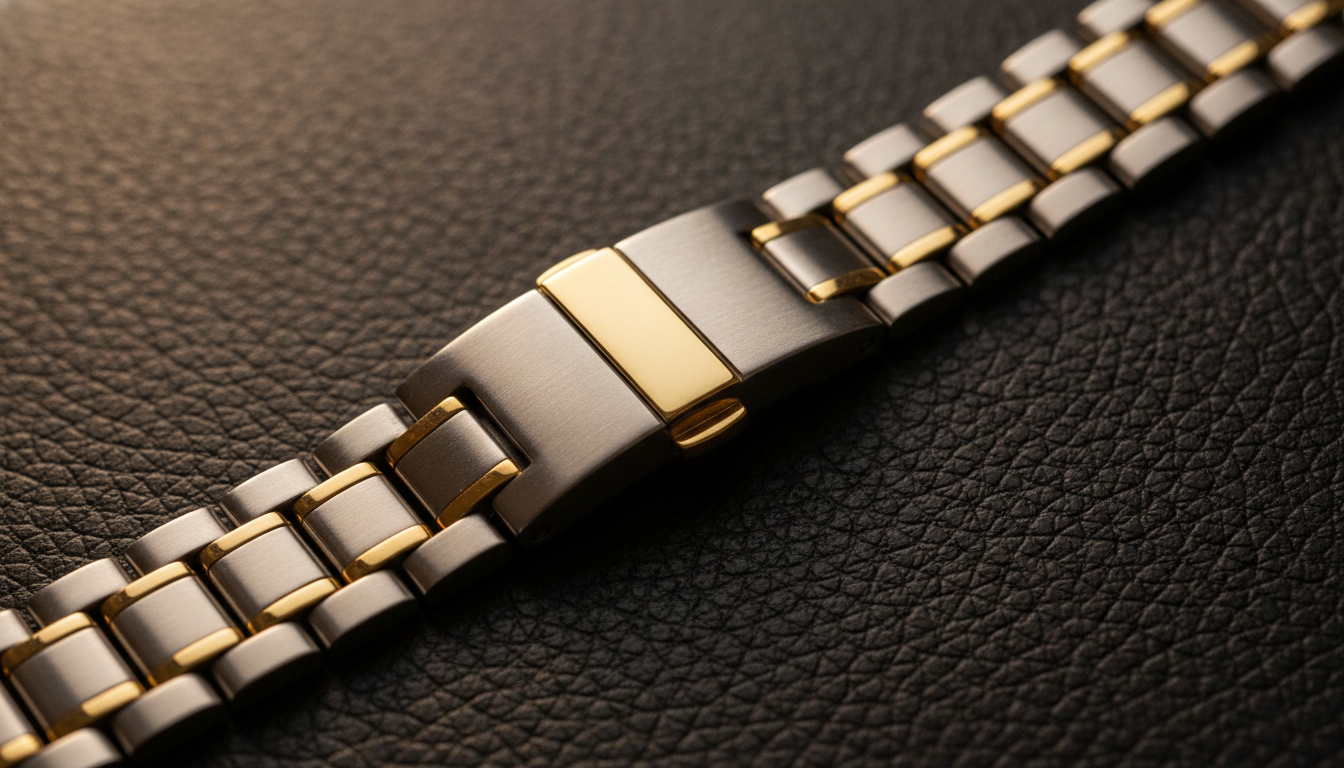
The metal, the bracelet, and the strap matter. These are the parts the recipient will live with daily. Rose gold reads warmer on the wrist; steel reads sportier; yellow gold reads more formal. A bracelet can usually be resized by a few links. A strap is easier still to swap, but only if a second strap is included in the gift. These small details are the ones that signal whether a watch was chosen or merely selected.
The Delivery: Insured, Discreet, and Ready
A luxury watch delivered carelessly is a luxury watch that has been mistreated, regardless of how it was purchased. The last stage of a gift transaction is not logistics. It is part of the gift.
Every shipment we send is fully insured, both domestically and internationally, with white-glove coordination of secure delivery (Watches Collection). For a gift, this matters for three reasons.
The first is timing. A birthday is not a window. It is a date. The buyer should be able to name the day and trust the watch will arrive, ready to present, with enough margin for the inevitable last-minute panic.
The second is discretion. A gift is often a surprise. The watch should not appear in packaging that telegraphs its contents to anyone other than the recipient, and the recipient should not need to be home at a specific hour to receive it.
The third is presentation. A watch box, a soft cloth, the warranty card, and a handwritten note from the buyer turn a delivery into an opening. None of this requires theatrics. It requires that the specialist treat the delivery as part of the gift rather than the tail end of a transaction.
When the Gift Becomes a Long-Term Relationship
A luxury watch given well tends to outlast the moment. The recipient wears it through the next decade, has it serviced, and at some point asks where it came from. That question is the one we hope to answer for years.
Our contact line remains available after delivery for any future questions, whether that is sizing adjustments, insurance documentation, service referrals, or, eventually, conversations about trade-ins or upgrades if the recipient chooses to pursue them. For buyers who are not watch collectors themselves, having a single point of contact across those moments is often the part of the process they value most: they do not need to become experts. They need someone who already understands the piece, the recipient, and the occasion that started it.
A luxury watch is not the only meaningful gift in the world. But for the occasions that call for one, the difference between a good gift and a great one is rarely the price. It is the fit, the reference, and the quiet, careful handling of every step in between.
To start a gift conversation directly, call or text (213) 444-0926 or browse the current watches collection to get a sense of the range.
