

How Authentication Standards Survive International Watch Shipping
The Stellaris Journal
An authentication certificate confirms that a watch was genuine at one moment, in one room, under one set of hands. The question is what happens between that moment and the moment the watch reaches your wrist across an international border, where it passes through customs warehouses, third-party sort facilities, and the hands of drivers who have never seen the piece before. The authentication standard survives that journey only when it is treated as a continuous custody discipline, not a one-time event. This article walks through how that standard is built, where it can quietly erode, and what to look for in a seller who takes both the inspection and the transit seriously.
What "authenticated" actually means in practice
Authentication, at a serious dealer, is rarely a single step. It is a sequence of checks performed on the piece itself: weight, finishing, dial alignment, lume behavior, serial structure, and movement details through the caseback. The cumulative effect of those checks is what allows the seller to issue a written guarantee and stand behind the watch.
A practical authentication layer adds two distinct checkpoints around a watch's life on a dealer's floor:
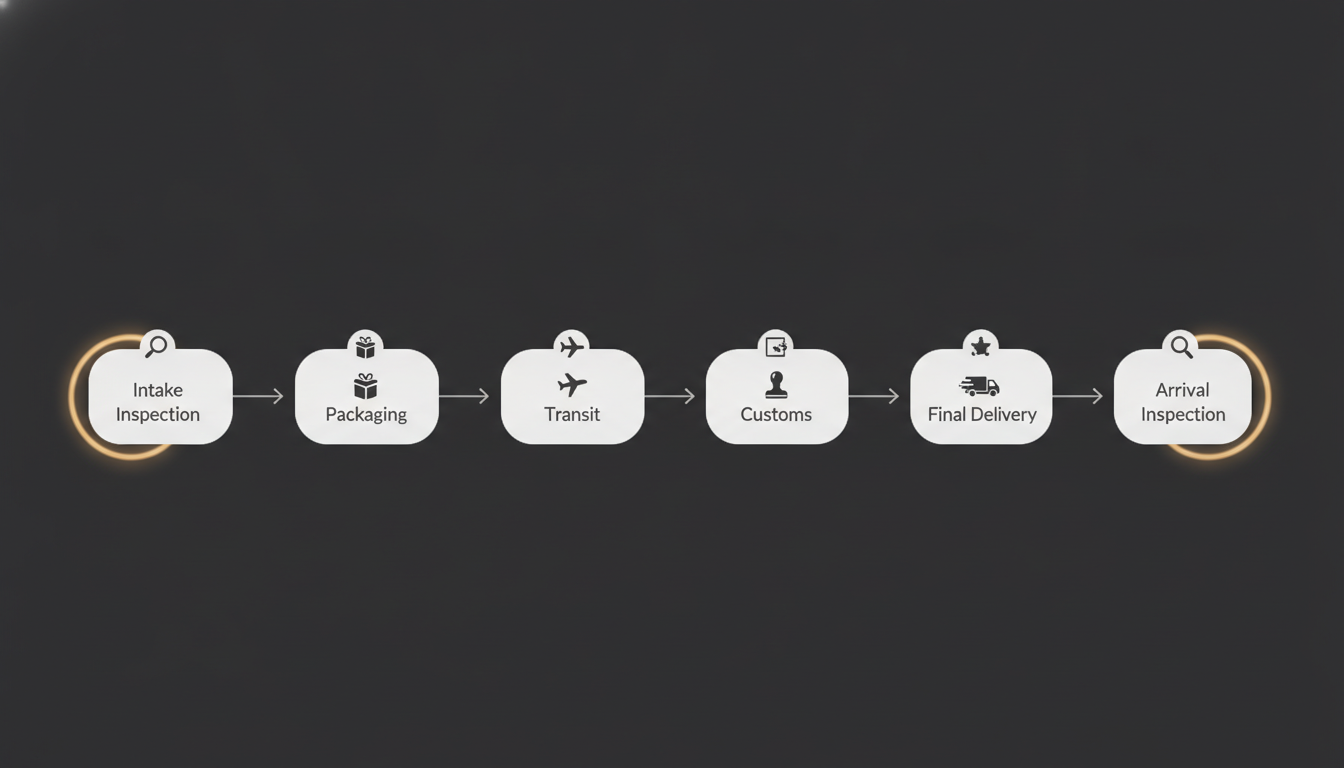
- At intake. Before the watch is ever listed, it goes through an initial inspection. Private trades and pre-owned acquisitions are examined so the dealer can confirm the piece matches what the previous owner represented. According to the FAQ at The Stellaris Collection, each piece is "authenticated on arrival" as part of its intake workflow.
- At shipment. Before the watch is handed to a courier, it is re-examined. The same FAQ notes that every piece "undergoes a multi-point inspection, and is reverified before shipment."
The two checkpoints are not redundant. They bracket every handover the watch will see on the dealer's side of the journey and form a record that the watch entered the chain in a verifiable condition and left it in the same condition.
A single inspection only certifies a moment. A two-inspection workflow certifies a window of custody. That distinction matters more once the watch leaves the building.
The new risk surface: where international transit adds exposure
A watch that has just been re-verified faces a different set of risks the moment it leaves the dealer's hands. None of these risks invalidate the prior authentication. They simply test whether the chain connecting the dealer's inspection to the buyer's wrist is intact.
Customs handling and inspection
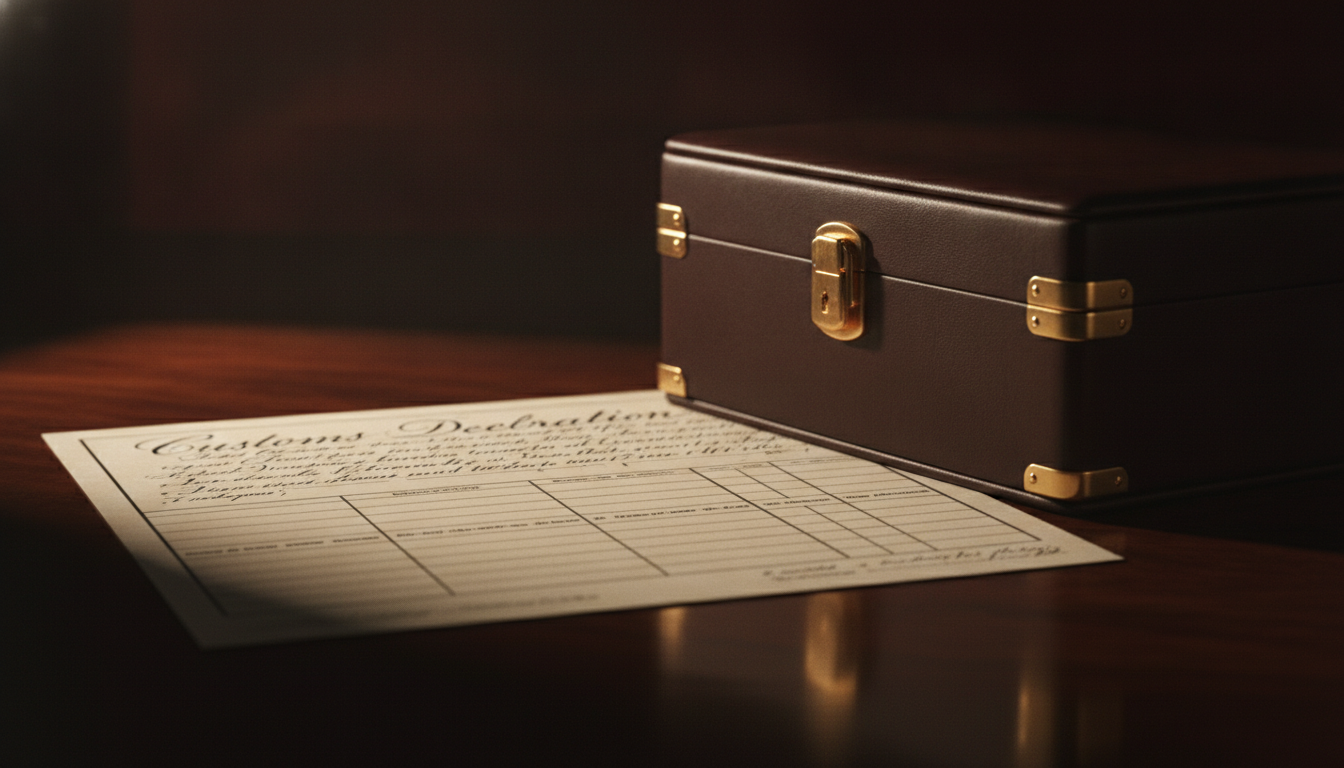
Customs procedures vary sharply by jurisdiction, and a watch crossing a border may be set aside for additional documentation review, especially when the declared value is high. According to the U.S. International Trade Administration, temporary imports and cross-border movements of high-value goods typically require formal documentation such as a commercial invoice or, for goods being moved temporarily across borders, an ATA Carnet issued through an authorized guaranteeing association. Trade.gov also notes that "ATA Carnet DOES NOT exempt the holders from obtaining necessary export licenses or permits," which is a reminder that documentation completeness is the buyer's and seller's joint responsibility, not the carrier's.
For a permanent sale, what matters most is the commercial invoice: an accurate description of the item, its value, its country of origin, and the harmonized tariff classification. Undervaluing a watch on a customs form is treated as customs fraud in many jurisdictions, and, separately, it limits what an insurer will pay out if the package is lost. As Shippo (2026) notes, "undervaluing to reduce import duties is customs fraud; it also means a lower payout if the package is lost."
Third-party courier handovers
A watch sent internationally will pass through more physical hands than most buyers realize. A typical high-value shipment moves from the seller to a drop-off point, into a sort facility, onto an aircraft or vehicle, into a destination sort facility, onto a local delivery vehicle, and finally to a courier for last-mile delivery. At each transfer, the package may be inspected for damage, scanned for routing, and re-stacked.
For luxury watch shipments specifically, Chrono24 notes that many carriers require the seller to drop off high-value packages at a staffed location rather than scheduling a pickup, and that not every service point is set up to handle them. This is the dealer's problem to solve before the package moves.
The declared-value paradox
Standard parcel carriers cap their liability at relatively modest values for jewelry shipments, regardless of the value being shipped. Courier Authority summarizes the constraint plainly: "Standard parcel carriers (UPS, FedEx) cap declared value liability at $50,000 for jewelry under their standard tariffs, with specific exclusions for unset stones; shipments above those thresholds require a specialty carrier or a separately arranged inland marine policy covering the gap." For a six-figure timepiece, default declared-value coverage is simply not enough, which is why serious dealers arrange a separate transit policy that matches the watch's actual value.
The risk surface introduced by international shipment is not a question of authenticity being false. It is a question of the chain between an authenticated object and a delivered object being documented, declared, and insured in a way that survives any of those individual transfer points failing.
How authentication is preserved in transit
If authentication is to mean anything after the watch leaves the dealer, three things have to happen. The watch has to be documented correctly. It has to be physically protected in a way that resists tampering. And it has to be re-examined at the boundary moments of its journey.
Documentation: invoices, declarations, and provenance papers
The minimum documentation set for an international watch shipment is:
- A commercial invoice with the item's description, value, country of origin, and HS code for watches.
- An accurate declared value that matches what is recorded on the insurance certificate.
- Any provenance papers the piece carries, kept inside the shipment but separated from the watch itself.
- For shipments involving exotic leather straps, the relevant convention paperwork. As Fratello's shipping guide notes, some countries strictly regulate exotic animal skins, and straps have been confiscated or destroyed in customs, so dealers and buyers sometimes ship the strap separately.
Documentation is not just paperwork. It is the part of the authentication standard that customs officers and insurance adjusters rely on when something goes wrong. If the paperwork is inaccurate or out of sync with the actual package, the buyer's recourse under either customs law or transit insurance is materially weaker.
Tamper-evident packaging and chain of custody
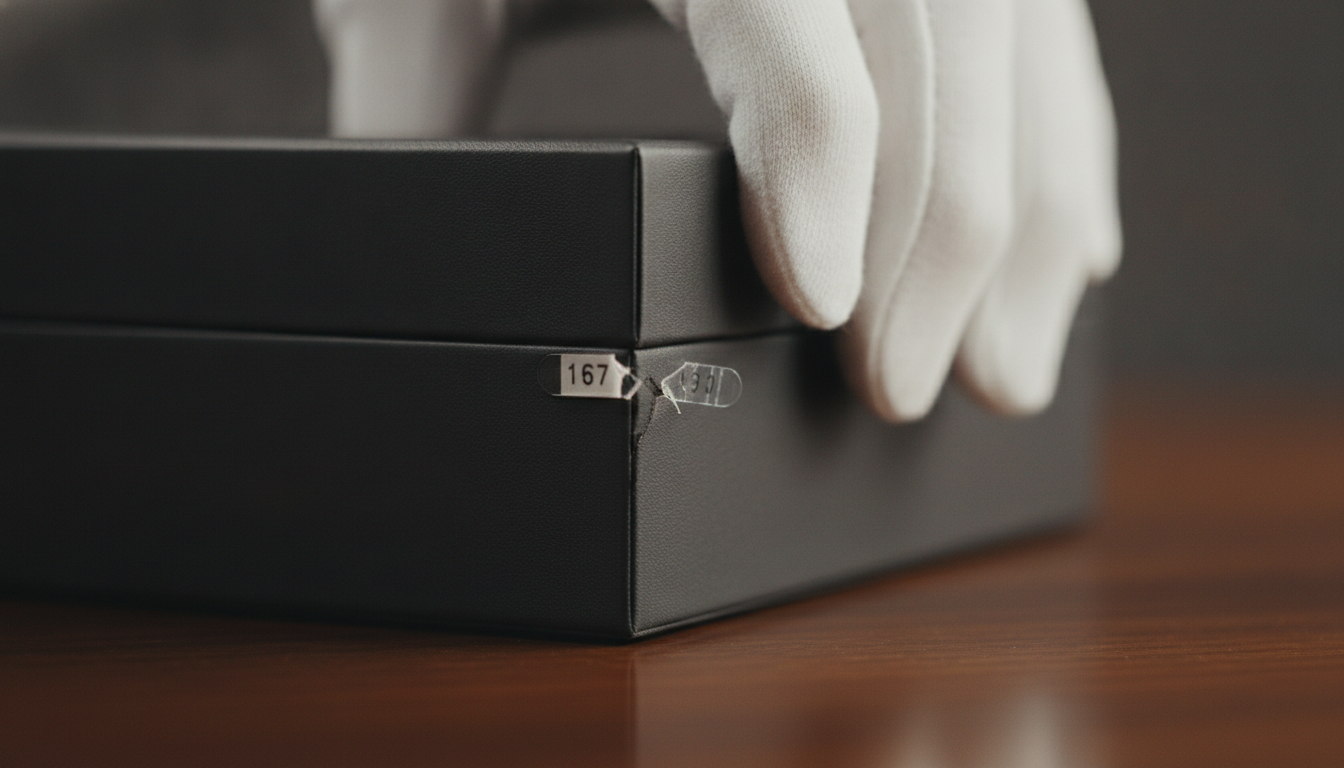
Tamper-evident packaging is the part of the system that protects the documentation as much as the watch. Sealed inner boxes, numbered security seals, and serial-matched label tags all serve the same purpose: an unbroken chain of custody that can be confirmed or rejected at the moment of delivery. Per Shosky, the use of serialized authentication labels and tamper-evident seals is now standard practice for high-end watches, handbags, and perfumes moving through the supply chain.
For the buyer, what matters is that the packaging carries visible evidence of a sealed handover. If the tamper-evident seal is compromised at delivery, the buyer has the standing to refuse the package or to document the issue with the courier on the spot, before signing.
Re-verification at shipment
The internal check at shipment is the moment where the chain that began at intake reaches the door. The watch is examined one more time, often with a record of the condition created at that point, so that the dealer can attest to the watch's state as it leaves custody. The Stellaris Collection's published authenticity policy names this as the final step in its two-checkpoint workflow: each piece "is reverified before shipment."
The buyer's side of the chain
Authentication continuity is two-sided. The dealer has a duty to preserve the standard through the handovers on its side. The buyer has a duty at the point of receipt.
Inspection on arrival
The right move on receiving an international watch shipment is to inspect the outer packaging first, before signing anything. Per Luxury Time's security guide, "a rigorous inspection protocol is required. Instruct the recipient to examine the outer box for any signs of tampering or structural damage before signing the delivery receipt. If the tamper-evident tape appears compromised, the delivery should be documented immediately with the courier."
After the packaging has cleared, the watch itself should be examined against the documentation: serial numbers, reference numbers, and any case-specific features described on the commercial invoice or certificate. This is not the place to perform a deep authentication. It is the place to confirm that what was sealed in the package matches what was promised in the paperwork.
Discrepancies and what to do
If a watch arrives in a damaged package, with a broken seal, or showing any feature that does not match the seller's description, the correct response is to refuse delivery or to document the issue at the door with the courier. The signed delivery receipt is, in most transit insurance terms, the moment when the carrier's liability substantially ends. Documentation at the point of receipt is what makes a subsequent claim possible.
Where the standard can quietly degrade
There is honest value in naming the points at which an authentication standard is most likely to fail, especially because the failures are usually silent.
Grey-market handovers
When a watch changes hands multiple times before being offered to a buyer, each additional handover is a place where authentication documentation can be lost, altered, or replaced. Pieces moving through several intermediaries are harder to source-trace to the original documentation. This is part of the reason curators of high-end inventory lean toward direct sourcing from owners, brands, or known specialists rather than multi-step trades.
Country-specific complications
Different countries apply different rules to watches and their components. Exotic leather straps fall under the Convention on International Trade in Endangered Species (CITES) in many jurisdictions, and a strap that is legal at origin can be confiscated at destination, as Fratello documents. Watches with materials subject to import restrictions may also face additional duties or paperwork.
Documentation mismatches
The most common failure mode is not a fake watch. It is paperwork that does not match the package. Declared values that do not reflect the insurance certificate. Provenance papers describing a different reference. Commercial invoices with the wrong HS code. Each of these creates a small, addressable risk that compounds across the chain.
What the publishable standard looks like
A seller that takes the international shipment seriously should be able to answer each of the following without hesitation:
- The watch is inspected again before it leaves the dealer's custody, with that re-inspection recorded in writing.
- A commercial invoice and accurate customs declaration are prepared for every international shipment, matching the insurance value.
- The shipment is insured for its full appraised value, under a policy that is independent of the carrier's default coverage.
- The package uses tamper-evident sealing and serial-matched packaging where appropriate, so a breach at delivery is detectable.
- The buyer is told what to inspect on arrival and what to do if the seal is compromised.
- Concierge-level contact is available throughout the transaction, including after delivery, in case of any documentation or condition question.
This is consistent with how The Stellaris Collection describes its own international shipping posture: shipments are insured, the concierge team is reachable from inquiry through delivery, and pieces are re-verified before they leave the dealer's custody.
The point worth keeping
A watch's authenticity is not established by the word "authenticated" on a listing page. It is established by the discipline applied at each boundary moment in the watch's journey, from intake to door. The international shipment is the largest set of those boundary moments, and it is the most common place for a buyer's trust to drift.
The standard survives the trip when the dealer's documentation matches what is in the package, the insurance matches what is on the invoice, and the packaging matches what was sealed at the time of re-verification. Anything less is a quiet downgrade that the buyer will usually only discover when something goes wrong.
Frequently asked questions
Does a written authentication certificate still apply after international shipping?
Yes, but only if the documentation is consistent with the package and the insurance certificate. A certificate alone does not protect a buyer from customs treatment, in-transit damage, or a seal that has been opened.
What is the single most important document to inspect on arrival?
The commercial invoice. It is the document that links the seller, the carrier, the customs declaration, and the insurance certificate. If the invoice does not match the watch in the package, nothing else in the chain holds up cleanly.
How much declared value is appropriate on the customs form?
The actual value of the piece. Undervaluing to reduce duty is treated as customs fraud in many jurisdictions and also reduces any insurance payout in a loss scenario.
What is the right response if the package seal looks broken on arrival?
Document the issue with the courier before signing the delivery receipt. If the seal is visibly compromised, the buyer has the standing to refuse the package, which is what makes any subsequent claim possible.
Can I have the watch authenticated independently after it arrives?
Yes. Independent authentication services are widely available, and post-arrival verification is a reasonable step for any purchase above a certain value. The Stellaris Collection publishes a separate guide on the methodologies involved.
