

How To Authenticate A Rolex: A Practical Guide
The Stellaris Journal
Billions. That’s what the global counterfeit watch market pockets every year. And if you think only fools get caught, you haven’t seen the "superclones" lately. These aren't the flea-market specials your grandpa spotted. They’re good. Damn good.
So, you’re eyeing a Rolex. A lot of cash. Your cash. This isn't just about buying a pretty watch; it's about protecting a significant chunk of change.
This guide cuts through the noise. No fluff here. We’ll show you how to actually tell a real Rolex from a very convincing fake. It’s a multi-layered approach. From vetting the seller (critical, folks) to inspecting the damn movement, we cover it. Don't get played. Get smart. Understanding how to spot a "superclone" is essential to protect your significant investment.
The First Line of Defense: Vetting the Seller and Documentation
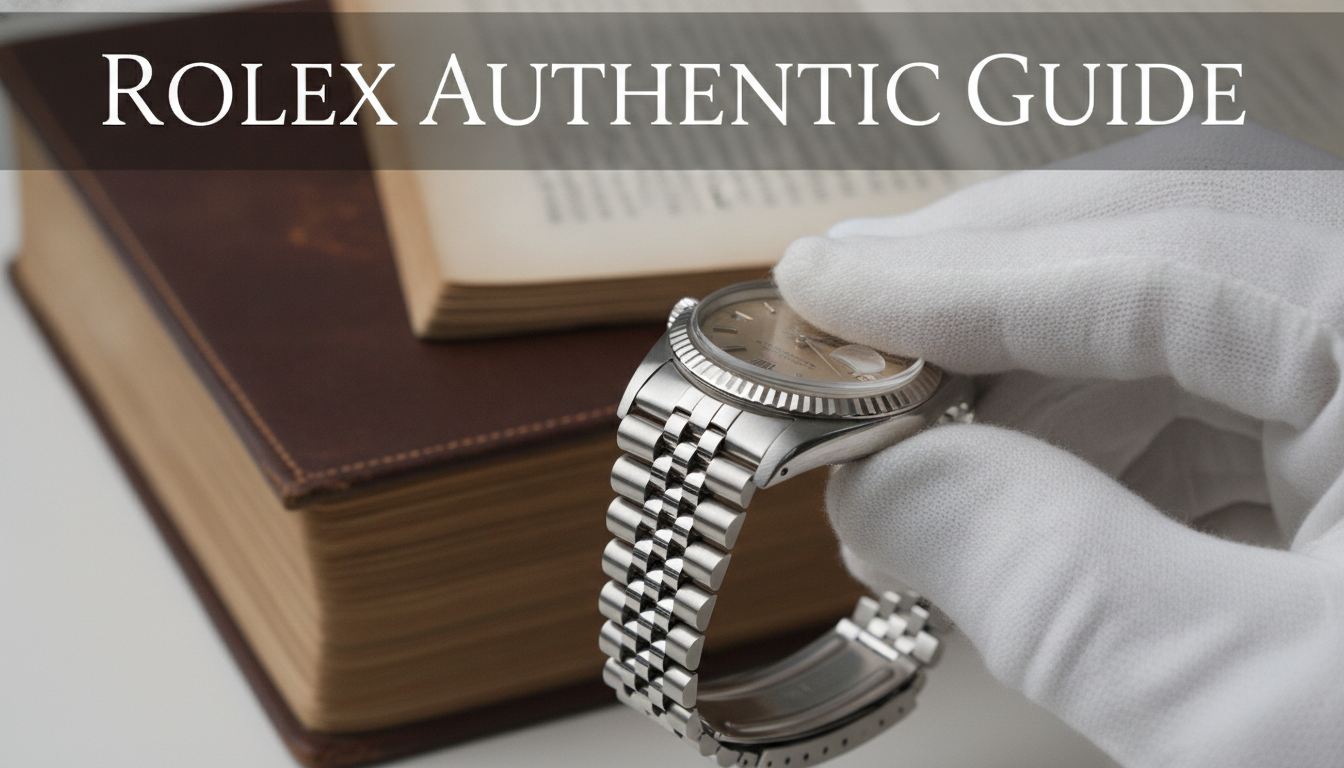
Forget staring at the watch. Seriously. That's for later. Most of the time, the battle is won—or lost—before you even touch the damn thing. Before it ever gets to your hands. Because you need to trust the source. Or you're already screwed. The integrity of the source is your first and most critical defense against counterfeits.
The oldest rule in this crazy mess, the one us old timers swear by? Buy the seller, not the watch, and always prioritize seller vetting. And yeah, it’s true. It’s the only rule that matters. Look, a good dealer, someone who’s been around the block (and hasn’t gone to jail yet), they’re your best bet. They’ve got a reputation. They've got years. A real history. But some random dude on the internet? A ghost? That's just asking for trouble. Your first and only real shield is the person selling it.
So, about the Rolex papers. Rolex has changed its game, and you gotta keep up. Because fakers, they try. They always try. Back in the old days, vintage stuff, just paper booklets. Easy to forge. But then 2006 hit. Plastic cards, like your credit card, came in. A bit tougher. And now, since 2020, they're these green plastic things with NFC chips. Advanced stuff. These cards are important. They're like a birth certificate. But a fake birth certificate? That happens. Know what to look for based on the watch's age.
And a "full set"? Everyone talks about it. A full set means the original box, that warranty card (the right kind for the era, remember?), all the instruction booklets, and even the hang tags. Little things. But they matter. The big one, though? The serial number on that card. It has to perfectly, exactly, match the one on the watch. No wiggle room. Not a single digit off. Or it's a hard stop. Because if it doesn't match? Someone's selling you a fantasy. Always, always, check the serials.
But sellers. Oh, the sellers. They'll try to rush you. "Hot deal, must act now!" Red flag number one. And the pricing? If it's way, way below what everyone else is asking (even Similarweb (2024) shows the market's pretty tight on these things), something's wrong. You know it. I know it. Nobody gives away a Rolex for charity. Then there are the listings. Grainy photos. Vague descriptions. Like they're hiding something. They usually are. So, don’t fall for the cheap thrill. Bad photos and cheap prices? Huge warnings.
And here's the kicker. The really nasty one. Even if you get a full set, everything looks right, sometimes the warranty card's date doesn't match what Rolex has in their system. A user on Rolex forums had a GMT, all the papers, but the Rolex Service Center (RSC) flagged the date. Only RSC can tell you that. It’s like a secret handshake. It means someone's been messing around. Or the watch was stolen. Dangerous. Never assume a complete set means complete safety.
This whole thing, it’s not a treasure hunt. It’s risk management. You're trying to dodge landmines. And the biggest landmine? A sketchy seller. So do your homework. Look hard at the person, the paperwork. Before you even think about the watch itself. Because the minute you cut corners here? You’ve already lost. And ninety percent of your battle? It's done before you see the metal.
The Physical Inspection: A Checklist for Key External Indicators
Alright, so the seller checked out. Papers look clean. Good. Now, the real fun starts. Or the real heartbreak. Because even the best-looking fakes (they call ‘em superclones these days, for chrissakes) fall apart under scrutiny. They might look perfect from across a crowded room. But pull out a loupe. Get close. And that's where the magic, or the horror, happens. The tiny details, they're the killers.

The Heft and Feel
First thing. Pick it up. Hold it. A real Rolex? It’s got weight. It feels solid. Because it’s made of 904L steel (Oystersteel, they call it) or proper precious metal. Not some flimsy crap. You feel it in your hand. Like a brick of precision. A genuine Oystersteel Submariner? We're talking 150-200 grams, easy. But a fake? Often light. Sometimes a bit off. Like holding a toy. Your gut will tell you. Trust your hands. Never buy a Rolex that feels like a cheap knockoff.
The Cyclops Magnification
Next, the date window. See that bubble over it? That's the Cyclops. And it's critical. Because a real one, it magnifies the date by exactly 2.5x. Crisp. Clear. No distortion at the edges. Not blurry. But fakes? They usually screw this up. It’s often weaker, maybe 1.5x magnification. Or it’s hazy. Distorted. This is a dead giveaway. And a simple 10x jeweler's loupe? Cheap. Essential. You need one. Because it makes this stuff pop. Your Cyclops must be a perfect 2.5x magnifier. Period.
The Dial Text Precision
Then, the dial text. All that tiny writing on the watch face. Rolex, Oyster Perpetual, Submariner, whatever. Look close. Very, very close. Because it needs to be perfect. Every letter. Every number. Sharp edges. No smudges. No bleeding. Nothing uneven. Not even a tiny bit. They engrave these things with lasers, for god's sake. They’re precise. But fakes? The printing is often sloppy. Thick. Or it looks like it was painted on with a shaky hand. Or the spacing is off. It's a huge tell. Even Similarweb (2024) shows folks constantly looking for images of perfect Rolex dials, because it’s such a consistent differentiator. Any imperfect text on the dial means it's a fake.
The Second Hand's Sweep
Now, watch the second hand. This is a big one. On a genuine Rolex, it doesn't tick like a cheap quartz watch. It sweeps. Smoothly. Almost like liquid. They’ve got these high-beat movements, typically 8 ticks per second. So it just glides. But fakes? Most of them? They stutter. You can see the individual ticks, sometimes 6 per second, sometimes less. It’s jerky. It’s not smooth. You don’t even need a loupe for this one. Your eyes will catch it. Just look at it. A genuine Rolex second hand glides, it doesn't stutter.
The Laser-Etched Coronet
Okay, deep breath. Grab that loupe again. This is the ultimate hidden test. Look at the sapphire crystal. Right at the 6 o'clock position. There’s a tiny, tiny laser-etched coronet. The Rolex crown logo. It’s almost impossible to see with the naked eye. Seriously. You have to tilt the watch just right. Get the light hitting it perfectly. And it's there. A series of tiny dots forming that crown. Fakers? They can’t get this right. Or they miss it entirely. Or it's too obvious. Too big. This is a hell of a hard detail to replicate. So if you see it, and it looks right, you’re on the right track. The invisible crown at 6 o'clock is a major win for authenticity.
The Material Quality
Finally, materials. We already talked about the weight, but it's more than that. Rolex uses 904L stainless steel (Oystersteel). Why? Superior corrosion resistance. Better sheen. You can feel the quality. The finish. It’s not just a fancy name. This steel, it feels different. It holds a polish differently. It's tough. So when you’re doing your physical check, think about the overall material quality. Does it feel premium? Does it look like it will last a hundred years? Because it should. Rolex materials are top-shelf, and anything less means it’s bogus.
The Ultimate Verification: Movement Inspection and Professional Services
Look, you can squint at the dial all day. You can count cyclops magnification, try to read the tiny etchings. But that's just window dressing. The real tell? It's inside. Always. That movement. That's the guts of it, the actual heart. And a proper movement inspection is the hardest damn thing for those fakers to nail. They try. Oh, they try. But a genuine Rolex movement? It's like comparing a finely tuned racing engine to a cheap, knock-off motor. One is precision, finished to absurd standards. The other just... spins, usually not even for long. You want absolute, undeniable proof? Proof that means everything? True authenticity is revealed only by inspecting the watch's internal movement.
So, what are we even looking for? A real Calibre 3235, for instance. It's not just a random collection of gears. No. It’s got specific finishing, intricate Geneva stripes. Branded engravings. You’ll see that iconic blue Parachrom hairspring (it’s blue for a reason, you know). And it’ll be humming, usually at a consistent 28,800 vibrations per hour (vph), smooth as silk. Not just any blue hairspring, mind you. This particular blue, this specific finish. These are microscopic details. But the difference, it’s night and day to someone who actually knows what they’re seeing. Because fakes are getting incredibly good, you hear that? They are. And spotting those tiny, tiny differences, that’s the whole damn game. Fakers just can't get that specific touch perfectly right.
But here’s the thing. Don’t you dare try to open that caseback yourself. Seriously. Don’t. You'll scratch it, easy. You'll damage something delicate inside. Or you'll void any warranty it might still have. This isn’t a screw-top jar, pal. It needs specific tools. Proper ones. And a steady hand. So, this critical step? It absolutely, unequivocally, must be left to a professional. No shortcuts. None. Because a $150 verification fee? For an asset worth thousands? That’s not even a question. It’s a negligible insurance policy against a total loss. You want certainty? You gotta pay for expertise.
Okay, so who’s the pro? Your best bet, the official route, is a Rolex Service Center (RSC). They’ll give you the most authoritative answer. But be ready. It’s not a quick thing. They can take weeks sometimes, just to get a definitive answer (think 7-10 days for papers, if you’re lucky). And it’ll run you about $150. Many Authorized Dealers (ADs) won't even touch it on the spot. They just won't. But for speed? You might want to think local. A trusted, certified independent watchmaker. They’re usually faster. Much faster. And often just as good, if you know the right guy. Because some of these top-tier fakes, man, they’ve got cloned movements that even fool some people. It takes a real eye to spot the truly subtle tells. That expertise. Either way, someone else’s hands need to be inside that watch.
Frequently Asked Questions
So, no box or papers? Is it still a real Rolex?
Absolutely. A lot of old watches, you know, vintage pieces? Papers get lost. Or thrown out. Happens all the time. But yeah, the absence of those papers, it usually drops the market value. Not always a huge hit, but a hit. And it means you absolutely, unequivocally, need that extra verification. It's non-negotiable without 'em. Even without papers, a Rolex can be authentic, but professional verification becomes essential.
How much is this professional authentication going to set me back?
You're looking at maybe $100 to $200. Give or take. Independent watchmaker? Often on the lower side. Faster turnaround too. An official Rolex Service Center (RSC)? Yeah, usually closer to that $150 mark. They're pretty consistent, those guys. Expect to pay $100-$200 for professional authentication, a small price for peace of mind.
What happens if my watch has some aftermarket parts? Like a custom bezel?
Not fully authentic. No. Period. They're franken-watches. And here’s the kicker: an RSC? They won't service that thing. Not until you pay up to install genuine Rolex parts. All at your expense, by the way. Had a guy once, aftermarket crystal. Rolex made him shell out an extra $160 for a real one during his $800 service. So yeah. It gets expensive. Quick. Aftermarket parts disqualify a Rolex as fully authentic and may prevent official servicing.
Is the weight of the watch actually a reliable indicator?
Oh, definitely. Massively. A real Rolex? It’s heavy. Substantial. You pick it up, you feel the quality. It's solid steel or gold, man. A fake? Often feels light. Flimsy. Like a cheap toy. It's one of the most immediate signs, honestly. First thing I check. A super light watch? Instant red flag. A substantial weight is a significant and immediate indicator of a genuine Rolex.
Can I just take my watch to an Authorized Dealer (AD) to get it authenticated?
Nah. Not usually. Most of them? They’re focused on selling new watches. That's their gig. They're not really set up for third-party authentication on the spot. You want the truth? You want no doubts? Go to an RSC. Or, even better, find yourself a trusted, certified independent watchmaker. Someone who lives and breathes this stuff. That’s the only way to play this game.
Alright. You've slogged through the details. Good. This isn't some academic exercise (unless you enjoy losing money). It’s about protecting your cash in a market absolutely crawling with excellent fakes. Don't just skim it. Understand it. Understanding these details is crucial to protect your investment from rampant counterfeits.
Here’s the gut check, because nobody hands you a genuine Rolex on a silver platter:
- Seller first, always. And their paperwork. Who are you actually buying from? What’s their track record? The documentation (serial numbers, original sales receipt, warranty card)? If the provenance isn't ironclad, walk. Seriously. No watch is worth the headache of a maybe-fake (and trust me, they’re getting harder to spot).
- The movement is the ultimate truth. You can stare at the outside all day long. But a skilled faker can nail the externals now. The inside? That’s where their budget usually runs out. So, get a qualified, independent set of eyes on the guts. This step isn't optional; it’s fundamental. Skip it, and you're gambling.
Touch it. See it. Really. Get it in your hands. Every single detail matters. The weight, the finish on the rehaut, the crispness of the dial printing. The cyclops magnification. Even the date change — does it snap crisply at midnight, or does it drag like a tired old dog? Those little tells? They separate the real deal from a very expensive paperweight. Fakes rarely get everything* right.
Look, you're not just buying a watch. You're acquiring a tiny piece of precision engineering, decades of heritage, often an appreciating asset. Treat it like the investment it is, not a lottery ticket.
And what now? Don't be a hero. You're not going to become a master authenticator overnight. Find someone trustworthy. A legitimate outfit that lives authentication, that builds its reputation on zero-tolerance for fakes. Pay for that peace of mind. Or prepare to learn a very expensive lesson yourself. Your call. For true peace of mind, invest in professional authentication services from experts like The Stellaris Collection.
