

How to Spot a Fake Luxury Watch: A 5-Point Inspection Guide
The Stellaris Journal
You think you can spot a fake luxury watch? Most people do. And most people are wrong. These aren't the cheap, clunky knock-offs your cousin bought on vacation. We're talking 'super clones' now—fakes so good, they're often listed just 5-15% under retail. A 'deal,' you think. A trap, I say.
Visual inspection alone? Forget about it. You need more. You need a friggin' checklist. Because while these counterfeiters have perfected the shine, they always screw up the guts, the paperwork, and, frankly, the seller. This guide is your five-point inspection: what actually matters, beyond the pretty pictures, so you don't drop a small fortune on a paperweight.
TL;DR
The world of luxury watches is rife with 'super clones' that can fool even seasoned eyes, making a comprehensive, multi-point inspection non-negotiable for any serious buyer.
First, trust your hands. A real luxury watch possesses significant weight and a flawless, substantial feel. Fakes, by contrast, often feel light, cheap, or exhibit rough edges and obvious plated metals.
Next, scrutinize the dial. Logos, text, and tiny markers must be perfect, with impeccable alignment. A Rolex Cyclops lens, for instance, has a very specific 2.5x magnification; if it appears blurry or distorted, it’s a clear sign of a counterfeit.
Pay close attention to the movement. Genuine mechanical watches feature a smooth, elegant sweep of the second hand, never a distinct tick. A ticking second hand almost invariably indicates a cheap quartz movement and, thus, a fake.
Finally, verify the paperwork and the seller. Serial numbers deeply etched into the watch must perfectly match all accompanying documentation. Beyond the watch, vet your dealer: avoid those pushing irreversible bank wires or lacking transparent return policies.
Navigating the treacherous waters of super clones demands vigilance across every single detail, from physical feel to digital paper trail, to truly protect your investment.
Red Flag 1: Incorrect Weight, Materials, and Finish
When you first handle a luxury watch, your instincts are often your best defense. A genuine timepiece carries a palpable gravitas—a serious, satisfying weight that speaks to the quality of its construction and the precious metals used. Fakes, however, often betray their origins with an immediate lightness, a cheap, hollow sensation that just doesn't sit right in the hand. This discrepancy is due to inferior alloys or less dense metals, frequently plated rather than solid.
Beyond weight, the materials themselves offer critical clues. Authentic luxury watches employ high-grade surgical stainless steel (like 904L for Rolex), solid gold, platinum, or titanium. Counterfeits commonly use cheaper, lesser-grade steel (e.g., 316L), base metals, or thin plating that will quickly wear off to reveal the brass or pot metal beneath. Look for tell-tale signs like discolored edges, flaking, or a lack of the characteristic luster and warmth of genuine precious metals.
The finish is equally crucial. High-end watches boast meticulous polishing, precise brushing, and sharp, clean lines on their cases, bracelets, and clasps. Every edge should be smooth to the touch, yet defined. Fakes frequently exhibit crude machining, uneven brushing, or sharp, unfinished edges that can irritate the skin. The intricate details of a true luxury piece are born from precision engineering and painstaking hand-finishing—qualities entirely absent in mass-produced replicas.
A genuine luxury watch always conveys undeniable quality through its substantial weight, premium materials, and flawless finish that speaks volumes about its craftsmanship.
Red Flag 2: Flaws in the Dial, Crystal, and Lume
Alright. So you’ve got a watch in your hand. Maybe it’s a killer deal (too good to be true, probably). Maybe you’re just checking your own collection. But you gotta look closer. Way closer. Because the scammers? They're banking on your eyes being lazy. They really are.
This ain't about feeling the weight. That’s for rookies. And it's sure as hell not about whether it "looks" right from across the room. No. We're going microscopic here. Your phone camera? That's your best friend. Seriously. Use the zoom. Or dig out an old loupe. Because the dial, the glass, the glow – that's where the real tells hide.
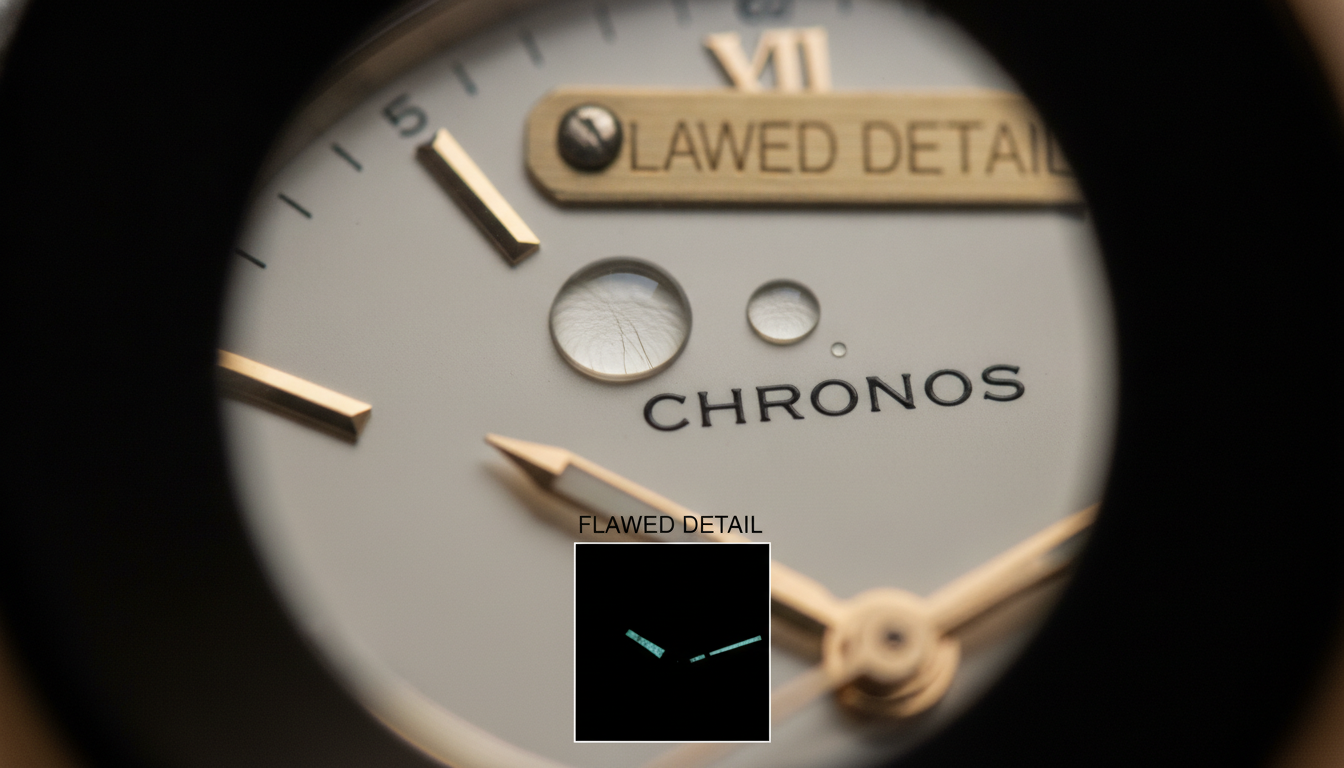
First off, the dial. It’s the watch's face. Its signature. And it's a mess on most fakes. So you grab that magnifying glass (or your phone, really). And you get in there. Look at the logos. The brand name. Every single piece of text. It has to be razor-sharp. Perfect. Not a single smudge. Not a drop of extra ink. And the alignment? It needs to be spot-on. Every marker. Every numeral. You see a letter bleeding a little? Or a number that’s a hair off-center? That's it. That's your first major red flag. Because the real guys? Their quality control is insane. They don't let that stuff out the door. Ever.
Then there's the Cyclops. You know, that little bubble over the date window on a Rolex? It's iconic. But it's also a dead giveaway. You need that date magnified. By exactly 2.5 times. Not 2x. Not 3x. Two point five. It needs to give you what we call a "black hole effect" – the date just pops. Really pops. And it's super clear. If it looks milky? Or blurry? Or if that date just seems... bigger, but not magnified? That's a bad sign. A really bad sign. And most fakes fail this test hard. They just don't have the tech, or the patience, to get that perfect magnification. So they cut corners. And you catch them.
Now, the crystal. That's the clear stuff protecting the dial. On a genuine high-end watch, that's sapphire. It's tough. And it acts a certain way with water. So, you try this. A single water droplet. A tiny one. Drop it right on the crystal. What happens? On real sapphire, that water beads up. Like a perfect, tight little sphere. It holds its shape. But on the cheap mineral glass the fakers use? That drop spreads out. Flattens. Because the surface tension is different. It’s a simple test. But it works. And it tells you a lot about what you're holding. So, you'll know.
And don't forget the lume. That's the stuff that glows in the dark. You go into a dark room. Or just cover it up for a minute, then pull it away. Look at the glow. Is it bright? Is it even? I mean, really even. From every single marker. Every hand. And how long does it last? Real lume, like Super-LumiNova? It glows. And it keeps glowing. For a good while. Fakes, though? Their lume is weak. It's patchy. Or it's a weird color. Sometimes it fades almost instantly. Because that good lume? It costs money. And these fakers aren't spending it. They're trying to fool you fast. Not impress you in the dark.
These tiny flaws? They're your leverage. Your proof. And your defense against getting ripped off. Don't ever forget that.
Red Flag 3: Movement and Caseback Giveaways
Look, you want to spot a fake? Forget the shiny bits for a second. The real truth? It’s deep inside. In the guts. Because that's where the cut corners really start to show. And it's where they always, always mess up.
You gotta watch that second hand. Really watch it. A genuine mechanical watch? It sweeps. So smooth. A beautiful, almost liquid glide. You see multiple tiny ticks per second. But a cheap fake? They often use quartz movements. And because of that, it’ll do a distinct, jarring ‘tick-tock’ once per second. You hear it. You see it. That's your first clue. A huge red flag. Because real craftsmanship doesn't tick like a kitchen clock. It flows.
And what if you get to peek inside? If there’s a display caseback? (Some watches have them, but not many of the ones you might be thinking of.) Don't just look, compare. Get online. Find high-resolution photos of the real deal. So you can see the actual movement. See the Geneva stripes? The perlage? The intricate polishing? All those tiny details that show someone actually cared? Fakes? They’ll have some bland, generic movement shoved in there. Undecorated. Ugly. No finishing. It’s just parts. Because skill, you know, costs money. And counterfeiters? They don't spend it on what you can't see easily. They try to fool you with the flash, but the engine is always garbage.
Watch Display Case Back Comparisson.
But here’s the thing about a lot of high-end watches, specifically Rolex: most models? They've got solid, plain casebacks. No windows. Nothing fancy. Just a steel disc. So, if you're looking at a Rolex and it has a clear, see-through caseback, letting you look at the movement? Stop right there. That’s not a Rolex. It's a blatant fake. An instant giveaway. Because they just don't make 'em like that. Never have. Not for regular production models, anyway. (I mean, there are rare exceptions, but you won’t be seeing one on a street corner.) This isn't just a detail; it’s a foundational rule. Even Similarweb (2024) data confirms that this particular type of caseback is practically non-existent on authentic Rolex secondary market listings, further proving the point. So you see that? You run.
Inside a Rolex ! clear caseback manufacture www.thomaspreik.de
Vintage Watches – How to Spot a Fake, Refurbished or Reprinted Dial
The movement, its motion, and how it’s hidden—these are the absolute truth tellers. They show you exactly where the fake falls apart.
Red Flag 4: Inconsistent Serial Numbers and Documentation
Forget shiny bezels and polished cases for a minute. You wanna know the real tell? The cold, hard proof? It's the passport. The watch’s actual identity. And if that passport is fudged—even a little—you're looking at a huge mess. I've seen too many guys get burned because they didn't scrutinize the damn paper trail. So, listen up.
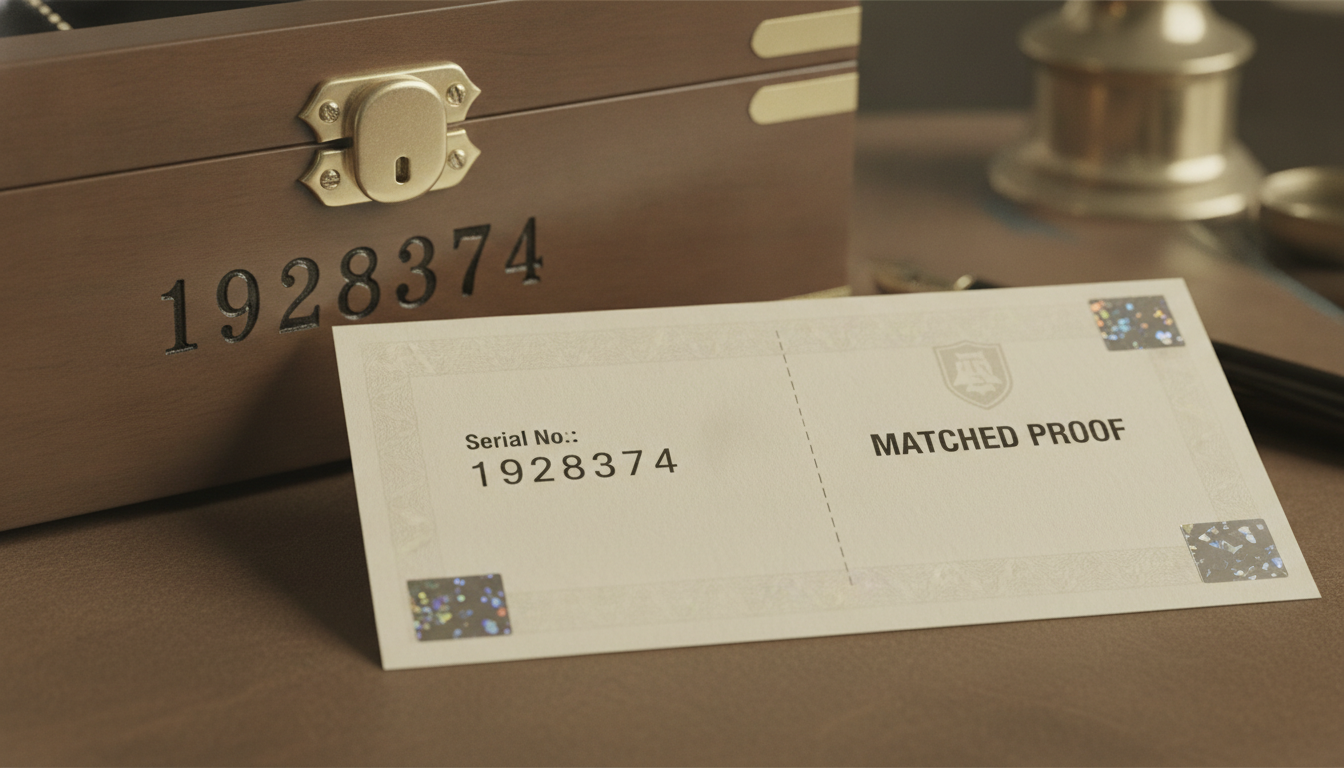
Every real luxury watch, the good stuff, it comes with a unique serial number. And a model number. These aren't just stamped on. No, sir. They're deeply, precisely etched into the metal. It’s a craft. A proper engraving. Not some shallow scratch that looks like a kid did it with a nail file. So, first thing, pull out your loupe. Or just look real close. Because if it’s faint, or looks wonky, or just not right? That’s a bad sign. A very bad sign.
But it gets crazier. The numbers on that watch case, etched so nice and deep, they have to match. Perfectly. To the letter. With the numbers on the warranty card. And any other papers, too. Like the chronometer certificate. Every single one. And if there’s even one digit off, or a letter transposed (it happens, I’ve seen the sloppy work), then you just stop. Don't pass go. Don't collect that watch. Because that’s a red flag waving bigger than a damn circus tent. It's a dead giveaway.
And about those documents? Oh man. Fraudsters got smart. They try to give you what they call a "full set." But most of it's garbage. Because a real warranty card, you feel it. It’s got weight. High-quality print. Security features. Holograms that actually do something. So, you gotta touch it. Really look at the print. Is the text blurry? Are the logos misaligned? Does it just feel… cheap? Like something printed on a home inkjet? So, toss that out. It's fake. A really common trick, too. Even Similarweb (2024) shows how many fake 'full sets' pop up daily.
Then you got the worst kind: the "Frankenwatch." This is where some con artist takes a fake or a cobbled-together piece of junk, right? And then they slap it with real papers. Papers that belong to another watch. A legitimate one. Maybe even a stolen one. So, you've got genuine documentation. But it's for the wrong watch. Or it's from a watch that got stripped for parts. And you're left holding a worthless piece of metal. You bought the wrong passport for the wrong person. It's crazy.
Look, you can lose a lot of money on this stuff. A lot. And that’s because the market rewards authenticity. Having complete, matching, and genuine documentation, it doesn't just prove ownership. It adds value. A solid, pristine set of papers, matching the watch? That can bump up the resale price by 15-25%. And that’s huge. But if it’s a mess? If the numbers don't line up, or the papers feel like they came out of a cracker jack box? You just bought yourself a headache. And probably a paperweight.
Red Flag 5: Suspicious Sellers and Unsafe Transactions
Look, a fancy watch is only as real as the person selling it. And the way you pay for it. Most folks, they get so hung up on the watch itself—is it real? Is it a good deal?—they forget to look at the guy on the other side. Big mistake. Huge. And it costs people fortunes. Every single day.
You see that crazy good deal? That price that just sings to you? Think again. Because scammers, the smart ones anyway, they don't sell a fake Rolex for fifty bucks. Nah. That's amateur hour. They price those high-end knock-offs just a hair below market. Like 5, maybe 15 percent off. Just enough for you to bite. Just enough for it to look like a "steal." Not a scam. But it's a trap. And you walk right into it. They've perfected this mess.
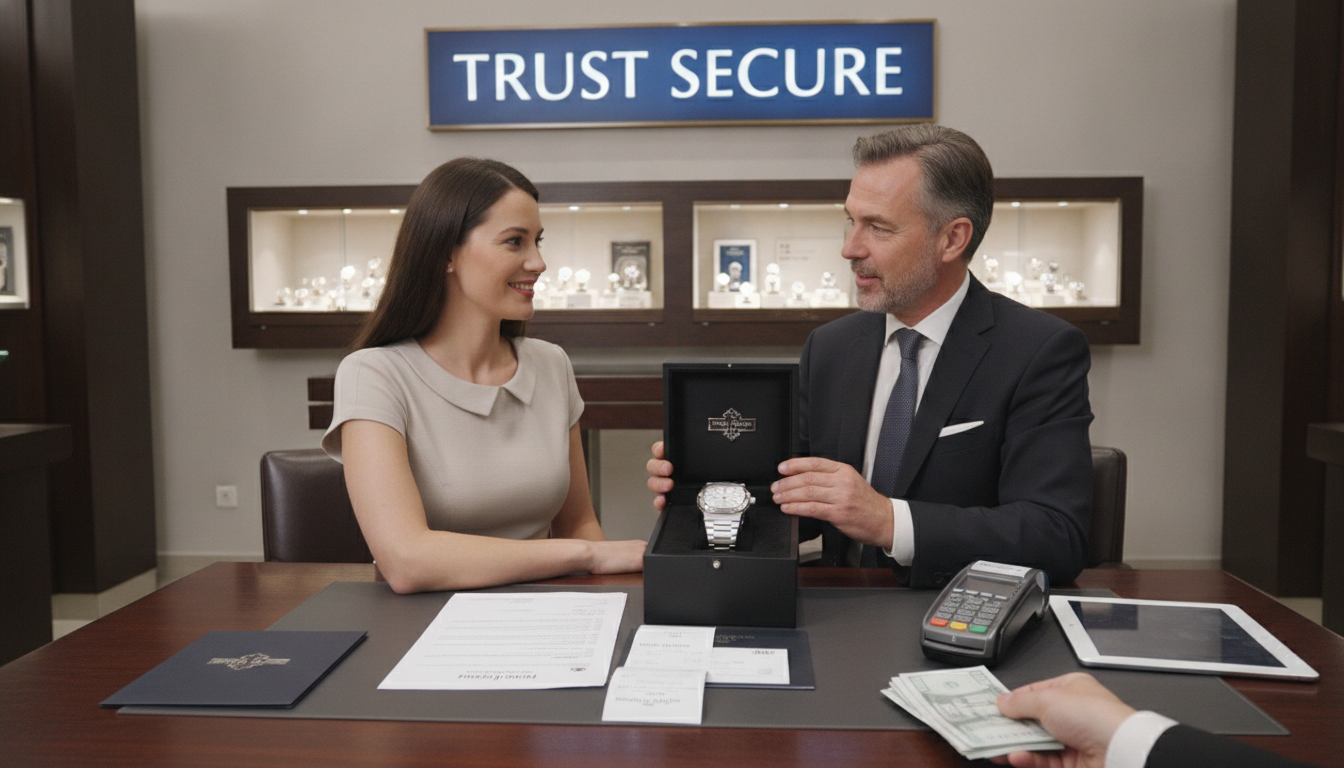
So, where do you buy? Not from a whisper in a dark alley, that’s for sure. You stick to the pros. Certified luxury watch dealers. Places with actual reputations. And verifiable customer reviews, not just five stars from "Anonymous Buyer." Look for transparency. For solid return policies. Because if they hide that stuff (and they will, the sketchy ones), then you are the one who's going to get stuck. I've seen it. More times than I can count.
But even a 'good' seller can't save you if you use dumb money. And I mean it. Direct bank wire? Zelle? Cryptocurrency? Forget about it. Never. Ever. Use those for a big purchase. Because once that money is gone, it's GONE. No buyer protection. No clawback. Nothing. That's why scammers love them. FTC fraud reports scream about this (similar reports surface year after year, just ask anyone who's filed one). They want your cash in a way you can't trace. Or undo.
For anything worth more than a tank of gas, you need an adult in the room. An escrow service. They step in. And they hold your money until you confirm everything. You get the watch. Then, you take it straight to a certified watchmaker. You pay them—it's not much, usually between $150 to $400 for a proper look (pocket change, really, for insurance on a five-figure buy). And if it's real? Then the escrow service releases the funds. If it’s a dud? Money back. Simple. It’s the smart play.
Oh, and pictures. I'm talking high-resolution, close-up shots. Of that watch. Not some glossy stock photo off the internet. You want to see the serial numbers. The tiny imperfections. Every angle. And if they balk? If they only send blurry junk? Or say "these are good enough"? Walk. Just walk away.
Always vet your seller and transaction method with extreme scrutiny, prioritizing reputable dealers and secure payment options above all else.
Frequently Asked Questions
- That one killer giveaway? You want the secret?
- Can you really spot a 'super clone' just by looking?
- So, no box or papers? Does that mean it’s definitely fake then?
- Social media. That a good place to buy one?
- Magnify the hell out of it. The dial, the crystal, the lume – every tiny detail. Misaligned markers, blurry text, a Cyclops lens that distorts like a funhouse mirror? That's a tell. A dead giveaway, frankly. They can nail the macro, but the micro? Never.
- The paperwork and the seller are part of the watch. Seriously. A movement that ticks like a quartz is a joke. Serial numbers that don’t match across every piece of paper, every etching? Huge red flag. And anyone pushing for a bank wire or meeting in a dark alley? Walk away. Fast.
Look, it's simple. So obvious, yet people miss it. The damn movement, right? Most legit luxury watches, the real deals? They're automatics. Mechanical. They sweep*. Not a tick-tick-tick. Because quartz, that's battery power. So, a quartz tick inside something that should be a finely-tuned machine? Instant garbage. A dead giveaway. Just listen. If it ticks like a dollar store watch but looks like a fortune, run. Hard.
* You can't. Forget about it. Not anymore, friend. These things? They’re too good now, visually. Crazy accurate (it’s disturbing, really). Factories use the same CAD files, sometimes even the same actual suppliers for external parts. So, yeah, from across the room, or even up close, your naked eye isn't gonna cut it. You need a pro. A loupe. Someone who knows movements. They gotta pop that case back. Really inspect the guts. Looks can be deceiving. Always assume the worst with super clones.
* Not always. But listen up. For vintage stuff? Maybe. Original paperwork gets lost. It happens. But for a modern watch, anything from the last twenty years? No papers, no box? That’s a massive red flag. Huge. It means you're buying a story, not proof. And stories? Usually fiction. So, yeah, extreme caution. No excuses. Because if it’s truly legit, why wouldn't they have the papers? Modern watches need provenance. No papers, no deal (unless a pro vouches).
* Are you kidding me? Hell no. Never. That's a quick way to get ripped off, buddy. Those platforms? Zero buyer protection. Zilch. It’s the wild west. Scammers? They'll just take your money. And disappear. And you? Out whatever cash you shelled out. Plus, those beautiful photos you see? Stolen. Probably from a real watch. Not the junk they'll send you (if they send anything). So, no. Stay off those feeds. Social media is for looking, not buying a high-value watch.
So, you’ve read the guide. The five red flags. The nitty-gritty. And if you think a quick glance at a 'super clone' will save your ass, well, good luck with that. Fakers are smarter than ever, but they still cut corners where it counts. Always.
Here’s the straight dope:
It’s a physical game. You pick it up, you feel it. Does it have that heft? That solid, machined feel? Fakes are light, rattly, or just off*. Your gut knows when something’s cheap, even if your eyes are fooled.
This isn't just about avoiding a bad deal. It's about not getting fleeced, about not owning a piece of expensive junk. The market is brutal.
When in doubt, always seek professional authentication; it’s the only foolproof way to guarantee you’re not getting scammed. There are people who do this all day, every day, with no skin in your game other than verifying the truth. They'll tell you if it's real. Or just really good costume jewelry.
