

Horology's Digital Shift: New Authenticity & Ownership Models
The Stellaris Journal
Let's cut through the romanticized allure of luxury watchmaking. The reality is stark: the pre-owned market for high-end watches is projected to reach an astounding thirty-two billion dollars by 2025. That's "billion" with a definitive 'B,' and with such immense capital circulating, the archaic methods – paper trails, speculative "trust me, bro" transactions – are simply no longer viable.
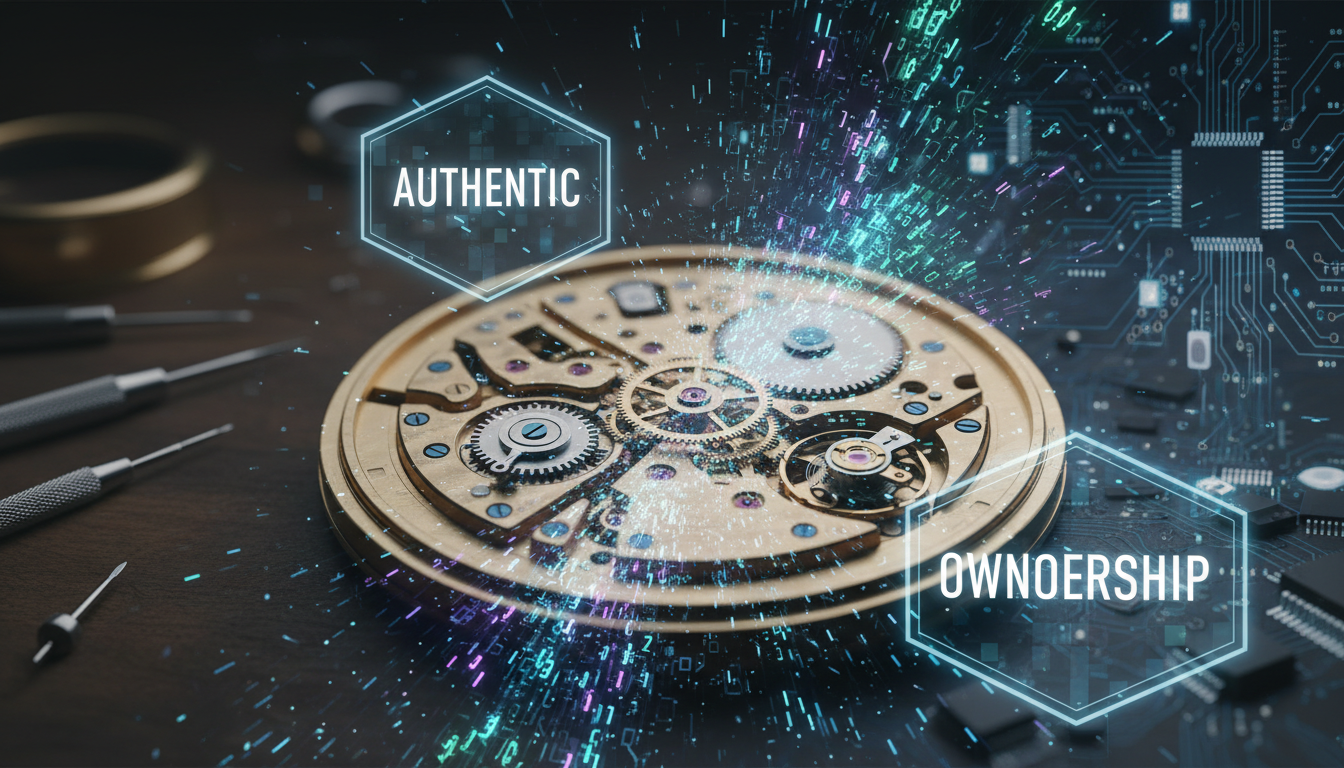
A new wave of collectors, digital natives by instinct, now dominates this landscape. They demand concrete proof, not just a worn receipt, but verifiable, ironclad assurance regarding their significant investments. And for good reason: the proliferation of sophisticated counterfeits is a relentless nightmare, and establishing unequivocal ownership often proves an even greater quagmire, driving them towards trusted sources for authentication like The Stellaris Collection.
This is precisely why blockchain technology is emerging, not as another ephemeral tech fad attempting blanket disruption (though that impulse is always present), but as the singular, logical progression for the industry. Imagine a digital passport for your Daytona – that's the paradigm shift we're discussing. It fundamentally redefines the interactions between brands, owners, and collectors, establishing a foundation of genuine trust and absolute clarity in ownership.
The multi-billion dollar pre-owned watch market desperately needs digital trust and verifiable provenance.
Briefing and TL;DR
The luxury watch market, especially pre-owned, is exploding, but rife with fakes and ownership complexities. Blockchain technology offers a definitive solution: digital passports for watches, ensuring authenticity and clear provenance. This isn't a futuristic concept; leading brands are already implementing it to meet new consumer demands and combat counterfeits. While challenges exist, the industry's shift towards verifiable digital records is undeniable.
Blockchain is transforming luxury watch ownership by providing an unforgeable digital identity for every timepiece.
The Core Technology: Understanding a Watch's 'Digital Twin'
At the heart of blockchain's application in luxury watches lies the concept of a "digital twin." This isn't some abstract metaverse avatar, but a unique, unalterable digital record that mirrors a physical watch. Each digital twin is essentially an NFT (Non-Fungible Token) minted on a blockchain, irrevocably tied to a specific timepiece.  This token contains critical data: the watch's unique serial number, manufacturing details, service history, and a chronological record of ownership. When a watch changes hands, the digital twin is transferred, creating an unbroken chain of verifiable provenance. This ensures that every piece of information about the watch, from its creation to its current owner, is transparent and tamper-proof, eliminating the need for fragile paper certificates or speculative claims.
A watch's digital twin on the blockchain provides an immutable, verifiable history and proof of ownership, eliminating fakes and uncertainty.
The Market Drivers: Why the Watch Industry is Adopting Blockchain Now
Even the most entrenched, tradition-bound figures in the luxury watch world, often characterized by their glacial pace, are no longer oblivious. Their reluctant embrace of blockchain isn't a sudden surge of tech enthusiasm; it's a strategic necessity. 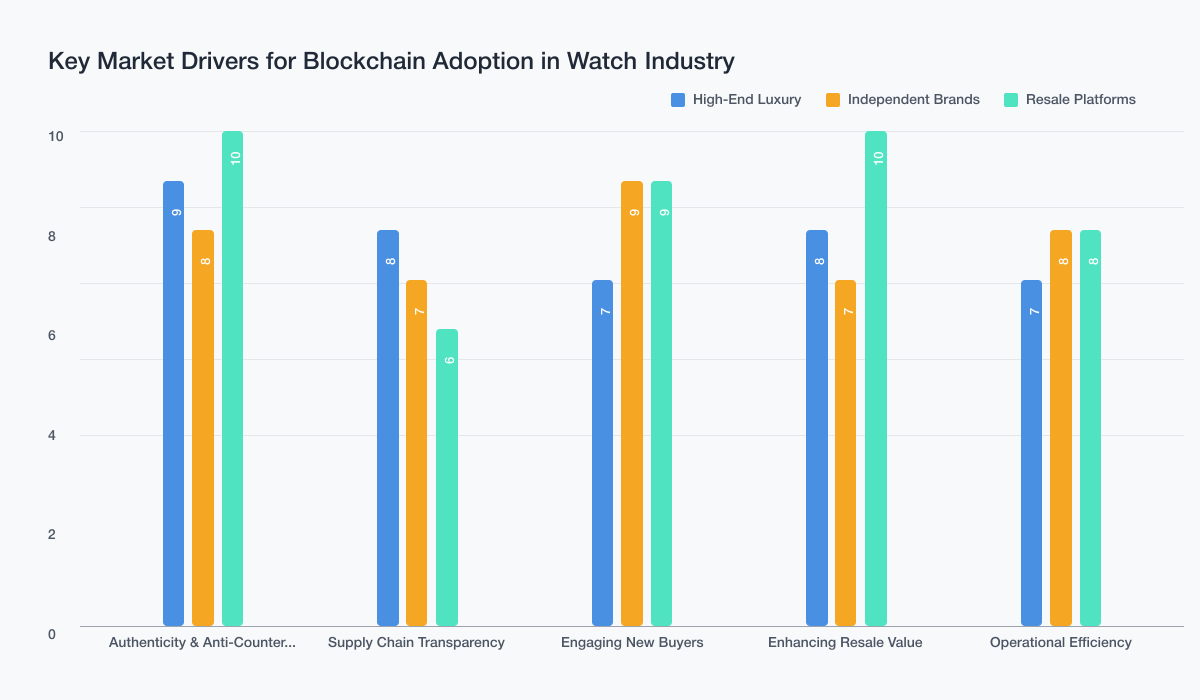 This isn't merely another passing tech trend they can afford to dismiss. Instead, it represents a convergence of anomalous economic pressures, the emergence of a new demographic of buyers, and a market that is quite frankly desperate for a superior solution.
The luxury watch industry's adoption of blockchain is a reactive, inevitable response to profound market shifts and escalating demands for transparency.
The Used Market is Eating Their Lunch
The pre-owned luxury watch market is not just significant; it's experiencing explosive, exponential growth, expanding at an annual rate of 8-10%. In stark contrast, the market for new timepieces barely manages a meager 1-3% growth. This disparity means the secondary market is dramatically outperforming new sales, attracting substantial capital—and with it, an influx of issues ranging from rampant scams to sophisticated counterfeits. The industry was compelled to act; allowing this pervasive chaos to continue unchecked would be detrimental to all stakeholders.
The unprecedented growth of the used watch market has made robust, verifiable authentication an urgent, mandatory industry requirement.
Fakes. So Many Fakes.
The sheer volume of pre-owned luxury watches circulating has created a veritable playground for counterfeiters, resulting in an authentic crisis. When investing tens or even hundreds of thousands of dollars, buyers demand absolute certainty of authenticity. Traditional paper certificates are notoriously simple for professionals to replicate, rendering them practically obsolete. The imperative is for an unforgeable, trustworthy solution that transcends subjective expert opinion. Blockchain-powered digital passports are precisely engineered to decisively eliminate the pervasive counterfeit problem.
Counterfeits represent an existential threat to the luxury watch market, and blockchain technology provides an unyielding defense.
New Buyers, New Rules.
The demographic of luxury watch buyers is rapidly evolving, moving beyond traditional collectors to embrace a younger generation of digital natives. These new consumers primarily operate online and demand uncompromising transparency. Prestigious auction houses like Phillips) and Sotheby's report over 40% new buyers—a clear indicator that these are not the collectors of yesteryear. Engaged primarily through their mobile devices, they seek comprehensive provenance, not vague assurances. Brands must adapt to connect directly with this discerning audience. Furthermore, McKinsey projects a staggering $2.4 billion shift from traditional multi-brand retailers to direct-to-consumer (DTC) sales by 2025, underscoring brands' desire to cultivate direct customer relationships. In this new paradigm, verifiable digital identification is the cornerstone of trust.
The emergence of digitally-savvy collectors necessitates that brands provide verifiable digital proof and foster direct, transparent customer relationships.
The "Green" Angle (Yeah, I Know).
The pervasive discourse around sustainability has permeated even the luxury watch sector, with over 50% of high-end consumers now factoring a brand's sustainability credentials into their purchasing decisions, according to reports like those from Deloitte. In this context, a watch's complete history documented on the blockchain—detailing every owner, repair, and even component origin—provides significant leverage. While the tangible impact can be debated, it undeniably offers brands a powerful narrative to showcase transparency and accountability. This digital paper trail for a physical object aligns perfectly with the current demand for responsible consumption.
Sustainability has transitioned from a mere marketing optic to a critical purchasing factor, and blockchain-enabled digital history offers brands verifiable credibility.
In Practice: How Leading Brands Are Forging the Path
Beyond the pervasive buzzwords of "blockchain" and "Web3" – often little more than empty rhetoric from those yet to deliver tangible products – a critical shift is underway. Even the most venerable and traditionally resistant luxury brands are not merely experimenting; they are committing wholeheartedly. This is no longer an "experiment"; it's a full-scale deployment, a concrete integration of technology into their core operations.
Leading luxury watch brands are demonstrating tangible, real-world adoption of blockchain, moving far beyond mere conceptual discussions.
Breitling, for instance, has been a pioneer. Since October 2020, every new timepiece they produce is issued a digital passport, a testament to their unwavering commitment. Partnering with Arianee, this initiative means each watch now possesses a verifiable online identity, offering customers a digital warranty, streamlined insurance services, and crucially, access to a dedicated trade-in platform providing real-time value estimates. This transcends a simple digital receipt; it's a comprehensive ecosystem designed to revolutionize customer interaction, ensuring greater transparency, irrefutable traceability, and enhanced peace of mind during transactions. Arianee's reach extends beyond Breitling, with Vacheron Constantin and Audemars Piguet also leveraging the platform to address the complexities of ownership.
The commitment of individual brands is significant, but when fierce competitors unite, it signals a fundamental industry shift. The AURA Blockchain Consortium, initially spearheaded by LVMH and subsequently joined by Richemont and other luxury powerhouses like Cartier, embodies this. Recognizing the inevitable, these conglomerates opted to define their own industry standard rather than react to external forces. This collaboration is monumental, given their customary rivalry. Their shared objectives are clear: establish irrefutable proof of authenticity, provide comprehensive product histories to deter fraud, and enhance after-sales service, fostering greater trust and efficiency. (Indeed, data from sources like Similarweb likely confirms surging demand for "luxury watch authenticity," compelling this collective action.)
Bulgari's approach with their Octo Finissimo Ultra is equally innovative. This exceptional timepiece features a laser-engraved QR code directly on the watch itself. Scanning this code immediately links the owner to the watch's unique NFT—its digital passport—providing indisputable proof of authenticity, comprehensive history, and a complete record. This integration is about eliminating ambiguity and ensuring the legitimacy of a high-value asset, thereby resolving the pervasive uncertainty that has plagued the market.
This widespread adoption by industry titans—Breitling's comprehensive integration and the unprecedented collaboration within the AURA Blockchain Consortium involving LVMH and Richemont—signifies far more than mere hype. It represents real-world traction. Blockchain technology for luxury watches is no longer a theoretical concept; it is actively transforming how these timepieces are bought, owned, and sold by major brands.
The Next Frontier: From Digital Twins to Digital-Only Watches
While blockchain's utility for authenticating physical watches is foundational, its capabilities extend far beyond. Visionaries in the space are not merely securing existing assets; they are pioneering entirely new, purely digital creations. These are Non-Fungible Watches (NFWs), digital-only timepieces sold as NFTs, devoid of any physical counterpart. The concept may seem unconventional, yet a robust market exists, driven by digital scarcity, artistic innovation, and the inherent collectibility of digital assets within the expanding online realm.
Remarkably, even Beyer Chronometrie, the world's oldest watch store with centuries of heritage, has embraced this frontier. They launched their 'Time Warp Collection' of NFWs, seamlessly blending traditional horological aesthetics with futuristic digital design. This move by such a venerable institution underscores the seriousness of this trend; ignoring it would mean ceding innovation to emerging startups.
These virtual watches command serious cash. An NFT watch by artist Jesus Calderon, for instance, sold for 6.6 ETH—equivalent to approximately twenty thousand dollars at the time. This demonstrates the tangible value consumers place on purely digital assets. Beyond artistic collection, these NFTs function as "wearables" for avatars in metaverse environments, opening lucrative new markets for brands targeting a younger, tech-savvy demographic who might invest substantially in their digital identities even before acquiring physical luxury timepieces.
Treasure Hunt: Unique Digital Watches
Beyer Watches & Jewellery
Are NFTs Any Good For Watch Collecting?
Watch Nvidia's Jensen Huang Deliver Opening Metaverse Remarks (Siggraph 2022)
The lines between our digital and physical lives are increasingly blurred, and NFTs are at the forefront of this convergence. For horology, this signifies a new frontier where value is derived not only from intricate gears and springs but also from pixelated scarcity and digital identity.
The rise of Non-Fungible Watches (NFWs) signals a radical expansion of horology into purely digital assets and virtual identities.
Hurdles and Headwinds: Challenges to Widespread Adoption
Despite the promising innovations showcased by leading brands, the path to widespread blockchain adoption in the luxury watch industry is anything but smooth. It's a complex, friction-filled journey, riddled with significant challenges that explain why many brands remain hesitant.
Foremost is the financial consideration. Brands meticulously evaluate the substantial investment required for blockchain integration against the elusive promise of immediate, quantifiable returns. For many, existing inventory tracking systems, however imperfect, are deemed "sufficient," making the justification for a costly overhaul a difficult proposition.
Culturally, the industry presents formidable resistance. Deeply steeped in centuries of tradition, the notion of embedding electronic components like NFC or RFID chips into a "pure" mechanical timepiece often borders on heresy. The purist ethos dictates that a true luxury watch should embody mechanical artistry, not tech gadgetry, raising fundamental questions about the perceived integrity of electronically-augmented timepieces.
However, the most critical and complex hurdle is technical: the 'fingerprint problem'. This refers to the challenge of creating an unforgeable, immutable link between a physical watch and its digital token (NFT). A sophisticated fraudster could potentially re-associate a digital token with a counterfeit physical watch, thereby undermining the entire system of trust. Ensuring the unique digital identifier is permanently and inalienably tied to that exact physical object remains a profound vulnerability, one that demands an unassailable solution.
Adding to the complexity is the nascent and fragmented landscape of blockchain solutions. Even with major players like Arianee and the AURA Consortium striving for standardization, multiple competing platforms and approaches exist. This fragmentation fosters confusion among brands and consumers alike, raising questions about which standard will prevail, or if the industry will simply endure a patchwork of incompatible systems.
Ultimately, widespread adoption hinges on consumer demand. As expert Ariel Adams aptly notes, while startups pursue brands, it is the consumer who stands to benefit most. Yet, without robust consumer awareness and active demand for blockchain-powered provenance, brands lack sufficient incentive for broad implementation. Furthermore, many third-party retailers, thriving within the ambiguities of the 'grey' market, have little appetite for enhanced authentication, preferring the existing transactional opacity.
Despite its clear benefits, widespread blockchain adoption in luxury watches faces significant barriers from cost, cultural resistance, technical vulnerabilities, and fragmented standards, all exacerbated by insufficient consumer demand.
The era of the old guard's complacency is rapidly concluding. This isn't speculative "future of luxury" rhetoric; this transformation is unequivocally now. The market, driven by informed consumers, unequivocally demands proof—vague assurances are no longer acceptable, nor should they be.
This fundamental paradigm shift is anchored in several undeniable realities:
- Authenticity has transcended the handshake agreement. It is now digitally verifiable, recorded on an immutable ledger, fundamentally displacing the "trust me, bro" era of transactions with robust data.
- Brands are increasingly recognizing the strategic advantage of knowing their owners and tracking provenance. This offers immense benefits for resale value, fosters brand loyalty, and provides a powerful counter-measure against the grey market by establishing direct connections with consumers.
- Crucially, this evolution is not confined to the tracking of physical goods. The undeniable progression towards purely digital assets is real, with digital twins merely the inception. New markets are forming and expanding, whether traditionalists acknowledge them or not, driving significant disruption.
Ultimately, personal preference for blockchain technology is irrelevant. The critical imperative is to recognize that foundational industry shifts are occurring, and value is rapidly reallocating.
The future of luxury watch ownership demands verifiable data, not antiquated assurances, fundamentally redefining trust in the market.
So, what's your strategic response? Mere passive observation is insufficient. When acquiring or divesting a significant timepiece, demand a transparent, verifiable history—the kind of verified provenance found on specialist platforms like The Stellaris Collection. Inquire precisely how its provenance is tracked. Because if you aren’t, you’re playing a different game entirely. And you’re probably losing. The old ways of ‘trust me’ are getting replaced by ‘show me the data’.
