

Auction vs. Dealer: A Strategic Guide to Selling Your Luxury Watch
The Stellaris Journal
Got a killer watch? A grail Rolex, maybe a Patek, or something truly special? Your first gut instinct probably screams, "Auction! That
’s where the big money is!"
And you know what? You're probably wrong.
Yeah, Francis Ford Coppola
’s F.P. Journe fetched $10.8 million. A monster sale. But let's be real: that
’s not your everyday timepiece. And you ain't Francis.
Selling a luxury watch? It
’s a mess of options. And most folks pick the wrong one.
This isn't about tossing it on eBay and hoping for the best. It's about figuring out if you want fast cash from a dealer, or if you're willing to play the long, risky game for a potentially bigger payout at auction. Your watch, your timeline, your priorities. Simple as that.
TL;DR
So, you want to ditch that watch. Here
’s the deal. It's a trade-off. Always. Speed, safety, or cash. Pick two. (You rarely get three, let
’s be honest).
- Dealers. Fastest way out. They cut you a check. Maybe 60-80% of what it's worth, immediately. PrecisionWatches.com even confirms those trade-in numbers. But it's done. Clean. You walk away. For a trusted dealer experience, consider specialists in the field.
- Consignment. A middle ground, right? You might see 10-15% more than a direct sale. But you're waiting. 60 to 120 days for payment. And it
- Online. eBay. Forums. The Wild West. Highest potential return? Sure. Highest risk? Absolutely. Scammers. Frauds. You're on your own. A real mess.
- Prep. Don't touch a vintage watch. No polish. Ever. And get your damn box and papers. It's gold. Your final sale price hinges on it. WatchMyDiamonds.com has a good comparison, too.
- Upgrading. You chase the unicorn. Or maybe you want a better version of what you already got. That 'grail' watch you dream about? You gotta sell something to get it, right? Free up that capital.
- Portfolio Balance. That watch you bought five years ago? It blew up. Worth a fortune now. And suddenly it's a huge chunk of your whole damn net worth. So you trim it. Smart money diversifies. They always do.
- Taste Changes. This is the big one. The single biggest reason people ditch a piece. (Experts at Phillips, Bonhams, and Sotheby's all agree on that). What you loved five years ago? Maybe it just doesn't hit anymore. Your personal style shifts. Happens. It
- Liquidate an Asset. Inherited it. Nice gift. But you need cash. For something real. Not just a pretty thing on your wrist. So you move it. Convert it. Distribute the cash amongst beneficiaries (a common reason). Good.
- You want speed and zero fuss? Dealer it is. Expect 60-80% of market value. They pay, you walk. Simple transaction, less cash. That's the trade-off. No surprises.
- Big money potential means big patience and big fees. Auction houses are for the unicorns
- And for the love of God, original box, papers. Always. Never polish a vintage piece. You ruin the patina, you ruin the value. Online? Buyer beware. Seller, too. It's a Wild West show with higher risk of getting swindled than striking gold.
Auctions. Big money. For the really* special stuff. Rare pieces. With stories. You wait months. And they take their cut
—around 15% of the hammer price. A huge fee, really.
’s still your problem until it sells. Still your risk.
Why Sell? Understanding the Modern Collector's Motivation
Look, nobody just wakes up and decides to dump a watch. Not a good one, anyway. It's a call. A strategic move. Because selling a luxury piece? It
’s never just a transaction. It
’s about taste. Money. Where you
’re headed as a collector.
’s just how we are.
No Wrist Time. It sits in the safe. Day after day. Or in the box. So it just gathers dust. Doesn't get worn. And what's the point of that? Reddit threads are full of guys selling entire collections just to fund one perfect, more luxurious 'tool watch.' Get rid of it. Free up some space. And some capital. So you can get something you actually use*.
The Dealer Option: Maximizing Speed and Security
You want it gone. Fast. No headaches. No messing around. So, you hit up a dealer. Look, you
’re sacrificing top dollar, yeah. But what you get? Speed. Security. Convenience. That
’s the whole deal with a reputable dealer.
It's simple. You walk in (or ship it, if you trust them, and only trust them after vetting). They check it. They make an offer. You say yes. Boom. Money in your account. Same day. Sometimes within hours. The 1916 Company's data points to dealers as the "fastest and most secure" way. And they're right. You can't beat that immediacy. Your watch is out of your hands, the cash is in your bank. It's a clean break.
But why does it work like this? Because the dealer takes all the risk. Every bit of it. Once that money hits your account, it
’s their problem. Not yours. They deal with the next buyer. The marketing. The photography. The authenticity checks. The shipping. Any returns (a huge headache, trust me). All of it. They handle it. And you're out. Clean. Done. That immediate payment? Usually a bank wire. Secure. Or maybe crypto if you're into that. Even cash, if it
’s a smaller deal and you're doing business face-to-face. Reputable dealers make sure you get paid, no games.
So, what
’s the catch? Always a catch. You won't get "market value." Not even close to what you see listed on Chrono24. Because a dealer needs to make a profit. They have overhead
– rent, staff, insurance for a vault full of expensive timepieces. And they cover that risk they just took on. So their offer? It's typically 60-80% of what they might sell it for. That's just how it works. You trade a chunk of potential profit for peace of mind. For that instant fix.
But what if you want a little more? Without going full auction house crazy and waiting forever? Then you look at consignment. It
’s the middle ground. A gamble, some would say. You hand your watch over to a dealer (or a specialized platform). They sell it for you. And when it sells, then they pay you.
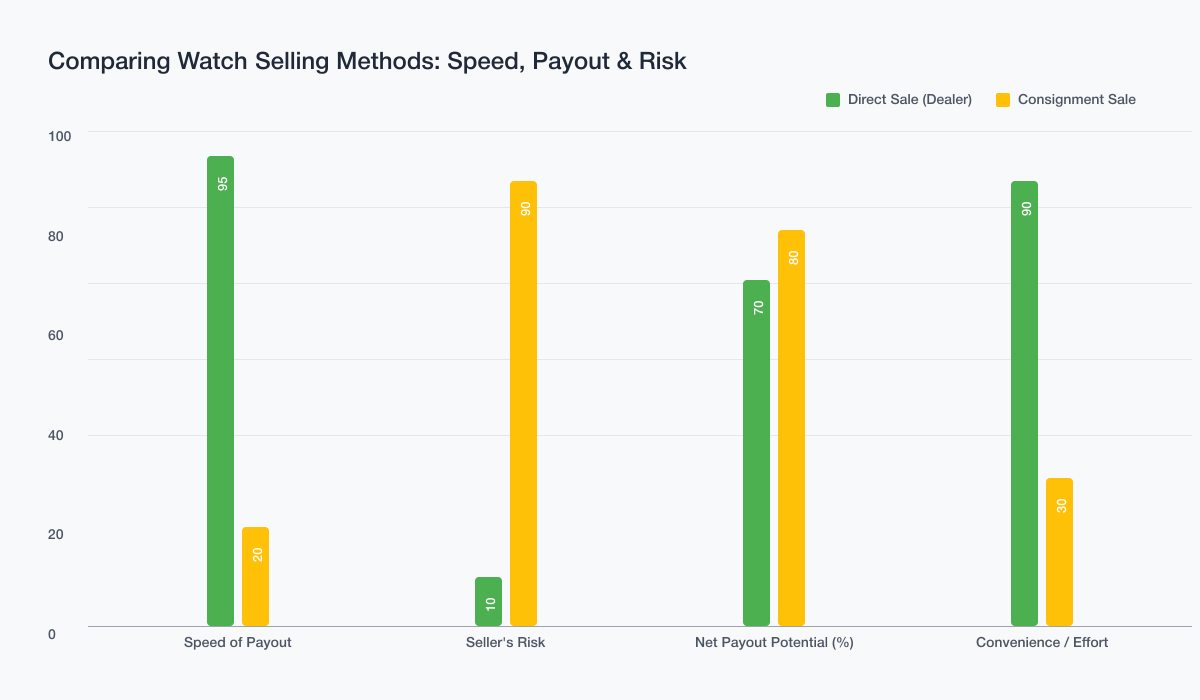
The upside? You might pull in 10-15% more than a direct sale. A decent bump. WatchMyDiamonds.com lays out the comparison pretty clearly: consignment can look tempting on paper, especially when you're fixated on that extra percentage point.
The downside? Oh, there's a downside. A big one. First, you wait. And you wait. And you wait some more. 60 days. Sometimes 120 days. Maybe longer. You don't see a dime until that watch is gone. And during all that time? It's still your watch. Still your risk. If something happens to it
—damaged, lost, whatever
—that
’s on you. If it doesn't sell at all? You just wasted months. And now you
’re back to square one, with a watch that's been handled, photographed, and maybe even sent back and forth. Or worse, you
’re getting it back from a partner who might've handled it rough, or stored it poorly. That
’s a real mess to clean up.
Then there's the commission. Those consignment partners? They're not doing it for free. You
’re looking at commission rates that average 15-30% of the final sale price. So, sure, you get a higher potential return compared to a direct sale. But you're paying for it. In time. In risk. And in that hefty cut.
It
’s a trust game, consignment. A serious one. You gotta pick someone damn good. Because they're holding your valuable asset for months. And you
’re just hoping they sell it. For what they promised. And don't play games with the payout or their fees. I
’ve seen some crazy stories where sellers ended up chasing their own money.
So, if you
’re a busy professional, or a first-time seller? Someone who just needs that cash, wants it clean, wants it fast? Go direct. Take the hit on the price. But get the certainty. And walk away with your money in hand. That's the smartest play for most.
The Auction House: In Pursuit of the Highest Bid
Got a watch? A special one? Maybe you
’re eyeing the big leagues, dreaming of those auction numbers. Look, I get it. Paul Newman's Daytona
—that thing went for $17.75 million. The Sale Of Paul Newman's 'Paul Newman' Rolex Daytona, The Most Expensive Wristwatch Ever Sold Francis Ford Coppola
’s F.P. Journe? Ten-point-eight million bucks. Yeah, that's crazy money. And you think your watch could be next. Maybe. But probably not.
Here
’s the thing. Auction houses
—we're talking Sotheby's, Phillips), and Bonhams—they aren't looking for just "nice" watches. Or "pretty" watches. They want events. They want the stuff that makes collectors go absolutely bonkers, the pieces that have a story so good it's practically fiction. We
’re talking exceptionally rare pieces, sure. Vintage, absolutely. But also historically significant timepieces, the ones with a real pedigree. Deals Buying & Selling Watches at Auctions Because competitive bidding? That
’s what drives prices through the roof. Far beyond what any dealer, or even some rich guy, would pay sitting across a table from you. It
’s like a gladiatorial arena for your wrist candy. But only if it's got the chops to fight.
So, what are they really after? Provenance. That
’s the magic word. Proof. Did some famous dude wear it? Or some infamous one? Was it on the moon? Did it survive a shipwreck? (Okay, maybe not a shipwreck, but you get the idea.) A unique story. How Phillips Auction House Finds and Sells the World’s Rarest Watches That
’s what makes a watch an auction darling. Your run-of-the-mill luxury watch? Even a super high-end one? Chances are it won
’t even clear their minimum value threshold. Not exciting enough. No narrative. They
’ll just give you the polite brush-off. So don
’t even try.
And this isn't a quick sale. Oh no. You want speed? Go to eBay. Or a dealer. This is a commitment. The process is lengthy, you know? Often taking months. From the moment you consign it
—if they even accept it
—until the day you actually see money. Deals Buying & Selling Watches at Auctions It
’s a marathon. Not a sprint. You send it off. They examine it. Catalog it. Market it. Wait for the right auction date. Then the auction itself. And then you wait for the buyer to pay up. And then they pay you. So, if you need cash next week, this isn
’t your play. Not by a long shot.
But let
’s talk money, because that
’s what this is really about, right? You, the seller, you pay a commission. Around 15%, usually. Could be a sliding scale. But it
’s a chunk. Off the final hammer price. And the buyer? They pay a premium. A buyer's premium. That
’s their fee. Can be as high as 30%. Because everyone needs their slice. This means the actual price a bidder is willing to pay? It gets influenced. They know that 30% is coming on top. So, their bids might not hit the crazy numbers you
’re hoping for. Or maybe they do. That
’s the gamble. The high stakes. So, if your watch isn't absolutely extraordinary, it might not even hit its reserve price. Collecting watches: Only 15 brands hold their value Meaning, no sale. And then you're stuck. With a watch, and maybe a bill for their time.
Honestly, if you've got a common luxury watch
—a nice one, yeah, but common
—skip the auction house. You'll just waste your time. And theirs. They
’ve got zero interest. Their business? It's about breaking records. Making headlines. Selling the untouchables. Because your watch, while maybe gorgeous to you, just isn't special enough for their spotlight.
Auction houses are the lottery ticket for relics, not daily wearers. Only bring them the legends.
The Digital Frontier: Online Marketplaces and Forums

Alright, you wanna sell online. Cut out the middleman. Keep all the cash. Sounds like a sweet deal, right? You list it on Chrono24. Or eBay. Maybe some Reddit sub, like r/WatchExchange. Access to a global pool of buyers. Potentially the highest net return, because fees are theoretically lower. So you think.
But here
’s the cold, hard truth: you just signed up for a second job. And you just inherited all the risk. Every single bit of it. You
’re responsible for everything. High-quality photography? Yep. You. Writing descriptions that don
’t sound like AI fluff? That
’s on you. Vetting buyers? Good luck. Negotiation? Hope you
’re good at it. Insured shipping across continents? Oh yeah. All yours. Because you wanted to save a few bucks.
And the fraud? Oh, man. It
’s everywhere. It
’s a goddamn mess out there. eBay's policies? They usually lean hard on the buyer's side. So if some joker claims the watch isn't as described, you
’re often fighting an uphill battle. Forums? Rife with phishing attempts. Scammers trying to steal accounts, or just straight-up disappear with your money. r/WatchExchange is under 'siege' from scammers, using phishing tactics to steal accounts, so says Reddit data. These aren't just isolated incidents. This is the daily reality. So you
’re rolling the dice, every single time. And the house? It
’s not always favoring you.
Building a reputation? That
’s everything online. On forums, especially. New sellers without transaction history? You
’re viewed with suspicion. Rightfully so. Nobody trusts a fresh account with zero feedback and a $10,000 watch. So, your first sale? Could be a nightmare. Or impossible. Because even Watchuseek, a long-standing forum, requires a history of posts (like 90 days and 100 posts) before you can even think about selling. You have to earn that trust. And that takes time. Or you just pay Chrono24 their 6.5% commission and hope their system protects you better. But eBay can be difficult for infrequent sellers due to buyer-favored policies and fraud risk. So, either way, you
’re exposed.
This channel? It
’s for the pros. For the experienced sellers. The ones who live and breathe this stuff. Who are comfortable managing risk. Who know their product inside and out. And who know how to spot a scammer from a mile away. You gotta have deep product knowledge. You gotta be a detective. Because if you
’re not, you
’re just a target.
You want direct sales? You sign up for fraud, headaches, and a full-time job.
Pre-Sale Prep: How to Maximize Your Watch's Value
Alright, you
’ve decided to sell the damn thing. Good. But before you do anything stupid, listen up. Because you
’re probably about to trash your watch's value without even realizing it. Seriously.
Here
’s Rule #1, carve it into your brain: Do not service or polish the watch. I'm not kidding. Put down the cloth. Drop the screwdriver. Don't even think about it. Experts from every major auction house
—Phillips, Sotheby's, Bonhams—they all agree. Servicing a vintage piece? It can absolutely tank its value. Polishing it? A crime. You take away the patina. You erase the history. Because a servicer
’s goal is "pristine," factory-new. But a collector's goal? That's "originality." And those are two very different things. Remember Paul Newman
’s Daytona? Scratches, wear, tear
—that added to its value. Restoring that would have been a sin. So, leave it alone. Let the dirt stay.
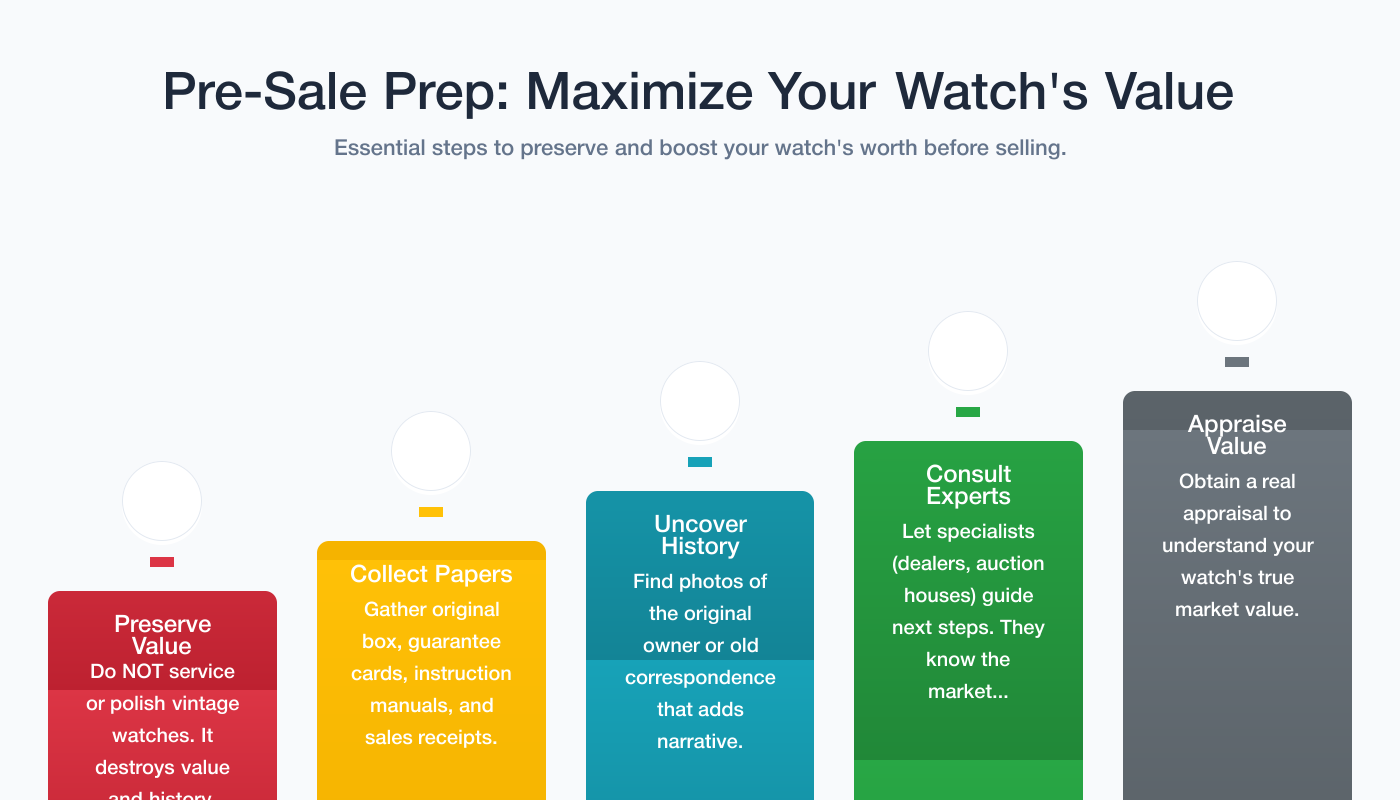
And you better have your paperwork. All of it. The original box. The guarantee cards. Those little certificates. Instruction manuals. Even the old sales receipts. You got it? Because that stuff? It establishes provenance. It tells a story. And it significantly bumps up the value. So dig through your drawers. Empty out the attic. Find every last shred of evidence. Because the more complete the package, the more value for the buyer. It's that simple.
Got more than just paper? Good. Collect any associated ephemera. If your watch has a real story
—not some made-up crap, but a legitimate history
—find photos of the original owner wearing it. Maybe some old correspondence with the manufacturer. Anything that adds to its narrative. Anything that enriches its history. That's gold.
So, what do you do? Nothing. You let the specialist
—your dealer, your chosen auction house, whoever
—you let them decide if it needs anything. They understand the market. They know what buyers are looking for. They know when to leave it alone. And believe me, most of the time, "alone" is the best advice.
Originality is currency. Leave it dirty, leave it untouched. Let the pros decide.
Alright, you've chewed on the options. Auction vs. dealer, consignment, rolling the dice online. Here's the deal: You pick your poison, or you pick your profit. But it's never a clean sweep.
So what's the takeaway, really? Beyond the glossy brochures and auction catalogs, three things cut through the noise.
—the Patek 2499, a Coppola F.P. Journe. Not your everyday Rolex. If your watch has a story and rarity, then you consider the months-long wait and 15% bite.
Look, the market ain't a charity. It's about data, condition, and timing. Understand your piece. Understand your urgency. That's it.
So, you're not selling a piece of jewelry from a gum machine. Get a real appraisal. Find out what your watch actually is worth, not what you hope it's worth. Then, if you want a straight shot, a clear offer, and no drama, work with a trusted dealer. Someone who deals in facts, not fairy tales.
