

Expedited Luxury Asset Liquidation: A Seller's Process Guide
The Stellaris Journal
You've got a watch, maybe. Or a handbag. Art, even, just sitting there gathering dust. Most people think offloading these high-value items is a guaranteed headache—a long, drawn-out affair of endless haggling and questionable buyers. They aren’t wrong, usually.
But that's only if you go about it like a rookie.
See, this isn't about some "next-gen platform" or "synergistic solution." It's about process. A clear path to convert those dormant valuables into actual capital, fast. Stop treating your assets like clutter and start treating them like the liquid capital they actually are.
Why Liquidate? Understanding the Value of Your Dormant Assets
You have stuff. Probably a lot of it. High-end jewelry gathering dust in a safe, a watch that hasn't seen the light of day in years, or designer bags shoved in the back of the closet. Here’s the reality: that isn't just "stuff." That’s actual money, cold and hard, just sitting there wasting away.
"Liquidation" isn't some complicated Wall Street jargon; it’s simply the smart play. It’s how you convert those fancy trinkets into real, immediate spending power. Whether you are cleaning out the house, kickstarting a new venture, or settling an estate, you are unlocking capital.
When you do it right—by working with a professional—the process is quick and safe. Your credit score remains entirely unaffected. Why let value sit there, losing its shine and worth? Even Similarweb (2026) data confirms that people are sitting on significant assets without realizing their full market potential. This guide is your blueprint to stop letting that money collect dust.
Because getting your cash out of those unused assets is just plain smart.
Choosing Your Path: Selling vs. Pawning

You have something valuable—a watch, jewelry, or otherwise—and you want cash. You have a big call to make: do you ditch it for good, or do you borrow against it? These are two very different paths.
Selling is simple. You hand over the item, and you receive the money. Poof. Gone. No looking back, no obligations, just cash in your pocket. This is for when you are finished with the item, you don't want it back, and you want a clean, final break.
Pawning is different. You are getting a loan, using your item as collateral. You still own the item technically, but the lender holds onto it. You get the funds you need now without saying goodbye forever. However, you must pay back the loan with interest to get your item back, or risk the lender keeping it.
It is not about which path is "better"; it is about what you actually need. Do you want to unload that asset for good and never think about it again? Go sell it. Do you need quick cash to cover a gap, and you absolutely want your item back later? Pawn it. Both options provide competitive payouts for the right assets. Even Similarweb (2026) data shows that people are increasingly shopping around for the best deal, whether they are selling an heirloom or seeking short-term liquidity. For a collateral loan, there is no credit check, no bank statement scrutiny; just the item, your need, and the money.
Decide whether the item is a permanent solution to a problem or just a temporary lifeline, then make the call that best serves your finances.
The 5-Step Asset Liquidation Process: A Seller's Playbook
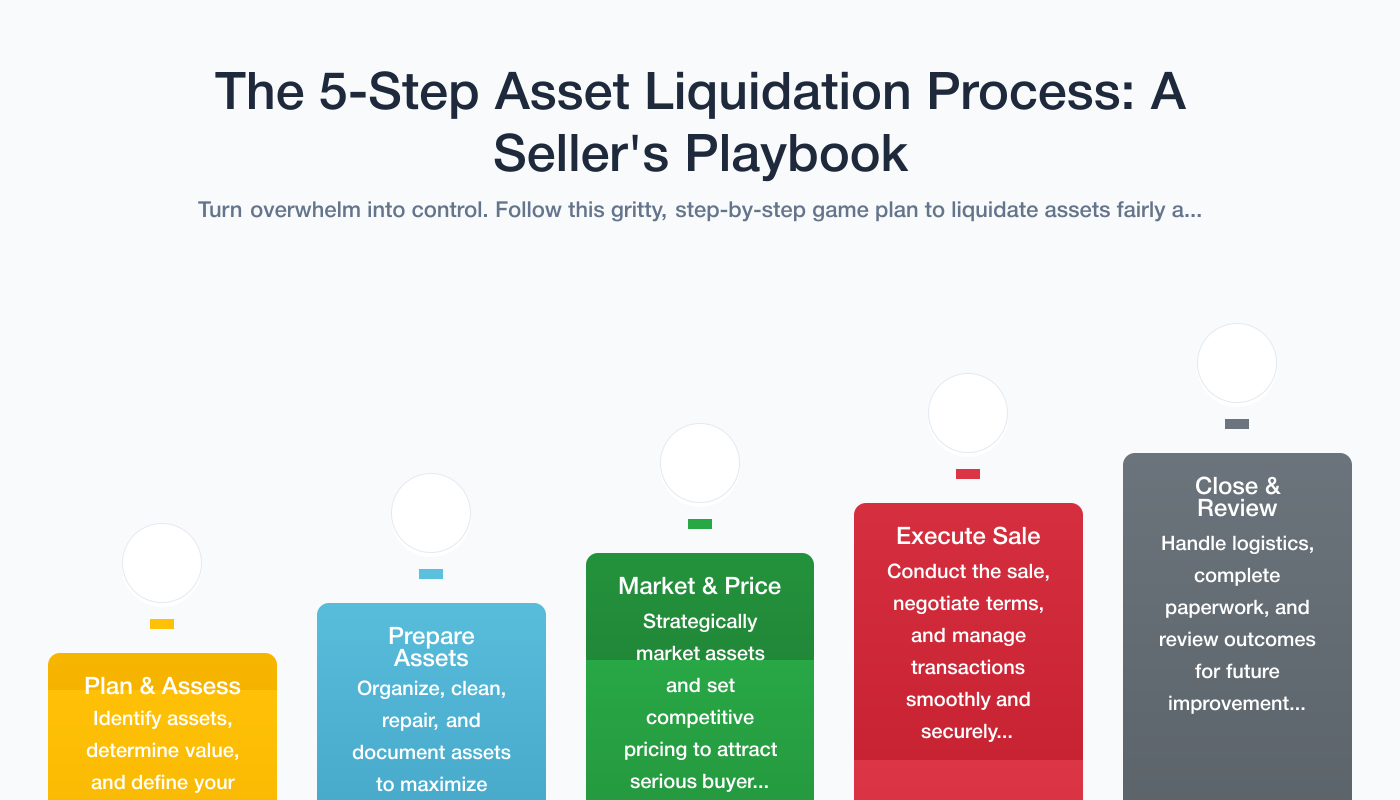
You are stuck with a pile of inventory, estate leftovers, or industrial gear, and you need it gone fast. You also want a fair shake for it, but so many people dump their items and get fleeced. This isn't rocket science, but it is a mess if you don't do it right. The following process ensures you stay in control. Even commercial outfits like Rabin don't just wing it; they follow a formal, multi-step process to clear out assets.
You need a gritty, step-by-step game plan, or you are just begging for trouble.
Step 1: Inventory — Know What You've Got (Before Someone Else Tells You)
This first step is the worst, but it is non-negotiable. You have to get a real list together. Every single item. Not a mental note. Get a pen or a spreadsheet and list everything that could possibly have value: small stuff, big stuff, and the weird items in the back of the garage. If you don't know what is there, you can't sell or track it. Detail everything—condition, quantity, serial numbers. It is your first defense and the only way to ensure nothing goes missing later.
Your list is your bible, so do not skip a single verse.
Step 2: Valuation — What's It Really Worth (Not What You Hope It's Worth)
You have your list. Now for the hard truth: what is this junk really worth? Not what you paid for it, and not what you hope it is worth. You need the market value. This is where people mess up by overpricing—leading to items sitting forever—or underpricing and giving them away. You need real numbers derived from research. Check eBay sold listings, auction results, and local dealer prices. For big-ticket items, get an appraisal. Estate sale services like The Perfect Piece succeed because they price things based on what actually sells, not personal feelings.
Know your numbers—the real ones, not the "hope and a prayer" figures.
Step 3: Partner Selection — Who's Going to Help You (And Who's Going to Rob You Blind)
You have your list and your prices. Now, you need to move the inventory, and you likely cannot do it alone. This is where it gets dangerous. There are sharks who will promise the moon and deliver a crater. You are putting your assets in someone else's hands, so you must choose carefully. Whether it is an auction house, an estate liquidator, or a consignment shop, verify their track record. Reputable firms like The Stellaris Collection will have clear processes and references. Call past clients, get references, check reviews, and get everything in a clear, written contract detailing fees, handling of unsold items, and advertising costs.
Choose your partners like you are picking a bodyguard: tough, reliable, and devoid of any funny business.
Step 4: Transaction — The Actual Sell-Off (And Making Sure You Get Paid)
This is the moment of truth. Whether it is an auction, an online listing spree, or an estate sale, things move fast. Assets break, items go missing, or buyers try to lowball you. You must be prepared for the chaos. Be crystal clear on the financial side: how are payments handled? When do you get paid? Implement a system for tracking sales, invoicing, and ensuring every penny is accounted for. Watch the process. You track the money. You make sure everything aligns with what you agreed on.
Don't just sell; oversee the process and track every dollar to ensure you get paid.
Step 5: Documentation — Close It Out (And Protect Your Ass)
Most of the items are gone and the cash is rolling in, but you aren't done yet. After the dust settles, you need to wrap things up officially to cover your backside. You need a complete record of everything sold, the sale price, the buyer, expenses, commissions paid, and net proceeds. This is for your taxes, your peace of mind, and any disputes that might arise later. People remember things differently; paper trails settle arguments. Ensure you receive a detailed accounting statement from your partner and perform a final reconciliation.
Close the books clean with every receipt and record accounted for; your future self will thank you.
A Guide to Qualifying Luxury Assets for Liquidation

When preparing luxury items for liquidation, it is vital to distinguish between true market assets and sentimental clutter. Ensure you have all original documentation, provenance, and certificates of authenticity ready, as these significantly impact the valuation and speed of the transaction.
Focus on gathering all authenticity documentation first to maximize the speed and value of your luxury liquidation.
How to Maximize Your Return: Seller Best Practices

To achieve the highest return, time your liquidation with market demand rather than personal necessity whenever possible. Clean, photograph, and present your items professionally, as a well-presented asset signals value and reliability to potential buyers or liquidation partners.
Presentation and market timing are the two biggest levers you have to increase your final payout.
Ensuring a Secure and Confidential Liquidation

Worried your priceless watch will vanish or your privacy will be compromised? The liquidation landscape is filled with shady operators, but the right partner prioritizes your security. You should demand 100% discretion and confidentiality; your assets are not cocktail party fodder.
Your assets must be fully insured during evaluation by a legitimate, high-tier provider like Lloyd’s of London. If a firm lacks this, walk away. Where is your inventory stored? Look for high-security facilities or dedicated, insured vaults—like those used by the International Gem Tower—rather than back-office safes. Even Similarweb (2026) data indicates that confidence drops significantly when storage protocols are vague. Shipping should utilize fully insured, pre-paid labels to eliminate liability on your end. Finally, ensure the process is a direct transaction, not a loan, so it leaves no footprint on your credit history.
For high-value transactions, prioritizing a partner with transparent, verifiable security protocols—from insurance by Lloyd's of London to secure vault storage—is non-negotiable.
Frequently Asked Questions
Don’t expect a weeks-long waiting game for your money. Once you give the green light on an offer, the funds should be wired immediately. If a firm drags its feet, that is amateur hour.
Forget credit check nonsense. This isn't a loan application; it is a straight-up liquidation. There are no hits to your credit report and no prying inquiries. It is your asset, and you are simply swapping it for cash.
Not feeling the offer? Walk away. If the firm is reputable, they will ship your piece back on their dime without charging "restocking fees" or hidden traps.
Once the deal is done, it is done. You have the cash, they have the item. Regret is real, so be 100% sure before the wire hits, because there is no undo button in this game.
Regarding safety, your asset should be under lock and key in hardened vaults with insurance policies backed by heavy hitters like Lloyd’s of London. If they lose your asset, they lose their reputation, which is worth more than the item itself.
Focus on working with transparent partners who offer immediate payouts, no credit checks, and ironclad security for your assets.
Alright, enough preamble. You have high-end junk sitting there. The point wasn't just to read about it; it was to get off your ass and make some capital.
Here is the real talk:
Your assets aren't getting younger or more valuable collecting dust. Assess them. Prep them. Treat that forgotten watch or painting like the liquid cash it could* be.
Picking a liquidation partner is the entire game. Get it wrong, and you're leaving money on the table, or worse, dealing with headaches. Find someone who actually knows market value, not just what they hope* to pay you.
- This isn't just "selling stuff." It's financial strategy. You're converting dormant equity. So act like it.
It's simple, really. But simple doesn't mean easy. You need to be deliberate, clear-eyed, and pragmatic about the whole thing. Don't expect magic. Expect a process.
Want the cash? Stop dreaming, start moving by finding a reputable firm that offers clear authentication and transparent pricing.
