

Custom Jewelry: Maximizing Design Value & Resale Potential
The Stellaris Journal
Most people treat custom jewelry like an emotional souvenir, which is exactly why they lose money the second they try to liquidate. If you design a piece without an exit strategy, you aren’t an investor—you’re a consumer. And in the secondary market, consumers get eaten alive.
Custom jewelry is rarely an asset unless you build it to be one.
In this guide, we break down:
- The Reality Check: Why your "sentimental value" is worth zero to a buyer.
- The Pre-Sale Audit: How to strip away the emotion to find the real market price.
- Market Navigation: Avoiding the pitfalls of pawn shops and bottom-feeding online marketplaces.
- Maintenance: Why neglecting the basics kills your resale potential.
- The Documentation Purge: Dig through your files. If it’s GIA or AGS certified, put that front and center. It lowers the buyer's risk, and lower risk for them equals more cash for you.
- The Deep Clean: Don't hand over something covered in body oils and dust. Get it polished. It shows you respect the asset; it’s a low-cost move that drives a high-value return.
- The Metal Sort: Group your items. Gold with gold, platinum with platinum. Don’t make the dealer do the sorting—they will just charge you for the time it takes to organize the chaos.
- The Truth Test: Use that magnet. If you know what you have before the expert verifies it, you hold all the leverage in the negotiation.
- Fabrication costs are sunk capital. When evaluating resale, look at stone quality and brand equity, because custom labor rarely transfers its value to a second owner.
- Paperwork dictates the ceiling. A piece without a GIA report or verifiable authentication is often viewed as a liability until proven otherwise, which costs you significant time and margin.
- Access is the ultimate multiplier. Dumping a piece at a local shop usually guarantees the bottom of the market, whereas finding the right collector or specialized intermediary shifts the math entirely.
The Reality of Jewelry Value: Investment vs. Ornament
Stop calling your ring an "investment." It’s an ornament—a piece of art you wear on your hand. If you’re looking at it as a way to park cash or flip for a profit, you’re in for a rough awakening.
The math is simple, and it hurts. New luxury retail pieces carry a markup of about 250% to cover store rent, flashy marketing, and salesperson commissions. When you walk out the door, that premium evaporates. Even Similarweb (2026) data indicates that while secondary market interest is high, buyer expectations for resale prices are routinely crushed. You are typically looking at 20% to 50% of the original sticker price. Period.
The lab-grown versus natural diamond debate is equally clear. Lab-grown stones are mass-produced commodities; they lack the historic scarcity that keeps natural diamonds stable on the secondary market. If you bought lab-grown, accept the reality: the resale value is near zero. It is not a store of value; it’s a temporary fashion choice.
Custom jewelry creates its own paradox. A custom piece usually has zero liquidity because it fits your finger and your taste. The only thing with real resale legs in a custom build is the material purity—the gold or platinum weight. If you spent thousands on intricate labor-heavy design, do not expect to recoup that cost. Ultimately, the value lives in the "Emotional Premium." You bought it to celebrate something, and that experience is priceless. The jewelry itself? It’s just metal and carbon.
The hard truth is that jewelry is a financial risk unless you prioritize material quality over brand markup.
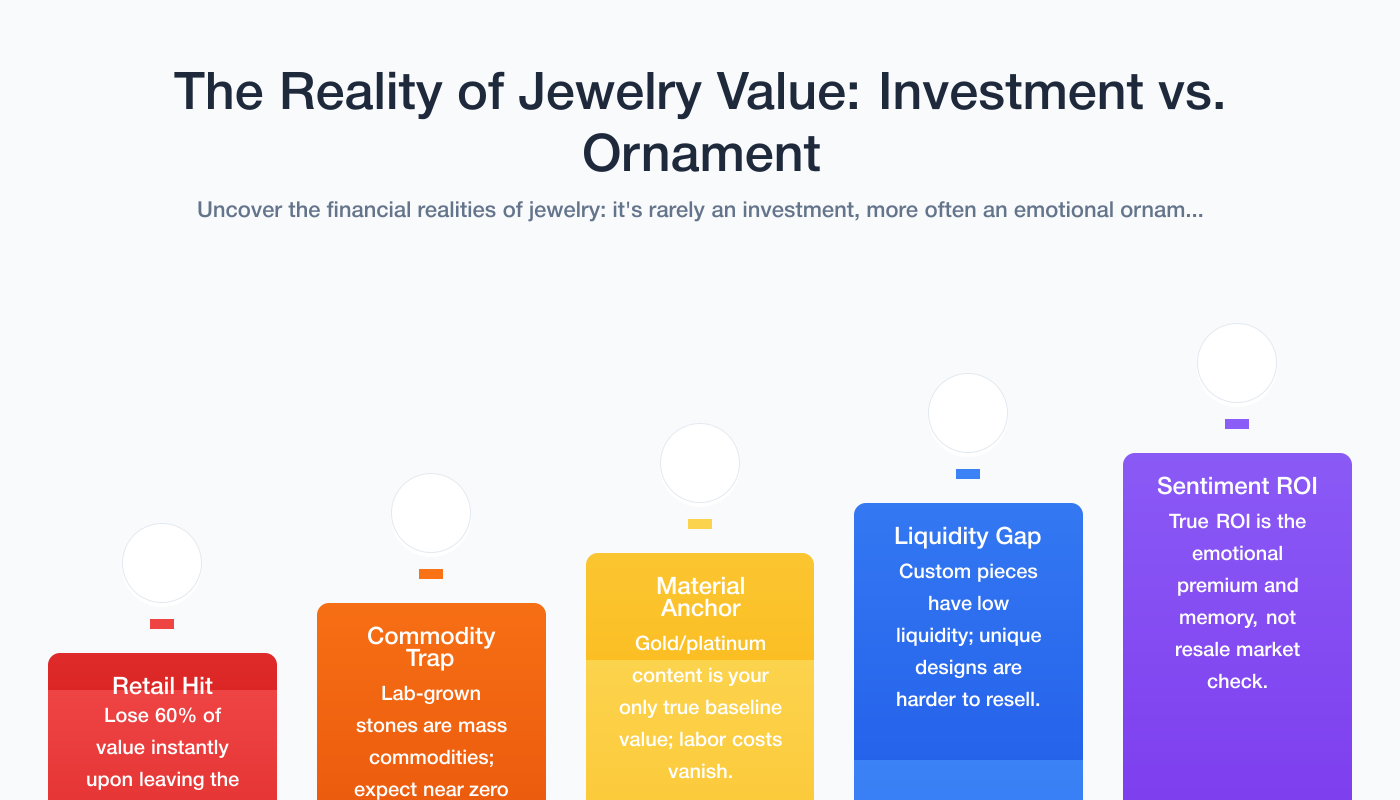
The Five-Stage Value Reality:
1. The Retail Hit: Expect to lose 60% of your value the second you take the item out of the store.
2. The Commodity Trap: Recognize that mass-produced lab-grown stones rarely hold resale value compared to their natural counterparts.
3. Material Anchoring: Focus on the gold and platinum content as your baseline for "value" when things go sideways.
4. The Liquidity Gap: Understand that custom, one-off designs are harder to sell than classic, brand-name pieces.
5. The Sentiment Buffer: Accept that the real ROI is the memory, not the secondary market resale check.
*
The Pre-Sale Audit: Getting Your Piece Market-Ready
You want the best offer? Then stop treating your jewelry like a junk drawer item. You need to act like a curator. For guidance on curating your collection for maximum value, consider a professional consultation. If you dump a dirty, unorganized mess of jewelry on a buyer, you’re telling them you don’t value the piece. Why should they?
The effort you put into the presentation is the single strongest indicator of the offer price you will receive.
Start with the paperwork. If you have the GIA certificate, the original box, and the purchase receipt, you’ve already won half the battle. A GIA certificate removes the "is this fake?" fear instantly. If you lost the papers, get an independent appraisal before you even talk to a dealer. It costs money, but it clears the path for a faster, higher offer.
Alternatively, take the DIY route. Start by cleaning the piece properly. A pro-level ultrasonic cleaning makes a massive difference in how a stone refracts light; it changes the psychology of the negotiation. If it looks sparkling and new, the buyer assumes you took care of it.
Finally, test the metals yourself. You don’t need a degree to do this. A simple magnet test is your best friend. Gold, silver, and platinum are non-magnetic. If your "gold" sticks to the magnet, it’s trash. If you want to check if the stone is a diamond, use a basic diamond tester or, in a pinch, a ceramic plate scratch test for hardness.
Do not approach a buyer until you have organized your pieces by metal type and authenticated what you can.
The Checklist for Top Dollar:
*
Navigating the Market: Local Buyers vs. Online Channels
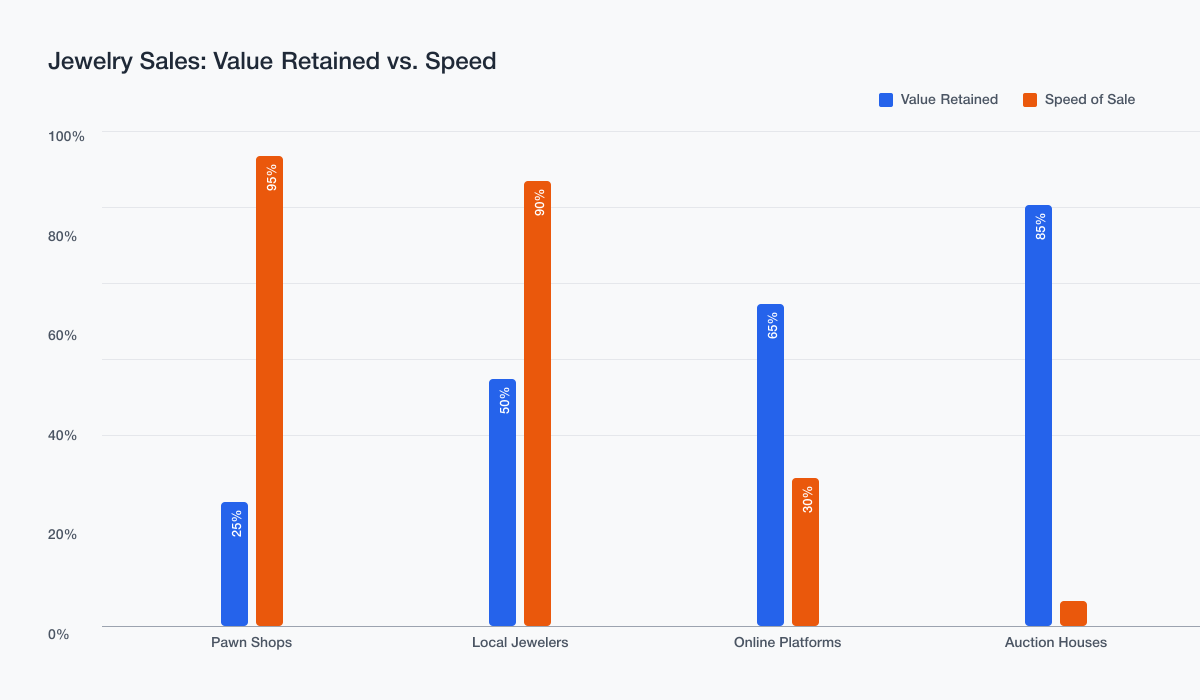
Selling jewelry isn't a sentimental journey; it’s math. You have two variables fighting for dominance: how fast you need the cash and how much of it you want in your pocket. If you chase the highest number, you will wait. If you chase speed, you will take a haircut on the price.
Local Specialists
These are your brick-and-mortar jewelers. You want an actual professional—someone who knows the cut, color, and provenance of what you’re selling. They provide immediate security: you walk in, you get a check, you leave. No shipping risks. No fraud. However, because they have overhead (rent, insurance, staff), their margin requirements are higher. They have to resell it, so they won't pay you retail value. Expect 40-60% of current market value.
Online Platforms
Think eBay, Etsy, or specialized marketplaces. The reach here is massive. Similarweb shows that consumer interest in the secondary jewelry market is skyrocketing, with online resale projects hitting $5.53B by 2033. But the friction is yours to manage. You are responsible for the photography, the descriptions, and the shipping. And shipping is a minefield.
Poor packaging is the number one cause of value loss in transit.
If you don't know how to insure and ship a diamond ring, don't start here. You might get 70-80% of market value, but you’ll lose 10% of that to platform fees, shipping insurance, and the occasional scammer who says the item never arrived.
Auction Houses
If you have a rare, signed piece or a significant stone, go here. These people have the buyer base for items that scare off standard retail buyers. But be warned: it is a slow, manual grind. You wait for the catalog cycle and pay commission fees ranging from 10% to 25%. You don't control the price—the room does. It’s a gamble. Sometimes you win big; sometimes the reserve isn't met and you're back to square one.
The 'Pawn Shop' Warning
Avoid them. If you walk into a pawn shop, you aren't a seller; you're a liquidation risk. They know you are desperate (or you wouldn't be there). They will pay pennies on the dollar—usually 20-30% of actual value. Speed is the only advantage, but it’s a predatory one.
*
Protecting Value: Maintenance and Storage Best Practices
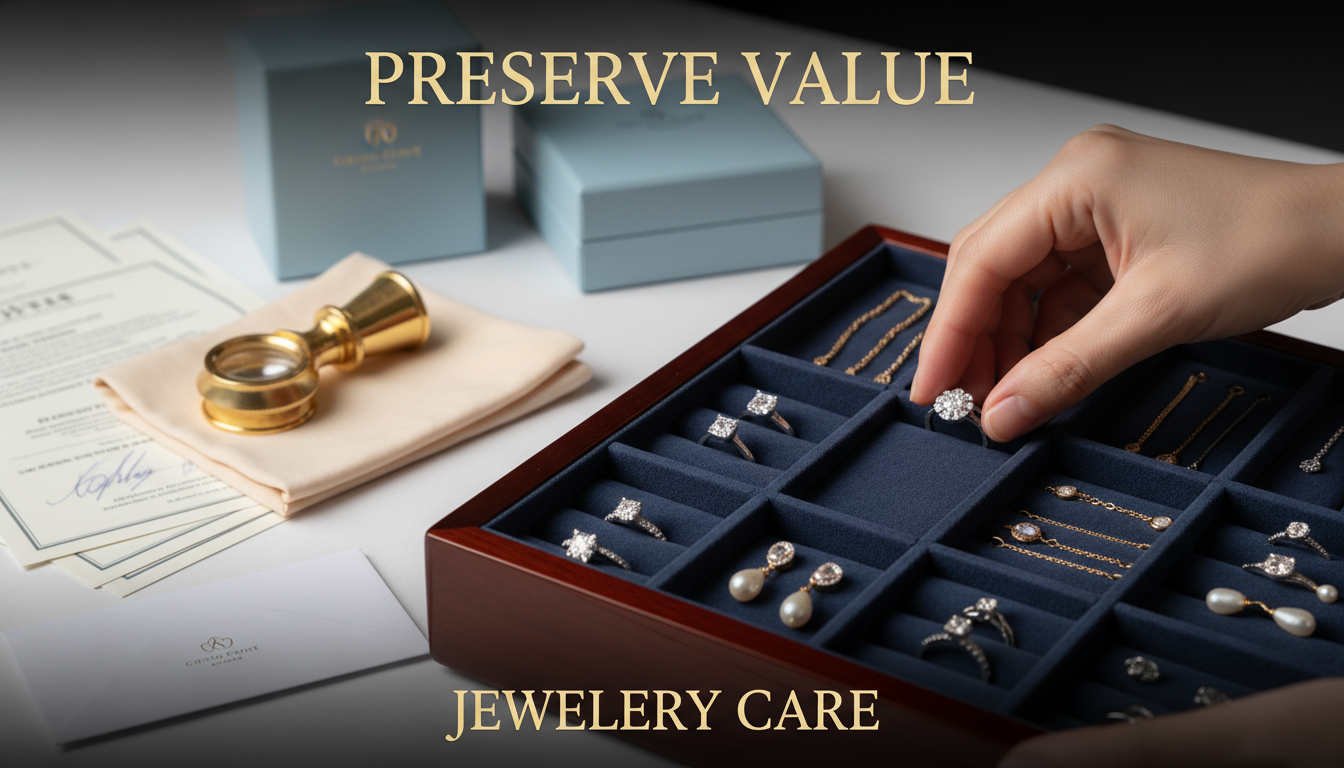
Your jewelry’s resale condition is determined not by how it looks when you sell it, but by how you lived with it. Most people treat high-end jewelry like a cheap trinket, tossing it in a drawer with house keys and loose change. That’s a mistake. You are an investor; treat the assets accordingly.
Storage
Stop dumping your pieces in a bowl. Metal scratches metal, and diamonds can scratch other diamonds. Get a dedicated box with individual, felt-lined compartments. If the pieces aren't touching, they aren't degrading. It’s that simple.
The Environmental Factor
Your bathroom is a death trap for fine jewelry. Harsh household cleaners, bleach, and even chlorine from a swimming pool will permanently ruin the luster of gold and weaken the metal. I’ve seen engagement rings turned brittle and dull because the owner wore them while cleaning the kitchen with harsh chemicals. If you are doing manual labor or handling cleaning agents, take it off.
Professional Servicing
Every two years, get a professional to check the prongs. It isn't overkill; metal fatigue is real. A loose prong is the primary reason for catastrophic stone loss. A fifty-dollar service fee saves you from losing a center stone worth thousands. It’s cheap insurance.
The 'Boxed' Mindset
Here is a secret that separates the amateurs from the pros: keep the original packaging. The outer box, the inner box, the papers, and the warranty card. When it comes time to sell, having the full "kit" adds a premium to the resale value. Buyers want the experience of a new purchase, even if it’s second-hand.
Well-maintained jewelry has significantly fewer returns in resale scenarios.
If you document your service history and keep the original box, you’ve already done 80% of the work. You’ve maintained the asset. Now, just keep it out of the bleach.
*
Most people overestimate the liquidity of their custom jewelry because they conflate the cost of production with actual market demand. They aren't the same. If you’re looking to unlock capital, sentiment is an anchor, not an asset. You need to strip away the emotional attachment to the design and focus strictly on the underlying components—the stone specifications, the metal weight, and the paper trail.
Here is what you actually need to understand before approaching the secondary market:
The market doesn't care what you paid for the design; it only cares what it can sell the materials for tomorrow.
If you are ready to stop guessing and want a cold assessment of what your pieces can actually command, get in touch. We don’t deal in emotional appraisals or sales fluff—just liquidity. We can review your inventory, provide a reality check on current market demand, and determine the most efficient path to exit. Reach out to The Stellaris Collection when you're ready to stop holding and start acting.
