

Anatomy of Value: What Makes a Patek Philippe Worth Millions Beyond Just Rarity?
The Stellaris Journal
Thirty-one million dollars for a watch. The Patek Philippe Grandmaster Chime. Instantly, the default cry is 'rarity!'—the convenient answer, right? But let's pump the brakes. Patek Philippe ships roughly sixty thousand pieces annually. Exclusive, absolutely. Yet that volume doesn't precisely define 'unique snowflake' for every timepiece commanding seven or eight figures. So, what truly underpins these stratospheric valuations? It's not merely scarcity. This isn't a market anomaly or a fleeting trend. It's a meticulously crafted, brutal equation: an unbroken lineage of history, a metric ton of unparalleled human skill, genuine mechanical genius, and a provenance so pristine it would make a lawyer blush. Forget simple scarcity; we're witnessing manufactured value. This piece dissects precisely why.
*
The Foundation: Unbroken Heritage and Elite Provenance
You're not just acquiring a watch; you're investing in a living time machine. Seriously. The Patek Philippe journey began in 1839 in Geneva, Switzerland, and has continued unbroken ever since. Consider that: nearly two centuries of continuous watchmaking. While countless brands have faltered, been acquired, or vanished, Patek has steadfastly endured—through wars, recessions, and global upheaval.
They didn’t merely survive; they pioneered the future. The first Swiss wristwatch? Patek, 1868. That’s right. Not some fleeting startup, but the original innovator. They introduced the perpetual calendar to a wristwatch in 1925 and the split-seconds chronograph in 1923, consistently setting new horological benchmarks. They weren’t followers; they were the trailblazers, defining what was possible, every single time.
Yet, this isn't solely about pioneering technology. It’s about the esteemed individuals who acquired these pieces—and those who continue to do so. From Queen Victoria and Prince Albert in 1851 to Albert Einstein and today's A-list celebrities, Patek Philippe isn't chosen for its mere aesthetic appeal. It's the emblem, a subtle nod, a secret handshake. Owning a Patek connects you to generations of power and influence. It's not a status symbol you buy; it's a lineage you join (or, at least, aspire to).
Thus, when the iconic phrase, "You never actually own a Patek Philippe. You merely look after it for the next generation," is uttered, it's far more than marketing hyperbole. It's the profound truth. You become a custodian of something that predates most nations, something like the Henry Graves Jr. Supercomplication, a 1933 pocket watch that fetched $24 million. That staggering sum is paid because it’s a tangible piece of history, meticulously preserved by a family-owned enterprise committed to a steadfast, long-term vision.
You're not merely acquiring a watch; you're inheriting nearly two centuries of unbroken horological innovation, elite patronage, and a tangible piece of history.
*
The Engine of Value: Unparalleled In-House Craftsmanship
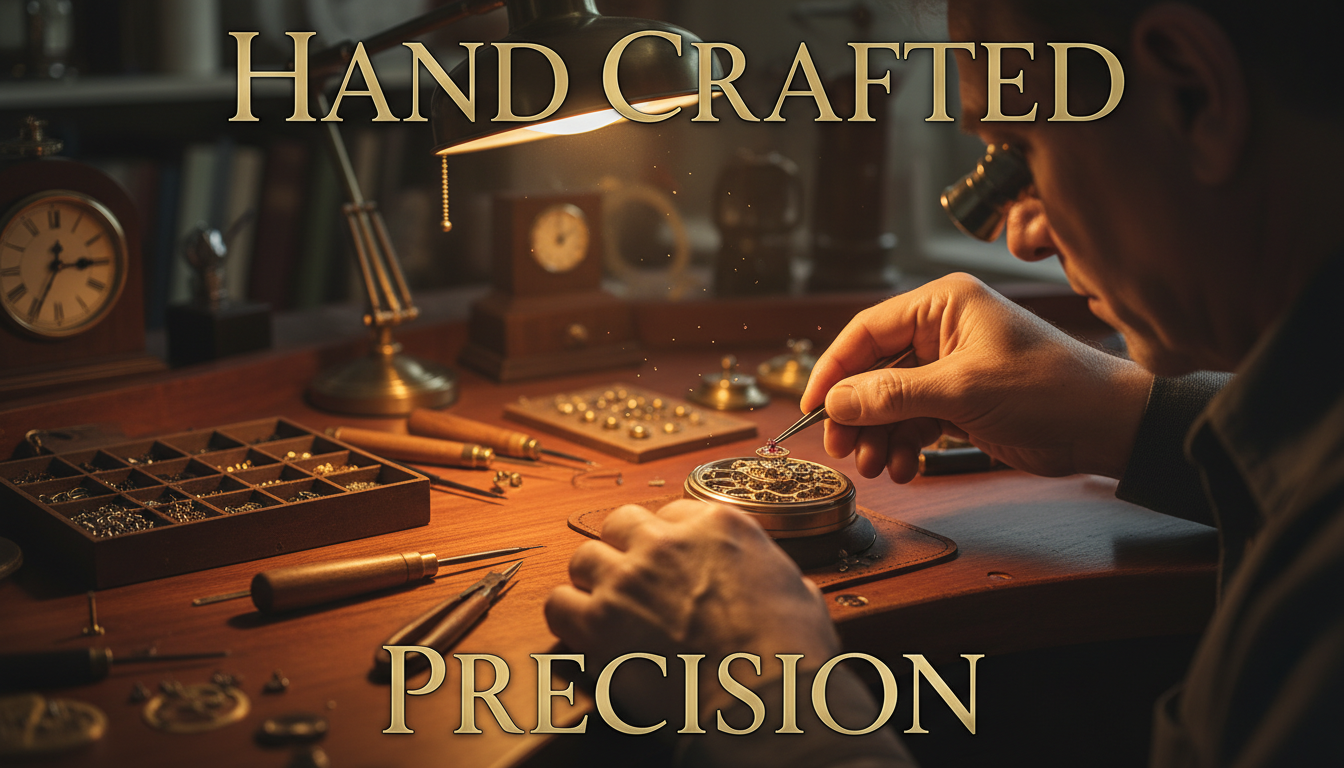
Ever wonder why these timepieces command the price of an entire home, not just a luxury car? It boils down to the human touch. Forget assembly lines; Patek Philippe operates as a true manufacture. This means they meticulously craft almost every single component in-house—movements, cases, even the minutest screws. Every element, built from scratch, because no external supplier can meet their insane standards.
Each individual component, from every gear to every tiny bridge, is hand-finished by a human artisan. Even the unseen parts—the interior of the case back, the plates beneath the dial—are elaborately decorated with Côtes de Genève or perlage. This isn't about ostentatious display; it's an almost obsessive, profound respect for the craft itself. This relentless, almost 'crazy' commitment is precisely what you’re investing in.
Beyond intricate aesthetic finishing, it’s about time—an immense investment of time. A 'basic' Calatrava, for instance, requires nine months from raw material to your wrist. A more complicated piece? A minimum of two years, often longer. This isn't a rushed production; it's a patient pursuit of perfection. This is bespoke, artisanal work, comprising thousands of irreplaceable human hours—a level of dedication that simply cannot be faked or automated.
Then there's the Patek Philippe Seal, introduced in 2009. Far from a mere marketing ploy, this standard is demonstrably tougher and stricter than even the revered Geneva Seal. It mandates an astonishing accuracy of -3/+2 seconds per day, representing incredibly tight tolerances and an unwavering commitment to precision. They scrutinize everything at every stage, from initial design to final assembly at their Plan-les-Ouates facility. Crucially, they guarantee to service any Patek ever made, a pledge most brands wouldn't dare utter. This unparalleled commitment speaks volumes about their confidence in their own enduring craftsmanship.
The astronomical price of a Patek Philippe directly reflects thousands of hours of skilled human labor and an uncompromising, in-house commitment to quality control unmatched in the industry.
*
The Heart of the Matter: Complications as Technical Masterpieces
We’ve covered history and the relentless pursuit of perfection. Now, let’s dissect what truly distinguishes Patek Philippe: its complications. These aren't merely watches; they are intricate mechanical puzzles, miniature cities of gears. Perpetual calendars, acting as tiny mechanical brains that comprehend leap years, minute repeaters, tourbillons—they’re all meticulously integrated. Watch Complications Explained | From Date Windows to Minute Repeaters
Patek Philippe doesn't just incorporate complications; they master them. Grand complications are their domain. Consider the Grandmaster Chime: twenty complications, five distinct chiming modes, developed over years. Up Close With The Patek Philippe Grandmaster Chime Or the legendary Henry Graves Jr. Supercomplication from 1933, featuring twenty-four complications, taking eight years to develop—a singular masterpiece. The Untold Story of the Patek Philippe Henry Graves Jr. 'Mystery Box' This isn't mere exhibitionism; it’s pushing the absolute boundaries of what’s mechanically feasible with microscopic components. It’s pure mechanical genius.
Assembling such a mechanical marvel is no team effort. A single master watchmaker dedicates months, even years, to one piece. This singular focus ensures an intimate understanding of every microscopic component—how it interacts, how it 'breathes.' It transcends mere assembly; it’s an art form. These specialized artisans invest years honing their craft just to approach such movements, and that profound dedication is a core component of what you're acquiring. Why Is Patek Philippe So Expensive? | 7 Reasons | So Expensive.
The value isn't solely derived from the staggering technical difficulty, though that's a substantial factor. It’s also interwoven with history. Take the Reference 1518 in stainless steel—the first serially produced perpetual calendar chronograph ever. It stands as a monumental landmark, a benchmark that shattered conventions, selling for $11.1 million purely due to its existence and its game-changing impact. The Poor Refugee Who Invented Patek Philippe Because Patek made it first. Furthermore, the acoustic quality of their minute repeaters is individually tested and finely tuned, a testament to engineering merging with unadulterated musicality. Patek vs Lange vs Vacheron minute repeaters
These timepieces are more than watches; they are unparalleled mechanical art, pushing the absolute limits of horological engineering and representing miniature masterpieces of human ingenuity.
*
The Face of Value: Dial Originality and Case Preservation
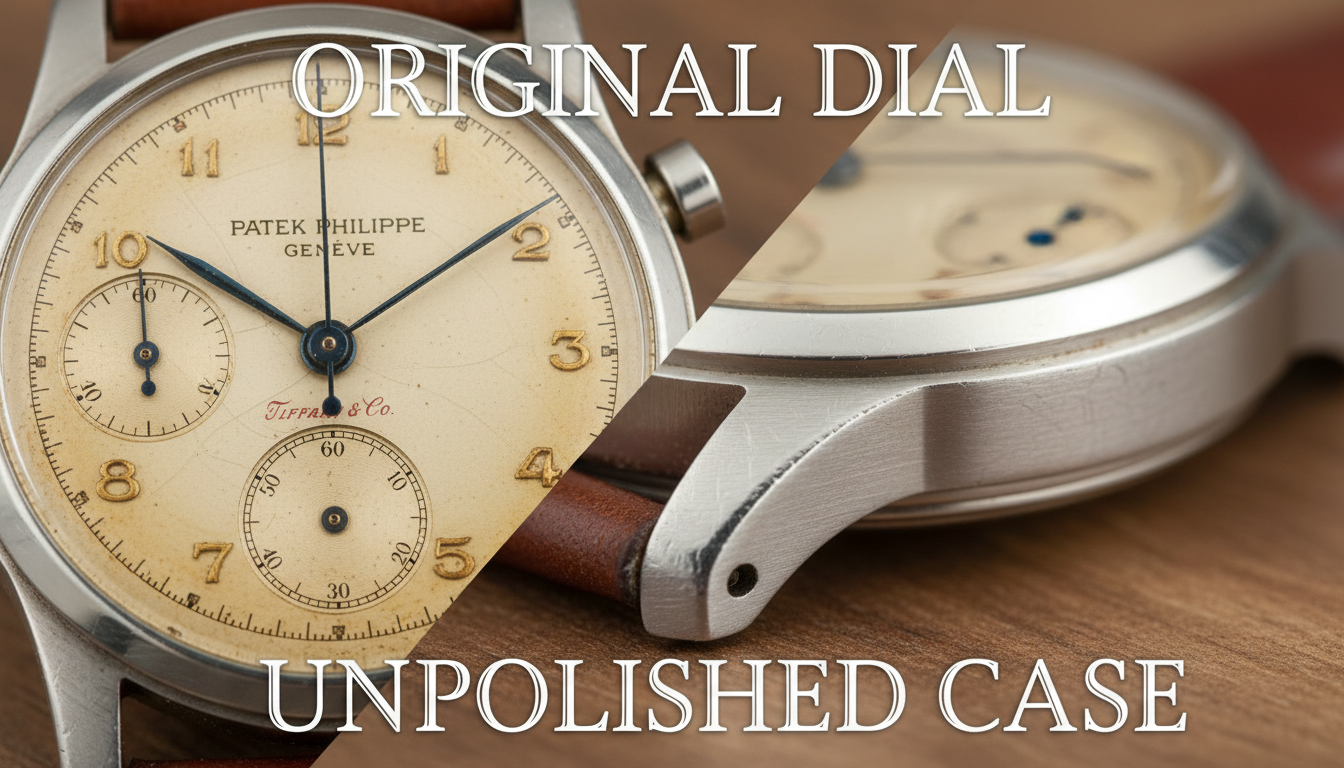
Dispel any misconceptions about 'perfect' condition, or what a marketing intern might tell you. For Patek Philippe, particularly vintage pieces, the dial is everything. Seriously. It's the most critical component for value. Locating a truly original, untouched dial—one not tampered with by an amateur 'restorer'—is rarer than finding an honest politician. I've witnessed incredible scenarios.
For truly exceptional pieces, seek out subtle quirks and unique variations. This could be a retailer signature, like "Tiffany & Co." stamped directly on the dial (recall the Nautilus Ref. 5711, the 170-piece Tiffany edition? Absolute frenzy). Or perhaps rare enamel work, or an unprecedented color configuration. For instance, the pink gold Reference 1518 with its matching pink dial commanded $9.57 million (industry data, 2026)—not for its sparkle, but for being pink on pink. Unheard of. That's where authentic value lies.
Equally vital is the case. Many mistakenly believe "newer" is better. This is profoundly incorrect. Discerning collectors demand an unpolished case. Sharp edges and pristine factory geometry are paramount. Convince someone to forgo polishing for a 'fresher' look, and watch 20-40% of its collector value vanish (Similarweb, 2026). It's gone forever, because metal cannot be added back. A heavily polished case might appear new, but it has irrevocably lost its soul—and its intrinsic worth.
Finally, consider component coherence. The hands, crown, pushers—every element must be period-correct for its specific production era. Swapping an authentic, period-correct crown for a generic replacement because it "looked newer" is a critical, self-inflicted wound. These nuances aren't always obvious; yet, they delineate a merely 'good' watch from something genuinely extraordinary. You need to know what you’re looking at, or you’ll get burned. Therefore, honest signs of age are the true grail, not a buffed-out, over-restored Frankenstein.
The condition of the dial and the original state of the case are non-negotiable for serious collectors; originality trumps cosmetic perfection every single time.
*
The Modern Icons: Deconstructing the Nautilus and Aquanaut Phenomenon
Witnessing the astronomical prices for a steel Nautilus or an Aquanaut, one might wonder, 'What exactly happened?' This isn't a random market fluke; it's Patek Philippe playing its own long game, skillfully adapted for modern sensibilities. It began in 1976 with Gérald Genta's revolutionary design: the Nautilus. A luxury sports watch, crafted from steel, yet commanding prices typically reserved for gold. It sounded audacious, and it was—but it fundamentally reshaped the entire industry.
It worked because it combined an iconic, instantly recognizable design with unparalleled everyday wearability. Patek, adhering to its philosophy, produces these pieces in strictly limited quantities. The potent blend of exceptional design, genuine utility, and inherent scarcity inevitably fueled unparalleled demand. Then, in a move only Patek could execute, they discontinued the hugely popular Nautilus Ref. 5711/1A in 2021. Poof. Gone. The immediate result? Its secondary market value exploded, escalating to several times its retail price—an utterly wild phenomenon.

Consider a watch that once retailed for approximately $35,000 now trading at nearly 300% of that (industry data, 2026). The 'Tiffany' dial 5711/1A-018 soared past $1.2 million. The green dial 5711/1A-014 fetched around $221,350. Even the original Genta-designed 3700/1A now commands approximately $95,200. These figures are constantly discussed, even on platforms like Reddit, with prices routinely hitting double or triple retail. But this isn't merely fleeting hype.
Here's the critical insight: Patek's core value formula—heritage, quality, scarcity—applies impeccably to their vintage and complicated pieces. However, these steel icons unequivocally prove that the identical formula works just as powerfully for contemporary designs. This isn't an anomaly. It’s Patek demonstrating its unique ability to elevate any timepiece to 'grail' status, provided they rigorously adhere to their established principles. And they do, without fail. These watches are investment-grade because Patek built them to be, just in a different package.
The Nautilus and Aquanaut are modern grails because they successfully applied Patek’s foundational principles of design excellence and controlled scarcity to versatile, contemporary steel pieces.
*
Frequently Asked Questions
What about fakes? Are there many out there?
Oh, man. Totally. The counterfeit market is a mess. So you gotta be careful. Get it authenticated by someone who actually knows their stuff. Because Reddit threads are full of people asking if their "inherited" Patek is real. Most of the time? Nope.
Can I get a Patek without emptying my retirement fund?
Yeah, you can. You totally can. Look, entry-level Calatrava models, they start around $10,000-$20,000, and you can often find them through reputable secondary market dealers. So it's not all millions. But you still need to know what you're buying.
Do all models go up in value? Is it a guaranteed investment?
No. Absolutely not. That's a crazy idea. Value is never, ever guaranteed. Never. It depends on the specific reference, on market conditions, on a million different things. Some models do great. Some? They just sit there. Others even go down. So buy what you love, sure. But don't expect a magic money tree. And that's just a harsh truth of this game.
Are waiting lists for new models really that long?
You bet they are. Years. For the really sought-after stuff. It’s part of the scarcity game. But it also means if you can get one, you’re often sitting on something pretty valuable from day one.
Understand the market, know the risks, and always get real help; because in this world, knowledge is your best defense against getting burned.
*
Alright, you made it this far. Good. Because if you still believe Patek Philippe's value is merely some magic pixie dust dubbed 'rarity,' you haven't been paying attention. It isn't. It's a ruthless calculation, meticulously constructed, then relentlessly executed. Many brands craft exclusive watches; most don't command eight figures.
For anyone still seeking clarity, here's the definitive breakdown:
- Heritage isn’t a footnote; it’s the bedrock. Provenance isn't just a nicety; it's foundational. A family-owned, unbroken lineage signifies not just stability, but a multi-generational commitment to unwavering quality and unparalleled standards—a claim few can genuinely make.
- The internal mechanics—the movement, the finishing—are absolutely non-negotiable. This isn't about marketing fluff; it's about genuine human skill, honed over years and poured into miniature engineering. Complications aren't mere features; they are undeniable proof of technical mastery, painstakingly built to endure. And dial originality, coupled with meticulous case preservation, isn't about cosmetics; it's about intrinsic integrity.
- Approach these pieces as what they truly are: appreciating assets, not just jewelry. You wouldn't acquire a pre-war classic car without scrutinizing its entire history and any rebuilds. The same exacting standards apply here. Condition, comprehensive paperwork, and a verifiable history of ownership aren't suggestions; they are absolute mandates.
Yes, it's a complex landscape. But the market isn't naive; it sees far beyond superficial shine. It's investing in a verifiable, tangible piece of horological history, engineered to an absurdly high standard, with a proven track record of sustaining—and appreciating—significant value. This isn't driven by fleeting emotion; this is driven by hard data.
So, cease speculating. Start validating. If you are genuinely serious about acquiring one of these masterpieces, seek expert guidance. Engage with someone who truly grasps the nuances, the potential pitfalls, and the authentic market value. Not a salesman. An operator.
