

The Essential Watch Care Checklist for Discerning Collectors
The Stellaris Journal
Your automatic watch isn't indestructible—and treating it like one could cost you thousands. While Swiss precision engineering is legendary, even the finest timepieces require consistent care to maintain their value, accuracy, and beauty. This comprehensive guide covers everything from daily maintenance habits to professional servicing schedules, helping you protect your investment for generations.
Why Regular Watch Maintenance Matters
Automatic watches are intricate mechanical devices with hundreds of micro-components working in perfect harmony. Without proper maintenance, these precision instruments face several serious threats:
Common Issues from Neglect:
- Lubrication breakdown - Movement oils dry out every 3-5 years, causing increased friction and wear
- Gasket deterioration - Rubber seals become brittle, compromising water resistance
- Dust infiltration - Microscopic particles act as abrasives, damaging delicate components
- Moisture damage - Humidity causes corrosion and rust in the movement
- Accuracy loss - Unmaintained watches can drift from seconds to minutes per day
- Corrode metal cases and bracelets
- Degrade leather straps prematurely
- Cause discoloration and tarnishing
- Create buildup in bracelet links
- Water infiltration
- Dust and debris
- Moisture that compromises the movement
- Wearing dress watches during heavy physical activity
- Exposing non-dive watches to water (even "water resistant" ratings degrade over time)
- Contact with harsh chemicals (cleaners, solvents, perfumes)
- Repeated impacts against hard surfaces (desk corners, door frames)
- Individual compartments (prevents watches from scratching each other)
- Soft interior lining (velvet, microfiber, or suede)
- Secure, dust-proof closure
- Dark storage environment
- Temperature and humidity control
- Built-in watch winders for automatics
- Security locks
- Add silica gel packets to your watch box
- Target humidity: 40-50% relative humidity
- Too dry causes strap cracking; too humid causes corrosion
- Avoid extreme temperature swings (affects lubricant viscosity)
- Store in climate-controlled areas
- Never leave watches in cars (temperature extremes)
- Keep watches away from direct sunlight
- UV rays fade dials and degrade strap materials
- Use opaque storage boxes, not display cases in sunny locations
- Annual pressure testing is essential
- Gaskets should be replaced every 2-3 years
- Never assume decades-old seals still function
- Condensation under the crystal
- Water in the case (emergency—stop wearing immediately)
- Crown feels loose or doesn't screw down smoothly
- Lukewarm water + mild dish soap
- Soft toothbrush for bracelet links
- Dry thoroughly with microfiber cloth
- Leather straps (use specialized leather cleaner)
- Fabric/NATO straps (spot clean or replace)
- Any watch with compromised seals
- Vintage watches (professional cleaning only)
- Lubricants formulated decades ago deteriorate faster
- Replacement parts are increasingly scarce
- Preventative maintenance prevents catastrophic failure
- Historical value can't be recovered after damage
- They become brittle without warning
- Catastrophic failure can drop your watch on hard surfaces
- Once degraded, spring bar removal becomes extremely difficult
- Smartphones and tablets
- Laptop speakers
- Magnetic phone mounts
- MRI machines (extreme hazard)
- Hairspring magnetization causes dramatic accuracy loss
- Can gain/lose hours per day
- Requires professional demagnetization
- Gaskets deteriorate completely after decades
- Crystal seals become compromised
- Case backs may have been opened multiple times
- Wipe down after each wear
- Ensure crown is secured
- Store in proper conditions
- Inspect straps for wear
- Check crown operation
- Verify accuracy (should be within manufacturer specifications)
- Professional water resistance test (for water-exposed watches)
- Gasket inspection
- Complete movement service
- All seals replaced
- Full functionality check
Research from watch servicing data shows that owners who skip regular maintenance face repair costs 3-4 times higher than those who follow recommended service intervals. More importantly, neglected watches lose significant resale value—often 30-50% compared to well-maintained examples.
The bottom line: Proactive maintenance isn't an expense—it's an investment in preserving both function and value.
Daily Care: Essential Habits for Longevity
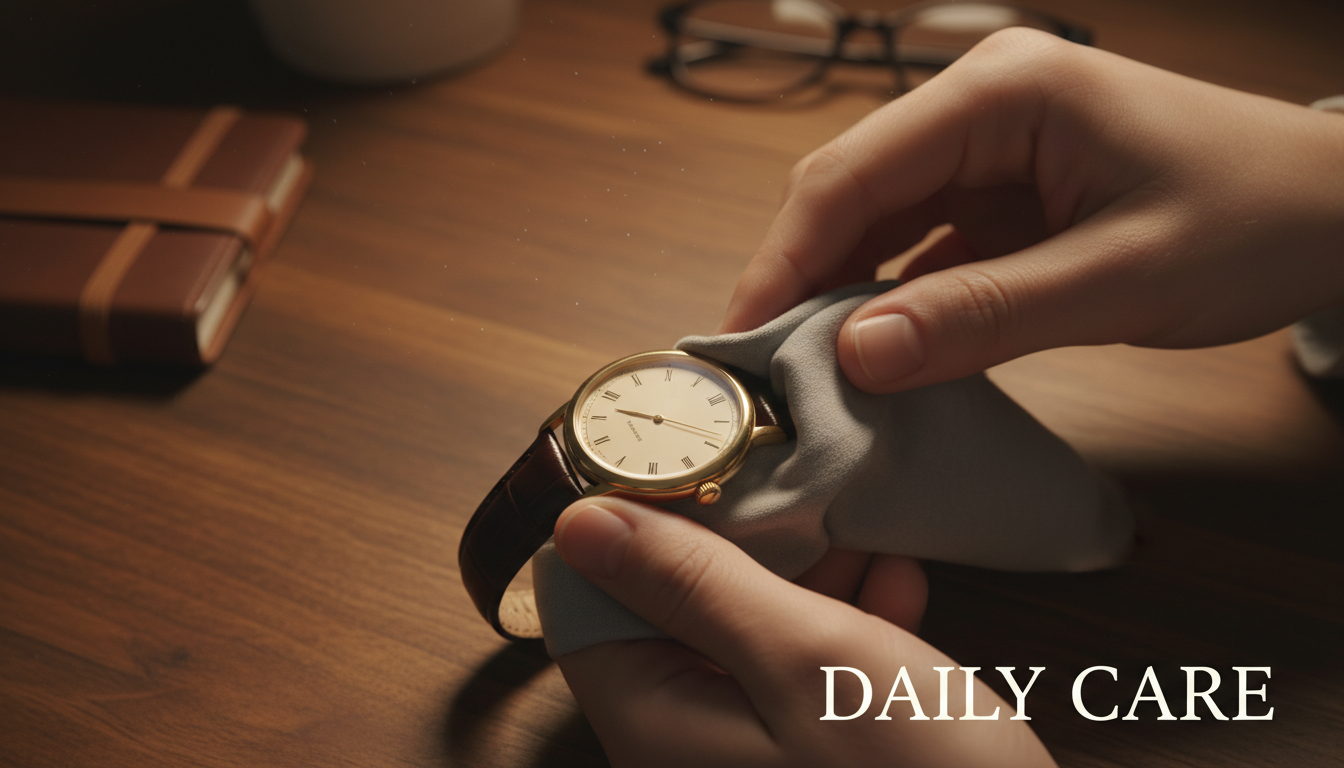
1. Clean Your Watch After Each Wear
What to do: Use a soft, lint-free microfiber cloth to wipe down your watch every time you remove it.
Why it matters: Skin oils, sweat, and environmental particles accumulate throughout the day. These substances are acidic and can:
Time investment: 10-15 seconds Cost savings: Extends strap life by years, prevents case refinishing needs
2. Always Secure the Crown Properly
Best practice: Push in (or screw down) the crown completely every time you're not adjusting the watch.
Critical importance: An unsecured crown is the primary entry point for:
For screw-down crowns, ensure you feel the threads engage fully and tighten finger-tight—never force it.
3. Practice Conscious Wearing
Avoid these common mistakes:
Pro tip: If your watch isn't rated for the activity, leave it in its case. A G-Shock costs $100; repairing a damaged luxury movement costs thousands.
Strategic Storage: Protecting Watches Off Your Wrist

Proper storage is as crucial as daily wear habits. When your watch isn't on your wrist, it faces different threats.
Invest in Quality Watch Storage
Minimum requirements:
Premium features to consider:
Control Environmental Factors
Humidity management:
Temperature considerations:
UV protection:
Storage insight: Watch collectors report that poor storage practices account for approximately 25% of preventable value depreciation in their collections.
Professional Servicing: The Non-Negotiable Timeline
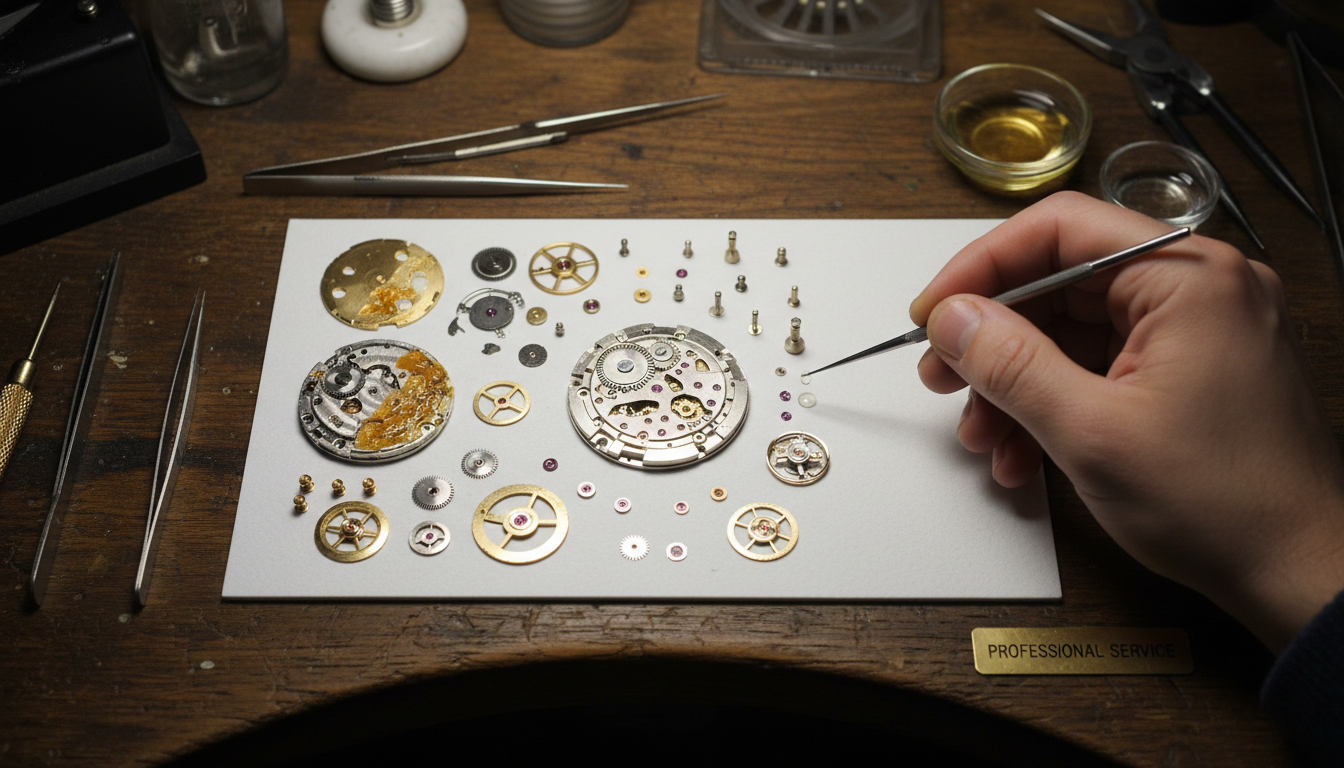
Standard Service Interval: Every 3-5 Years
What happens during a complete service:
1. Disassembly - The entire movement is carefully taken apart
2. Cleaning - Every component is ultrasonically cleaned
3. Inspection - Parts are examined for wear or damage
4. Lubrication - Fresh oils are applied to over 50 friction points
5. Reassembly - The movement is rebuilt to factory specifications
6. Regulation - Timing is adjusted for accuracy
7. Pressure testing - Water resistance is verified
8. Quality control - The watch runs for several days under observation
Cost range: $300-$1,500 depending on complexity and brand Alternative cost: Major movement repair from neglect: $2,000-$5,000+
Water Resistance Testing: Annual or Bi-Annual
For watches regularly exposed to water:
Warning signs you need immediate service:
At-Home Cleaning Guidelines
Safe for metal bracelets only (with good water resistance):
Never clean with water:
Special Considerations for Vintage and Complicated Watches
Vintage timepieces and watches with complications require elevated care protocols.
Vintage Watch Service Frequency
Recommendation: Every 2-3 years (more frequent than modern watches)
Reasoning:
The Vintage Strap Problem
Old rubber straps are time bombs:
Solution: Replace aging straps preemptively, not reactively.
Magnetism: A Modern Threat to Vintage Watches
Common sources of magnetic fields:
Effects on vintage watches:
Modern watch advantage: Contemporary timepieces often feature anti-magnetic components (silicon hairsprings, soft iron cages).
Water Resistance in Vintage Watches: Assume Zero
Critical rule: Never trust vintage water resistance ratings, regardless of what the dial says.
Why:
Best practice: Get a professional pressure test before any water exposure—then replace all seals as preventative maintenance.
Frequently Asked Questions
Q: How often should I service my automatic watch? A: Every 3-5 years for modern watches, every 2-3 years for vintage pieces. Your manufacturer may have specific recommendations—check your warranty documentation.
Q: Can I clean my watch with water? A: Only if it has verified water resistance and a metal bracelet. Never clean leather or fabric straps with water—use specialized cleaners instead.
Q: Should I keep my automatic watch running continuously? A: Yes, through regular wear or a quality watch winder. Continuous operation keeps lubricants distributed and prevents settling. Extended periods of inactivity (6+ months) can cause lubricant migration and increase friction.
Q: How do I protect my watch from sun damage? A: Store in a closed case away from direct sunlight. UV exposure fades dials, discolors lume, and degrades leather, rubber, and some synthetic materials.
Q: What's the most common maintenance mistake? A: Delaying professional service. Many owners wait until problems appear instead of following preventative schedules—turning $400 services into $2,000+ repairs.
Conclusion: Your Watch Maintenance Action Plan
Your timepiece represents a significant investment—protect it with these essential practices:
Daily:
Monthly:
Annually:
Every 3-5 Years:
The Reality: Well-maintained watches retain 80-90% of their value and can appreciate over time. Neglected watches lose 30-50% of their value and face exponentially higher repair costs.
Your next step: Schedule service for any watch that's overdue, inspect your storage setup, and commit to daily care habits. Your future self (and your heirs) will thank you.
