

Digital Provenance: How Blockchain Secures Trust in Luxury Authentication
The Stellaris Journal
Look, the luxury market is bleeding. We're talking a trillion dollars a year lost to fakes. A trillion. That's 3.3% of all global trade, just
… gone. Swallowed by counterfeits.
And what's the real cost? Not just the money, though that's massive. It's trust. The whole damn thing rests on authenticity, right? But paper certificates? They're a joke now. Easily copied. No longer cutting it in this mess of a global supply chain.
So, where do we go? Forget the hype. Blockchain isn't some "game-changer" buzzword – it's a cold, hard blockchain infrastructure play. It’s how we build a verifiable, tamper-proof history for every single luxury item. This isn't just about stopping fakes; it's about rebuilding the core of what luxury means: genuine trust.
The Billion-Dollar Trust Deficit in the Luxury Market
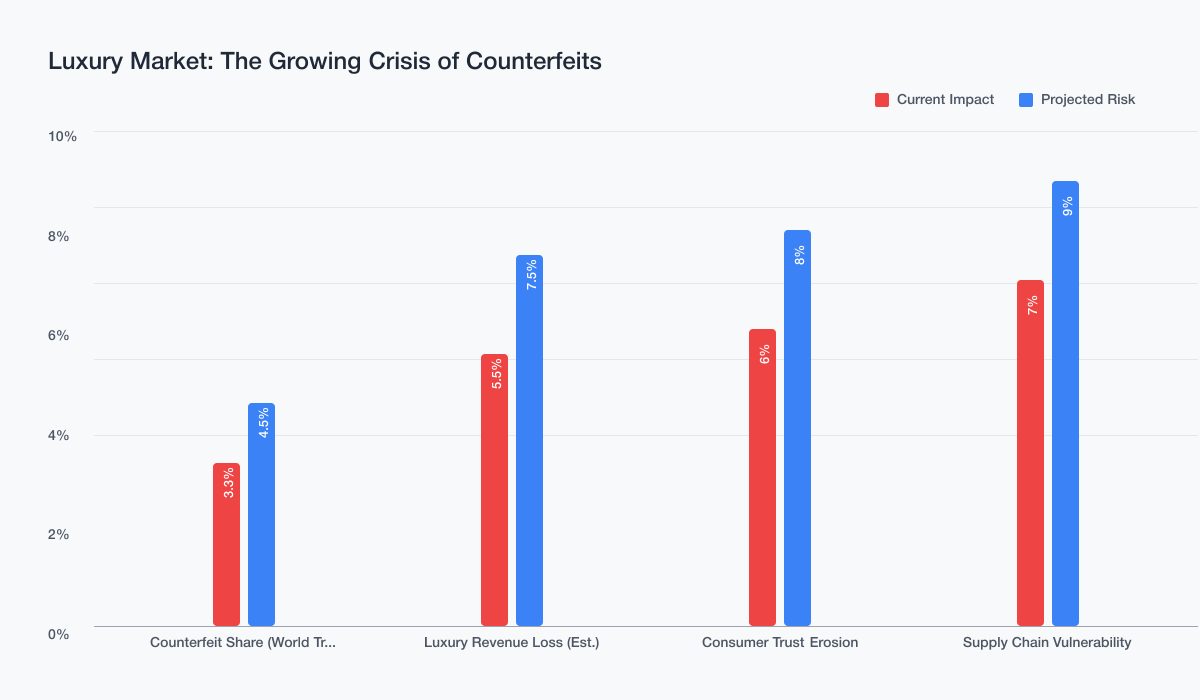
Here's the thing. You ever wonder where all those "deals" come from? The ones too good to be true? Yeah, they're probably fake. And that’s a problem. A huge one. Because this isn't just about some knock-off handbag someone bought on a street corner. This is about real money. Big money. We're talking billions. Trillions, even. The luxury market? It's bleeding cash, non-stop. And because of fakes, our whole reputation, the industry's very soul, gets chewed up and spit out.
So, how bad is the mess? Crazy bad. We're not just talking a few bad apples. It's an entire orchard of rotten fruit. The OECD (2024) showed that counterfeit goods, they're 3.3% of all world trade. That's a staggering amount. Just sit with that for a second. It's a trillion-dollar problem every single year. A trillion! And it just keeps getting worse. Yet, we're still using methods from the Stone Age to fix this. It’s a joke.
But why's it such a mess? Because our supply chains? They're like a bowl of spaghetti. All tangled up. So many hands touch a high-end watch or a fancy piece of jewelry before it ever hits your wrist. Designers, manufacturers, then some distributors, then finally the stores. So many gaps. And so many chances for some fraudster to slip in a fake. Or swap a genuine part for a garbage one. And because it's so convoluted, tracing anything back? Forget about it. Impossible.
And the "proofs" we've been relying on? Paper certificates. Receipts. You know, the things you print at home. So easy to fake. Just open up Photoshop. Or go down to the print shop. That little piece of paper, supposedly proving something is real? Worthless. Consumers know it. They’re not dumb anymore. They buy something expensive, they want to know it's real. And because of these paper lies, they're left guessing. Or worse, feeling ripped off. And you can't blame them. But they’re also demanding more now, too. Not just "is it real?" but "where did it come from?" And "was it made by people paid fairly?" Old systems? Can't even begin to tell you that.
The old ways? They're not just failing. They’re actively sinking the ship.
Understanding Digital Provenance: Blockchain as an Immutable Record

Forget what you heard about "blockchain" being some magical internet money thing. Or some crazy investment fad. Because it's not. Not really. Here's the thing about it: it’s just a ledger. But it's a ledger that no one, not one single person or company, can screw with. Or change. Ever. It’s permanent. Like carving something into stone. But digital.
So, what does that even mean? Well, think of it as a never-ending chain. Every time something happens—like a luxury item gets created, or shipped, or changes hands—it gets written down. That's a "block." And because it's so secure (it uses this weird math stuff called cryptography), that block gets locked onto the one before it. And then the next one gets locked onto that. And so on. And because they're all locked together, you can't just go back and change one in the middle. Try it. You can't. It's like trying to pull one brick out of the middle of a wall without the whole damn thing crumbling. So, it's tamper-proof. And because of that, it creates an unchangeable record. A history.
And this history? This is the "digital certificate." Or the "digital passport." For an expensive watch, or a diamond, or a designer handbag. It tracks the whole damn journey. From the minute the raw materials are sourced. All the way through manufacturing. Shipping. Selling it the first time. Even when it gets resold later. Every single step, stamped with a time. And because it’s on this chain, you know that history is real. It's not some forged piece of paper. Not some database a hacker could break into.
But why can't a hacker break in? Because there’s no central database. No single place where all the information lives. And because it’s not run by one company. Or one server. This ledger, it’s spread out. Across hundreds, thousands, even millions of computers. All of them holding a copy. So, if someone tries to change something on one computer, all the others instantly know it’s a fake. And reject it. So, no single point of failure. It's crazy. But it works. And some players, like VeChain (with their Proof of Authority, or PoA, model), they're trying to make this whole thing efficient for businesses.
This isn't just a fancy database. It’s an unchangeable truth machine for your most valuable stuff.
How Blockchain Forges Trust in the Supply Chain

Okay, so you get the "immutable record" bit. But how do we actually use this thing? How does it fix the mess in the real world? It's not just some abstract concept. It's about chips. And scans. And automated rules.
First off, every single item. Or even a key component of it. It gets its own unique digital identity. A "digital twin," some call it. Yeah, a fancy way of saying a unique record on the blockchain. And how do we link the physical thing to this digital record? Usually, it's something embedded. Like tiny NFC tags. Or an IoT (Internet of Things) sensor. Stuck right inside the product. Or on its packaging. So you scan that chip with your phone. And boom. You're looking at its life story. The whole thing.
And then there are "smart contracts." These things? They’re just code. But they’re code that runs automatically. Without any human getting in the way. They’re like an agreement, written into the blockchain. And when certain conditions are met? It just executes. No arguments. No forgetting. Transfer ownership? Record a service? The smart contract just does it. Automatically. So, you don't need a bunch of paperwork or approvals slowing everything down. It’s built-in. It's slick. And it really speeds things up.
Think about it. On-chain authentication. That's what we're talking about. You, the retailer, the customer, anyone. Scan the item. With your damn smartphone. And you get its whole history. Instantly. Right there. You know who owned it before. When it was made. What materials went into it. Was it serviced? When? All of it. In real-time. It completely cuts out the guesswork. It saves your ass. And it gives consumers the certainty they crave. Like Tod’s, with their Di Bag (using Aura Blockchain and NFC tags). Or Vaultik, who’s making these digital passports for everything, linking ownership and authenticity. It's happening now. It's the kind of verifiable trust that consumers expect when browsing high-end collections, such as The Stellaris Collection.
And it’s not just about fakes anymore. It’s about being honest. Consumers are asking about where the raw materials come from. Was the gold mined ethically? Are the diamonds conflict-free? Were the factory workers paid properly? The old systems? Forget about it. No way to prove any of that. But with blockchain? You track the raw materials from day one. You link them to the finished product. And because that chain can’t be broken, you can actually verify these ethical sourcing and sustainability claims. You can prove it. No more hot air. Even some platforms, like VeChain's ToolChain, they're letting businesses build their own solutions to do this stuff. So, this isn't just theory. It's a fix.
Blockchain, with its chips and automated rules, isn't just making things traceable. It's building a new foundation of trust, piece by piece.
Industry Adoption: Luxury Brands on the Blockchain
Forget the hype. That's for the crypto bros. Because this isn't some fringe experiment anymore. No, this blockchain thing? It’s real. And the big players, the ones with actual money and history, they’re not just dabbling. They’re building the damn infrastructure. For you. For the whole industry.
Look, you ask, "Who else is doing this?" A fair question. But the answer isn’t a maybe. It’s a definite. You’ve got the Aura Blockchain Consortium, right? Not some startup. It’s LVMH, Prada Group, and Cartier. These guys built a platform. A unified one. Just for luxury brands. And it works. It really does. Tod's, for example, their Di Bag uses Aura technology. Proof that this isn't just talk. It’s happening.
And it goes deeper. Vacheron Constantin. They’re uploading critical product info for their high-end watches directly to the blockchain. Creating a perpetual certificate for every single one. Think about that. No more chasing paper trails. Just immutable, on-chain data. That’s trust. You know? The real kind.
But that's not all. You’ve seen the news, or you should have. Gucci, Dior, Louis Vuitton. They’re using NFTs and blockchain to give you proof of authenticity. Legit proof. Because counterfeits are a huge mess. And this? It helps fix that. It really helps. VeChain (one of the big blockchain platforms) has announced partnerships with the LVMH and BMW Group.
And it’s not just the fashion houses, you know. BMW. Renault. They’re using this tech for supply chain stuff. Tracking parts. Knowing where everything comes from. So, yeah. It’s got cross-industry utility. It’s not just a fancy digital receipt. This is serious. It's solid. And if you're not looking at it, you're missing the boat. A big boat.
Luxury giants aren’t playing games; they’re building the very foundations of how this whole industry will operate in the future. You need to be part of it.
The Strategic Imperative: Separating Product Trust and Client Trust
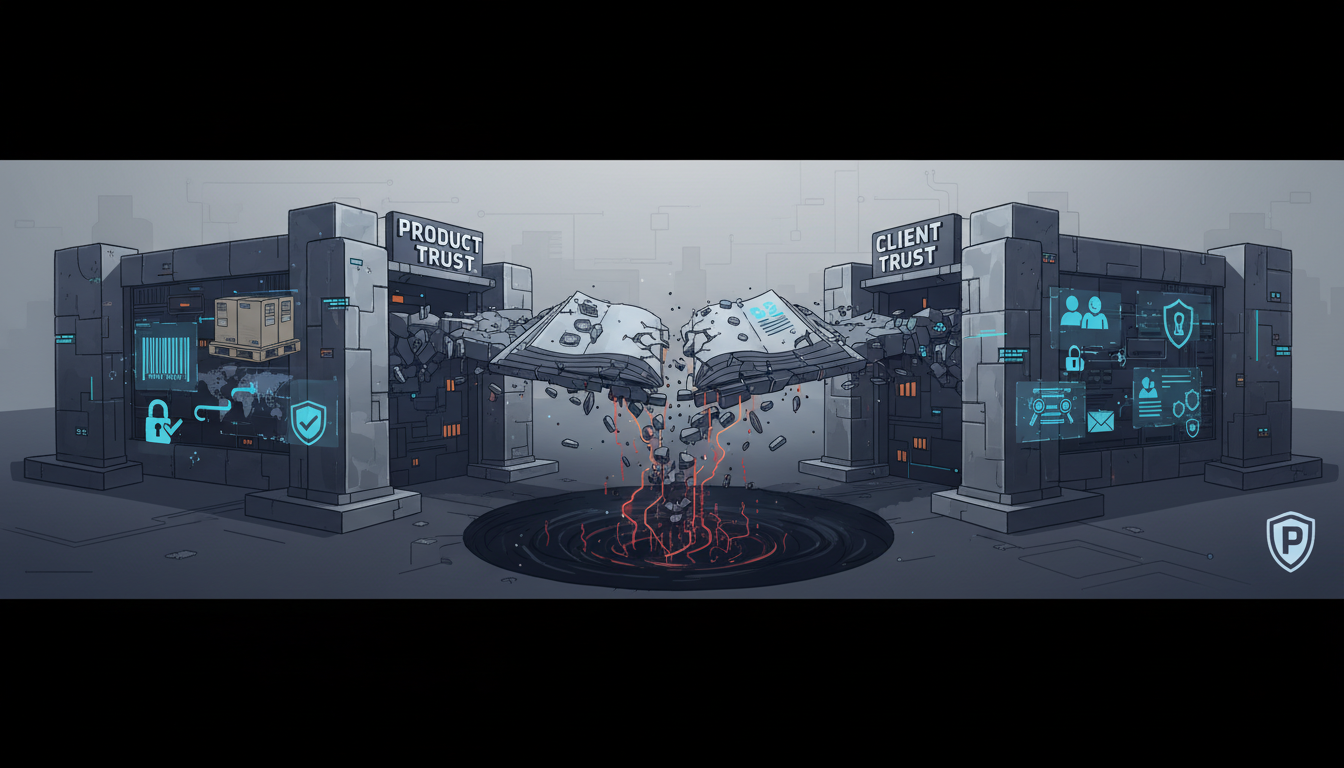
Okay, so you’ve got data. Lots of it. But here’s the thing. Not all data is equal. And mixing it up? That’s a dangerous game. A really dangerous game. Because you need two trust architectures. Not just one. One for the product. And another, totally separate one, for your client.
Think about it. Product provenance systems. These are about the item, right? Its origin. Where it’s been. Who had it. Every little event in its crazy lifecycle. And that data? It needs to be verifiable by a whole ecosystem. Suppliers, customs, all that. It’s about the watch, the bag, the jewel. Just the thing itself.
But clienteling systems? Oh, that’s different. That’s about the person. You. Your identity. What you bought. Your preferences. Everything that makes up your relationship with the brand. That's high-value client data. Personal data. And you can’t just throw that into a shared ledger with product info. That’s asking for trouble. Big trouble.
Merging these two worlds? Especially on some shared blockchain? That’s a cybersecurity nightmare waiting to happen. Serious privacy risks. And you know how much a data breach costs. IBM’s 2025 Cost of a Data Breach report? It’s not pretty. Not for anyone. And regulatory penalties? Ouch. We saw what happened with Dior (IAPP analyzed their China case, a real mess). You don't want that.
Because the ultimate goal here? It’s protecting authenticity without screwing up customer intimacy. It’s about verifying the product through a broad system. But keeping your client data locked down tight. Inside. Strict, internal controls. That's the cybersecurity principle of least privilege. You give access only when absolutely needed. And if you don’t separate these domains? You'll lose client trust. The trust that underpins everything you do. That's the real luxury.
So, yes, you need to verify the product. But you need to protect your client even more. Build two walls, not one.
Challenges and the Road to Adoption
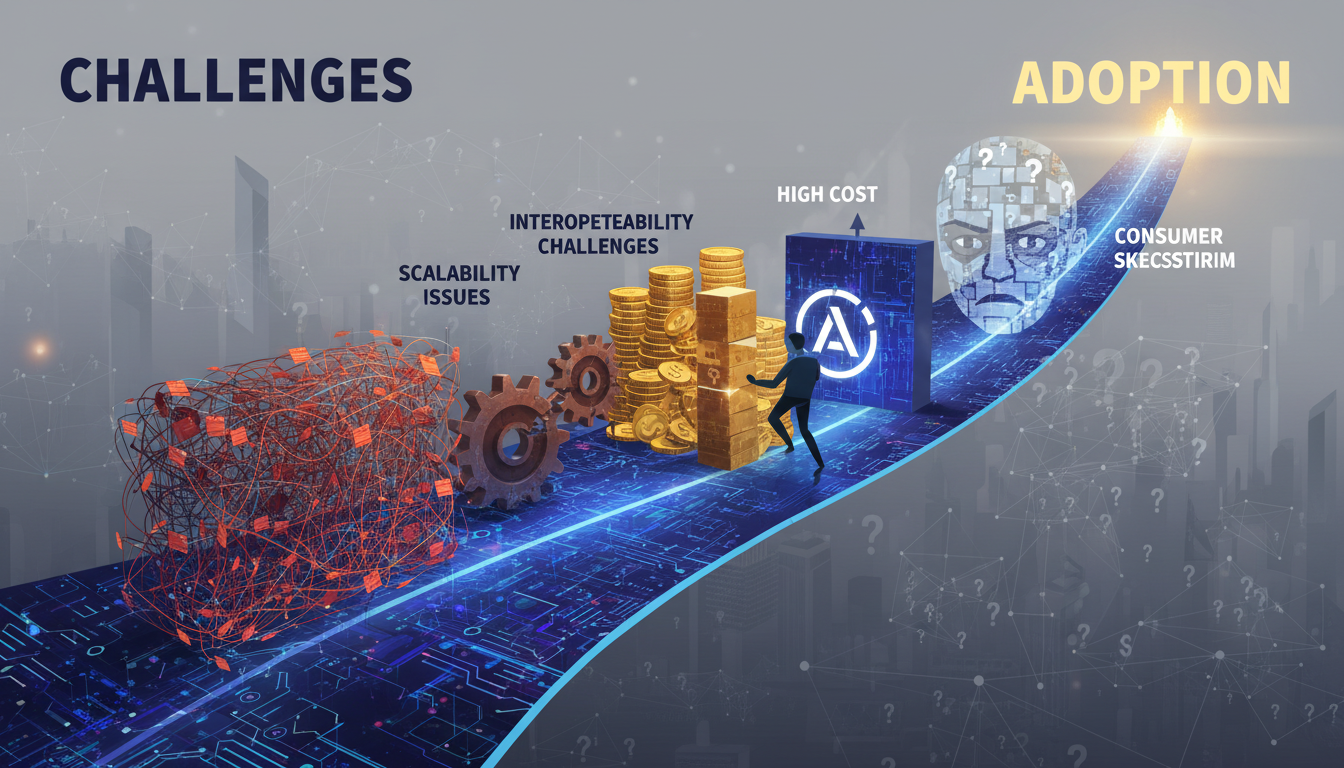
Alright, don't get me wrong. This blockchain stuff? It's not some magic fix. There are real headaches here. And anyone who tells you otherwise? They're either selling something or they're just plain naive. You've gotta look at the whole picture. The good, the bad. And the ugly.
First off, scalability. Blockchain networks. They need to handle a crazy amount of transactions. Without slowing down. Or becoming insecure. Because when more brands jump on, and they will, this thing needs to perform. It needs to keep up. Or it all falls apart. So, that's a big one.
Then you got interoperability. It's not just one blockchain. Or one system. You've got different brands. Old legacy systems. New platforms. They all need to talk to each other. Seamlessly. And that takes standards. Real standards. Which is why something like Aura is so important. They’re trying to connect the dots. But it’s a big, complicated mess to untangle. Like the Battery Pass initiative, right? Tons of data, complex systems all trying to talk. Not easy.
And cost. Let's not pretend this is free. The initial investment for all this? Embedding IoT tags. NFC tags. Integrating blockchain systems into what you already have. It can be a real barrier. Especially for smaller brands. You need budget. Real budget. So, think hard about that.
But the biggest hurdle? Probably consumer reception. Remember the NFT hype? And then the crash? People got burned. Big time. And now? There's skepticism. A lot of it. You see it everywhere. Reddit forums (I read them, so do you) are full of people confused. They think NFTs were just some crazy digital art bubble. And they associate that with all blockchain. So you, the brand, you gotta educate them. Show them the utility. The real-world benefits of a digital provenance. Not just some speculative JPEG.
So, no, it's not easy. But ignoring the challenges won't make them disappear. Face them. Fix them. That's how this becomes the industry standard.
---
Look, the game changed. Counterfeits bleed this industry dry, and paper trails? They’re toilet paper against a $1 trillion problem. Blockchain isn't some academic exercise or another buzzword to roll your eyes at. It’s the only real shot we've got at locking down authenticity in a market absolutely swimming in fakes.
And that’s the raw truth of it. This isn't about shiny new tech for its own sake. It’s about ensuring what you buy is actually what it claims to be. A simple concept, really. Yet, one we've completely fumbled for decades.
Here’s what you need to remember:
- This whole digital provenance thing? It’s not a nice-to-have; it’s the definitive answer to the trust deficit. A verifiable, immutable record for every item, from the bench to your wrist.
- Think of it like a bulletproof history for a luxury item. Not just a sticker, not a flimsy card. A permanent, undeniable digital fingerprint from factory floor to owner.
- Brands that actually get this aren't just playing defense against counterfeits. They’re building an entirely new foundation for customer confidence, for future resales, for genuine loyalty. The others? They’ll be selling doubt.
This isn't just about "digital assets" or some abstract concept of ownership. It’s about money, sure. But it’s also about the soul of the luxury market—trust.
So, what do you do with this? If you’re buying or selling anything with serious value, like items from The Stellaris Collection, demand proof. And not just any proof. Demand a verifiable, immutable record of provenance. Don't settle for anything less. Your capital, and your peace of mind, depend on it.
