

Choosing a Center Stone for a Custom Jewelry Commission
The Stellaris Journal
A commission gives you one rare advantage over a stock purchase: you can match the stone to the setting rather than the other way around. That single inversion changes almost every decision that follows. The center stone is no longer a constraint to design around; it sets the design language. The shape, the proportions, the way light enters and returns, the metal it sits in, and the budget that remains for the band, the gallery, and any accent stones all start to fall into place once that choice is made well.
This guide is written for someone at the beginning of a custom commission who wants a clear way to evaluate a center stone beyond the usual four-line summary of the 4Cs. The goal is to help you leave a consultation having made a defensible choice you will still be comfortable with a decade from now, not just at the proposal.
Why the Center Stone Comes First in a Commission
In a made-to-order piece, the stone dictates the engineering. A 1.20 carat elongated oval sits differently in a bezel than a 1.20 carat round brilliant, and the prong spacing, the head height, and the band width all move with it. According to GIA's research on cut quality grading, appearance factors such as proportion, symmetry, and polish influence not only beauty but the structural interaction between stone and setting. Reverse the order, and you start designing a ring, then searching for a stone that happens to fit it.
Treating the center stone as the design anchor also clarifies the budget conversation. Most custom budgets for engagement and commission rings break into three pools: the stone, the metal and labor, and the secondary elements (accent stones, engraving, milgrain, finishing). Allocating roughly half to the center stone is a common starting point, but the share should flex with your priorities. A simpler solitaire on a platinum band can absorb more budget in the stone. A pavé halo with a custom gallery will absorb more in the setting. Either choice is legitimate, but only if you make it consciously rather than discovering the imbalance at the invoice.
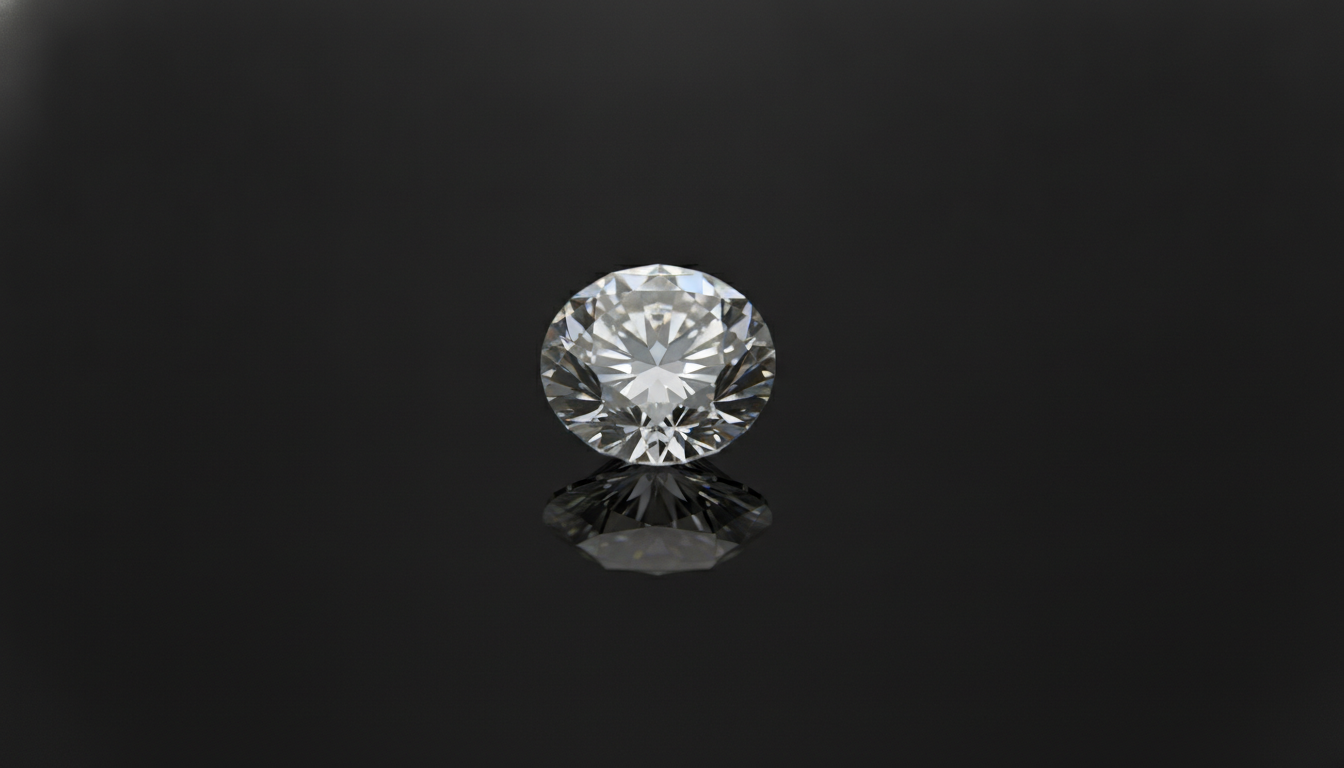
Shape and Silhouette: Choosing the Visual Identity
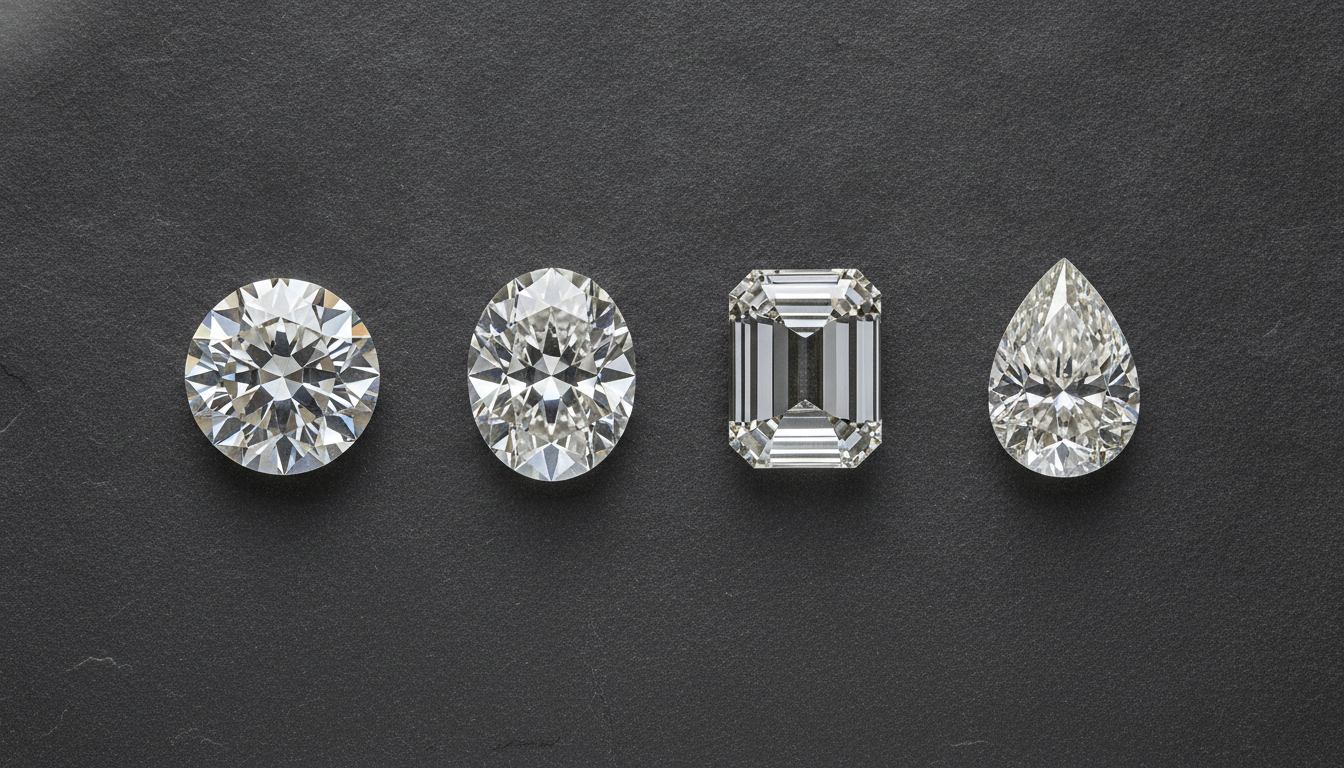
Shape is where most commissions either take clear direction or quietly drift. Two people can say "I want an elegant stone" and mean a round brilliant and an emerald cut. The difference is not aesthetic preference alone; it is the entire optical behavior of the finished ring.
Round brilliants are the reference. They are engineered to maximize light return and are the only shape with a universally standardized cut grade in the GIA system. If you want maximum sparkle and minimal guesswork on proportion, this is the safest path.
Modified brilliants (oval, cushion, pear, marquise, radiant) keep most of the round brilliant's facet structure but stretch the silhouette. Elongated shapes such as oval, marquise, and pear generally present more of their weight across the top of the stone rather than in depth, which is why face-up measurements diverge from what carat weight alone suggests. A GIA study of fancy-shaped diamonds documents how length-to-width ratio, shoulder shape, and point angle each shift the visible outline in ways that round brilliants do not. That matters if you care about visible size for a given weight.
Step cuts (emerald and asscher) prioritize a calm, mirror-like flash over sparkle. Their open, broad facets show inclusions and color more readily, so they reward higher clarity and color grades, and they pair naturally with clean, architectural settings.
A practical way to evaluate shape during a consultation is to ask for the measurements, not just the carat weight. A 1.5 carat oval that measures 9.0 by 6.2 mm will look meaningfully different from one measuring 9.4 by 6.0 mm, even though both are technically the same carat. Face-up size, length-to-width ratio, and depth percentage are the numbers that drive what you actually see on the finger.
Light Performance Over Paper Grades: Why Cut Dominates
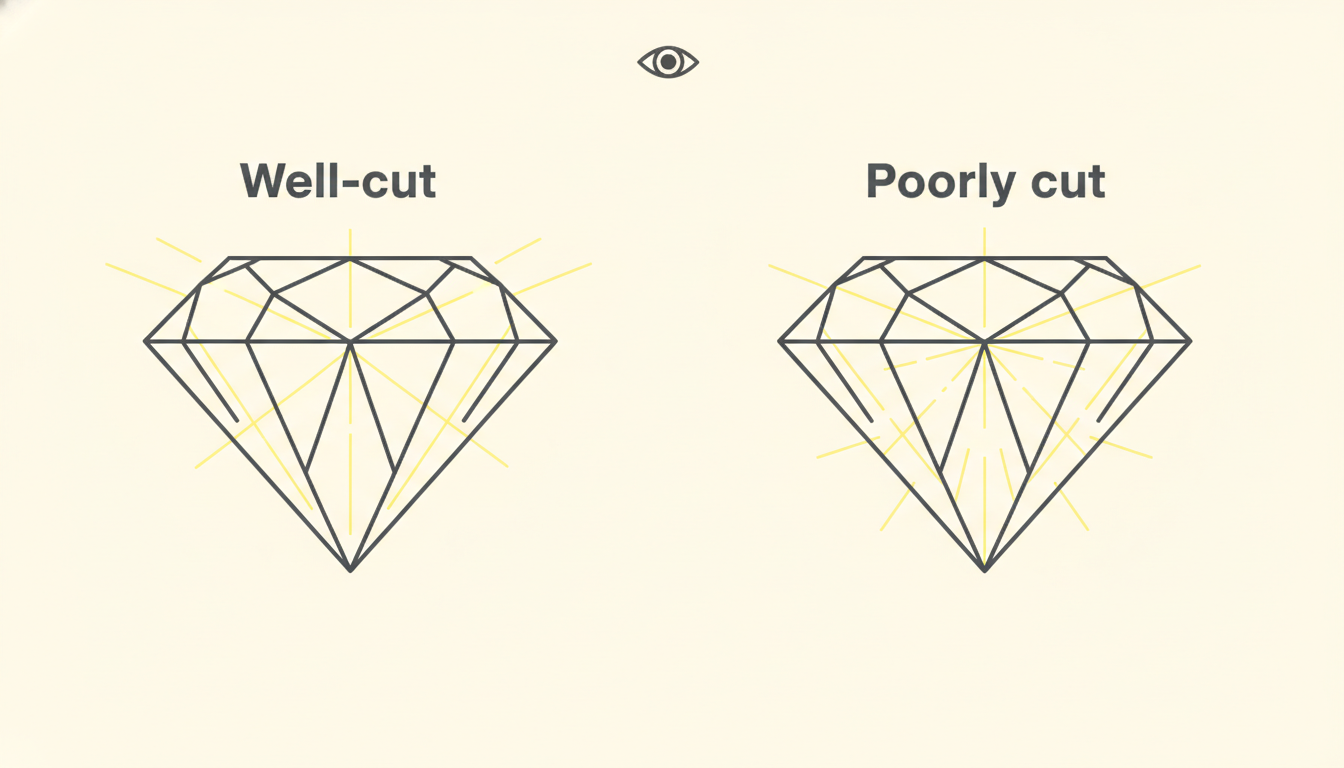
Cut grade, not carat weight, is the single most important variable for how a diamond looks in normal wear. Two stones of identical color and clarity can appear entirely different if one is cut to ideal proportions and the other is cut to retain weight.
Light performance is generally broken into three properties. Brilliance is the white light returned through the crown. Fire is the dispersion of light into spectral colors across the facets. Scintillation is the pattern of light and dark flashes you see when the stone, the light source, or the wearer moves. The interaction of all three, not any one alone, defines what your eye reads as "a beautiful stone."
For a round brilliant, GIA's cut grade scale runs Excellent, Very Good, Good, Fair, Poor. For modified brilliants and step cuts, there is no equivalent universal cut grade from GIA. That does not mean cut stops mattering; it means the responsibility for proportion shifts to your jeweler and to the information on the grading report (table percentage, depth percentage, pavilion and crown angles). For fancy shapes, you should expect to discuss these numbers directly rather than rely on a single letter.
A practical rule of thumb for commissions: prioritize cut first, then size, then color and clarity. This is the order that gets you a stone that looks alive rather than a stone that merely looks large on paper.
Color, Clarity, and the Setting Interaction
Color and clarity are where most buyers overpay, because the grades sound technical and the price differences are easy to mistake for meaningful. In practice, the setting you choose changes which grades are actually visible.
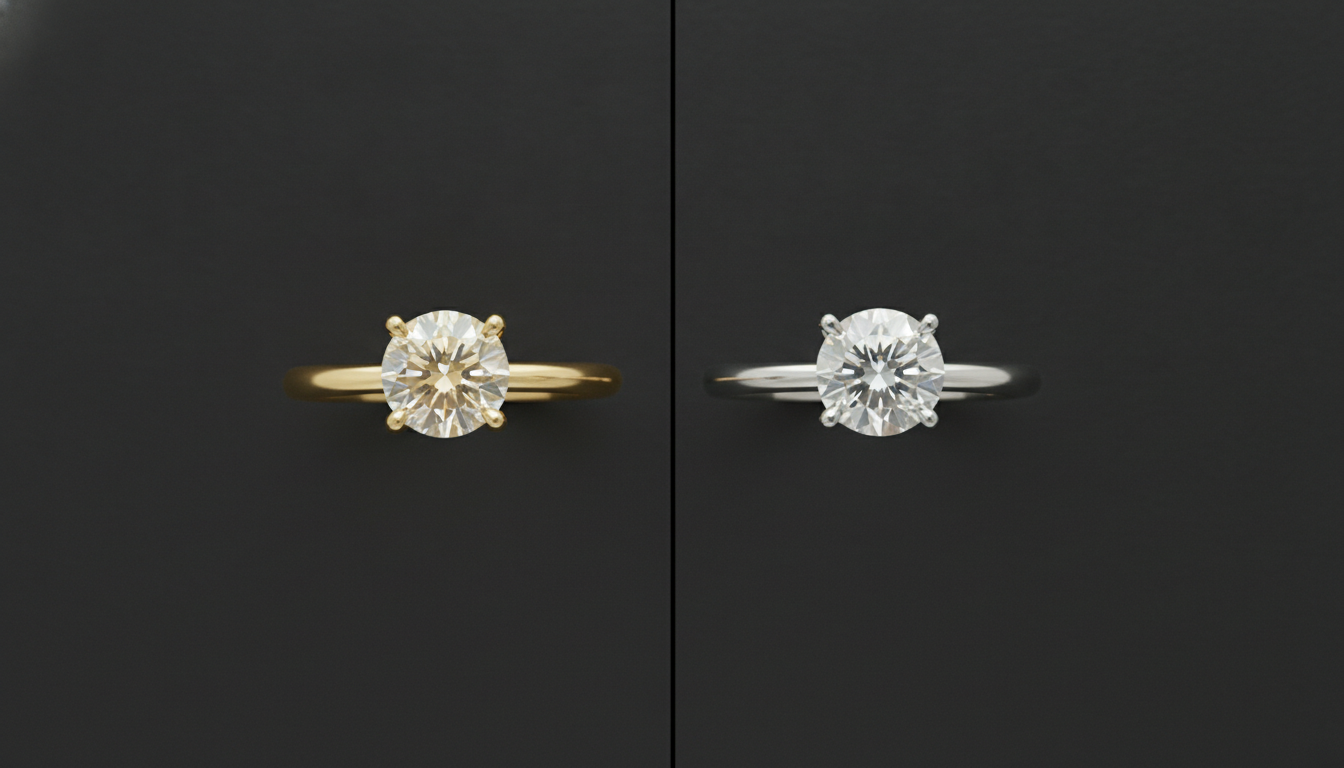
On color, GIA's D-to-Z scale places D, E, and F as colorless and G through J as near-colorless. According to the Natural Diamond Council's guide to engagement ring metals, white metals such as platinum and white gold tend to emphasize any tint in lower-color stones, while yellow and rose gold settings can visually offset a faint warm hue, allowing a G or H to look bright rather than tinted. If your commission calls for a yellow gold solitaire, you can often step down one or two color grades with no visible difference. If your commission calls for a platinum or white gold setting with no surrounding melee to mask the tint, prioritize a higher color grade.
On clarity, the practical standard is "eye-clean": no inclusions visible to the naked eye from a normal viewing distance. Clarity research aggregated across retailers shows that VS1 and VS2 grades almost always appear eye-clean, while SI1 can be eye-clean but varies significantly stone to stone depending on inclusion type and position. A single small crystal tucked under a prong can be invisible; a cloud that sits beneath the table is more obvious. For step cuts and larger stones, lean toward VS2 or higher. For brilliant cuts under two carats, a well-selected SI1 is often indistinguishable from a VS2 to the wearer.
The trap to avoid is buying clarity you will never see. Once mounted, most inclusions are hidden by prongs, the gallery, or surrounding metal. The grading report is for the jeweler's confidence and for resale; what matters in your daily wear is what your eye registers.
Natural vs. Lab-Grown: A Decision for the Commission
For a commission, the choice between a natural and a lab-grown center stone is a choice about priorities, not a choice about right and wrong. Both are real diamonds, identical in crystal structure and hardness.
What changes is provenance, price, and long-term position. Lab-grown stones typically cost 60 to 80 percent less than comparable natural stones, according to current market data (Polar Lab Diamonds, 2026). That margin can either let you move up meaningfully in size or quality for the same budget, or free budget for a more elaborate setting. Natural diamonds, on the other hand, retain a perception of rarity and a more established resale market, though neither category is a reliable financial investment at the retail level.
From our perspective at The Stellaris Collection, the practical question is what the stone is meant to mean to you. We work with both natural and lab-grown diamonds in our custom jewelry line, and we select both for measurable brilliance, structural integrity, and long-term performance rather than origin alone. The decision belongs with the client, ideally reached before the design is finalized, because the same budget buys different stones and the same stone supports different designs.
A note on ethics: the question of which choice is more responsible has no single answer. Lab-grown production requires significant energy, often from non-renewable sources; natural mining has its own documented environmental and labor concerns. Neither category is automatically the more ethical choice. What matters is verifiable provenance, transparent documentation, and a jeweler who will answer the question directly.
Certification, Documentation, and What to Verify Before Production
In a commission, a grading report is not optional. It is the only objective record you have of what you are buying, and it is the document that should accompany the stone through setting and final inspection.
Two laboratories dominate the market. GIA is the longest-established authority on natural diamond grading and is the standard most resellers and insurers reference. IGI grades both natural and lab-grown diamonds and is widely used internationally for finished jewelry and lab-grown stones. Both are legitimate; neither should be assumed over the other without context. What matters is that the report you receive matches the stone you selected, and that the issuing laboratory is one you recognize.
For a commission specifically, the report should document:
- Carat weight with measurements (length, width, depth in millimeters)
- Color and clarity grades with the plotting diagram
- Cut grade (for round brilliants) or the proportion data (for fancy shapes)
- Polish and symmetry grades
- Fluorescence
- Any treatments or enhancements, clearly disclosed
If the report indicates a clarity-enhanced or fracture-filled stone, that affects long-term durability and should be discussed openly before approval. These treatments are not undisclosed; they should simply be part of the conversation.
Once the stone is selected and the report is in hand, you should expect your jeweler to issue a formal production proposal documenting the agreed stone, the setting design, the metal, and any other agreed specifications before fabrication begins. At The Stellaris Collection, no fabrication begins until every element of the proposal is approved and documented. That is the discipline that protects both the client and the studio.
What You Should Leave a Consultation With
A center stone is not a single decision; it is a sequence of small decisions that should reinforce each other. The shape sets the visual identity. The cut determines whether it looks alive. The color and clarity are filtered through the setting you intend to build. The choice between natural and lab-grown aligns the stone with the meaning you want the piece to carry. And the grading report is the receipt that proves what you actually bought.
If you leave a consultation having discussed all five, you are in a position to commission with confidence. If you leave having focused on carat alone, the rest of the design will quietly fight the stone for the rest of the project's life.
For clients ready to begin a commission, our Design Your Own process begins with a consultation and ends with formal documentation before any work begins. The center stone is one of the first substantive decisions in that process, and it deserves the attention of every other.
Frequently Asked Questions
What matters most when choosing a center stone for a custom ring?
Cut quality and shape, in that order. Carat weight follows from how the proportions read on the hand, not the other way around.
How does the setting change which stone grades matter?
Yellow and rose gold settings forgive lower color grades, while platinum and white gold demand higher color. Step cuts demand higher clarity than brilliants because their open facets expose inclusions.
Is a GIA or IGI report better?
Both are legitimate laboratories. GIA is the standard for natural diamonds; IGI is widely used for both natural and lab-grown stones. What matters is that the report matches the stone and is recognized in your market.
Should I choose a natural or lab-grown diamond for a commission?
It depends on your priorities. Lab-grown offers meaningful budget flexibility; natural carries established rarity and resale perception. Both can be the right choice for the right client.
How long does a custom commission take after the stone is selected?
At The Stellaris Collection, please allow approximately three weeks for crafting following final approval. Timelines may vary depending on the complexity of the design.
