

The Ultimate Checklist for Inspecting Pre-Owned Watches
The Stellaris Journal
Twenty-seven billion dollars. That's the pre-owned watch market now. A massive pile of money, sure. But it ’s also a minefield (a literal one, if you ’re not careful). Every day, the fakes get smarter, the digital scams slicker. You want a hidden gem? Great. But you're just as likely to snag a costly paperweight, or worse, a ticking time bomb of regret. So, forget your 'gut feeling.' Forget just squinting at the dial. You need a system. A brutal, no-nonsense checklist. And that ’s what this is: your personal fraud detector.
Brief & TL;DR
So, you want a used watch? Good luck. It ’s a minefield out there, and one wrong step can burn you. Simple as that. It ’s not about the watch first; it ’s about the person selling it. You need to buy the seller. Seriously. Their reputation is everything. If it smells off, walk away. Period.
Then, you get to the actual piece. You have to be a detective. Check the case—is it over-polished? (That kills value and is a red flag.) Are there chips on the crystal? Or is the bracelet stretched out like old gum? Don't let them rush you.
Don't just stare at it. Feel it. Wind the crown. Is it smooth, or gritty? Does the date click right, every single time? What about the clasp? It needs to snap shut, securely. Because loose means cheap. For anything pricey, you demand to see the movement. Open it up. You don't want a "Frankenwatch," buddy. That ’s a common trick. Expert authenticators? They go straight for the guts, not just the shiny bits.
Oh, and the "full set" —box, papers, all that fluff. Yeah, it matters. A lot. It can tack on 10, even 20% more value, Similarweb (2024) shows. It ’s your proof. Your provenance. You need it.
Because right now, the market is crazy. Pre-owned watch sales hit like $27 billion in 2022. That ’s a huge mess, and scammers are everywhere. They're using AI to generate fake listing photos now. Saw it myself on Reddit. So, ask for a custom timestamp. Or a video call. Do something real. Don ’t trust a pretty picture.
It ’s a systematic game. You skip a layer of inspection? You're playing with fire. Every step is there to keep you from losing your shirt. That ’s the only way.
The Pre-Purchase Framework: Researching the Seller and the Story
Before you even think about that shiny watch on your wrist, you need to pause. Seriously. The watch itself is only half the story. The other half is the person selling it to you, and their background. You need to know who you're dealing with and what they ’re trying to sell you—or pawn off.

Seller types vary. Not all are shady, but some are shadier than others. You usually have a few options. First, the manufacturer-backed CPO programs. Think Rolex, with their certified pre-owned setup and a two-year international guarantee. Even Similarweb (2024) data wouldn't argue with that. Less risk, but more cash out of your pocket. Always a trade-off. Then there are trusted independent dealers. These guys live and die by reputation, building their names over years of positive experiences and a clear paper trail. But you still need to check their work. And then? The Wild West: private sellers—your buddy's uncle, some random person on the internet. This is where most people get absolutely burned because there's no backup, no official channels.
You must vet these people. Every single one. It ’s not optional. Go digging. Find independent reviews. Customer testimonials are good, but also look for the bad ones; people are quick to complain, and that ’s your gold. Check out Reddit's r/WatchExchange or other watch forums; they're filled with stories, both good and bad, often bad when this step is skipped. Trust isn't given; it's earned, or sometimes, faked. You need to expose the fakes.
And the watch itself? It has a story—or it damn well should. Ask about the service history. Crucial. You need to know if this thing has been looked after by proper people. An authorized service center record? That's gold; it adds real value and shows someone actually cared. An unexpected service isn't cheap—a $500 to $1500 bill will hit you like a truck, turning your "bargain" into a money pit. So, ask for the papers, the receipts, every single thing. Rolex recommends servicing every 5-10 years. But what if it ’s been twenty?
Then there's the warranty. CPO programs, like the official Rolex one, typically include a 1-2 year warranty. That's a big deal; it means they trust the damn thing. But if a private seller offers "as-is" or just a handshake? That's a huge red flag. If they don't have faith in what they ’re selling, why should you?
A trustworthy seller and a clear history are the only foundation you get. Build on anything else, and you're just gambling your money.
Visual Inspection: Assessing the Case, Crystal, and Dial
Forget the fancy marketing. You ’re not buying a story; you ’re buying history, a tangible record. And that record? It's right there, staring back at you. All the good, all the bad, all the sloppy fixes. So look hard, because the outside of that watch—the case, the crystal, the dial—tells you everything. Every scratch, every botched polish, every little chip. It's all there, sometimes a real mess, and you have to see it.
First up? Those lugs—the little arms that hold the strap. You want 'em sharp, razor sharp, not rounded. Some chump trying to make an old watch 'new' again will just go at it with a polishing wheel. Boom. All that original geometry? Gone. Melted away. It's sickening, because every time they polish it down, they ’re ripping metal right off the watch, permanently, a process detailed in many polishing guides. You can ’t put it back. So, yes, look at those edges. Rounded lugs are a death sentence for collector value. They truly are. That's a sign of a bad life for that watch, maybe a bad owner. Any signs of over-polishing, especially rounded lugs, are a definitive red flag that diminishes both value and authenticity.
Next, the crystal—that window to the soul, right? More than just a window, it's a barrier. And you absolutely have to check it for chips, especially around the edges. Tiny little nicks. Because even a micro-chip, something you might barely see? That's a breach. Water, air, dust—all that nasty stuff gets in, and boom, your movement (the engine, the real heart of the thing) is screwed. Completely. Catastrophic damage. So, if the crystal's compromised, say goodbye to any hope of it surviving a splash, let alone a dive. The anti-reflective coating, though? Little scratches there are totally common. Not ideal, but not a deal-breaker; it just means someone used a shirt sleeve a few too many times. But chips? No. A definite, hard no.
Then, the dial. Oh, the dial. This is where the fakes often just fall apart. They try, but they always mess it up. Look for any weird discoloration, splotches, or obvious water damage. But really focus on the text, the logos, the markers. Are they crisp? Perfectly aligned? Or do they look like someone slapped 'em on with a cheap sticker? The real deal, the good ones, are precise. Unbelievably precise. Every single letter, every little hash mark, perfect. Counterfeiters, as noted in authenticity guides, just can ’t replicate that level of detail, ever. And if they get close, it's usually just a bit off—a millimeter here, a smudge there. So if you see any blurring or crookedness? Big red flag. A giant one.
And finally, the bracelet. Hold the watch case and just let the bracelet hang down. What do you see? Is it stiff? Or does it look like a sad, deflated noodle? That's 'stretch.' Not that the metal itself is stretching (it's not, usually), but the pins and links are worn down, ground thin over years of wrist movement, dirt, grime, and all that nonsense. When that happens, the bracelet's shot. Truly. And expensive to fix, too. So, yes, don't ignore the stretch. It tells you a lot about how much life that watch has actually lived (or endured). Even Similarweb (2024) shows that bracelet condition is a major factor in resale value. A loose bracelet isn't just uncomfortable; it's a money pit.
Functional Checks: Winding, Setting, and Securing
Alright, listen up. You can read all the spec sheets you want. You can stare at glossy pictures until your eyes bleed. But none of that tells you squat about a watch's true guts. Not really. The real talk? You have to feel the damn thing. Get your hands on it. Because how a watch feels when you interact with it? That's the real mechanic's report right there, giving you direct feedback on what ’s ticking (or seizing) inside. So, let ’s poke around, eh?
First, the crown. This is ground zero. Grab it, wind it. What ’s it feel like? Smooth? Or does it grate, like sand in the gears? A gritty winding stem is a huge red flag, not just "needs a clean." How to repair the crown and winding stem of your vintage watch - (Fast track re-edit) No, that usually means the movement's bone dry, and that ’s an expensive fix—fast. You don't want that. And when you set the time or date? It better click clean. No slop. No dead zones. Just a solid engagement. After that, if it's a screw-down crown (and it should be on anything half-decent), turn it. Feel it bite? It needs several smooth, solid turns to lock and stay locked. Otherwise, you'll be swimming with an open wound, water everywhere.
And for all you fancy types, with your chronographs? Test those pushers. All of them. Start it. Stop it. Reset it. And watch those hands. Do they snap back to zero? Perfectly? Because if they hesitate, or they're off a hair, you've got trouble. Big trouble. Malfunctioning chronograph pushers don't just happen; they point to serious, complicated issues inside. How To Recalibrate (Realign) the hands of ANY Chronograph Quartz Watch? (Back to 0) And believe me, those are wallet-emptying kinds of problems.
Or maybe it ’s a diver, yeah? With a rotating bezel. Grab that sucker. Turn it. Does it click crisply, like it means it? And does it have minimal backward play? Minimal is the only acceptable answer here, so it stays where you put it.
Then, there ’s the clasp. You put that watch on, right? It needs to stay there. Open and close that thing a few times. Feel it. It needs to lock securely and feel robust, not flimsy. A loose or faulty clasp isn't just annoying; it ’s probably the most common way people lose their watches or smash them. Non Secure Watch Clasp It ’s a critical failure point. A good seller, a reputable one, will let you mess with it; they understand you ’re checking for that confidence, that everything from the clasp to the date change actually works. Even Similarweb (2024) shows that final quality control should confirm flawless operation.
The feel of a watch, how it acts under your fingers, is your first, best, and cheapest diagnostic tool. Ignore it at your peril.
Inside the Case: Verifying the Movement and Markings
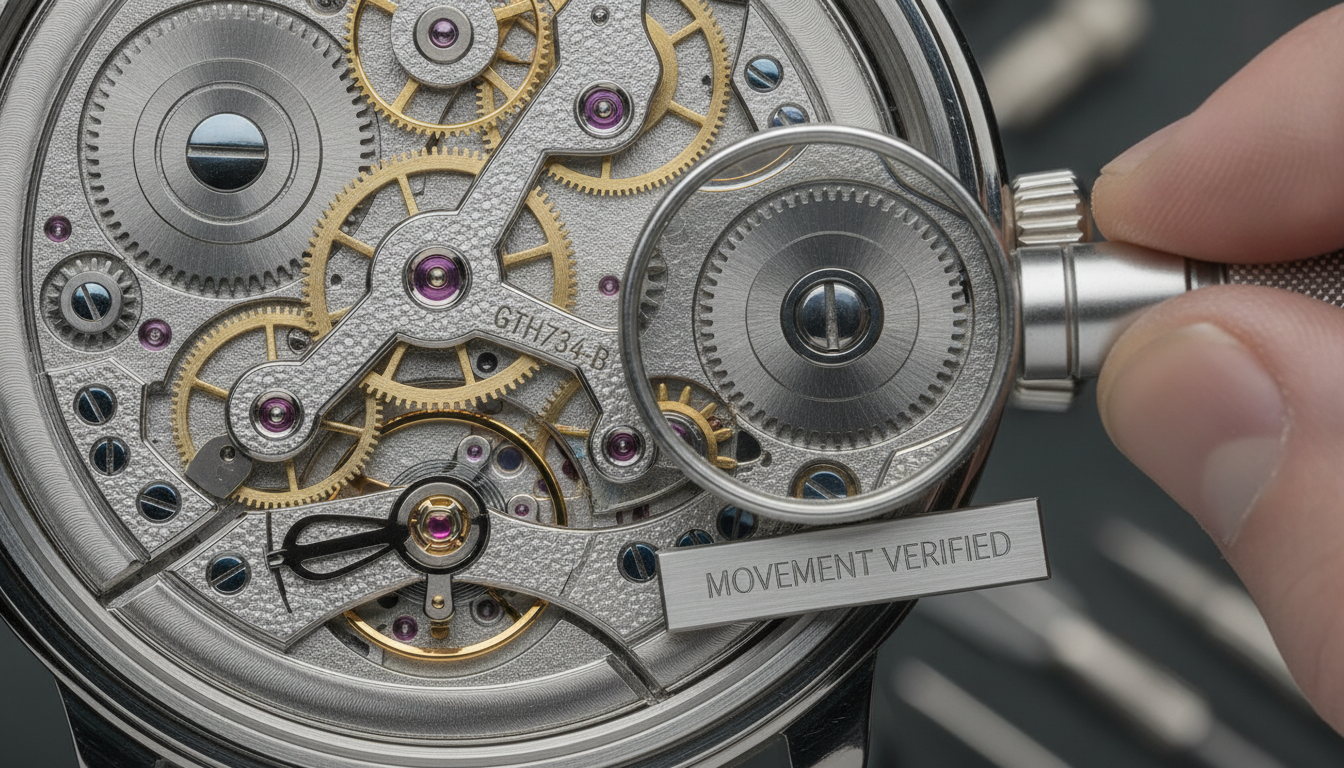
Forget the shiny case. Yeah, you heard me. The real story, the brutal truth, lives inside that watch. It's in the guts: the movement, right? That ’s the heart. So if that heart ’s not beating right, not manufactured right, you ’ve got a problem. A big one. This is where the whole thing falls apart for most guys. You think you can spot it? Maybe. But probably not.
See, a genuine movement? It has a specific look and finish—C ôtes de Gen ève, maybe, or perlage. They ’re not just pretty patterns; no, they ’re fingerprints. Brand-specific. Caliber numbers. All there. You miss that stuff, you miss everything. Because fakes, even the good ones, rarely nail the intricate finishing. It's just too damn expensive to get it perfect. And they're not trying to be perfect, are they? They're trying to fool you. And it works.
And you have to watch out for what we call "Frankenwatches." Yeah. Sounds scary, and it is. These things? They ’ll use a real case, a real dial—looks legit from the outside. But pop that back off, and it ’s some cheap, non-original crap movement shoved in there, or maybe a half-assed counterfeit. A total scam. You buy one of these, you just bought garbage. And here ’s the kicker: a 'Frankenwatch' has almost no resale value in the educated collector market. None. Because official brand service centers will refuse to work on them. Why? Because it ’s not real. Not truly. And they know it. You ’ll be stuck with a fancy paperweight.
So, you look for the serial and model numbers. On a lot of Rolex models, for instance, they're engraved right between the lugs. But here ’s the deal: they need to be sharp, with clean edges—not that acid-etched, fuzzy mess you see on a lot of the fakes. That's a dead giveaway. You need good eyes for this. Or, frankly, better eyes than yours.
Because let me tell you, what the pros do? It ’s another level entirely. They use high-powered magnification. AI-powered analysis. They ’re not just squinting at it; no, they ’re comparing every single microscopic component against manufacturer databases—rotor engravings, gear finishing, every single detail. It ’s a level of scrutiny that's impossible for a private buyer, though some authentication services are now available. Impossible. So, yes, you can try to check these things yourself. But you ’re basically bringing a butter knife to a gunfight.
The true identity and value of a luxury watch are confirmed by the intricate details inside its case. And unless you ’re running a lab (which you ’re not), you ’re guessing. Even Similarweb (2024) shows that for most valuable pieces, the average buyer misses critical tells. You can ’t afford to guess here.
Your eyes just aren't enough. Not for this. Get it checked by someone who knows what they're doing. Someone who sees this messy crap every single day.
Provenance is Paramount: Evaluating Box and Papers
The 'full set'—the original box, warranty cards, service receipts, and user manuals—isn't just collector fluff; it's a vital part of a watch's identity. These documents provide an undeniable chain of ownership and maintenance, substantiating its authenticity and increasing its resale value significantly. While an absence of papers doesn't automatically mean a watch is fake, it does introduce a layer of uncertainty and typically lowers its market worth. For high-value timepieces, having this complete provenance can add 10-20% to its price, acting as an irreplaceable historical record. Always prioritize listings that include original box and papers, as they serve as the watch's indisputable birth certificate and service history.
The Modern Threat: Spotting Digital Deception in Listings
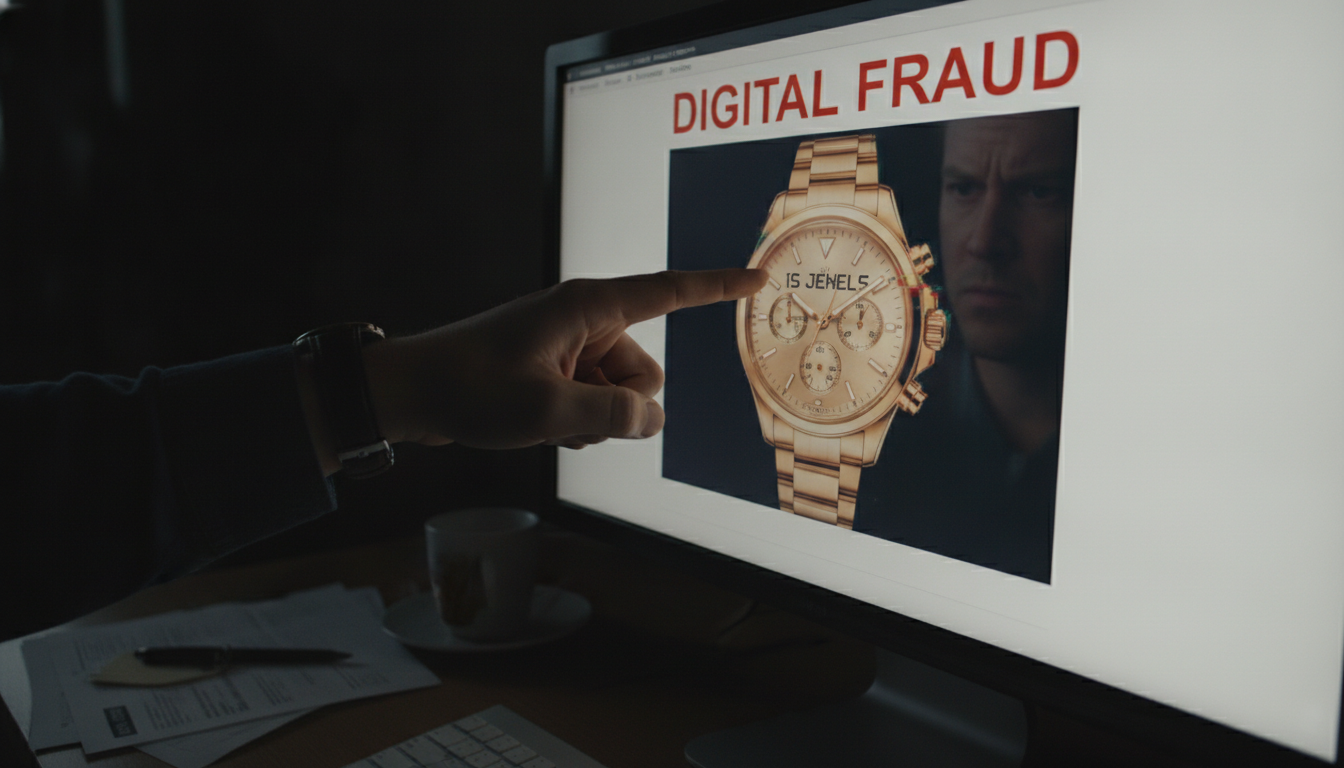
Look, the game changed. Again. You think you ’re good at spotting fakes? Think again, because these dirtbags got new tools: AI. Yeah, artificial intelligence. It's not just for chatbots anymore; scammers use it. They try to trick you with images that don ’t even exist—digital ghosts.
So, here ’s the thing: they ’re using AI to cook up perfectly fake pictures of watches for online listings—on eBay, on forums, everywhere. These aren't just photoshopped pictures anymore; they're generated from scratch. No actual watch, just pixels. It ’s a crazy mess. You scroll, you see something stunning, maybe a rare piece. But it ’s not real. Not even a little bit. And Similarweb (2024) shows traffic to these kinds of scam sites is actually going up.
How do you spot the garbage? Look for the red flags. Seriously.
- Text on the dial? Or the caseback? Scrutinize that. AI gets text wrong. Like, really wrong. You ’ll see "1S Jenels" instead of "15 Jewels"—just weird, nonsensical characters. A Reddit post even warned about this, a Seiko listing on eBay with "just weird" AI-generated text. It ’s a dead giveaway.
- Your eyes are only as good as your knowledge. You can stare at a watch all day, but if you don't know the specific tells for a re-dial, a swapped part, or a subtle repair, you're just looking. This guide isn't magic; it's a prompt for focused observation.
- The movement is the watch's beating heart, not just its engine. A pristine exterior means nothing if the movement's a Frankenstein's monster or a ticking time bomb of neglect. Crack it open, or have someone trustworthy do it. No excuses.
Details? Are they too smooth? Like a melted plastic toy? Or distorted, almost subtly so? Edges can get blurry. Reflections can be off. The lighting might not make sense—highlights where they shouldn't be. This tool hides* the real watch.
"Enhanced" images. Even if it ’s a real watch, sellers use AI to clean things up, to "fix" scratches, to make it look perfect. But it often looks too* perfect. Unnaturally smooth. Not like a watch that ’s lived a life. That ’s a scam in itself.
So what do you do? You demand proof. No ifs, ands, or buts. Ask the seller for a custom timestamp. That ’s a photo of the watch, in their hand, with a handwritten note. The note needs today ’s date and your username. Can ’t fake that with an AI image. Or better? Ask for a short video call. Five minutes. Let them show you the watch, live. It's the best defense. Because if they say no? Run. Fast. That ’s a major red flag, plain and simple. Even r/WatchExchange automod posts warn about this, telling you, "Scammers are stealing established accounts... ask any seller... for a custom timestamp." And a video call? That's the ultimate proof. Your skepticism has to go beyond the watch itself, all the way to the screen you ’re looking at.
Frequently Asked Questions
CPO from a dealer or private sale?
CPO? It ’s safer. A professional dealer takes the risks for you because they restore it, certify it, and give you a warranty. But you pay for that peace of mind. A private sale? Cheaper. Sometimes much cheaper. But way more risk. You ’re on your own. You mess up, you lose your money. No warranty. No guarantee. Private sale prices are often more flexible, too. It ’s your call, but know the gamble.
What about service costs?
For most luxury brands, you ’re looking at $500 to $1,500 just for a standard mechanical service. Not cheap. And you need to do it every 5 to 10 years because if you don ’t, things break. It ’s a full movement overhaul. Rolex's official costs? They line up with this. So factor that in, because if a watch is overdue for service? That's an immediate $500–$1,500 hit for you.
Can I negotiate the price?
CPO watches? Not really. The price reflects what they put into it: the certification, the service, the warranty. It's already priced for that value. Private sale? Yes, totally. You can haggle. Because there's no dealer markup. No overhead. So you might get a better deal, if you're willing to take the risk, that is.
What if it has no original papers?
No papers? It dings the value, yeah. But it doesn ’t automatically mean it ’s a fake. Lots of old watches lose their papers over the years because life happens. What matters then? Certification from a highly reputable dealer and a warranty. That becomes its new story, its proof. And those CPO warranties often last a year or two, which beats nothing. Original papers are great, but a solid dealer certification can be your new best friend.
Alright, you've slogged through the list. Good. Because buying a used watch isn't some romantic stroll through a flea market. It ’s a transaction in a market riddled with opportunists and damned good fakes. You want a valuable timepiece, not a story about how you got fleeced.
Here's the real bottom line:
Trust isn't given, it's verified. Always, always, always* scrutinize the seller's history and the watch's provenance before you even think about the dial. That paper trail? Crucial.
This isn't about collecting trinkets. It's about protecting an investment. And sometimes, it's about avoiding outright fraud.
So, what now? If you've run through this checklist and still feel a knot in your gut, don't ignore it. That gut feeling? It's usually right. Don't buy on hope; buy on certainty. If the details aren't iron-clad, walk away. Or, if you're not equipped to be your own expert, find someone who is. There are specialists who handle this day in, day out, ensuring what you pay for is what you actually get. A trusted partner like The Stellaris Collection can be invaluable.
