

Buying Your First Patek Philippe: A Strategic Guide
The Stellaris Journal
Rolex produces over a million watches every year. Patek Philippe? They hover around 60,000 to 70,000. Do the math. This isn't just about buying a watch; it's about snagging a ghost. Forget what you know about traditional luxury retail; this is a strategic maneuver and a high-stakes chess match that demands a concrete plan, whether you are playing the long game with an authorized dealer or navigating the premium-heavy secondary market. To succeed, you must stop shopping like a consumer and start operating like an investor.
Why Acquiring a Patek Philippe Is a Unique Challenge
Acquiring a Patek Philippe is rarely a straightforward transaction; it is a test of patience, resources, and connections. The brand is part of the "Holy Trinity" of watchmaking, alongside Audemars Piguet and Vacheron Constantin. However, Patek operates in a league of its own. As a family-owned institution—governed by the Stern family since 1932—they are not beholden to quarterly shareholder reports. This independence allows them to prioritize exclusivity over volume.
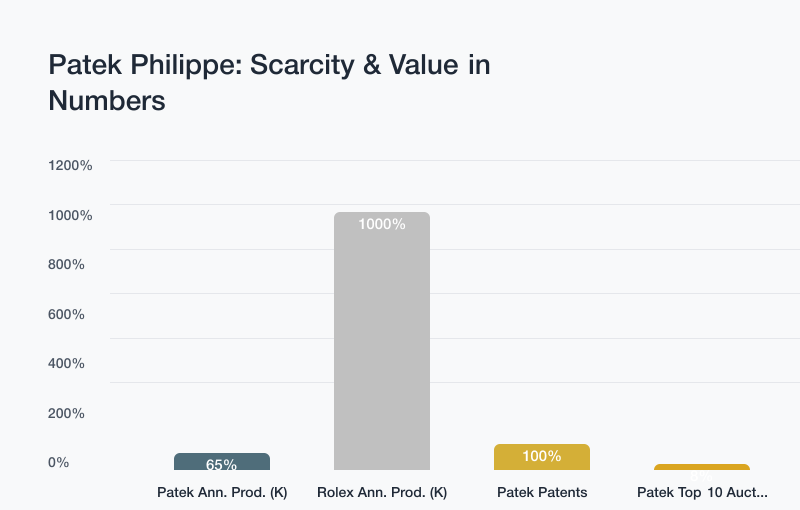
While Rolex produces over a million watches annually, Patek’s output is a mere fraction of that, with global demand consistently eclipsing supply. This deliberate scarcity has created waiting lists that span years, or even decades for specific references. The brand’s 185-year history of uninterrupted production and unmatched innovation is backed by over 100 patents. Most telling, however, is the secondary market performance: eight of the ten most expensive wristwatches sold this century are Patek Philippes. Undeniable proof of their crazy value. This isn't an accident of the market; it is a calculated brand strategy designed to maintain mystique and price floors. You’re not just shopping; you’re entering a whole different league of watch acquisition.
The Two Paths to Ownership: Authorized Dealer vs. Secondary Market
You have two primary avenues to acquire a Patek Philippe: through an Authorized Dealer (AD) or via the secondary market. This is the most critical decision in your journey, as it forces a trade-off between time and capital. You either pay with patience and a demonstrated history of loyalty, or you pay a significant premium for immediate gratification.
Authorized Dealer: The Long Game
There are only 78 Authorized Dealers in the United States, and their display cases are frequently empty because the premier inventory is allocated to "VIP clients." To secure an allocation, you must be a known entity.
- You need history: ADs prioritize clients with a proven purchase history. You cannot walk in off the street and expect to secure a high-demand reference.
- You need patience: Waiting lists are often indefinite. Some dealers may place you on a list, but success depends on your persistence and the dealer's specific allocation cycle.
- You save money (on paper): If you successfully secure a watch from an AD, you pay the retail price. However, the "hidden" cost involves the time and secondary purchases required to build that relationship.
- The experience is a quest: Achieving an allocation feels like a milestone, reinforcing your status within the brand’s ecosystem.
- Instant gratification: You can bypass the waiting list entirely. If the watch is in stock, it can be on your wrist within days.
- Higher prices: Expect to pay significantly above retail price. For high-demand models, you may pay three to four times the list price—a premium for bypassing the line.
- Research is mandatory: The secondary market is complex. You must thoroughly vet the seller and authenticate the watch, as the risk of misrepresentation or fraud is non-zero.
- Wider selection: You are not limited by current AD allocations; you can source specific references, vintage pieces, or unworn models from previous years, especially from curated collections.
- The Calatrava Ref. 6119G: The quintessential Patek. Retail price is approximately $31,940, with a market price typically ranging from $30,000 to $40,000. It is one of the few models close to retail value.
- The Aquanaut Ref. 5167A: A contemporary sports favorite. With a retail price of about $24,250, the market price often surges between $55,000 and $68,000—more than double the retail cost.
- The Golden Ellipse Ref. 5738R: An elegant, unconventional choice. Retail sits around $36,670, while the market price often falls between $29,000 and $35,000, occasionally offering value below retail.
- The Twenty~4 Ref. 4910/10A: A dedicated women's model with high accessibility. Retail is approximately $20,650, and it generally trades near its retail price, making it a realistic entry point.
- The Approach: If you choose the AD route, patience is your currency; if you choose the secondary market, vigilance is your shield.
- The Due Diligence: Never attempt to cut corners on authentication. If a deal seems too good to be true, it is.
- The Essentials: Box, papers, and an ironclad authentication are non-negotiable. These aren't just extras for completeness; they're the only things standing between you and a very expensive paperweight.
Secondary Market: Pay to Play, Now
If you lack the time to build a relationship, the secondary market is your only viable path. This route offers speed, but it demands financial flexibility.
You pick your poison: a long, uncertain wait for a 'deal,' or a steep, immediate premium for certainty.
Strategic Entry Points: The Best First Patek Philippe Collections
Not all Patek collections are accessible to newcomers. A tactical first buy is your golden ticket to building a relationship with an Authorized Dealer. Do not waste time chasing Grand Complications; prioritize the entry-level pieces that demonstrate your commitment to the brand.
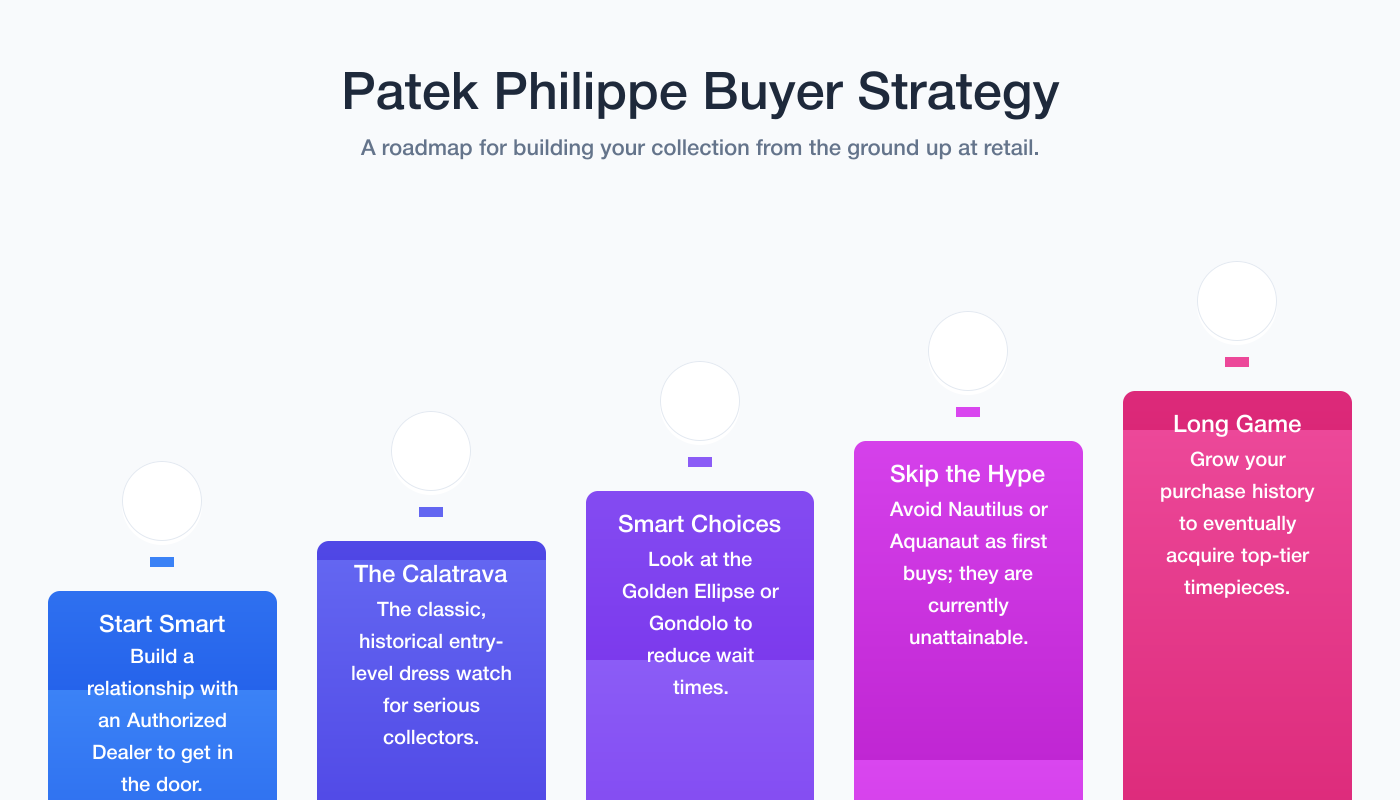
The Calatrava is the quintessential choice. Introduced in 1932, it represents the brand's heritage and is widely considered the natural starting point for a collector. Similarly, the Golden Ellipse and the Gondolo collections are distinctive, elegant, and historically carry shorter waiting times, increasing your chances of an allocation.
Conversely, sports models like the Nautilus and the Aquanaut are largely unattainable as a first purchase. The demand for these pieces is astronomical, and the waiting lists for a Nautilus frequently exceed a decade. Similarweb (2024) data confirms that these remain the most difficult models to acquire at retail. By targeting accessible references like the Calatrava, you begin your journey with a manageable, high-quality piece that validates your seriousness to the dealer. The only viable strategy for a first-time Patek buyer is to start with entry-level collections and build your history from there.
A Closer Look: Top Models and Market Prices for First-Time Buyers
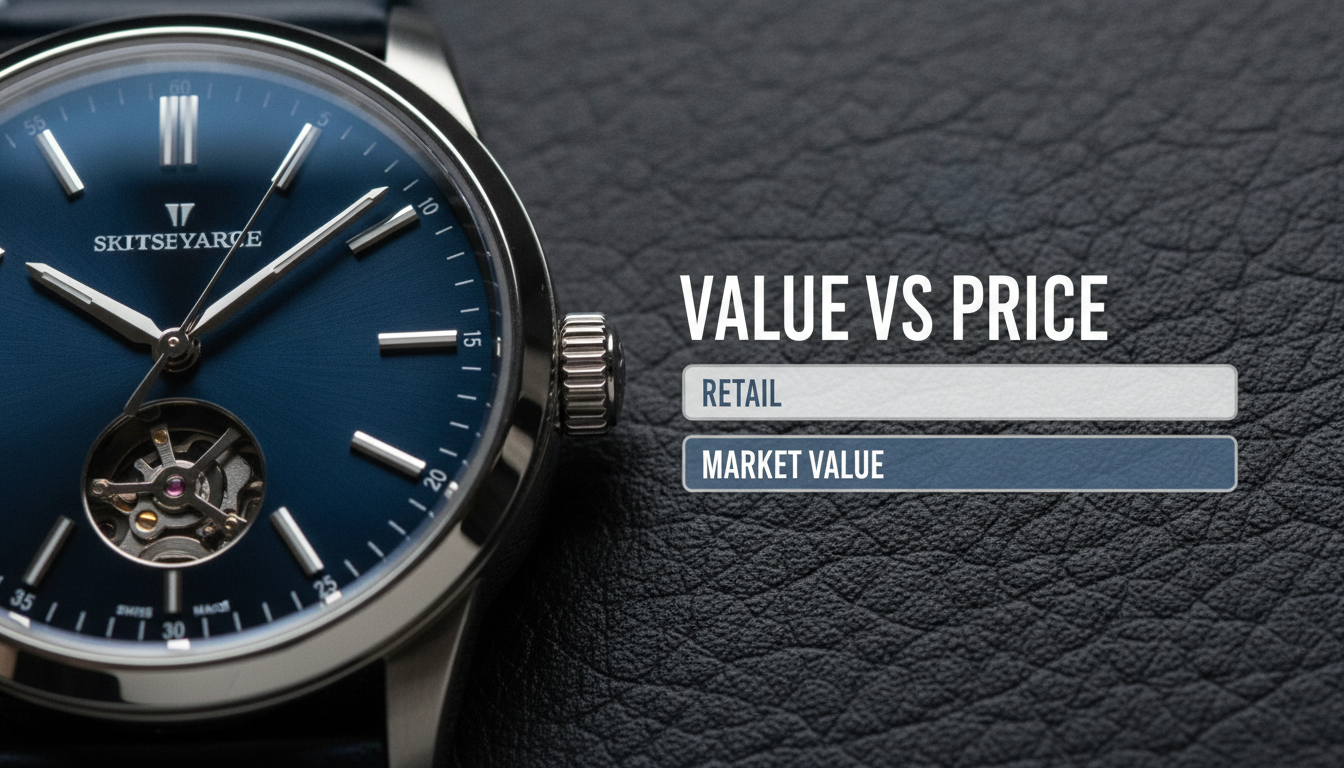
There is a distinct divergence between the manufacturer's suggested retail price (MSRP) and the market price. Understanding this spread is essential for financial planning and expectation management.
Understanding these numbers—retail versus market—is the only way to distinguish between what’s achievable and what’s merely a pipe dream.
Final Check: The Critical Role of Authentication, Box, and Papers
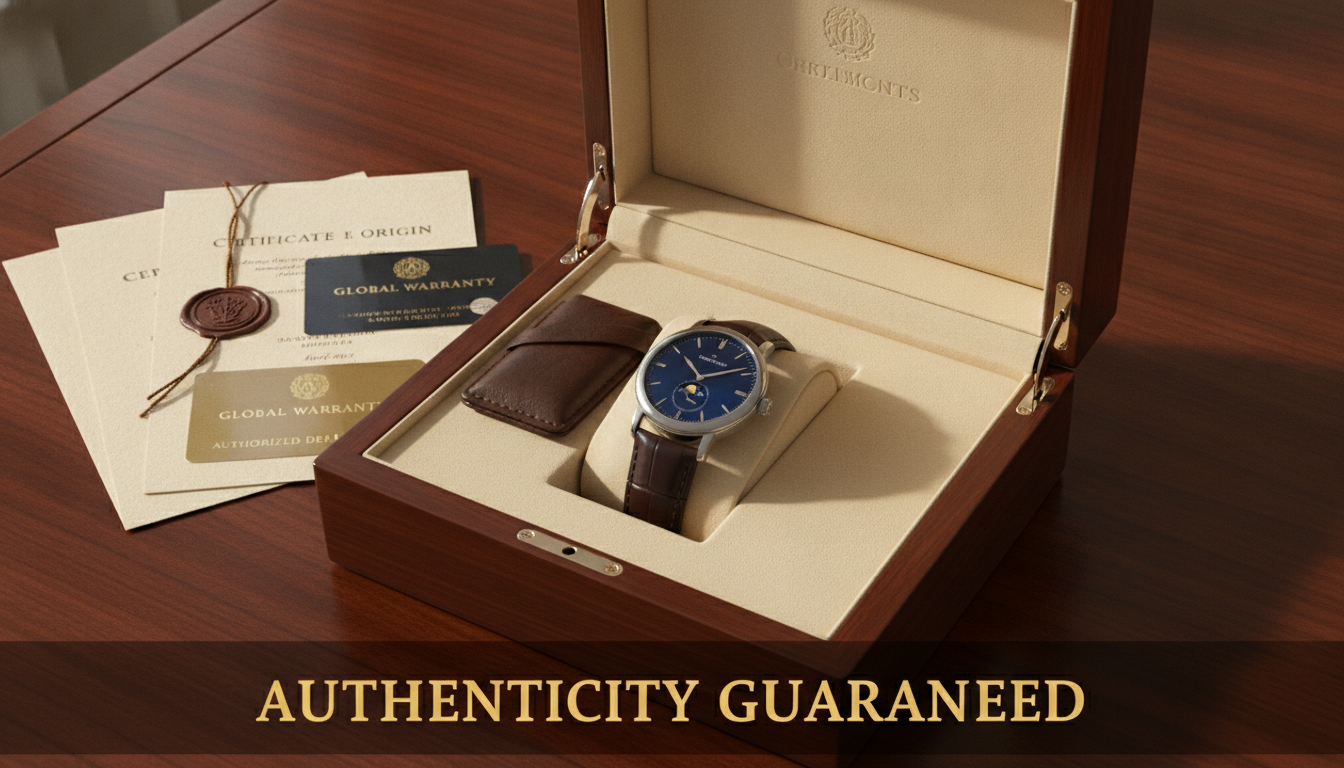
Before finalizing a transaction, you must conduct rigorous due diligence. A Patek Philippe’s value is inextricably linked to its provenance.
Your original Box and Papers—specifically the Certificate of Origin—are your golden tickets. The Certificate of Origin must match the reference, movement, and case numbers of the watch exactly. If these documents are missing or inconsistent, the watch loses significant investment value and becomes difficult to resell. Furthermore, you must assess the physical condition of the watch itself: look for signs of excessive polishing, non-original replacement parts, or service history irregularities. In the secondary market, you must "buy the seller" as much as you buy the watch. Never compromise on the documentation, as the box and papers are your only protection against fraud and value loss.
*
Acquiring a Patek Philippe is not a stroll; it is a strategic siege. You must choose your battle plan: the slow, relationship-driven path with an Authorized Dealer, or the high-premium, high-speed route on the secondary market.
Keep these three mandates in mind:
Ultimately, a Patek Philippe is more than a watch; it is a legacy asset that demands either the patience of a collector or the shrewdness of a tactician.
