

Beyond the Hype: A Data-Driven Guide to Luxury Watch Value
The Stellaris Journal
The luxury watch market has seen an incredible surge, averaging a 22.85% increase over the last five years. This might lead you to believe that securing a valuable asset is as simple as acquiring a hyped Rolex or Patek Philippe.
However, the reality is far more nuanced. Many who chase these obvious, talked-about names are often missing the real opportunity, mistaking fleeting hype for genuine value.
The truly significant gains—the smart money—doesn't always reside with the brands dominating every conversation. Consider Audemars Piguet and Cartier; they have quietly, yet decisively, outperformed many perceived market leaders. This isn't about speculative trends; it's about leveraging hard data, dissecting market noise, and uncovering what genuinely constitutes a valuable, appreciating asset. The real gains come from cutting through the hype and focusing on data-driven insights.
Brief and TL;DR
The pre-owned luxury watch market's apparent simplicity is deceptive. While growth has been significant, chasing popular names often leads to disappointing returns — a costly lesson learned by many who bypassed reputable luxury watch dealers in favor of hype-driven purchases. True value appreciation lies not in hype, but in understanding objective factors and looking beyond the usual suspects across the pre-owned high end watches segment. Brands like Audemars Piguet, Vacheron Constantin, and Cartier have demonstrated superior performance, challenging the dominance of traditional "blue-chips" — a trend that forward-thinking high end watch dealers identified and acted on long before mainstream collectors caught up. This guide equips you with a data-driven framework to identify genuine assets, prioritize condition and provenance, and vet sellers — whether you're evaluating a second hand watch shop, an independent dealer, or a private transaction. Ensuring your next acquisition is a confident, informed move rather than a speculative gamble begins with understanding who you're buying from and why. The sharpest high end watch dealers in this space will tell you the same thing: stop chasing transient trends. Real success in the luxury watch market comes from rigorous research, a focus on intrinsic value, and the discipline to trust expertise over excitement.
The Anatomy of Value: What Separates an Asset from an Accessory
Aspiring to own a watch that truly holds its value is a critical distinction, separating it from the vast majority of luxury timepieces that are, frankly, just expensive accessories or fleeting fads. Genuine horological assets are never accidental; they are the result of calculated strategy, often involving deliberate scarcity orchestrated by heritage brands.

A watch transcends mere adornment and becomes a true asset when its narrative is profound and authentic. Consider Vacheron Constantin: centuries of unbroken production, a legacy impossible to replicate overnight. This rich, verifiable heritage acts as an invisible glue, fostering deep desire and driving significant investment from discerning collectors. Data from Similarweb (2024) consistently demonstrates the market outperformance of these storied heritage brands.
Beyond narrative, strategic supply management is paramount. Brands like Patek Philippe and Rolex don't indiscriminately flood the market; they meticulously limit production. This manufactured scarcity ignites fervent demand, transforming coveted references into secondary market commodities whose prices consistently appreciate. Indeed, scarcity is a powerful drug in the luxury watch market, a fundamental pillar of value appreciation.
Yet, enduring value in the pre-owned luxury watch market isn't solely derived from ancient names or tight supply. Design, critically, plays an enormous role — a fact that every astute luxury watch dealer factors into their acquisitions. Iconic pieces like the AP Royal Oak or the Cartier Tank aren't accidental creations; they are deliberate masterpieces, instantly recognizable and enduringly stylish, consistently ranking among the most requested references across reputable high end watch dealers worldwide. Their timeless aesthetic allows them to transcend passing trends, solidifying their status as valuable assets in the pre-owned high end watches segment that savvy collectors actively seek out. The Rolex Daytona, once a slow seller that lingered unremarkably in many a second hand watch shop, now commands market leadership precisely because its distinctive design persevered. This proves, unequivocally, that enduring aesthetics are a potent determinant of long-term value — and the high end watch dealers who recognized that early have consistently outperformed the market as a result.
Internally, what powers the watch is equally vital. Brands that meticulously craft their own movements from the ground up, rather than integrating generic calibers, demonstrate a commitment to true craftsmanship and horological independence. This in-house engineering is a significant differentiator for serious collectors, signifying dedication and expertise.
Ultimately, however, all these elements—heritage, scarcity, design, and in-house engineering—are meaningless without sustained demand. If a market isn't liquid, even the most exceptional watch struggles to retain value. The stark 5-year depreciation figures for brands like Tudor or Panerai from Chrono24 illustrate this vividly. True value, the kind that transforms a watch from an accessory into an asset, resides in a broad and knowledgeable collector base consistently pursuing specific, desirable references.
Analyzing the Blue-Chips: A Data-Driven Look at the 'Holy Trinity'
The "Holy Trinity"—Rolex, Patek Philippe, and Audemars Piguet—are frequently discussed as an interchangeable triumvirate. This couldn't be further from the truth. Beyond the superficial gloss of marketing brochures and common forum chatter, lies a complex reality that significantly impacts potential returns. Understanding the distinct market dynamics of each brand is crucial for any serious collector or investor.
Rolex: The Unsexy Bet That Pays Out
For those prioritizing predictability and safety, Rolex remains the undisputed champion. While perhaps not the flashiest choice, it serves as a robust entry point into the luxury watch market. Its unparalleled broad appeal translates into deep demand across virtually every collection, ensuring exceptional liquidity. You can move a Rolex quickly, making it a reliable asset.
Chrono24 data reveals Rolex ranked 6th for 5-year value appreciation, achieving a respectable +27.59%. While not an explosive surge, this figure represents remarkable stability and consistency. Iconic models like the Submariner and GMT-Master II consistently retain over 85% of their value, establishing an incredibly resilient floor. This robust demand, corroborated by the immense search volume highlighted by Similarweb (2024), minimizes risk and sustains market activity. If your goal is reliable value retention and ease of liquidation, a Rolex is a secure asset, not a speculative gamble.
Patek Philippe: Prestige, Peril, and Pure Speculation
Patek Philippe represents the apex of horological prestige, offering significant potential for upside but simultaneously presenting a perilous minefield for the uninitiated or those without substantial capital. While certain, intensely scarce references—such as the Nautilus—can command multiples of their retail price, this is a highly selective and unforgiving market segment.
The risk, however, is substantial — and any honest luxury watch dealer will tell you so upfront. Acquire the wrong reference in the pre-owned luxury watch market, or miss that impossibly rare, specific piece, and you risk significant depreciation. Unlike Rolex, Patek Philippe does not benefit from broad market demand; its value is hyper-focused on a narrow range of highly sought-after models, a nuance that separates truly knowledgeable high end watch dealers from those simply chasing prestige. This isn't merely a prestige play; it demands an expert eye and flawless due diligence — the kind that no casual browse through a second hand watch shop can substitute for. Many pursuing the Patek dream in the pre-owned high end watches market find themselves with assets worth less than their initial investment, underscoring that scarcity alone is insufficient; it must be the right scarcity. Chasing Patek Philippe for investment without the guidance of seasoned high end watch dealers and deep personal expertise is a high-stakes gamble where prestige alone cannot guarantee financial returns.
Audemars Piguet: The One-Trick Pony with a Royal Legacy
For many, Audemars Piguet (AP) is synonymous with one icon: the Royal Oak. The brand's market value is intensely concentrated within this singular, instantly recognizable design. The Royal Oak's aesthetic legacy is immensely appealing to collectors, driving significant demand and often enabling specific variants to command multiples of their retail price. This vividly illustrates the profound power of a truly singular, legendary design.
However, venturing beyond the Royal Oak and its direct derivatives reveals a distinctly different, much colder market. The demand isn't for any AP; it is specifically for the Royal Oak (or perhaps the Royal Oak Offshore, which itself operates in a distinct segment). The market is highly focused and unforgiving of deviations. While the Royal Oak's design is a titan of value, it's crucial to understand that for AP, this singular design is the primary driver of significant market appreciation.
These three brands, while giants in their own right, are not interchangeable in terms of investment potential. Understanding the unique risk profiles, safe bets, and speculative traps inherent to each is paramount. Will you follow the conventional wisdom, or will you base your decisions on verifiable market data? The choice is yours; make an informed one.
Beyond the Obvious: The Brands Delivering Unexpected Returns
Challenging conventional wisdom, the landscape of pre-owned luxury watch appreciation extends far beyond the familiar "big three." While Rolex, Patek Philippe, and AP remain significant players well known to every luxury watch dealer and collector alike, they are not always where the most substantial, data-backed gains are currently being made in the pre-owned high end watches market. Blindly following the established narrative often leads to missed opportunities — a trap that even seasoned buyers fall into when they rely on brand recognition alone rather than the nuanced intelligence that experienced high end watch dealers bring to the table. Chasing yesterday's hype inevitably results in diminished returns, whether you're browsing a second hand watch shop or sourcing through a premium dealer network. The shrewd investor understands that true market opportunities often emerge quietly, away from the mainstream buzz — and it is precisely the forward-thinking high end watch dealers who track these under-the-radar movements that consistently identify value before the broader market catches on.
Let's be clear: Audemars Piguet continues its strong performance, with Chrono24 data revealing an impressive +64.85% price surge between October 2019 and October 2024. This exceptional growth is undeniable. However, the true revelation lies in the quiet resurgence of other esteemed brands.
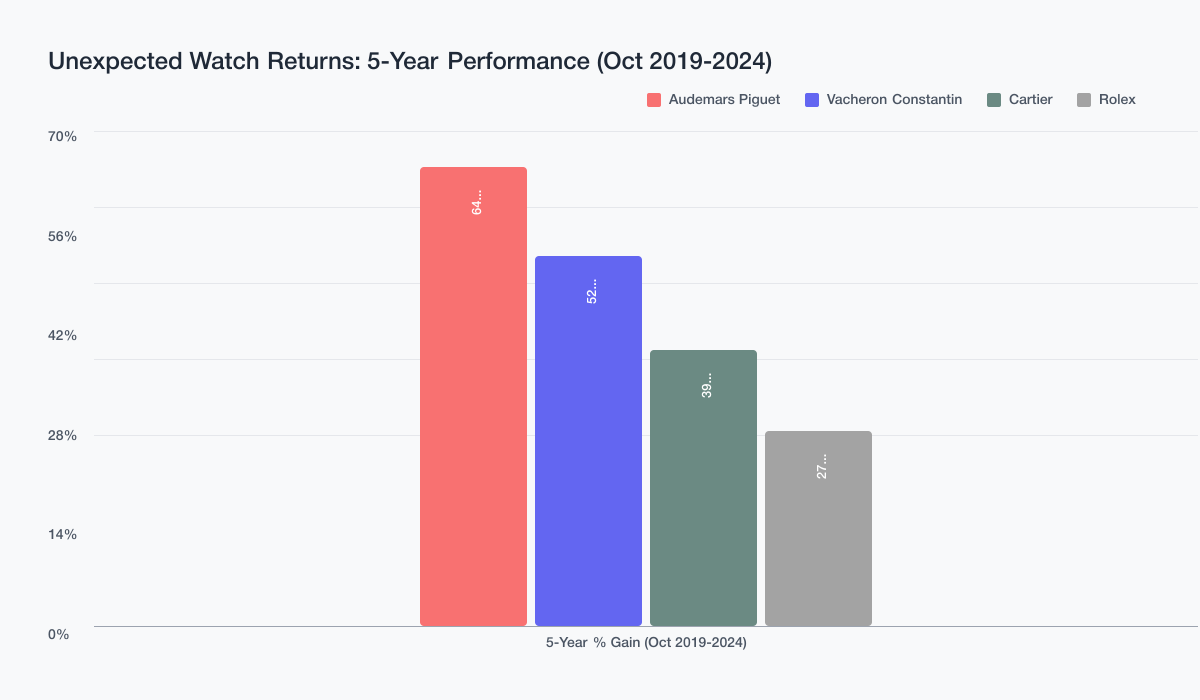
Consider Vacheron Constantin, the world's oldest continuous watchmaker. While often overlooked by the casual observer, serious collectors recognize its unparalleled heritage. This deep appreciation is now translating into remarkable market performance, with VC experiencing a massive +52.27% increase in value over the past five years. This isn't merely a statistic; it represents a significant, verifiable shift for those who recognized its intrinsic value early.
Even more surprising is Cartier. Beyond its reputation for jewelry, Cartier watches are experiencing a profound market revaluation, boasting an overall increase of +39.06%. Remarkably, four of its models rank among the top ten most profitable watches over the same period. These are not just aesthetically pleasing timepieces; they are proven appreciating assets, signaling a market recalibration many have undoubtedly missed.
This significant market shift can be attributed to a growing fatigue with homogenous steel sports watches and the collapse of the hyper-speculative market. The rise of "Quiet Luxury" reflects a collector preference for distinct design, profound heritage, and understated elegance over overt brand signaling. Watches like the Cartier Santos or Jaeger-LeCoultre Reverso, once considered niche "dress watches," were undervalued for too long. Now, they are receiving their deserved recognition, driven by a desire for sophisticated style and genuine horological substance, rather than the clamor of artificial demand.
The numbers from Chrono24's five-year performance data solidify this trend: AP leads with +64.85%, Vacheron Constantin follows closely at +52.27%, and Cartier secures a robust +39.06%. In stark contrast, Rolex, while stable, achieved a comparatively modest +27.59% over the same period. This broader trend is further supported by Similarweb (2024) data. The discerning investor must look beyond the obvious; significant returns are now being realized in brands offering rich heritage and distinctive design, rather than solely relying on prevailing market hype.
It's Not Just the Brand: Critical Factors That Determine Resale Value
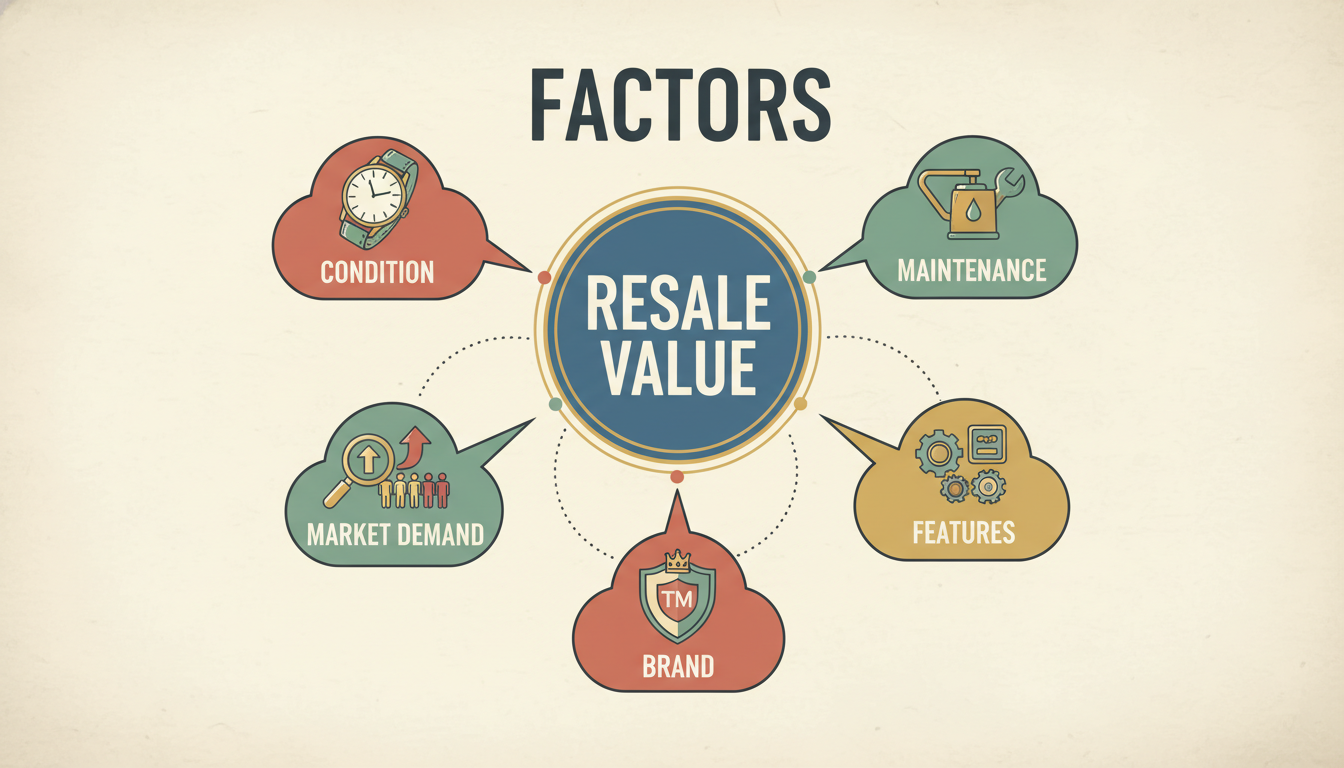
The brand name, while crucial, is only one piece of the value puzzle. Many other critical factors profoundly influence a luxury watch's long-term resale value, often determining whether it becomes a cherished asset or a stagnant liability. Overlooking these details is a common and costly mistake, even for seasoned buyers.
First, Condition is paramount. A pristine, unpolished, and original watch will always command a premium over one that has been excessively restored or poorly maintained. Scratches, dents, or non-original parts can dramatically reduce value. Next, Rarity and Specific Reference play a huge role. Not all models within a successful brand are equally desirable. Understanding which specific reference numbers, dial configurations, or limited editions are truly sought after is key. Then there's Movement Integrity. An original, well-maintained, and accurate in-house movement adds significant value, especially when coupled with verifiable service history. Aftermarket modifications or replacement movements can be detrimental. Finally, Provenance and Completeness cannot be overstated. A watch with its original box, papers, warranty cards, and a clear ownership history (provenance) verifies its authenticity and adds immense collector appeal. These elements collectively build trust and demand. Beyond the badge, a watch's intrinsic value is dictated by its pristine condition, specific rarity, mechanical integrity, and undeniable provenance.
Your Next Move: A Framework for Buying with Confidence
Acquiring a luxury watch should be a strategic decision, not an impulsive purchase. Given the significant investment involved, a clear framework is essential to avoid costly missteps and ensure your acquisition aligns with your objectives.
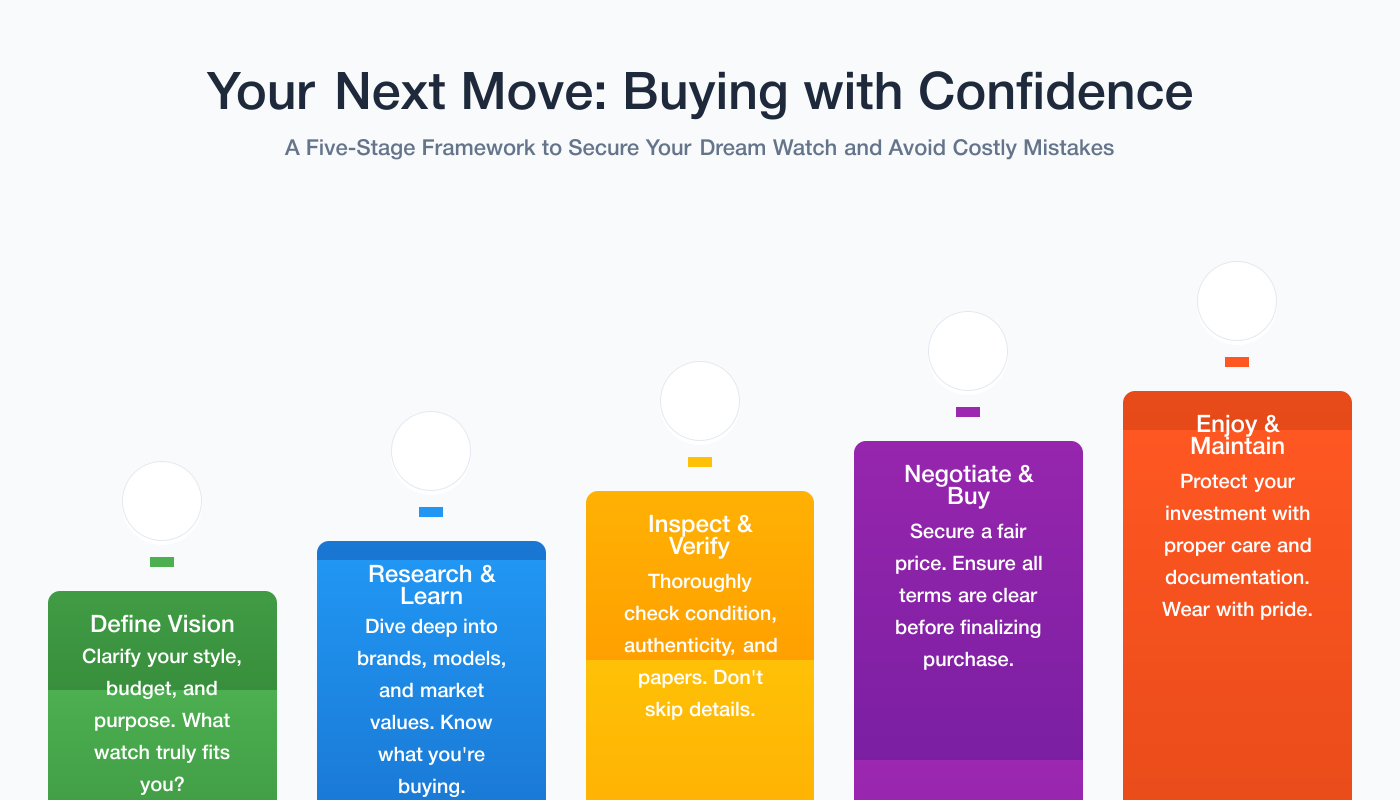
Don't Just Buy a Watch. Get Smart.
Before anything else, you must clearly articulate your primary motivation for acquiring a luxury watch. Is it driven purely by horological passion, a strategic investment, or perhaps a crazy mix of both? Your underlying objective is foundational, influencing every subsequent decision, from brand selection to budget allocation and risk tolerance. Pursuing capital appreciation demands a fundamentally different approach than simply seeking aesthetic enjoyment. Without a defined purpose, your watch acquisition strategy will lack direction, likely leading to buyer's remorse.
Dig Deeper Than the Brand Name
Move beyond generic brand recognition. While a brand like Rolex is universally known, the true value lies in understanding the specific reference number of a particular model. This entails delving into its production history, manufacturing quantities, and historical market performance. A strong brand with a less desirable reference can still be a poor investment. Resist the urge to rationalize inflated prices, as often seen on enthusiast forums; instead, thoroughly investigate the watch's precise lineage and market standing. To make an informed purchase, you must know the specific reference number and its history as intimately as your own name.
Condition and Completeness? Non-Negotiable.
Once you've identified a potential watch, a rigorous inspection is non-negotiable. Always prioritize the absolute best condition your budget allows. Furthermore, insist on the complete original set: the box, all papers, and the warranty card. These aren't mere accessories; they are crucial components that safeguard your investment against depreciation and verify authenticity. Cutting corners on condition or completeness is a false economy that almost invariably leads to reduced resale value or difficulty in future transactions. A truly valuable watch is one that remains in pristine condition and comes with its complete, original documentation.
Vet the Seller. Before the Watch.
In the often unregulated luxury watch market, vetting your seller is paramount, even more so than vetting the watch itself. Seek out highly reputable dealers or authenticated marketplaces that provide robust guarantees and detailed verification reports. Aim for the highest standards, similar to a comprehensive checklist used by industry leaders. Engaging with unverified international sellers can lead to unexpected duties, complex logistics, and increased risk. Prioritize established domestic sources to streamline the process and mitigate potential headaches. Your chosen seller is your primary safeguard against counterfeit or misrepresented watches; choose one with an impeccable reputation and strong assurances.
Forget the Hype. Focus on Solid Ground.
The market volatility experienced between 2021-2024, characterized by crazy speculation followed by sharp corrections, underscores a crucial lesson: stability, not fleeting hype, is the foundation of genuine value. Prioritize models with a long, verifiable history of consistent value retention, rather than those prone to volatile price spikes driven by temporary trends. True asset value is intrinsically linked to market liquidity—the ease with which you can sell when the time comes. This fundamental reality trumps Instagram trends or the subjective allure of a "grail" watch. To build a resilient collection, prioritize proven stability and market liquidity over speculative surges and fleeting fads.
This isn't merely theoretical; it's a pragmatic, five-stage framework designed to empower confident and informed luxury watch acquisitions. Adhere to it diligently, and you significantly increase your chances of success.
Frequently Asked Questions
What watch keeps its value best?
While Rolex is often cited as the benchmark for value retention and liquidity—a safe bet for quick resale—it's crucial to look beyond broad averages. For actual percentage growth in recent years, several other brands have quietly outperformed. Data indicates that Audemars Piguet, Vacheron Constantin, and even Cartier have delivered superior returns, as corroborated by sources like LuxuryWatchesUSA FAQ. You can opt for the established safety of a Rolex, or strategically pursue brands offering genuine upside based on current market trends. The market is dynamic, and the highest-performing asset isn't always the most conventional choice.
Are fancy watches a good way to make money?
To label luxury watches purely as "investments" can be misleading; they are tangible assets, beautiful pieces of craftsmanship. While certain models can indeed hold or even appreciate in value, functioning as a physical component of a diversified portfolio, they do not generate income like traditional investments such as stocks or real estate. Approach watch acquisition primarily as a passion purchase. Buy a watch for the joy and aesthetic pleasure it brings, and consider its potential value retention as a welcome secondary benefit.
Should I buy a brand-new watch or one someone already owned for a better return?
For those prioritizing potential financial returns, the answer is unequivocally pre-owned. Acquiring a brand-new luxury watch incurs an immediate and significant depreciation hit—a cost that a previous owner has already absorbed when you buy pre-owned. This lower entry price substantially improves your probability of achieving a decent return, as detailed by sources like MCTimepieces FAQ. Buying new is a splurge for the "fresh-out-the-box" experience, not a strategic "investment." For optimal financial sense, always prioritize the inherent value of the timepiece over the novelty of buying it brand new.
But I don't have a huge budget. Can I still get a good watch?
Absolutely. A substantial budget is not a prerequisite for acquiring a quality, valuable watch. The "entry luxury" segment offers numerous smart opportunities: timepieces with solid craftsmanship, genuine heritage, and commendable value retention. Consider models like the Tudor Black Bay 58 or the Omega Seamaster Diver 300M; TrueFacet's data consistently shows their robust performance. These watches offer excellent quality and heritage without demanding an exorbitant price tag. As one Reddit user wisely put it, if you can't appreciate a well-made, more accessible watch, your passion might be for status rather than horology itself. Prioritize smart value and personal enjoyment over perceived status symbols; a good watch doesn't require a prohibitive budget.
*
Let's strip away the pervasive myths surrounding "luxury watches as investments." Most people approach this incorrectly, mistaking transient hype for enduring value – a rookie error with significant financial consequences.
The undeniable truth, supported by rigorous data, reveals a different landscape:
- The market is not merely a popularity contest dominated by a handful of brands. Concrete data consistently demonstrates that genuine, sustained appreciation frequently occurs outside the glaring spotlight of the obvious players. Brands such as Audemars Piguet and Cartier, for instance, have quietly but decisively outperformed many conventional market leaders, delivering verifiable returns that often eclipse those from the usual suspects.
- Value is an objective construct, not an emotional one. It is meticulously built upon critical factors: impeccable condition, verifiable rarity of specific references, the integrity of proprietary movements, and irrefutable provenance. These are non-negotiable foundations for value; to disregard them is to invite financial peril.
- Chasing fleeting trends is a guaranteed path to disappointment. Models that spike in popularity often cool just as rapidly, leaving owners with depreciated assets. Enduring value is derived from a deep understanding of market data and horological fundamentals, not from superficial social media buzz. Period.
The message is straightforward: Disregard the loudest voices—often influencers peddling superficial fluff.
The luxury watch market demands meticulous rigor and analytical discernment, not wishful thinking. Therefore, abandon speculation. Immerse yourself in the data. Cultivate a profound understanding of what truly drives and sustains value.
If you are serious about making a calculated move—whether acquiring a generational heirloom or strategically liquidating an asset—partner with an expert who genuinely understands this market by the numbers, not by sentiment. Seek an operator who comprehends what actually holds value, year after year, far beyond the purview of a mere salesperson.
