

What Makes a Pre-Owned Luxury Watch Truly Significant
The Stellaris Journal
A pre-owned luxury watch is only as interesting as the caliber inside it. Everything else, the brand mystique, the price tag, the story, is decorative. That isn't a controversial opinion among seasoned collectors, but it is the reason our pre-owned inventory reads like a short list rather than a catalog.
The criterion that does most of the work at The Stellaris Collection is what we'd call mechanical significance: whether the movement powering the watch actually contributed something to horology, or whether it's just a known name on a less distinguished engine. That single filter is what separates the pieces we list from the long tail of "luxury watches" that flood the secondary market. It also keeps our inventory recognizably weighted toward the maisons that have a documented record of in-house movement development and complications that mattered: Rolex, Patek Philippe, Audemars Piguet, Vacheron Constantin, F.P. Journe, and Richard Mille.
Brief and TL;DR
Every watch we offer is selected for exceptional design, mechanical significance, or enduring collector appeal, sometimes all three at once. Mechanical significance is the hardest of the three to fake, and it's the filter that trims the most inventory. It is not the same thing as "expensive" or "complicated" or "in-house" in name only. It refers to a movement that added something to watchmaking: a complication that solved a real problem, a caliber that established a new construction standard, a piece whose mechanism is referenced in horological literature for a specific reason.
The point of mechanical significance as a filter is restraint. It keeps the catalog short, the substance high, and decisions easier for clients who already know what they're looking at.
Note: a matching uploaded asset may be used in place of generation if one is available; otherwise a generated image is acceptable.
What "Mechanical Significance" Actually Means
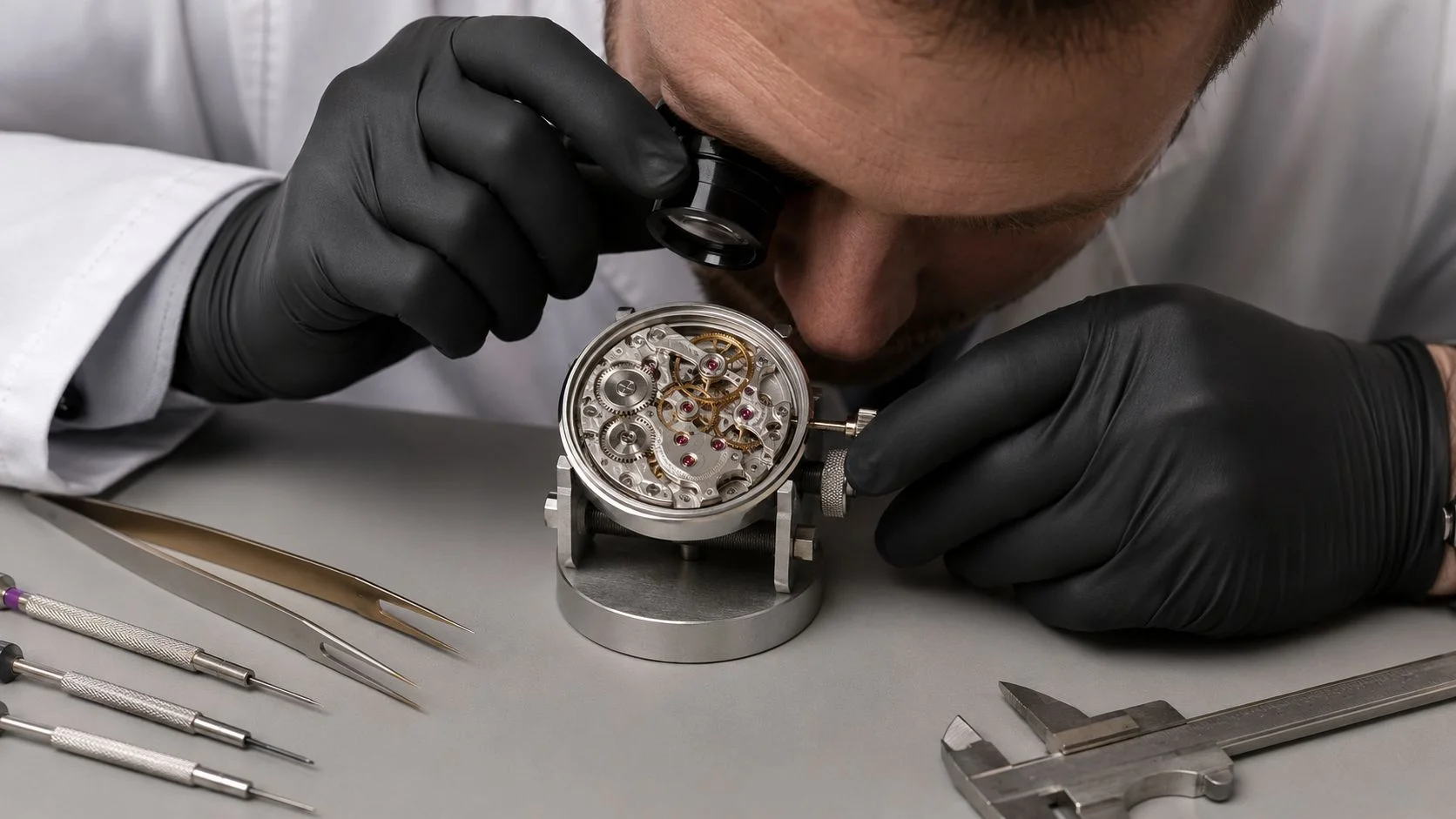
A movement's worth is in what it does, not in how many jewels it counts. Four qualities tend to define mechanical significance, and they're worth naming precisely before we talk about how they shape our curation.
An in-house caliber developed under a maison's own roof. When a brand designs, manufactures, and finishes its own movement, the watch inherits that maison's signature: a particular escapement geometry, a favored balance frequency, a decoration language. Patek Philippe produces essentially all of its movement components in-house, an approach anchored in the Geneva Seal tradition that long predates the brand's current self-imposed Patek Philippe Seal. Audemars Piguet and Vacheron Constantin apply the same vertical-integration discipline to most of their significant collections.
A complication that addressed a real horological problem. A perpetual calendar, a minute repeater, a tourbillon, a split-seconds chronograph: each exists because watchmakers wanted to solve a precision or display problem that simpler mechanisms couldn't. The Patek Philippe perpetual calendar chronograph caliber CH 29-535 PS Q, for instance, was the brand's first in-house movement for that complication, stepping away from a long reliance on outsourced ebauches. That's a meaningful historical moment in the brand's catalog.
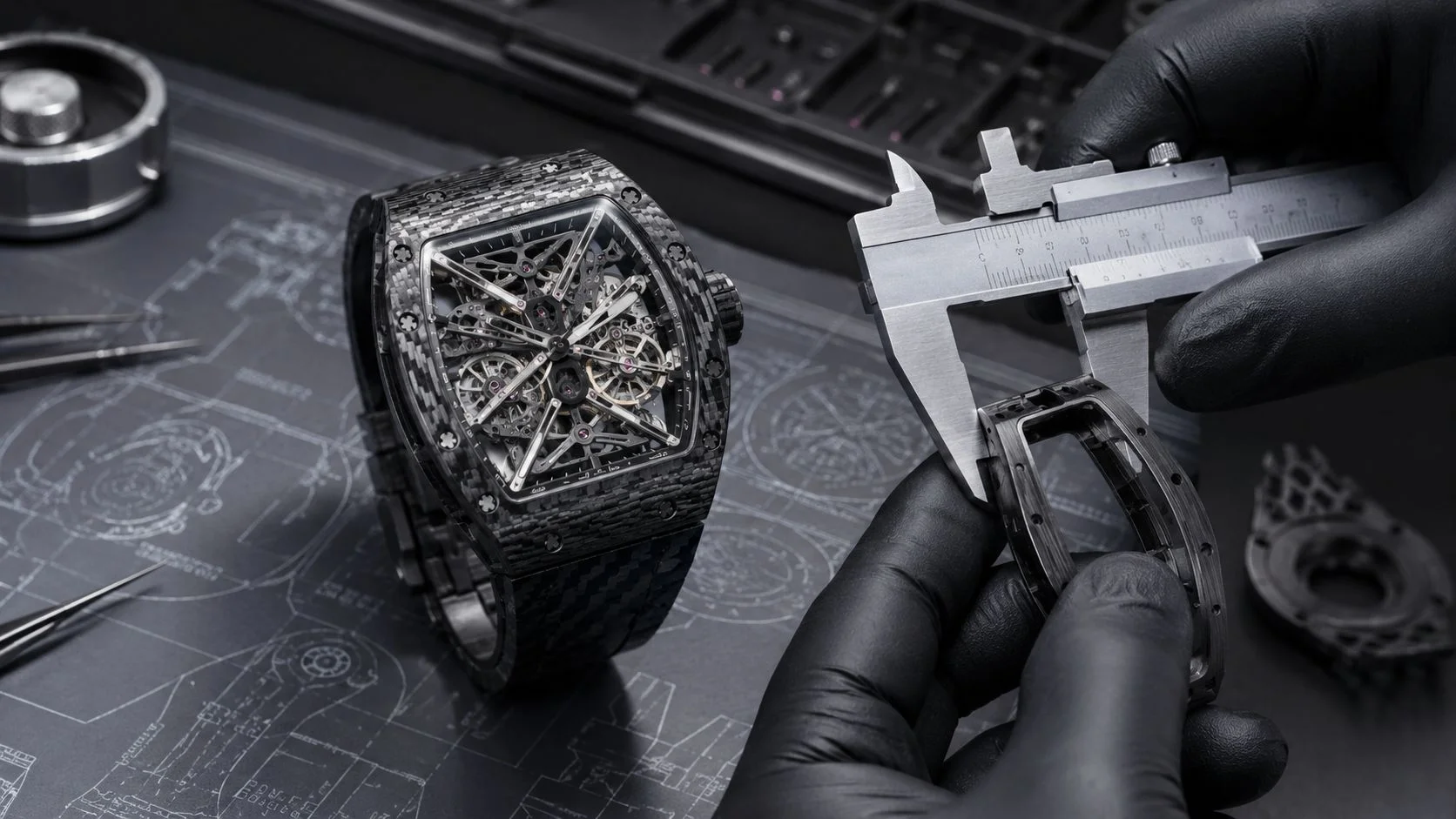
A construction or material choice that changed what a watch could do. Richard Mille's use of Carbon TPT, laminated sapphire crystals in the RM 53-01, and grade 5 titanium baseplates are documented technical innovations the brand pursued to push shock-resistance and lightness further than traditional stainless steel allowed. Each piece is the physical proof of a specific engineering bet.
A historical first, or a movement that's still in service. Some calibers earned their place by being the first to do something well. Some earned it by being so well-made that the maison kept refining them for decades. Both count.
Mechanical significance is the discipline of asking, of a given piece: did the movement answer a question that hadn't been answered before, or answer an old one more elegantly than anyone else?
Why It's a Curation Filter, Not a Movement Lesson
Plenty has been written about movement types in general. Our earlier post on understanding watch movement types covered the broad taxonomy of manual, automatic, and quartz movements. This article is about something different.
The filter is selective, not encyclopedic. We're not trying to classify a watch by whether it's manual-wound or self-winding. We're trying to decide whether the specific caliber inside it is interesting enough to merit a place alongside everything else we carry. A movement can be technically well-made and still fail this filter if it doesn't carry weight in horological terms. Conversely, a movement with quirks (a longer-than-typical power reserve, an unusual escapement, a non-standard rotor system) can pass easily if those choices are intentional and contribute to the watch's identity.
This is why the same brand can produce pieces we list enthusiastically and pieces we leave alone. Not every reference from a major maison meets the bar, and our authentication and inspection process treats every submitted piece the same way regardless of name on the dial.
The filter is also subjective in the way it has to be. Two experienced collectors can disagree about whether a given caliber "matters." That's fine. Mechanical significance isn't a checklist. It's a posture: the discipline of asking the engine to justify itself, and being willing to walk away when it can't.
The Houses That Earn a Place
Our curated selection concentrates around a small set of maisons, and that's deliberate. Each of the brands we focus on has a documented track record of in-house movement development, complications that introduced or codified technical standards, and a coherence across generations of calibers rather than a string of one-off statements. That's the practical answer to "why these brands and not others."
Patek Philippe anchors much of what we select because the maison's in-house manufacturing discipline and its long arc of complication development give every modern caliber a lineage. Pieces like the Annual Calendar Regulator 5235/50R-001 carry the brand's regulator-style display lineage forward in rose gold, an unusual configuration that has its own collector following.
Audemars Piguet earns a place on the strength of its in-house movement program across integrated-bracelet sport watches, with complications including chronographs, perpetual calendars, and tourbillons developed within the brand's manufacture. The brand's innovations in finishing (the tapisserie dial pattern, the way brushing and polishing meet on the Royal Oak case and bracelet) are inseparable from the engineering underneath. Our listings reflect that emphasis.
Vacheron Constantin is the oldest continuously operating watch manufacture, and that continuity shows up in movements that often reference historical calibers while still meeting contemporary chronometric standards. The Overseas Tourbillon Skeleton 6000V/110T-B935 is a useful example: an openworked tourbillon in a sports-watch profile, which is a less common combination than openworking in dressier formats. The Overseas Perpetual Calendar Ultra-Thin Skeleton 4300V/220R-B642 extends that same logic with a perpetual calendar complication.
F.P. Journe is included because the brand's significance is mechanical in the most literal sense. François-Paul Journe built his reputation on the Tourbillon Souverain à Remontoir d'Egalité, and his firm's first commercial releases (the souscription series beginning in 1999) brought a constant-force remontoir into a wristwatch format at a moment when such complications were rare outside of haute horlogerie ateliers. The Chronomètre Souverain, introduced shortly after, became one of the brand's defining time-only pieces for its balance of technical rigor and classical restraint, and Hodinkee's twenty-year retrospective on the line underlines how unusual that combination has been in independent watchmaking. Our listed pieces, like the Linesport Automatique Réserve in rose gold, reflect that same lineage.
Richard Mille earns its place through a different version of significance: a sustained, documented program of technical innovation in materials (Carbon TPT, Graphene, NTPT composites), case construction (the laminated sapphire crystal used in the RM 53-01), and movement architecture (variable-geometry rotors, declutchable rotors that protect the mainspring from overwinding). The RM 030-01 declutchable rotor is a representative example: an architecture that solves a specific problem in automatic winding and is rare even within the brand's catalog.
Rolex rounds out the list, though it earns a place through a different kind of significance: a long, sustained move toward vertical integration that, by 1957, included in-house caliber development, and continues today through calibers like the 4130 and its successor 4131, the integrated chronograph movements behind the contemporary Daytona family. Pieces like the Daytona 126518LN in yellow gold with meteorite dial reflect that vertical integration in a piece whose significance is more about consistency and refinement than novelty.
The shared thread is engineering substance you can verify and history you can read about. Those are two things hype cannot substitute for.
Beyond New: Why Pre-Owned Is Often Where Mechanics Shine
New watches can be hard to obtain, and certain references, particularly in the integrated-bracelet sport category, trade at significant premiums on the secondary market. That part is well known.
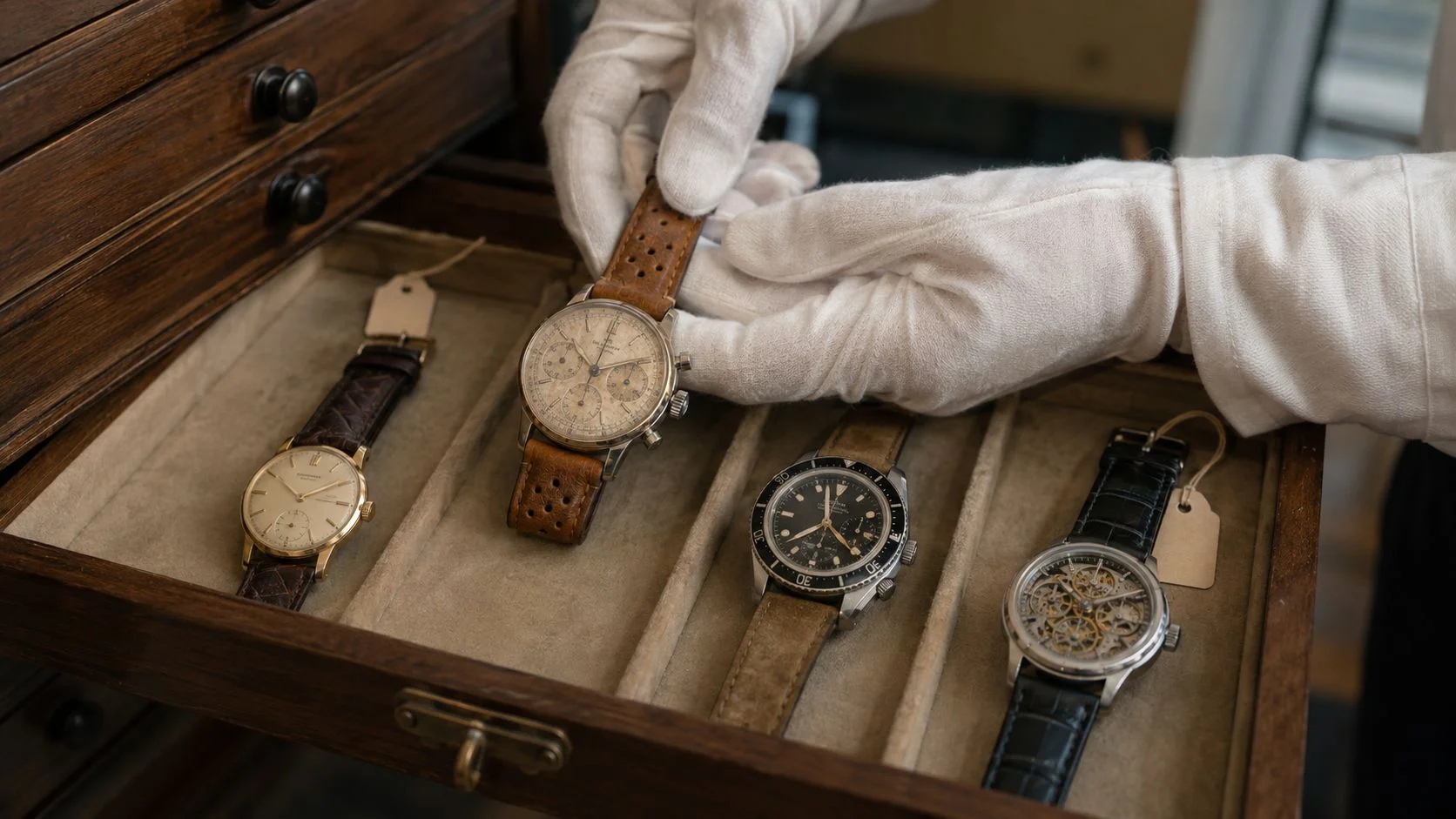
What gets less attention is that pre-owned is often where mechanical significance is most accessible. A discontinued caliber from a major maison is frequently available pre-owned at a price that reflects its rarity in the wild rather than a hype cycle. A first-generation in-house perpetual calendar chronograph from a brand like Patek Philippe becomes far more approachable on the secondary market than in any boutique allocation. This is a structural feature of the secondary market, not a tradeoff, and it means collectors interested in substance rather than allocation status often find the most interesting calibers in pre-owned inventory.
There is a real distinction here from our point of view. Buying pre-owned is not "settling for what couldn't be sold new." It is, in many cases, the only way to access a caliber that the maison has since replaced, refined, or discontinued. Our authentication process is designed for exactly that case: ensuring the piece is what it claims to be so collectors can pursue references that have long since exited boutique channels.
Pre-owned is where the mechanical-historical record lives. The houses that built the canon are still building on it, but their earlier chapters are most accessibly read in the secondary market.
The Line We Don't Cross
Honesty about what we don't carry matters as much as the inventory we build around mechanical significance. There are several categories we tend to pass on.
Quartz-only references from mechanical maisons. A high-quality quartz movement from a brand better known for mechanical work does not, by itself, represent mechanical significance in the sense we mean here. A Patek Philippe Advanced Research quartz prototype is a different matter than a standard production quartz, and we don't conflate them.
Limitations-driven references that exist primarily to move volume. A piece that uses a known complication as a marketing veneer, but whose caliber is outsourced and lightly modified, rarely meets the bar. We would rather list fewer pieces than list pieces whose significance doesn't hold up to inspection.
"Available Upon Request" sourcing carries the same filter. Our pre-owned selection page shows pieces that are physically in our inventory, and pieces that can be sourced through a vetted network on a 10% deposit. Both routes pass through the same basic standard. If a reference isn't interesting enough on mechanical grounds, we don't bring it in just because it's available.
What this filter produces is a curated short list, not a refusal to engage with variety. Within the houses we focus on, we list a wide range of complications, dial configurations, and case materials. The breadth is real. The restraint is the point.
A Practical Way to Read It
If you're evaluating a pre-owned luxury watch on mechanical significance, a few questions are worth asking before purchase, and they line up with what our selection process already tests for.
Does the movement wear the maison's name, or is it an outsourced caliber lightly modified? In-house development is not absolute proof of significance, but it is the most reliable starting point.
Is the complication (if any) one that the brand historically developed in-house and refined over generations, or is it a recent addition assembled for market positioning? Long arcs of refinement carry more weight than fresh complications without lineage.
Has the caliber, or its lineage, been referenced in horological literature for a specific reason? The most significant movements have written records explaining why they matter.
Does the piece carry the relevant maker's marks, finishing signatures, and serial conventions consistent with authentic production? Authenticity is the prerequisite. Without it, mechanical significance is moot.
These are not proprietary questions. They're the same questions most experienced collectors already ask. They've simply been formalized into our selection process so that every piece we offer has been considered against them, and a piece whose significance is uncertain doesn't quietly slip into the catalog.
Mechanical significance is not the only criterion that matters for a watch purchase, but it is the one that tends to age best. A piece that was selected for the right mechanical reasons generally remains interesting long after its hype has faded, and that's the test our pre-owned inventory is built to pass.
