

Best Place to Buy Used Watches: A Dealer Checklist
The Stellaris Journal
The best place to buy a used watch is the provider and channel that fit the exact piece while making the seller of record, actual item, condition, authentication scope, total price, warranty or guarantee, return terms, payment, and delivery responsibility verifiable before funds move.
Choosing a channel and vetting a seller are separate decisions. Brand or authorized certified pre-owned programs, specialist independent dealers, marketplaces, auction houses, and private transactions can each suit a different purchase. None makes every seller or watch equally safe.
This guide evaluates where and through whom to buy. The physical assessment of the individual watch is a separate task.
Best Place to Buy Used Watches: The Short Answer
Start with three layers:
1. Channel: Which transaction model fits the watch, budget, expertise, and protections needed?
2. Seller: Who owns or controls the watch, receives payment, issues the invoice, and handles a problem?
3. Exact watch: Do the actual condition, components, records, included items, and inspection findings support the representation?
Price alone cannot select the best place. A lower quote may exclude fees, taxes, shipping, coverage, a useful return right, or near-term service. Prestige alone cannot select it either. A polished website, famous platform, large social following, or five-star average does not prove that one listing is accurate.
A suitable provider should make the transaction easier to audit. Before payment, you should know:
- whether the watch is in stock, consigned, or still being sourced;
- who the seller of record is;
- whether photographs show the exact item;
- what is known about condition, service, replacement parts, and completeness;
- who inspected the watch and what the conclusion covers;
- the total amount and payment recipient;
- the issuer and scope of any warranty or guarantee;
- the inspection, return, delivery, and dispute procedures.
If a material answer remains verbal or vague, pause until it appears in a current listing, invoice, policy, or written confirmation.
Choose the Buying Channel That Fits the Watch
Use this matrix as a starting point. Practices vary within every category.
| Channel | Strongest use case | Typical tradeoff | Authentication or certification | Main verification |
| --- | --- | --- | --- | --- |
| Brand or authorized CPO | Buyer wants a manufacturer-defined pre-owned program | Selection, eligibility, availability, and price follow program rules | Manufacturer or authorized program under stated terms | Confirm retailer authorization, watch eligibility, guarantee, and return policy |
| Specialist independent dealer | Buyer wants a direct seller with inventory, sourcing, or after-sale accountability | Manufacturer affiliation and warranty status vary | Dealer, third party, manufacturer, or combination | Confirm seller of record, custody, review scope, guarantee, and exact-watch evidence |
| Marketplace | Buyer wants broad comparison across many sellers | Platform and seller duties can be divided | Platform program, seller claim, third party, or none | Confirm seller identity, item eligibility, payment path, deadlines, and protection scope |
| Auction house | Buyer wants access to consigned, uncommon, or historically documented pieces | Buyer premiums, limited inspection, and sale-finality terms may apply | Cataloguing and condition work vary by house and lot | Read the lot report, estimates, fees, inspection access, and conditions of sale |
| Private transaction | Buyer wants direct access to an owner or collector | Few standardized guarantees or ordinary returns may exist | Agreed independent or manufacturer review | Verify identity, title, watch, payment, inspection, handoff, and written terms |
“Certified pre-owned” requires an issuer. Rolex's Certified Pre-Owned program is one brand-specific authorized example with its own eligibility, checks, guarantee, and retailer network. It does not define every dealer's use of “certified.”
Independent and grey-market dealers, brokers, and concierges also play different contractual roles. Identify who sells as principal, who represents a party, and who simply provides a service. A separate channel guide should carry those definitions so this page can focus on selecting and vetting the seller.
Verify the Seller, Not Just the Platform or Review Score
Confirm the business or person's legal identity, current contact details, physical or online presence, and role in the transaction. Ask whether the seller owns the watch, holds it on consignment, or will source it after payment. The invoice, payment recipient, and policy issuer should agree.
The FTC's online-shopping guidance recommends researching unfamiliar sellers, comparing terms, checking reviews from multiple sources, and keeping records. Review evidence is useful when read critically:
- Look for recent and specific accounts rather than only the average score.
- Compare independent sources, complaints, and the seller's responses.
- Check whether reviews discuss the same high-value product and transaction type.
- Note repeated problems involving refunds, substitutions, shipping, or unreturned inquiries.
- Treat sudden bursts, vague praise, copied language, and reviewer patterns as questions, not automatic proof.
A long history or large following can support identity research, but neither authenticates the exact watch. A new seller is not automatically dishonest, while an established seller is not exempt from documenting a particular listing.
For a marketplace purchase, distinguish platform from seller. The FTC's marketplace guidance advises checking who you are buying from and how platform protections work. A badge or buyer-protection headline may apply only to eligible items, approved payment paths, specific deadlines, or stated claim types. Read the current rules for the exact transaction.
Ask who receives a discrepancy notice and who decides the remedy. If the marketplace, dealer, authenticator, payment provider, and shipper each handle different stages, know which record and deadline governs each claim.
Seller identity checks should also cover claimed authorization. Verify a brand-authorized retailer or service provider through the manufacturer's current directory. The words “authorized,” “factory certified,” or “official partner” should not rest on the seller's own badge alone.
Watch for impersonation as well as an unreliable business. A copied logo, cloned product page, lookalike domain, or compromised social account can imitate an established dealer. Reach the business through a contact method obtained independently, confirm the invoice entity and bank or payment details, and verify any last-minute account change through a known channel. Do not use the phone number inside the suspicious payment message to validate that same message.
If the seller says the watch belongs to a consignor or external source, ask how authority to sell is established and which party can approve a price change, return, or disclosure. The buyer may not need private owner data, but the dealer should be able to explain its authority and responsibility without exposing unnecessary personal information.
Demand Evidence About the Exact Watch Before Payment
The seller-selection test is whether the provider supplies useful evidence and accepts clear responsibility. It is not whether the buyer can authenticate a watch from a few photographs.
Request current images of the actual dial, case, caseback, crown, bracelet or strap, clasp, identifiers as appropriate, documents, and included accessories. Compare repeated condition marks and configuration details across the set. Stock or manufacturer images can explain a model, but they must not replace the watch being sold.
The listing and written answers should identify:
- the full reference and represented configuration;
- condition, including material marks not visible in ordinary photos;
- polishing, restoration, service, and functional information available;
- known genuine service, mismatched, aftermarket, or replaced components;
- box, papers, links, straps, tools, and service records included;
- whether the watch is physically in the seller's custody;
- who inspected it, when, and at what level; and
- which questions remain unknown or outside the inspection scope.
Authentication, originality, condition, function, and completeness are separate conclusions. An authentic watch can contain a later service dial, refinished case, incomplete bracelet, or overdue movement. A warranty card can support an earlier sale while saying little about current condition.
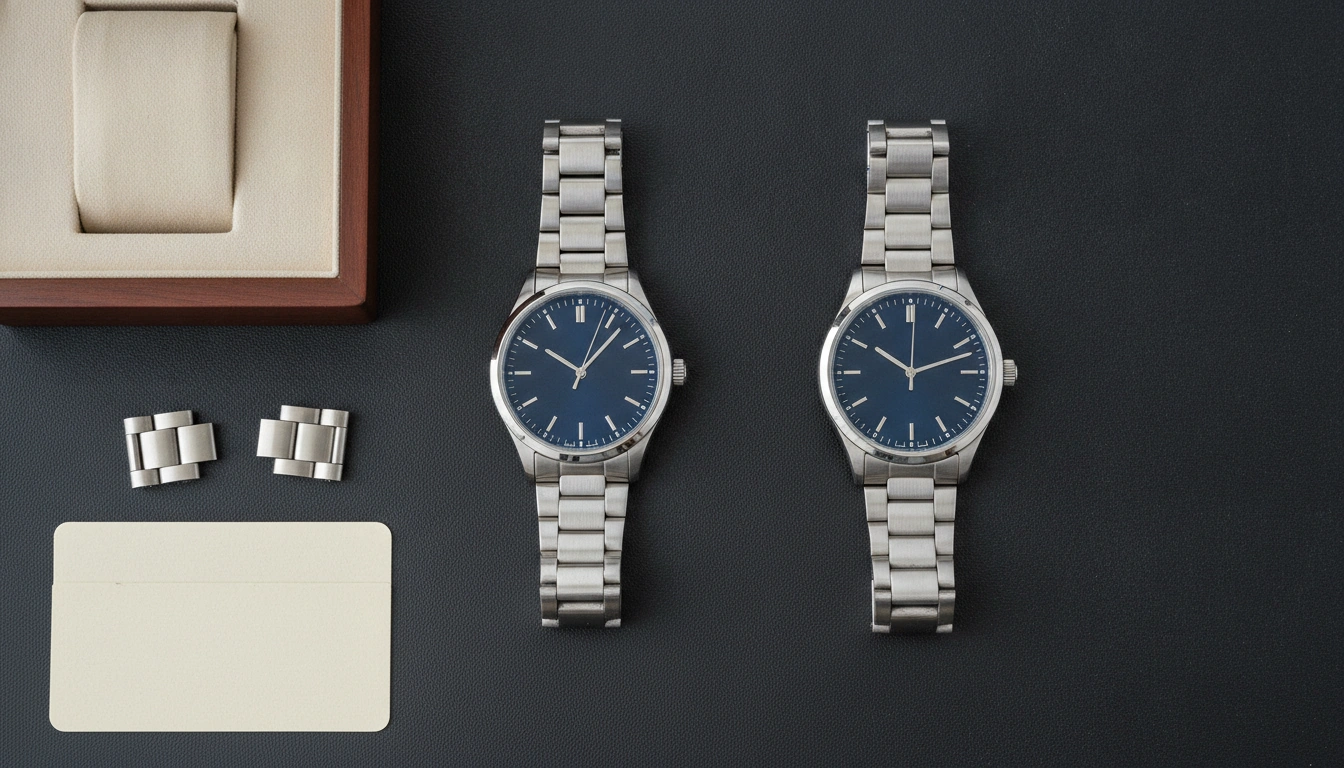
If an internal or brand-specific question is material, arrange a qualified or manufacturer-authorized review as appropriate. Ask what was accessed, which records were matched, and what remained outside scope. A short timing result, matching serial, plausible paper, or seller reputation cannot authenticate the whole watch.
A live video call can confirm that the seller can present a watch and can help examine requested angles, crown operation, bracelet fit, or accessories. It remains a remote observation shaped by camera quality and lighting. Save any material written follow-up, and do not let the immediacy of a video call replace the invoice, independent review, or return terms.
For a sourced watch, define the qualifying criteria before the search. Reference, material, dial, approximate production context where relevant, condition, originality tolerance, service history, completeness, budget, and approval rights should be clear. Locating the right reference is not the same as locating an acceptable example.
Compare Total Price, Payment, Warranty, and Return Terms
Compare the total transaction, not only the asking price. Include:
- buyer premium, sourcing, consignment, platform, or payment fees;
- sales tax, VAT, import duty, and brokerage where applicable;
- shipping and transit coverage;
- bracelet sizing or accessory costs;
- likely immediate service disclosed by the evidence; and
- return shipping, restocking, or inspection costs under the written policy.
Use exact-watch comparables with a similar reference, period, material, configuration, condition, components, completeness, service status, provenance, seller type, and date. An average model price cannot explain every individual example.
Confirm who receives funds, when ownership or risk transfers, and what document is issued. Credit card, bank wire, escrow, financing, and other methods have different fees, limits, finality, identity checks, and dispute procedures. No method is universally safe in every jurisdiction and setup. Do not leave the platform's approved payment path if doing so removes a protection you intended to use.
Separate each protection:
- a manufacturer warranty follows the manufacturer's current conditions;
- a seller guarantee or warranty is the seller's promise;
- a service contract is a separate agreement for defined work or costs;
- a return policy governs whether and how the purchase can be reversed;
- a payment dispute right comes from the applicable payment rules and law.
The FTC's warranty guidance recommends reading coverage, exclusions, duration, and the process for obtaining service. Ask who pays transport, whether third-party service affects coverage, and what happens if parts or manufacturer support are unavailable.
Read the return policy before payment. Confirm the inspection period, eligible condition, excluded categories, authorization requirement, restocking fee, time zone or deadline, return address, coverage responsibility, and refund timing. High-value and international transactions may have different terms, and legal rights vary by jurisdiction.
Save the listing, images, invoice, policies, seller messages, inspection report, and payment record. A webpage can change after the transaction. The retained record should identify the watch without unnecessarily publishing full serials or personal information.
Confirm Delivery and Post-Sale Responsibility
Before payment, determine whether the seller has the watch, when it can ship, and which condition or identity check occurs before dispatch. Ask who packages the parcel, purchases or provides transit coverage, tenders it to the carrier, monitors tracking, and owns a loss or damage claim.
The written plan should cover:
- the approved recipient and address or hold location;
- discreet protective packaging;
- the coverage terms and value evidence;
- tracking and expected communication;
- signature and identification requirements;
- restrictions on reroutes or address changes;
- visible damage and tampering steps; and
- the person responsible for resolution after delivery.
Declared value is not necessarily insurance. Carrier limits and coverage can depend on the commodity, value, account, service, route, packing, and tender location. The detailed packing and coverage process belongs in a dedicated watch-shipping checklist.
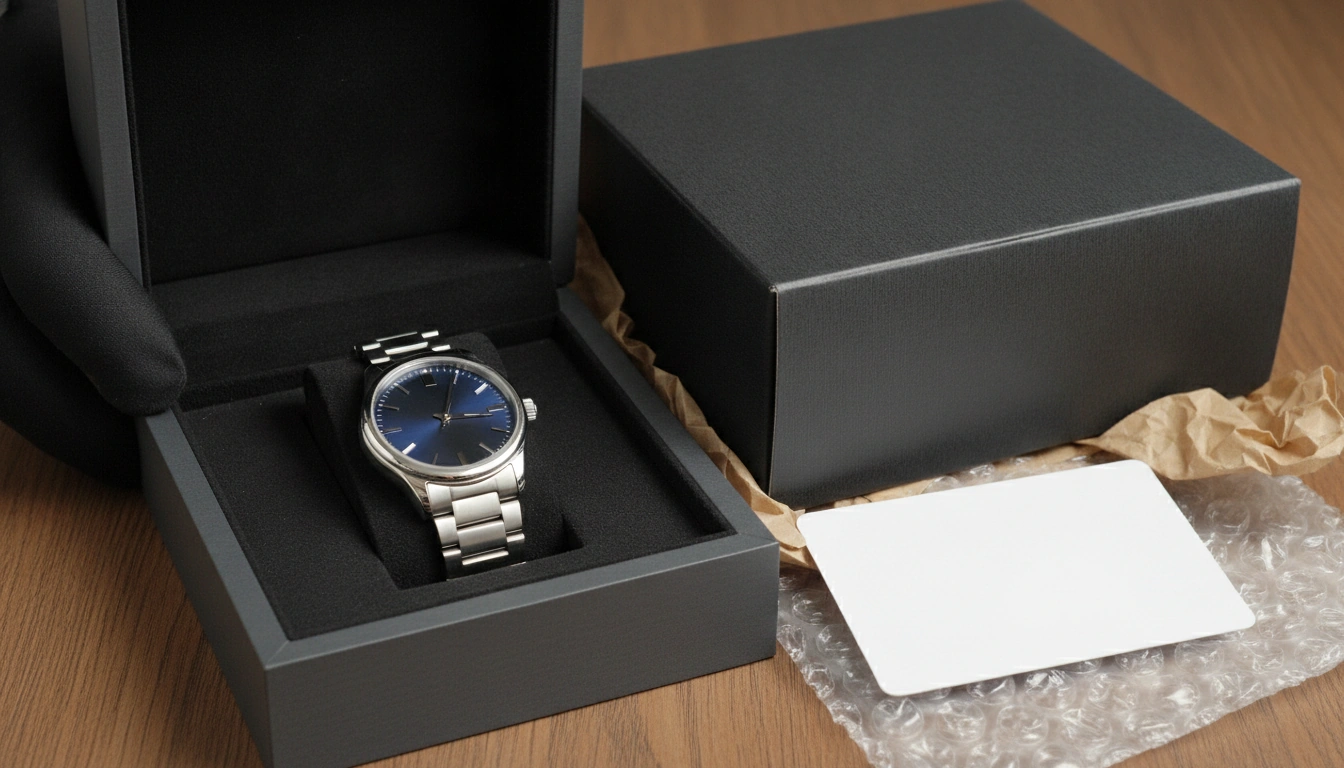
At delivery, inspect the outer parcel under the agreed procedure, photograph visible damage where practical, keep all packaging, compare the exact watch and included items with the record, and report a discrepancy promptly. These steps preserve evidence. They do not transfer the seller's authentication or fulfillment responsibility to the buyer.
Post-sale responsibility should not disappear into a generic support inbox. Identify who handles an authenticity concern, functional issue, missing accessory, return request, manufacturer-warranty question, or transit claim. Different problems may have different issuers and deadlines.
Apply the Dealer Checklist to Stellaris or Any Seller
Use this checklist for every provider:
1. Who is the legal seller of record, and who owns or controls the watch?
2. Is the watch in stock, consigned, or available only after sourcing?
3. Are the photographs current and of the exact piece?
4. What condition, service, component, refinishing, and completeness facts are disclosed?
5. Who inspected the watch, and what does the conclusion cover?
6. What evidence supports the total price?
7. Who receives payment, and which written protections apply?
8. Who issues each warranty, guarantee, certification, or service contract?
9. What inspection and return terms apply to this item?
10. Who controls packaging, transit coverage, delivery, and a claim?
11. Which facts remain unknown?
This article is published by The Stellaris Collection and therefore has a commercial interest in the subject. Evaluate Stellaris with the same checklist.
The current Stellaris FAQ identifies the company as an independent dealer, says priced watches are in inventory while Available Upon Request pieces are sourced, and describes actual-watch photographs, included-item disclosure, arrival authentication, inspection, and pre-shipment reverification. It also describes payment methods and a sourcing deposit. Confirm the live terms for the specific watch before paying, especially where timing language may differ across pages.
The current shipping policy describes Stellaris's packaging, tracking, coverage, hold-location, identification, signature, and international-shipment approach. The refund policy controls eligibility, timing, authorization, condition, fees, and return procedure. Those are Stellaris commitments, not manufacturer terms.
Stellaris is not affiliated with or authorized by the brands it sells. Its authenticity guarantee is a dealer commitment. A manufacturer warranty or service document keeps the separate scope defined by its issuer.
For a specific watch, use the contact page to ask for the current listing evidence, exact contents, inspection scope, price, payment, warranty or guarantee, delivery, and return terms. The best place to buy is the one that can answer those questions clearly for the piece you intend to receive.
