

Recession-Proof Luxury Assets: A Strategic Guide for Investors
The Stellaris Journal
Rare whiskey. Up 191.7% in ten years. Yes, you heard that right. While your mutual funds sweated through market dips (or worse), some folks were quietly stacking real assets that just kept climbing. Forget the usual panic talk about "diversification" with boring bonds. That's for amateurs.
When the economy goes south, the truly wealthy don't just hunker down. They pivot. They snap up things that inherently hold value because, frankly, they're always in demand. Scarcity is a brutal truth. And these assets don't give a damn about quarterly reports. The real play for the ultra-rich isn't just safety; it's aggressive growth in strange places.
This guide isn't here to whisper sweet nothings about "exquisite craftsmanship." It's here to show you the hard numbers. And the strategy. It's about why a Birkin bag outperforms many blue-chip stocks. Why a Patek Philippe is more than just a watch. And how you can use these "passion assets" to build real, enduring value. Recession? Doesn't matter.
Why Luxury Assets Thrive in Economic Downturns
Look, you think luxury stuff is just for showing off? Not when the economy goes sideways. This idea that luxury just happens to do well when things get tough? It’s not random. There’s a method to the madness. A brutal, simple truth, actually.

Because here's the thing about the rich. And yes, you have to talk about them. Their money isn't tied to a layoff notice or an interest rate hike. So when everyone else is cutting back, they're still buying. Or perhaps eyeing what they can pick up cheap. Similarweb (2026) data shows searches for high-end items barely dip. It’s wild. This concentrated demand, from a stable client base, cushions everything.
And the brands? They don't play discount games. Can't afford to. Price cuts kill perception. They protect the margins, preserving that inherent value. Because that's what makes it luxury. Not volume. Just look at the numbers: Post-2019, most revenue growth came from bumping prices, not from selling more watches or bags. Bain & Company projects another 3-5% market climb by 2026, even amidst global instability. It’s built into the model.
But it’s not just the ultra-wealthy. Even regular folks. They might not buy a new yacht (obviously), but they'll still opt for a fancy perfume or a quality watch. It's that 'lipstick effect' 2013 a smaller, tangible treat. Not quitting luxury, just trading down a bit, because the desire for something nice, something tangible, persists.
These things 2013 real estate, vintage watches, gold 2013 they're hard assets. Not just numbers on a screen. They are value. A hedge against inflation. A store of wealth. When paper money feels flimsy, you want something you can actually touch, something that lasts. UHNWIs do this all the time: waiting for a dip, then pouncing. It's a long game. And that's why these things keep going. Luxury assets are fundamentally designed to hold and grow value, regardless of market instability.
Asset Deep Dive: The Unwavering Appeal of Luxury Handbags
You think real investments are just stocks and bonds? Forget it. So many people chase algorithms. But a true play? That's what you wear. And yes, it's a crazy thought. But here's the thing: Luxury handbags. They don't just hold value; they appreciate. Fast. Financial experts, the types who usually talk about "market volatility," genuinely call these "recession-proof." Credit Suisse and Deloitte have stated it.
And it's all about the names. Hermès. You want a Birkin? A Kelly? Good luck. They make them scarce on purpose. Chanel. Louis Vuitton. They meticulously control the flow, keeping demand perpetually high. So, prices? They just climb. It's simple economics, but with a fancy leather twist. And sometimes, it gets absolutely wild. Remember the Yayoi Kusama Pumpkin Bag by Louis Vuitton? Sold for a record $151,200 in 2024. Just a bag. Unbelievable.
Look, this isn't just some theory. The Knight Frank Wealth Report (2025) confirms it: Handbags were the top-performing luxury asset last year, beating everything else. They climbed 2.8% in 2024, and get this: 85% appreciation over the last decade. That's a serious chunk of change. Plus, you get to use it. A real investment you can actually enjoy, not just a number on a screen. It's a tangible asset you carry. Smart money.
Asset Deep Dive: Fine Watches as a Legacy Investment
People chase the next big tech stock. Me? I see what lasts. And it isn't always digital. Sometimes it's tiny, with gears and a story. Fine watches. They aren't just about telling time or looking rich; they're a vault on your wrist, and a hell of a legacy. So many assets tanked in the last decade. Not these. They blew past almost everything else. Seriously.
The Knight Frank Luxury Index doesn't lie. Watches rocketed up 125.1% in value over the last decade. You read that right: one hundred twenty-five percent. And they still edged up 1.7% in 2024. But why? Because certain names 2013 Patek Philippe, Rolex 2013 don't just make watches. They make history. They build things with a craftsmanship that's almost lost now. And they don't flood the market. Scarcity drives the price.
And when they hit the auction block? Crazy money. A Patek Philippe Grandmaster Chime sold for $5.4 million in June 2024. Think about that. That's a house, or ten, for a watch. Because it's not just metal. It's art. It's engineering. It's a statement. But also, a damn good investment. And you can always sell them easily; there are plenty of buyers. Your grandkids will thank you. Maybe.
Asset Deep Dive: Trophy Real Estate in Global Safe Havens
Forget the noise. When the market wobbles, where do the truly smart put their cash? Not in some app. Not in meme stocks. They buy dirt. Expensive dirt. But it's hard dirt. Real estate. And not just any real estate. We're talking trophy properties in places like Beverly Hills, London, Dubai. These aren't just homes; they're fortresses for wealth. Because they hold value. Always.
Beverly Hills? It's seen almost 100% appreciation in the last decade alone. Think about that: double your money. And over 20 years? A staggering 190.91%. But it's not magic. It's supply and demand. You can't just build another Beverly Hills. And the buyers? They're global. They don't need a local bank; they have cash. Lots of it. That keeps the market stable, solid, even when everything else is going sideways.
Here's the trick: The ultra-rich, the UHNWIs, don't panic during downturns. They shop. They use those moments to snatch up properties, often off-market. They consolidate their smaller holdings into something bigger, something with history or an architect's name on it. Frank Gehry. Richard Neutra. Those places? They just keep climbing. They're irreplaceable. So, yes, it's a house. But it's also a legacy. A hedge. A shield against the crazy. It's the anchor you need when the world goes wild.
Asset Deep Dive: Connoisseur Collectibles (Art, Wine, and Whiskey)
Alright, you've heard the whispers. Maybe dismissed it as rich people nonsense. But here's the thing about your fancy art, dusty wine, and ridiculously priced whiskey. It isn't just for looking at. Not anymore. Because these "connoisseur" assets? Crushing it. Hard. Look at rare whiskey, for God's sake. Up a jaw-dropping 191.7% over the last decade, as Knight Frank (2024) reports. That's not just growth; that's an explosion. And fine art and wine? Up 54% over that same stretch. You think stocks and bonds are your only play? Think again.
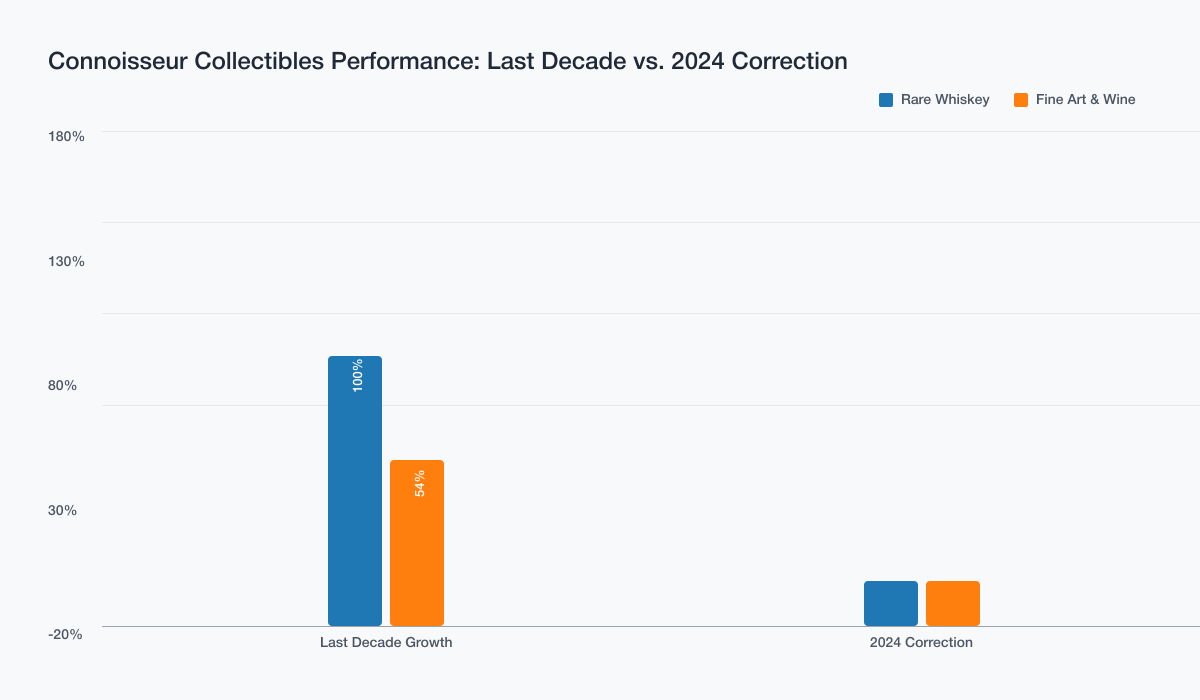
But. And this is important. This year? Things got weird. A mess, really. Whiskey prices dipped 9%, and art? Down a staggering 18.3% in 2024, if you're keeping score. New money is probably sweating. But I tell you, a dip isn't a crash. Just the market taking a breather (a long one, maybe). Knight Frank's analysis backs this up: corrections always follow insane growth. So, what you see right now? Not a disaster. It's a fire sale, if you know where to look.
Because true value isn't some fluffy marketing pitch. It's about scarcity. Provenance (where it came from, who owned it 2014 a big deal). And the name behind it 2014 the artist, the distillery. Not speculative buys for the pros. You buy the right piece. Store it right (often in crazy secure, hands-off vaults). And you wait. You let it do its job. While everyone else freaks out about a correction, you're the one stepping in, grabbing the real gems at a discount.
A Strategic Framework for Building Your Luxury Portfolio
You want to build a real luxury portfolio? Not some flimsy collection of shiny junk. This isn't a game for quick flips, buddy. No. It's about knowing what you're doing. And most people? They get it all wrong.
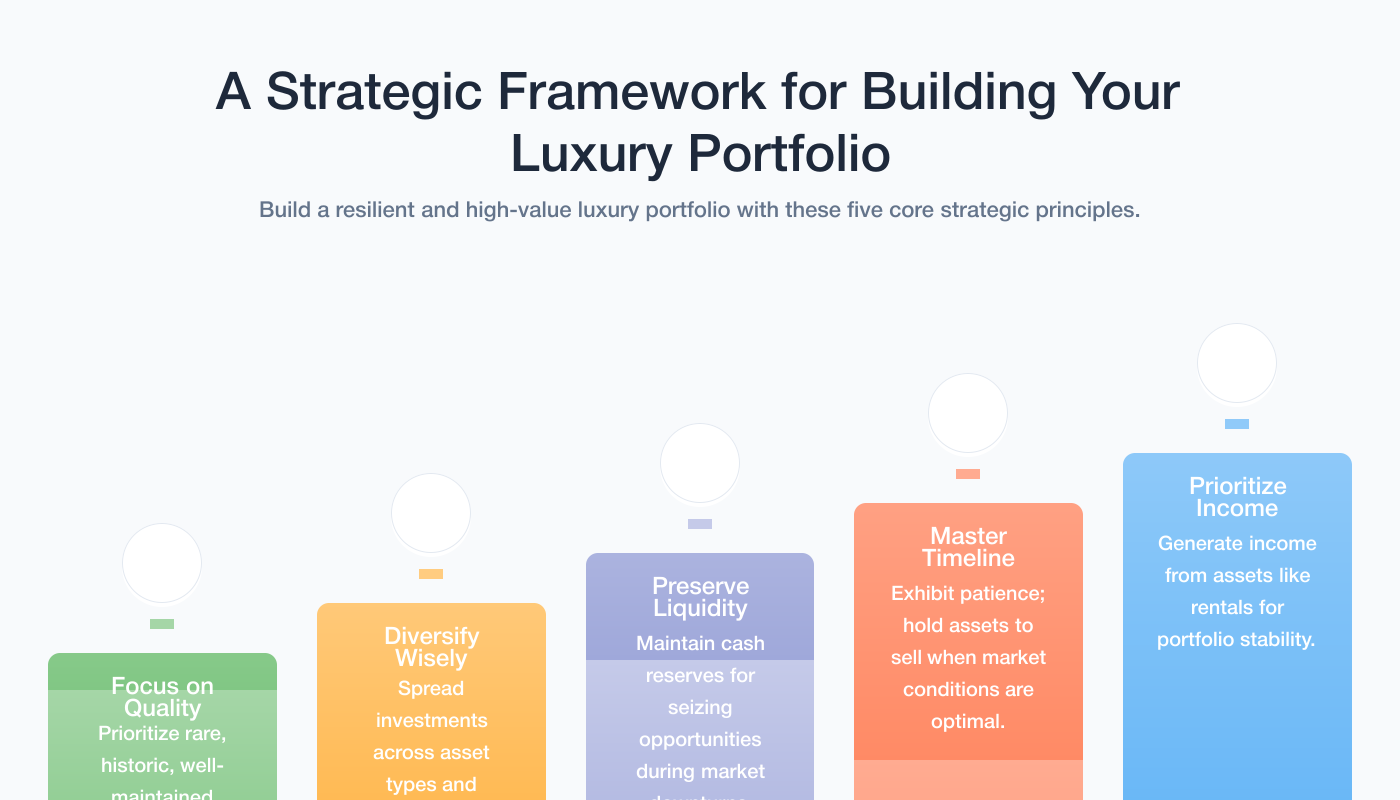
First, forget chasing trends. Just forget it. Focus on quality, scarcity. Always. You need assets with a real history, something special, an architectural masterpiece. Or a brand that just doesn't churn out product like a factory. Because those mass-produced pieces? They're a mess. Seasoned investors only touch the good stuff: the well-maintained, built-to-last assets. So, aim high. No compromises. That's your start.
But don't dump everything into one thing. That's just asking for trouble. Diversify. Intelligently. Spread your cash across different luxury assets, watches, real estate, maybe some art. And spread it geographically too. But here's the thing: don't just buy another watch. No. UHNWIs (the folks who actually know what they're doing) are spanning continents for a reason. They're balancing geopolitical risks, economic craziness. You should too.
Preserve some liquidity. Seriously. This isn't optional. Maintain cash reserves because those downturns? That's when the real opportunities pop up: distressed luxury assets, below-asking deals. People get desperate. Top investors quietly seize these chances with off-market stuff. You need dry powder for that, or you'll miss out.
Master the timeline. So many new players don't get this. Luxury assets aren't for flipping. You need patience. Real patience. Affluent owners can hold through volatile periods (and there will be volatile periods) to sell when the market's right, not when they have to. And that makes all the difference. Because urgency? That's weakness.
Even luxury assets should pull their weight. Prioritize cash flow. Look, that fancy property? Rent it out. Multi-family real estate, tied to necessity? Those are recession-resistant; they still generate income. Because even in the high-end game, pure speculation is dangerous. Cash flow, that's your anchor when things get rough.
And before you sign anything. Anything! Validate provenance. Due diligence. It's critical. Because the fakes? They're everywhere. And the ownership histories? Messy. You need to verify authenticity every single time, and the history, too. Protect your value. And your sanity.
So, you want a strong portfolio? You need discipline. And a plan. That's it. Now go do it.
Frequently Asked Questions
What does 'recession-proof' mean, anyway?
Look, nothing's truly "recession-proof." That's a myth. Pure marketing fluff. (Seriously, run from anyone selling that line.) But some assets, yeah, they hold up better than others when the whole damn economy goes sideways. These are the things designed to just exist, to keep ticking over, to not bleed value like everything else. So, you're not trying to get rich quick. You're just trying not to lose your shirt. Simple as that. It's about surviving the mess.
How fast can you sell these fancy things?
Some of it, you can move. And fast. Think a hot watch or a designer handbag. There are secondary markets for that stuff: auction houses, people lining up. But real estate? Or some obscure piece of art? Forget about it. (Good luck with that, pal.) You're probably stuck with it for a while. Not liquid at all. You need a buyer, a specific buyer. And that takes time. Or money. Or both. So, don't bet on a quick exit for everything, okay?
What's the catch? The biggest risks?
Risks? Oh, they're everywhere. First, fakes. Tons of 'em. So easy to get scammed if you don't know what you're doing. And illiquidity, like I just said. You're stuck with it, so no fast cash. But also, markets can crash in specific categories. Your "hot" item might just go cold. And you, yeah, you probably don't have the deep knowledge for authenticating everything or for figuring out its real worth. (Most people don't.) That's a huge problem.
Why do the rich folks jump into this during a downturn?
Because they're vultures. And smart ones. They see the mess as an opportunity. Prices drop, and they pounce. They want the stuff cheap, not for a quick flip usually, but for the long haul. Because these things2014real estate, certain art pieces2014they appreciate over years. Plus, they're tangible. Something you can touch, use, pass on. A legacy. My old man always said, "You can't eat a stock certificate." And even Similarweb (2024) shows UHNWIs are all over these "buy low" plays.
So, I gotta be some kind of expert to play this game?
Not really. But kinda. You need to know your stuff, or you need someone who does. Don't go in blind. Ever. Try buying pre-owned from a trustworthy dealer. Or use an advisor, someone with a track record. There are ways to get into this without being a full-blown guru. Art funds, for example, fix a lot of the risk for you. But you gotta be smart. Or pay someone who is. Trusted advisors and curated platforms like The Stellaris Collection can mitigate much of the risk. Don't just leap without looking.
Alright, enough with the theory. We've kicked the tires on these so-called recession-proof assets. And here's the brutal truth: nothing's truly 'proofed' against a full-blown meltdown. But some things bend, others break. The smart money? They're not just bending; they're acquiring while others panic.
What you should take from all this:
- This isn't about chasing fads. It's about understanding inherent value, scarcity, and demand that doesn't vanish when the stock market takes a dive. Think real assets, not paper promises.
- Certain categories 2014 your Patek Philippes, Herm00e8s Birkins, prime global real estate, that rare bottle of Scotch 2014 they operate on their own damn principles. They hold, often appreciate, because the buyer pool is different: discerning, rich.
- Diversification isn't just a buzzword for your equity portfolio. It's critical here. Spreading your bets across these tangible assets actually stabilizes your overall wealth, shielding it from typical market swings.
Look, this isn't some magic shield against every economic tempest. That's naive. But it's damn close to the best insurance policy you'll find when everything else is going sideways. It's about playing offense while others scramble.
So, what now? Stop reading. Start vetting. Your next move isn't another article; it's finding reliable eyes and hands—or trusted platforms like The Stellaris Collection—who can source, authenticate, and transact these assets for you. Or you can sit on your hands and watch everyone else make money. Your call.
