

How to Buy a Luxury Watch From Another Country in 2026
The Stellaris Journal
Buying a luxury timepiece from another country used to mean uncertainty: an unfamiliar dealer, opaque customs paperwork, and a wire transfer that left no paper trail if something went wrong. Those concerns are reasonable, and they are the reason our concierge model is built around a single point of contact who handles the entire transaction, including the parts that cross a border.
For international clients, the buying journey looks different from a domestic one. It involves authentication that happens before and after the watch enters our custody, payment rails that depend on currency and jurisdiction, insured shipping routed through specialist carriers, and customs clearance that has become more demanding since the de minimis thresholds in the United States, the European Union, and the United Kingdom were rewritten. This article explains how each of those steps is handled in practice, what is standard practice across the industry, and where we will need your input to make the transaction go smoothly.
How a Cross-Border Inquiry Begins
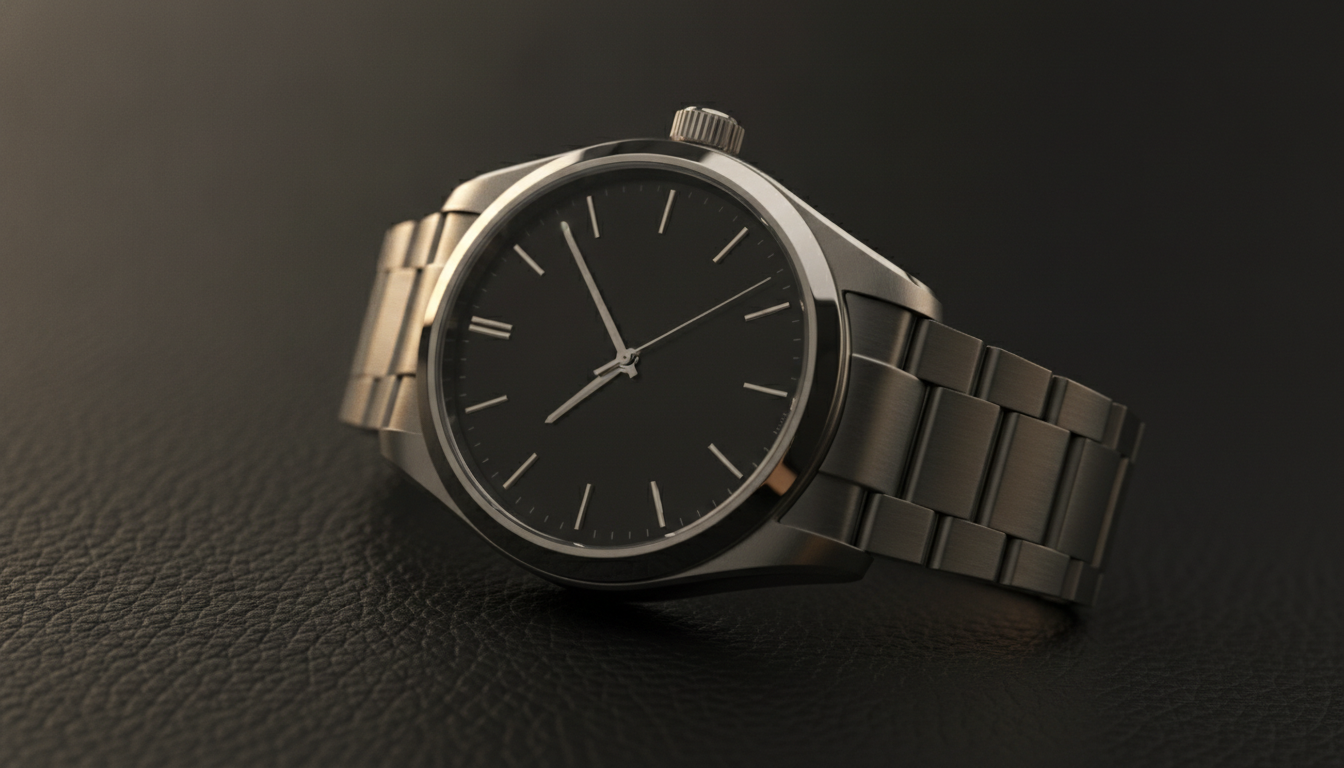
Every international conversation starts the same way: a direct message, a phone call, or an inquiry through the contact page. From that first point of contact, the same specialist who handles your inquiry also handles your transaction. There is no handoff to a separate freight desk or third-party logistics coordinator at any stage.
That continuity matters. If you write to us on a Tuesday about a Patek Philippe in our watches collection, the person replying is the person who will verify provenance, arrange payment terms, and confirm shipment routing. The concierge relationship is one-to-one, and it remains one-to-one across the border.
For most international clients, the first useful information we ask for is straightforward: your country of residence, the watch you are considering, and whether you intend to have the piece shipped to that country or to a different destination. These three details determine which customs regime applies, what documentation will be required at the point of import, and which payment methods are most efficient for your situation.
A cross-border inquiry should not feel like navigating a call center. It should feel like working with a single specialist who already knows your name.
Authentication on Both Sides of the Transaction
Every timepiece in our inventory passes through two authentication steps before it reaches you. The first happens on arrival at our holding facility, where each piece is inspected against the manufacturer's documented specifications for the reference. The second is a reverification that takes place immediately before the package is sealed for shipment. This is the same 100% authenticity guarantee we apply to domestic buyers, and it does not change based on where the watch is going.
For international buyers, this dual-pass process provides a particular advantage. Because customs authorities in many jurisdictions reserve the right to open and inspect high-value shipments, a watch that has been independently inspected by our team before dispatch arrives with a documented authentication record. That record can be requested at the point of import if a customs officer asks for substantiation of value or authenticity.
The maison brands we work with are listed openly on our authenticity page: Rolex, Audemars Piguet, Patek Philippe, Vacheron Constantin, Hublot, F.P. Journe, Omega, Panerai, Richard Mille, IWC, Tudor, Breitling, MB&F, and Zenith. We are not authorized dealers of any of these brands, and we make that clear on every listing. Authentication is therefore an absolute requirement, not a formality, and it is the part of our process we are most willing to slow down for when a buyer asks questions.
Authentication that happens once is a claim. Authentication that happens twice, on both sides of the journey, is a record.
Payment, Currency, and Banking Across Borders
Cross-border payment is where most luxury transactions quietly go wrong. The headline price of a watch is rarely the only number on the invoice, and the cost of moving money between two countries can range from trivial to material depending on the rails you choose.
The cleanest method for an international wire is a SWIFT transfer in the seller's settlement currency. For transactions involving large sums, this is what most private banks and wealth managers recommend because it leaves a full audit trail and is recognized by regulators in nearly every jurisdiction. Standard cross-border payment guidance from payments industry sources confirms that SWIFT remains the dominant infrastructure for high-value international transfers, with currency conversion handled either by the sending bank, the receiving bank, or a specialist FX provider.
For clients whose bank offers poor exchange rates, a separate FX platform that operates at or close to the mid-market rate is often worth the conversation. Wire transfers and bank drafts are also the payment methods that preserve the strongest documentation, which matters if you intend to claim the watch as a personal asset, insure it separately after delivery, or pass it through estate planning in the future.
Credit cards remain an option for many transactions, but they introduce two considerations specific to international buyers. First, currency conversion will happen at the card network rate, which is rarely the most favorable. Second, chargeback rights vary by issuer, and once a wire clears, there is little practical recourse if a dispute arises later. We are happy to walk through the trade-offs for your specific jurisdiction before any funds move.
The cheapest way to send money is rarely the same as the cleanest way to send money. We will tell you which one we recommend for your transaction, and why.
Shipping, Insurance, and the Carrier Question
Once authentication and payment are settled, the question becomes how the watch physically moves from us to you. Three things matter: how it is packed, how it is insured, and how it is routed.
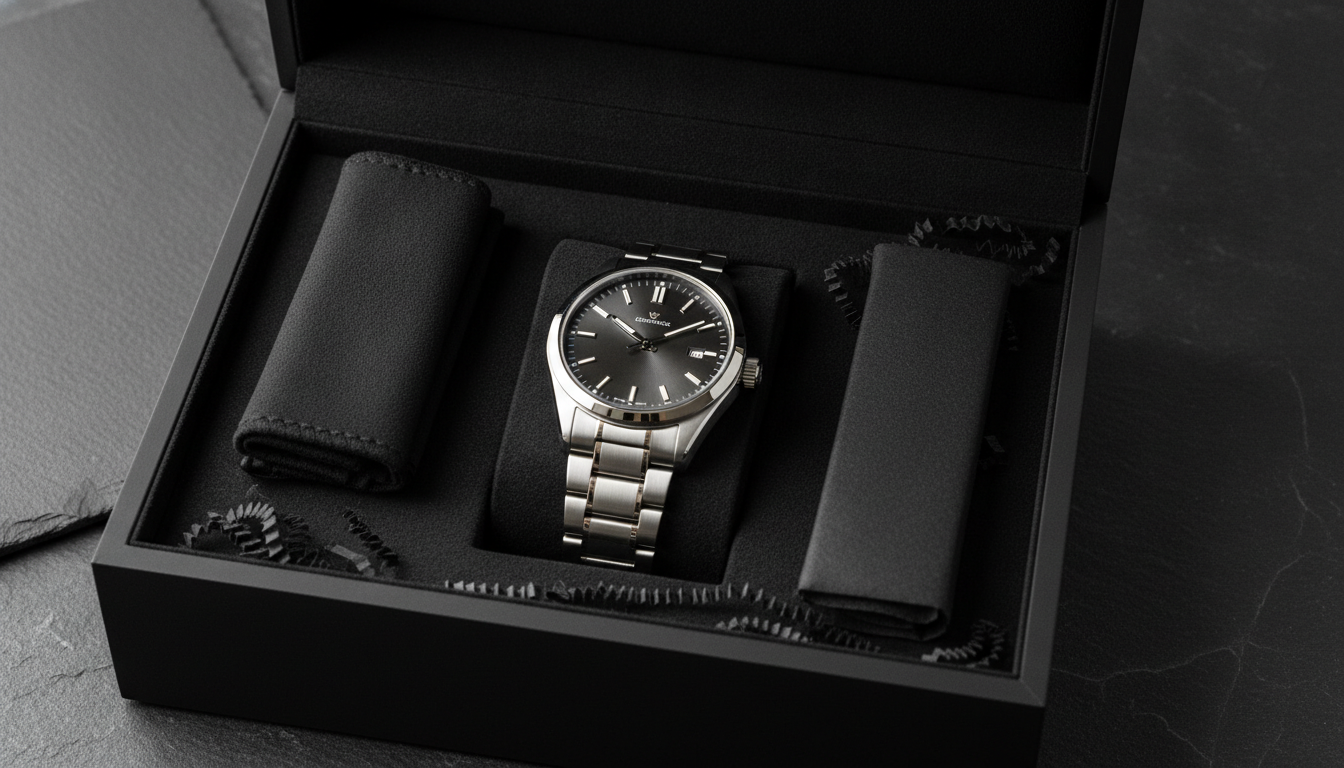
Specialist watch shippers universally recommend a double-box configuration (an inner padded box inside a sturdier outer carton), with the watch removed from any branded packaging that would identify the contents at first glance. Industry guidance on shipping high-value watches is explicit on this point: outer packaging should not announce the contents, and shipping labels should describe the parcel generically. Discretion at this stage reduces the chance of targeted handling loss.
Carrier choice for international luxury shipments almost always narrows to DHL Express, FedEx International Priority, or UPS Worldwide Express. Each offers next-day or second-day service to most major destinations, signature-on-delivery, and a declared-value option. The default liability of each carrier, however, is meaningfully lower than most buyers assume. FedEx defaults to $100 of liability with declared value capped around $1,000; UPS operates similarly; DHL provides declared-value coverage but with deductibles and exclusions for valuables. Published carrier terms make clear that watches are often excluded from standard coverage entirely.
For a high-value international shipment, the practical answer is therefore a third-party, ad valorem policy that covers the full transaction value. Specialist watch insurance providers routinely offer coverage up to roughly €100,000 per parcel, with claims handled directly rather than through the carrier. Every international order we ship is fully insured from dispatch through signed delivery, and we coordinate the declared value with you in advance so the policy matches the transaction.
Carrier liability is a backstop, not a solution. The right insurance policy is structured around the watch, not around the courier.
Customs, Duties, and the New Cross-Border Reality
Customs is the part of an international transaction that has changed most visibly in 2025 and 2026. Three jurisdictions matter most for our clients.
In the United States, the long-standing $800 de minimis exemption was suspended in August 2025, which means every shipment from abroad, regardless of value, now requires a formal customs declaration. Duties and applicable taxes are assessed on the declared transaction value.
In the European Union, the €150 low-value exemption is being phased out, with a temporary €3 customs duty per item taking effect 1 July 2026 for consignments under €150. Watches above that threshold continue to be assessed under normal tariff classification and are subject to value-added tax on import. Carriers also charge a separate customs brokerage fee per shipment, which varies by destination and should be factored into the landed cost.
In the United Kingdom, the post-Brexit £135 relief still applies at the time of writing, but the government has confirmed it will be removed by March 2029 at the latest, with reforms to the low-value regime expected earlier. Buyers planning repeated purchases into the UK should assume the duty-free pathway is closing.
In each of these regimes, the duty assessed on a luxury timepiece is calculated against the transaction value declared on the commercial invoice. We provide a properly formatted commercial invoice with every international shipment, including the Harmonized Tariff code, the country of origin, and the agreed sale price. Underdeclaring value to reduce duty is not a path we will help with, and it creates serious problems if an insurance claim is later filed against the same parcel.
Buyers sometimes ask whether we can ship "duty unpaid" or "delivered duty paid." The honest answer is that we can structure the shipment either way depending on what works better for your country of residence, and we will explain the difference before the parcel leaves our facility.
The customs landscape is moving, and the only durable approach is full transparency on the commercial invoice and a frank conversation about landed cost before payment.
After Delivery: Returns, Service, and Ongoing Support
A cross-border transaction does not end when the courier delivers the parcel. If the watch does not match the description, you have a return window governed by your consumer protection laws and by the terms under which the sale was structured. International returns are more complex than domestic ones, and we walk every buyer through the specific conditions in writing before the sale closes.
Once the watch is in your possession, service and support follow the same model as for any other client. A timepiece acquired from us carries the same authentication guarantee regardless of where it lives, and our team remains available for any future questions about resale, trade-in, or sourcing a complementary piece. For clients based outside the United States, ongoing communication typically happens by message, phone, or scheduled video call rather than in person, but the relationship is structured to be the same in either case.
The simplest way to start a cross-border conversation is to reach our team directly through the contact page or by calling (213) 444-0926444-0926). Tell us where you are, what you are considering, and whether you have any timing constraints. From there, the same specialist handles every step until the watch is on your wrist.
Distance changes the logistics of a luxury purchase. It does not change the standard of care the piece deserves.
