

Rolex Investment Value: A Data-Driven Analysis of the Last 15 Years
Andre Mercier
You've heard the talk. The "Rolex as an investment" crowd? For a good chunk of the last fifteen years, between 2010 and 2025, they looked like geniuses. The average resale price of a Rolex shot up over 550 percent. Let that sink in. Five-hundred-and-fifty percent. It peaked at a wild $17,206 in '22. Then, yeah, things cooled off. But not back to square one. The journey was volatile, full of surges and corrections.
Look, the whole market shifted. Permanently. This isn't about guessing anymore. It's about data. Actual transaction data. We’re stripping away the anecdotes (and the sales hype), diving deep into fifteen years of cold, hard numbers. Which models delivered? Which were duds? And what structural forces make a piece of steel and sapphire act more like a proper asset than just a fancy trinket? This analysis cuts straight to it. No fluff. Just facts.
My thesis? Not a traditional security, no. But specific Rolex models absolutely show asset-like characteristics. Manufactured scarcity, global liquidity, insane cultural status – that’s the real engine. It’s a unique case study in value retention, plain and simple. Specific Rolex models have transcended mere luxury items, demonstrating undeniable asset-like characteristics driven by scarcity, liquidity, and cultural status.
The Big Picture: 15 Years of Unprecedented Rolex Market Growth
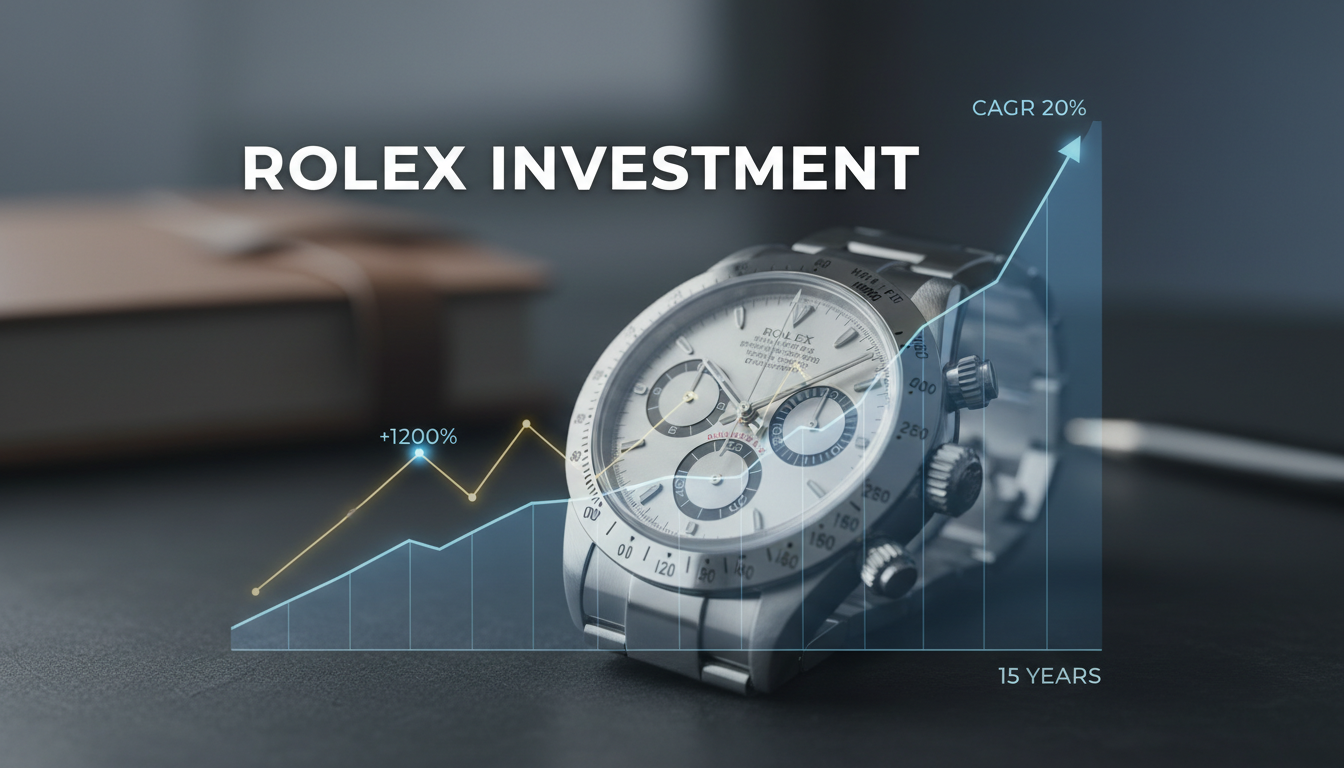
Forget what those polished reports try to tell you. This Rolex market? Not some steady, predictable thing. Not a gentle upward curve. It's been a total wild ride, a punch to the gut for anyone who thought they had it all figured out. And you’ve seen it. I’ve seen it. Fifteen years, and it's less a market, more a series of economic phases. Each one slammed into the last.

So, here’s the mess. You had the "Foundation Building" years, call it 2010 to 2015. Prices slowly climbing, maybe 250% up. But that was just setting the stage. Building up pressure. Then came "Maturation," 2015 to 2020. Moderate growth, like 24%. Nothing crazy. But it was a simmer. And then? Boom. The "Mania." The absolute insanity. You remember it. We all do.
Because from a baseline, a measly $2,050 average price in 2010 (Bob's Watches data confirms this, by the way), this thing just went nuclear. It surged. Exploded, actually. By March 2022, you were looking at an insane $17,206 average. Nearly doubled in less than two years. Pure, unadulterated speculation. Everyone chasing the hot money. Chrono24's ChronoPulse Index caught every single, crazy tick of that rocket ship.
But what goes up, right? It had to come down. And it did. A sharp, gut-wrenching 31% correction. You could feel it in your bones. Prices just dumped. Down to $11,785 by December 2022. Fast. It wiped out a lot of those newbie "investors." Yet, it stabilized. It did. Settled at a new floor. A higher floor, around $13,426 by June 2025 (Bob's Watches backs that up, showing over 550% growth from 2010 to 2025). So, yeah, it proves the market can be volatile as hell. But those desirable models? Their price foundation now sits way, way above what you saw pre-surge. It means the game changed. And it isn’t going back.
The Asset Hierarchy: Which Rolex Collections Delivered the Highest Returns?
Look, not all Rolexes are created equal. And if you think "a Rolex is a Rolex," then you’re already behind. Because this isn't some monolithic thing. This market? It picks favorites. And if you picked wrong, well, you know how that goes. The model. That’s the critical factor. Always has been.
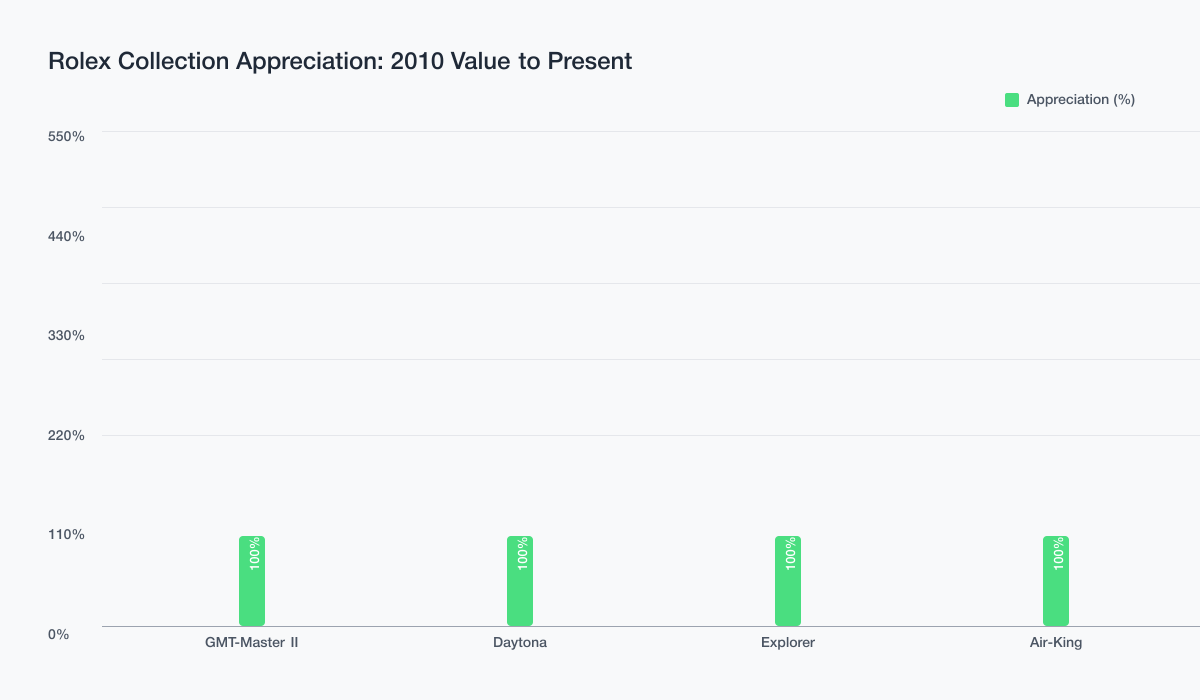
So, what ruled the roost? The GMT-Master II, hands down. Absolute money maker. You saw a ridiculous 506% appreciation from its 2010 value. Why? Simple. Demand for those iconic Pepsi and Batman bezels. Everyone wanted one. Still does. Bob's Watches' rankings confirm it, GMT-Master II crushed it at 505.74%. And it just kept going.
Then there’s the Daytona. Oh, the Daytona. It cemented its status as the trophy watch. What a run. A solid 358% gain. But the crazy part? It wasn't just a gain. It hit a speculative peak. One single model, touching $53,911 in March 2022. You know. That time when everyone lost their minds. Paul Altieri, he saw it. He said, "We've never seen steel sports models run hotter than during 2020–22." And he wasn't wrong.
Because steel sports models. They’re the backbone. Always resilient. Take the Submariner. It had a brief dip, sure. But it bounced back. You can find them trading at 92% of their peak value now. Strong collector conviction. People trust it. They hold onto it.
But here’s the weird part. Even the "entry-level" stuff, those watches that used to be a little easier to get, they transformed too. The Air-King. The Explorer. Both saw huge gains, 350% and 357% respectively. They weren't the top dogs, no. But the market surge lifted all those functionally-driven designs. And you think that's not important? Because it shows the depth of that mania. And it showed what people would chase.
So, you see the hierarchy. It’s clear. The steel sports models? They consistently deliver. And they show the most market resilience. But even with the Datejust being the most traded Rolex by volume (Chrono24 data, especially for younger buyers), the big money, the big wins, they're in those specific, sought-after steel references. You gotta choose smart. Or you're just buying a watch.
Anatomy of an Investment-Grade Rolex: Separating Winners from Underperformers
Alright. So you think you want a Rolex for investment? (Crazy, I know.) But look, most people get this wrong. They see the crown, think "money printer." Nah. Not all of them. Most are just watches. Nice watches, sure. But not investments.

Here's the thing. There’s a mental model. A framework. Because not every Rolex is going to make you rich. Far from it. Actually, some will lose you money. Fast. You gotta know the difference.
The Real Money Makers
You want a high-ROI reference? So you're looking at specific traits. Always. Stainless steel. Mandatory. And it's gotta be a "sport" or "tool watch." No diamonds everywhere. Please. Just stop. Think Daytona. Or the Submariner. Iconic designs. Heritage. And why do they pop? Scarcity. Absolute pain to get at an authorized dealer. Rolex doesn't do "limited editions," right? So those steel sport models? They're basically de facto limited. Because nobody can find one. Even ECI Jewelers spells it out—Daytonas, Day-Dates, Sky-Dwellers. These are your winners, often featured in curated collections.
The Steady Players
Then you've got the ones that just hold their own. Good value retention. Solid. Like a two-tone Datejust. Or a Yacht-Master, ECI Jewelers says. These aren't going to explode in value. But they won't tank either. They're reliable. A safe place to park some cash. An accessible entry point too. And sometimes, that’s exactly what you need. Not everyone wants the gamble. Or the crazy hunt.
The Money Pits
But here's where it gets dangerous. Certain setups? They consistently underperform. As investments anyway. Gem-set precious metal pieces. Avoid them. Unless you just love them (and have cash to burn). They’re not for making money. And aftermarket mods? Don't even start. A customized Rolex is just a broken Rolex to the market. Nobody wants your weird diamond bezel. So it’s garbage. You will kill the value. And missing the original box and papers? That's a huge problem. Not just a "vanity point." It's critical. Collectors pay more. A lot more. For a "full set." Every time. Even Reddit r/rolex understands the "value retention attitude" depends on this. It’s what secures the future value. You ignore this, you're just asking for trouble.
So, the brand name means nothing if the watch doesn't tick the right boxes. Material, function, and proof of origin. That’s the entire game.
The Four Pillars: Why the Rolex Market Behaves Like an Asset Class
Look, people talk about Rolex being an asset. But why? It's not magic. It’s mechanics. Pure market forces at play. You gotta understand these if you're serious. This isn’t just about shiny things. It's about structural foundations. A real market.
Scarcity by Design
First thing. Rolex doesn't make enough. Not even close. Around a million watches annually, tops. And global demand? Huge. Just insane. So what happens? Most people can't get one new. They get pushed straight to the secondary market. Creates this crazy bottleneck. A manufactured scarcity, if you ask me. And it keeps prices high. Simple economics. That’s how they do it.
Global Liquidity
So, you bought one in New York. Can you sell it in Dubai? Or Hong Kong? Absolutely. With barely any friction. This thing is a globally recognized store of value. Like gold, almost. But you can wear it. That makes it super liquid. And that's why it acts like an asset. ECI Jewelers even compares it to cars and art, but on liquidity? Rolex is king. It really is.
Broad Cultural Status
And it’s not just watch nerds buying these. Not at all. Rolex is a symbol. Of achievement. You see it on athletes. On bankers. On movie stars. Everywhere. This creates a massive pool of buyers. Way beyond some niche collectible. Because it represents something. To everyone. Chrono24 shows Rolex owns 34.2% of the secondary market. More than the next six brands combined. Think about that. So many people want one.
A Wearable Store of Value
Here’s the weird part. You can actually wear it. Enjoy it. But it still holds its value. Often appreciates. How crazy is that? Most luxury stuff? You buy it, it depreciates hard. Not a Rolex. It’s like a hedge against inflation. A psychological one, anyway. A Reddit user put it best: "I have a collection north of $500K that I consider a store of value... an asset class outside the system." Rebag’s 2025 study even says they retain 104% of their retail value on average. So you can use it. And it pays you back. Wild.
So, it's not just a watch. It's a strategic play. Because it’s scarce, globally liquid, and carries massive cultural weight. You ignore that, you miss the entire picture.
So, after all the charts and the number-crunching, here's the unvarnished truth. That 550%+ jump wasn't a fluke. It's a market reacting, violently sometimes, to a real shift. Forget the romantic BS; the data's clear.
The 550%+ surge proves specific Rolex models are legitimate alternative assets, driven by manufactured scarcity, global demand, and unparalleled cultural cachet.
What we've seen breaks down to a few hard facts:
- These aren't just watches. Specific Rolex models transformed into legitimate alternative assets. Think rare art, not just jewelry. Their value moves, sometimes wildly, based on actual market forces, not just advertising fluff.
- But not all crowns are created equal. We saw huge gains, yes, but also brutal corrections. Some models soared, others flatlined hard. Knowing the difference? That's the game. It's not a "buy any Rolex" strategy, ever.
- And why? Simple. Manufactured scarcity, global hunger, and that untouchable cultural cachet. Pull any of those pillars out, and the whole thing crumbles. That's the engine.
So, no, it's not a traditional stock certificate. But it performs enough like a real asset to keep people talking. And buying. For now, anyway.
Thinking about getting in, or out? You need more than forum gossip. You need solid intel, verifiable pieces, and a clear path to transact. No fluff. Get what you pay for.
